Debt Buyer Has No Original Contract: How to Defend Your Lawsuit

Debt Buyer No Original Contract Lawsuit

Debt buyers frequently sue using only a recent billing statement as proof. However, a statement only shows a final balance, while courts require the original signed contract to prove the actual legal terms and your consent to them. Debt buyers purchase accounts in bulk portfolios. They receive basic data on spreadsheets, not original signed contracts. … Read more

How to Get a Debt Collection Lawsuit Dismissed: The Defenses That Close Cases Before Trial

How To Get Debt Collection Lawsuit Dismissed

Most consumers assume a debt lawsuit must end in either a judgment or a settlement, but a significant percentage of cases are dismissed entirely when challenged. A dismissal “with prejudice” is the ultimate goal because it permanently prevents the collector from ever suing you for that specific debt again. Debt buyers frequently file lawsuits with … Read more

Authorized User Defense in a Debt Collection Lawsuit: Why You Aren’t Liable for Someone Else’s Credit Card Debt

Authorized User Credit Card Debt Lawsuit

If you were only an authorized user on a credit card, you are generally not legally responsible for the balance. The primary cardholder holds the liability. Debt buyers frequently sue authorized users by mistake because the generic spreadsheets they purchase often fail to distinguish between authorized users and joint account holders. Under federal law, the … Read more

Arbitration Clause in Debt Collection Lawsuits: How to Use It to Move the Case Out of Court

Arbitration Clause Debt Collection Lawsuit

Most major credit card agreements contain an arbitration clause that forces disputes out of a public courtroom and into a private arbitration forum. Debt buyers often drop lawsuits when forced into arbitration because the private filing fees (often $2,000 to $4,000) completely erase their potential profit. Filing a Motion to Compel Arbitration must be done … Read more

Debt Discharged in Bankruptcy: Your Complete Defense When Sued

Debt Discharged Bankruptcy Defense Lawsuit

A bankruptcy discharge is a permanent federal court injunction that prohibits any collector from filing a lawsuit to collect the discharged debt. Debt buyers often file lawsuits on discharged accounts because the bankruptcy status was lost or stripped out of the data when the debt portfolio was sold. To use your bankruptcy discharge as a … Read more

FDCPA Counterclaim in a Debt Collection Lawsuit: When Their Violations Become Your Leverage

FDCPA Counterclaim Debt Collection Lawsuit

Filing an FDCPA counterclaim allows you to sue the debt collector back within the same lawsuit they filed against you. If the collector violated federal law during the collection process, you can demand actual damages, up to $1,000 in statutory damages, and attorney fees. A counterclaim drastically shifts the settlement leverage, as the collector now … Read more

Wrong Amount in a Debt Collection Lawsuit: How to Challenge Unauthorized Fees and Inflated Balances

Wrong Amount Debt Collection Lawsuit Defense

You can dispute the amount a debt collector is suing you for without denying that a debt exists, and this is a complete defense against the inflated portion of their claim. Debt buyer lawsuit balances are frequently inflated with unauthorized post-default interest and collection fees that the original contract never allowed. Under the FDCPA, collectors … Read more

Sued for a Debt You Already Paid: How to Use Payment as a Complete Defense

Already Paid Debt Lawsuit Defense

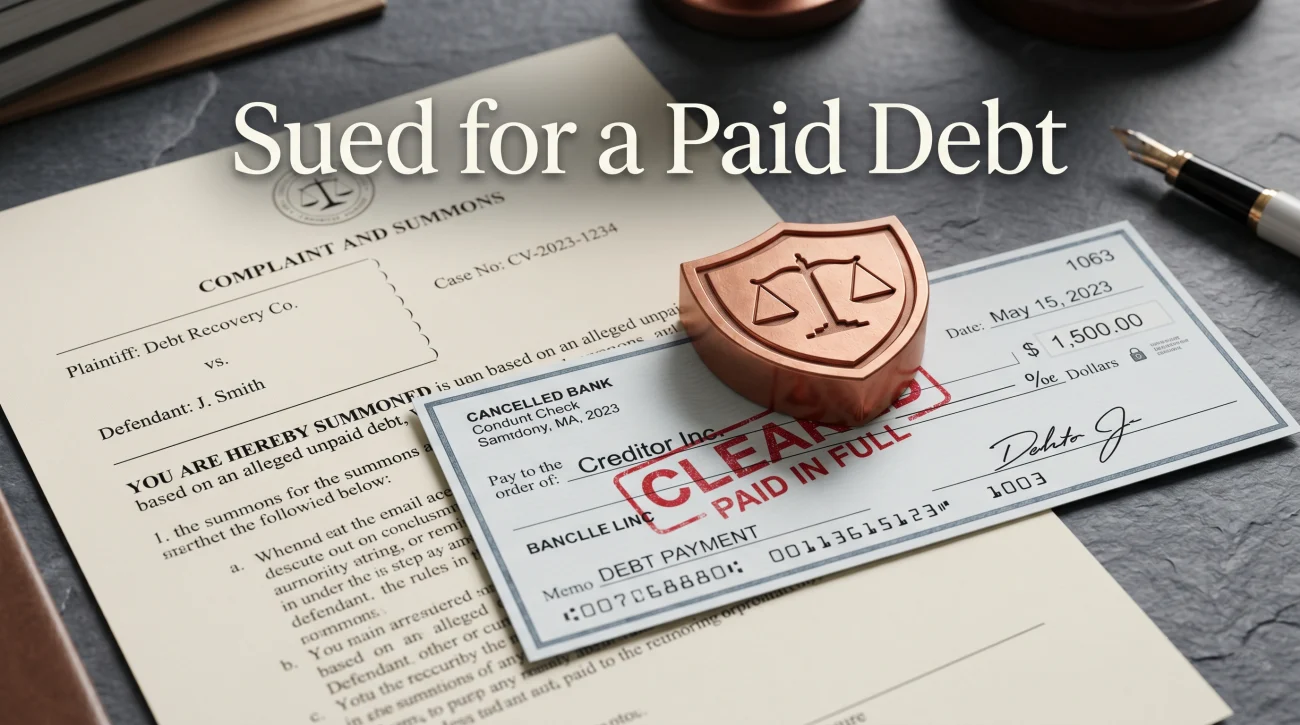
If you already paid the debt, your payment is a complete and absolute defense to the lawsuit. The plaintiff cannot legally win a case for an unpaid balance that does not exist. Debt buyers often sue on paid accounts by mistake. Payments made to the original creditor right before the debt was sold frequently do … Read more

Mistaken Identity or Not Your Debt: How to Defend Against a Debt Collection Lawsuit for an Account That Isn’t Yours

Mistaken Identity Debt Collection Lawsuit

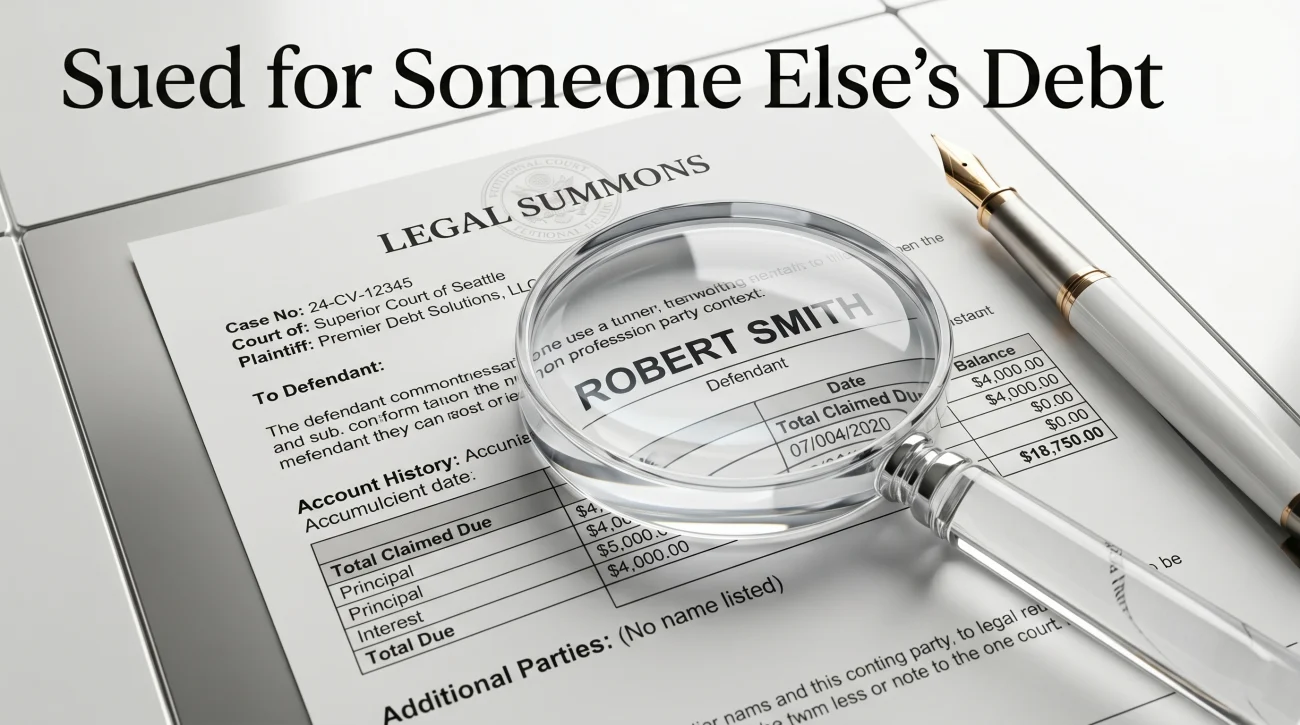
If you are sued for a debt that does not belong to you, the plaintiff bears the absolute burden of proving that you are the person who incurred the debt. Debt buyers frequently sue the wrong person due to automated skip-tracing errors, mismatched names, and incomplete data purchased in bulk portfolios. Mistaken identity and identity … Read more

Statute of Limitations as an Affirmative Defense: How to Raise It in Your Answer

Statute Of Limitations Affirmative Defense Debt Lawsuit

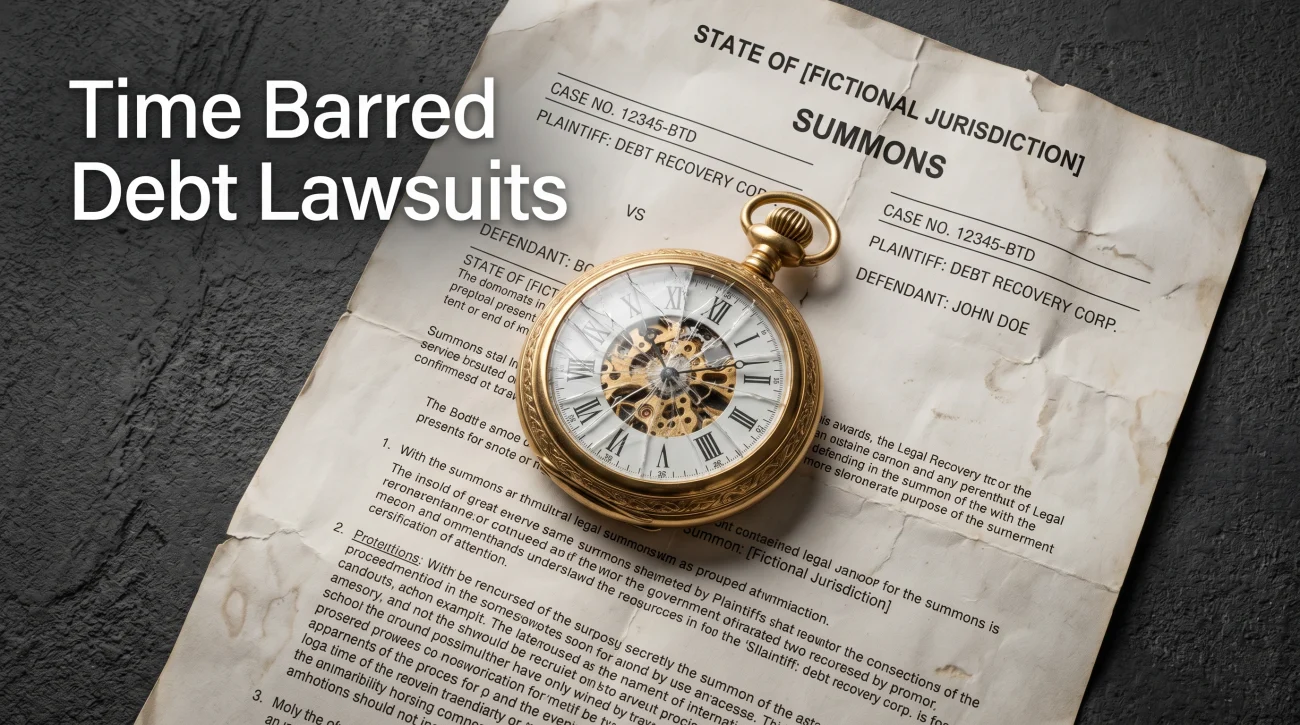
The statute of limitations (SOL) is an absolute defense that can get a debt lawsuit dismissed, but courts will not apply it automatically. You must actively raise it. If you file an Answer without formally listing the SOL as an affirmative defense, you waive the right to use it. The court will let the collector … Read more

Chain of Title in Debt Collection Lawsuits: What It Is, What It Must Show, and How Missing Links Win Cases

Chain Of Title Debt Buyer Lawsuit

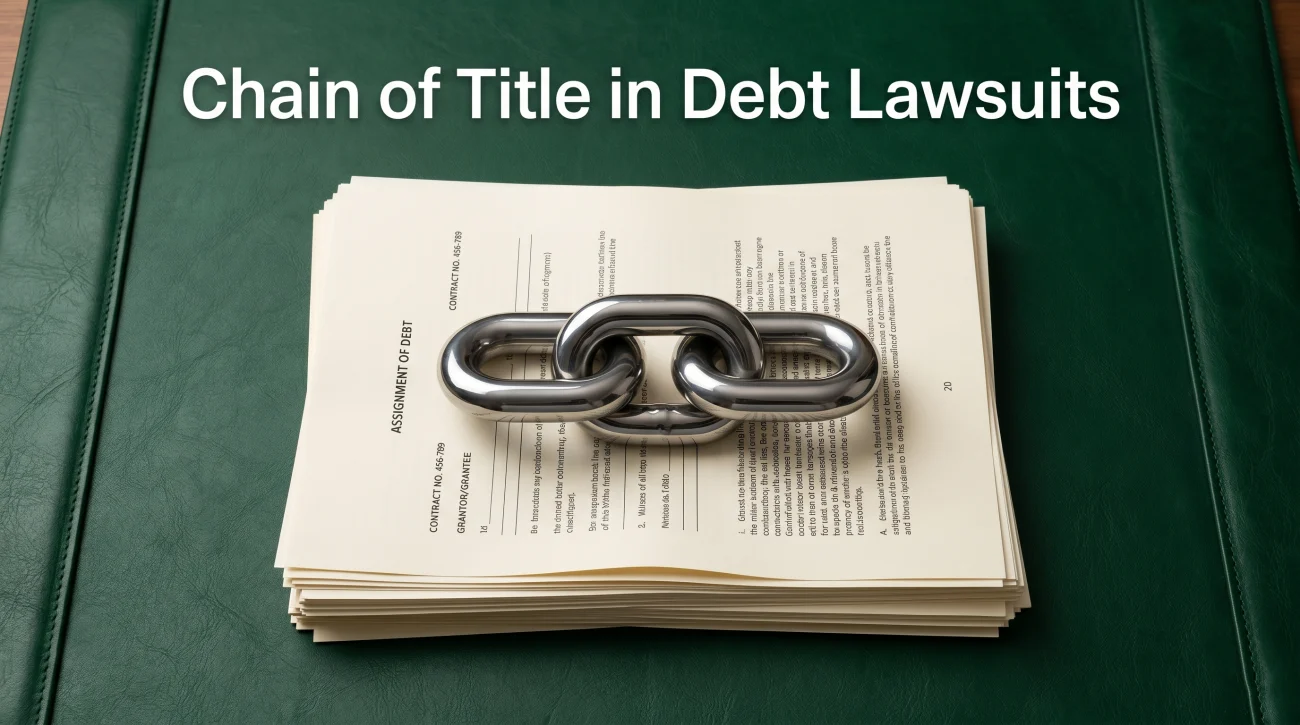
The paper trail is mandatory: A debt buyer must prove they legally own your specific account through an unbroken chain of documents from the original creditor to them. Generic documents are not enough: A bill of sale that mentions a “portfolio of accounts” is insufficient unless it includes an attachment that specifically lists your name … Read more

Lack of Standing in Debt Collection Lawsuits: Why Debt Buyers Can’t Prove They Own Your Debt

Lack Of Standing Debt Collection Lawsuit

Standing is the legal right to bring a lawsuit. If a debt buyer cannot prove they legally own your specific account, they lack standing to sue you. Debt buyers purchase accounts in massive portfolios, often receiving only a spreadsheet rather than complete documentation, creating severe standing vulnerabilities. To establish standing, the plaintiff must prove an … Read more

Debt Collection Lawsuit Defenses: What Debt Buyers Can’t Prove (And How to Make Them Prove It)

Debt Collection Lawsuit Defenses

A debt buyer suing you must prove they own your specific account, the amount is accurate, and they filed within the legal time limit. Many cannot prove all three. The most powerful defense against a third-party debt buyer is “lack of standing” or challenging their chain of title, because debt portfolios are usually sold with … Read more

Can You Still Settle a Debt Collection Lawsuit After Filing Your Answer?

Settle Debt Lawsuit After Answering

Filing an Answer to a debt collection lawsuit does not lock you into going to trial. It actually puts you in the strongest possible position to negotiate a settlement. Never try to negotiate a settlement before filing your formal response with the court. Verbal negotiations do not stop the legal clock, and the collector can … Read more

Debt Collectors in Small Claims Court: Why Most Cases End Up Here and What That Means for You

Small Claims Court Debt Collector

Most debt collection lawsuits are filed in small claims or justice courts because the filing fees are low and debt buyers expect you not to show up. Submitting a written response forces the debt buyer to prove their case with actual documentation, shifting the burden of proof back where it belongs. Small claims court is … Read more