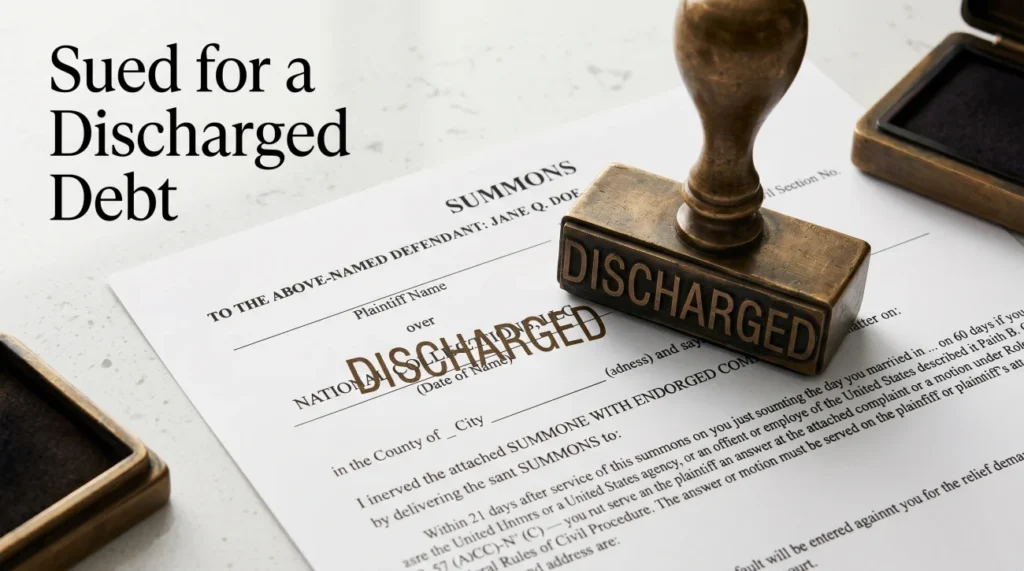
- A bankruptcy discharge is a permanent federal court injunction that prohibits any collector from filing a lawsuit to collect the discharged debt.
- Debt buyers often file lawsuits on discharged accounts because the bankruptcy status was lost or stripped out of the data when the debt portfolio was sold.
- To use your bankruptcy discharge as a defense, you must file a written Answer with the court and affirmatively state that the debt was discharged.
- Ignoring a lawsuit for a discharged debt can result in a default judgment against you, which forces you to fight a much harder battle to undo the damage.
- Collectors who are notified of a discharge but choose to continue the lawsuit may face severe sanctions from a bankruptcy court for violating the discharge injunction.
Why a Discharged Debt Should Be Dead (But Sometimes Is Not)
You went through the financial stress of filing for bankruptcy to get a fresh start. You attended the hearings, submitted the paperwork, and finally received your official discharge order from the court. You thought the past was permanently closed. Then, months or even years later, a process server knocks on your door and hands you a lawsuit for an old credit card account that was supposed to be wiped out.
Being sued for debt discharged in bankruptcy is an incredibly jarring experience. It feels like the legal system has failed you. You might even question whether your bankruptcy was handled correctly, especially if the lawsuit comes from a company you do not recognize for an account that predates your filing.
In the vast majority of cases, the system did not fail. What you are experiencing is a massive breakdown in how debt collection data is managed and sold.
During my 12 years working inside third-party collection agencies and a national debt buying firm, I saw this specific scenario play out time and time again. Debt buyers purchase massive spreadsheets of old accounts. Often, critical information regarding the account’s legal status is completely missing from those spreadsheets. The law firm filing the lawsuit frequently has no idea that a federal bankruptcy judge has already ruled on this exact debt.
Understanding exactly how this data breakdown happens is the first step to shutting the lawsuit down. The second step is learning how to present your discharge as a legal defense to stop the collector permanently.
The Insider Reality: Why Debt Buyers Miss the Bankruptcy Flag
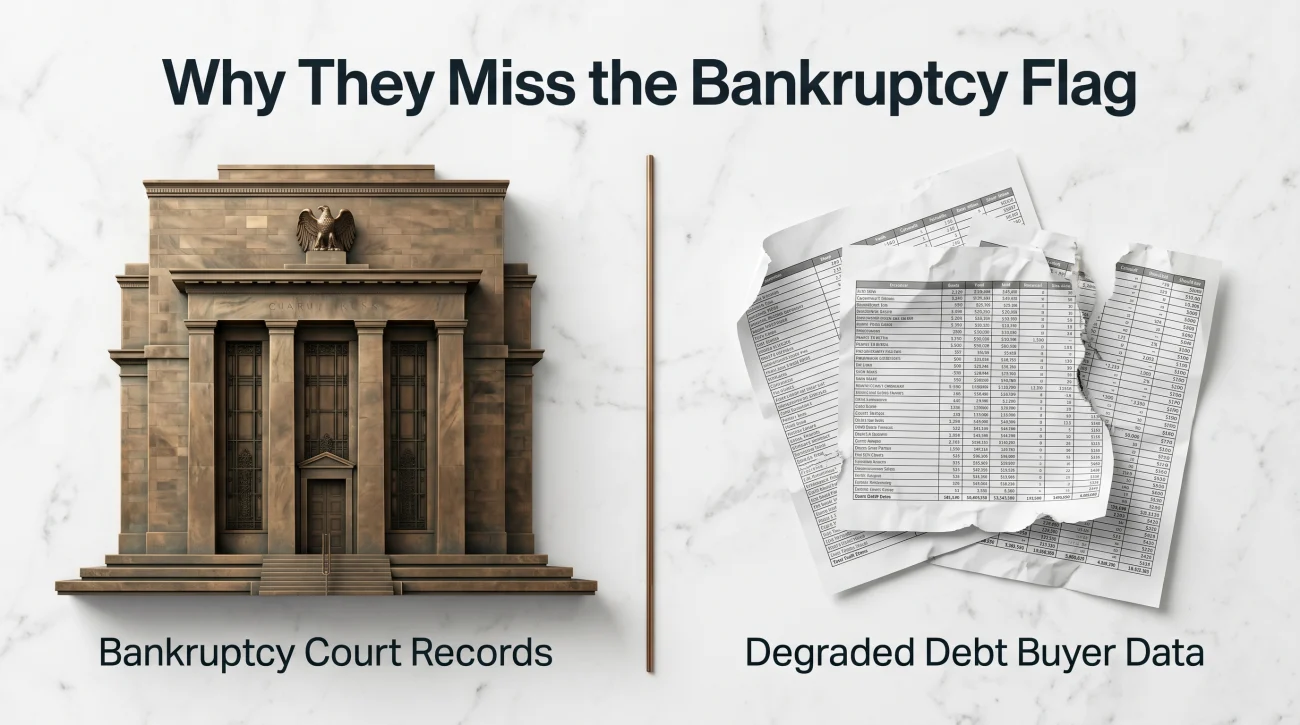
The most common question people ask when sued after a bankruptcy discharge is simply: how did they not know? The answer comes down to the economics of the debt buying industry and the poor quality of the data that gets traded.
When an original creditor gives up on collecting a debt, they often sell it as part of a massive portfolio. A debt buyer might purchase 10,000 accounts at once, paying only a few cents for every dollar of debt. In a perfect world, the original creditor would flag every account that was included in a bankruptcy filing. In reality, data degrades rapidly.
“When our agency would load a newly purchased portfolio into the system, we ran what is called a bankruptcy scrub. We cross-referenced the names and Social Security numbers against national public records. But the matching software was never perfect. Name variations, missing Social Security numbers, or transposed digits meant that legally discharged accounts frequently slipped through the cracks and were forwarded to our litigation department for lawsuits.”
This means that in many cases, the collection on discharged debt is not a malicious conspiracy to violate your rights. It is gross negligence born out of a high-volume business model.
However, while bad data explains the mistake, it does not excuse it. Once a federal judge has ruled on your debt, the legal boundary is absolute.
The Legal Power of the Discharge Injunction
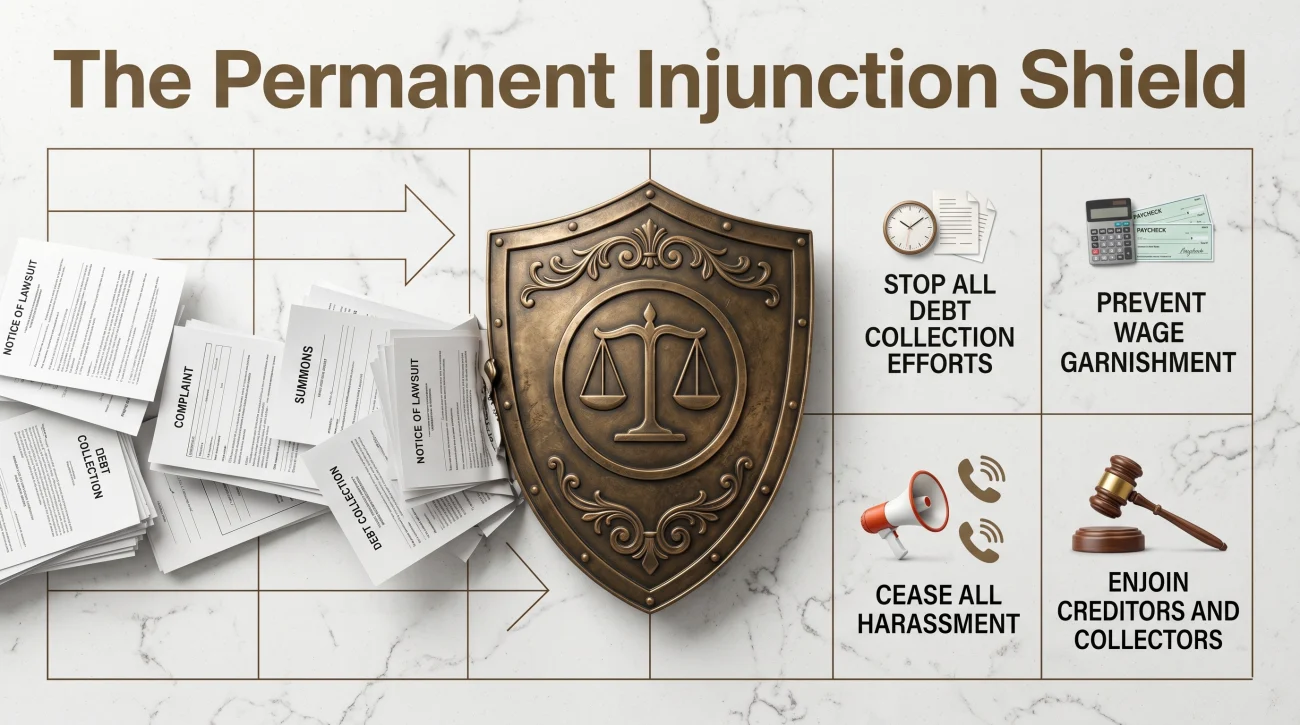
To use your defense effectively, you need to understand exactly what a bankruptcy discharge does. It is not merely a suggestion to creditors. It is a strict federal mandate.
Under federal bankruptcy code (specifically 11 U.S.C. Section 524), a discharge operates as a permanent injunction. This injunction strictly prohibits any creditor or debt collector from taking any action designed to collect a discharged debt as a personal liability. This means they cannot call you, they cannot send demand letters, and they absolutely cannot file a civil lawsuit against you.
When a collector files a lawsuit on a discharged debt, they are attempting to bypass the federal bankruptcy court’s final ruling. For a broader overview of how lawsuits operate and the framework governing these collection efforts, you can review our comprehensive guide on being sued by a debt collector.
However, state civil courts do not automatically cross-reference federal bankruptcy databases. To activate your legal protection, you have to bring the federal injunction to the state judge’s attention.
How to Raise the Discharge as an Affirmative Defense
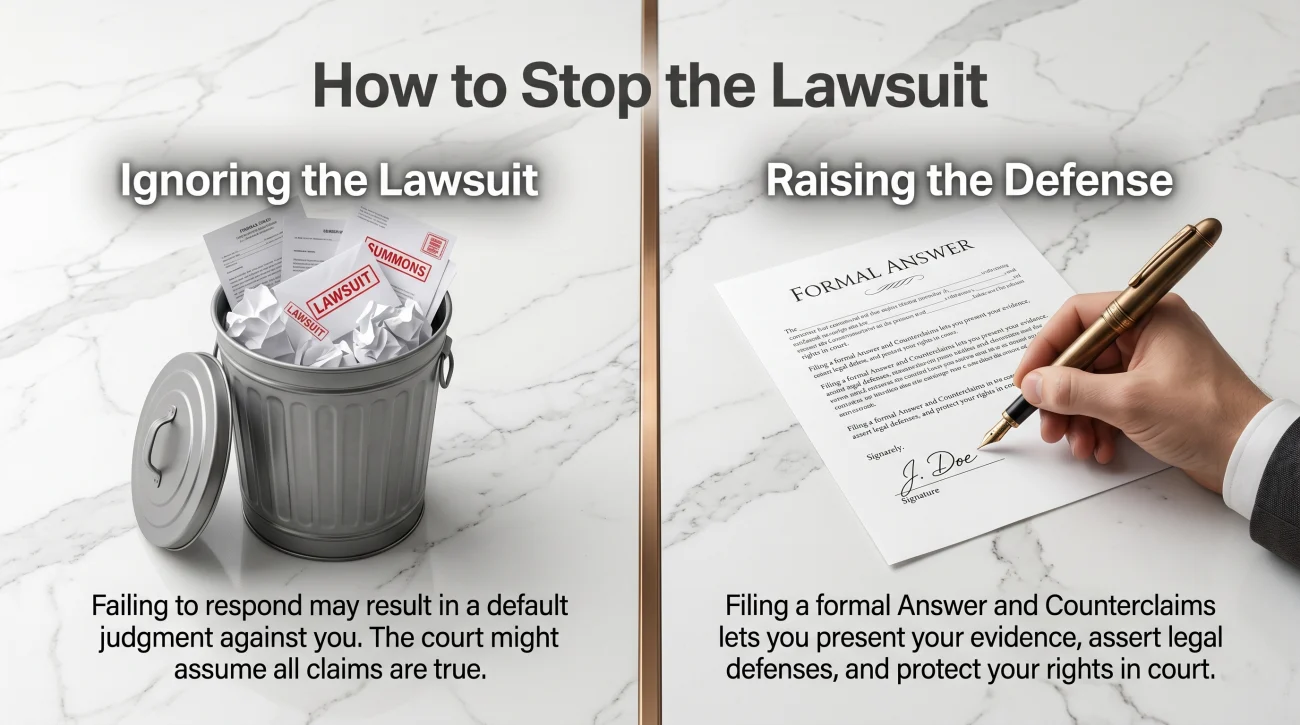
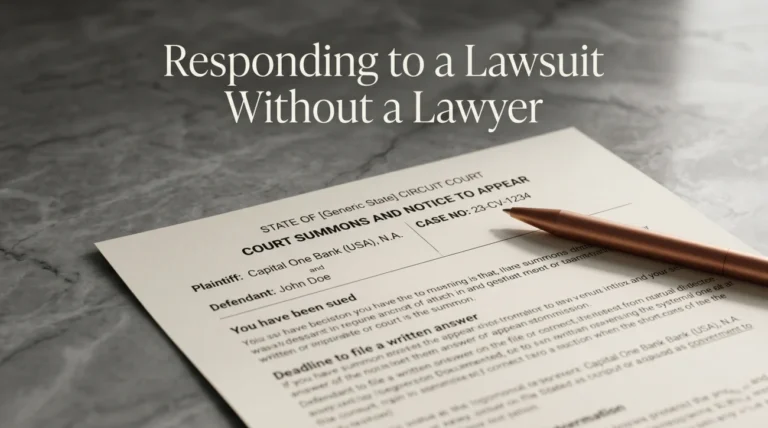
If you do nothing, the state court may simply enter a default judgment against you. You must actively raise the discharge as a defense by filing a formal written Answer with the court within the deadline stated on your summons.
You assume the lawsuit is invalid because of your bankruptcy and throw the papers away. The collector gets a default judgment against you. You now have to spend time and money trying to undo a state court judgment that never should have happened.
You file a written Answer with the state court explicitly stating that the debt was discharged in bankruptcy, forcing the collector to confront their error and back down.
During my time managing compliance for a collection agency, an Answer containing a valid bankruptcy case number was an immediate hard stop. Our team would pull the file from litigation within hours. The discharge is the ultimate trump card, but it only works if you actually play it.
When filing your Answer, you need to assert the bankruptcy as an affirmative defense. This puts the court and the plaintiff on notice that the claim is legally barred.
Sample Affirmative Defense Language
Defendant asserts the affirmative defense of bankruptcy discharge. Defendant received a discharge of this alleged debt on [Insert Date] in Case No. [Insert Bankruptcy Case Number] filed in the United States Bankruptcy Court for the [Insert District]. This lawsuit is barred by the permanent discharge injunction under 11 U.S.C. Section 524.
It is standard practice to attach a copy of your official bankruptcy discharge order as an exhibit to your Answer. You should also attach the specific page from your bankruptcy schedules (usually Schedule E or F) that lists this particular creditor. For more context on the various ways to defend a case, see our guide on debt collection lawsuit defenses.
While raising the defense forces the lawsuit to close, collectors who willfully ignore the bankruptcy process face consequences that go far beyond a dismissed case.
When the Lawsuit Becomes Contempt of Court
There is a distinct difference between a debt buyer making a clerical error and a collector knowingly ignoring a bankruptcy order. A willful violation of the discharge injunction is treated as contempt of court by federal bankruptcy judges.
Federal judges actively enforce these boundaries. In one notable case, a federal judge in St. Louis sanctioned a collections attorney for pursuing a lawsuit on a debt that had been discharged two years prior. The judge referred to the firm’s actions as one of the most egregious violations he had seen during his time on the bench.
Sanctions for contempt can include requiring the collector to pay your attorney fees, compensating you for actual damages caused by the lawsuit, and punitive fines. This creates significant leverage for the consumer. You can read more about how collector violations create leverage in our overview of the FDCPA counterclaim debt collection lawsuit process.
While it is empowering to know that federal judges will penalize collectors who cross this line, your immediate priority should be protecting yourself by shutting down the active state court case.
What to Do Immediately If You Are Sued
If you have a summons in your hand for a discharged debt, you need to execute a clear plan. Time is limited, and the burden is on you to present the facts to the court.
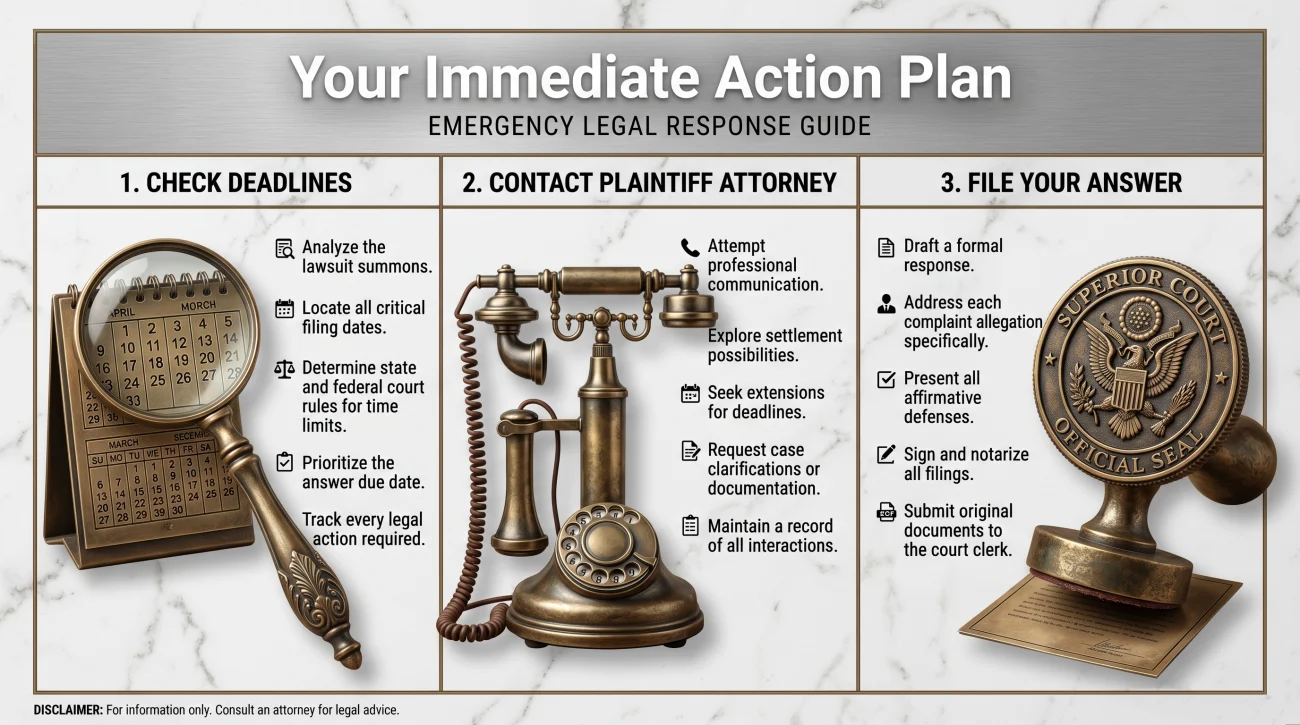
Step 1: Check Your Deadline and Gather Documents
Look at the summons document to find your exact deadline to respond. This is usually between 14 and 30 days depending on your state. Next, locate your final discharge order and the creditor schedules. If you do not have these documents, you can usually retrieve them online through the federal court’s PACER system or by contacting the attorney who handled your bankruptcy.
Step 2: Contact the Plaintiff’s Attorney
Call the attorney listed on the lawsuit. Inform them that the debt was discharged in bankruptcy and offer to send them a copy of the discharge order. If they verify the discharge, they will typically file a voluntary dismissal with the court.
Notify plaintiff's attorney + Provide discharge order + Request immediate voluntary dismissal
If they agree to dismiss the case, ensure they provide you with written confirmation. For details on how this dismissal process works, review our guide on how to get a debt collection lawsuit dismissed.
Step 3: File Your Answer Anyway
Do not rely solely on a verbal promise from the opposing attorney that they will drop the case. Until you hold a stamped dismissal order from the court, the lawsuit is still active. File your formal Answer raising the bankruptcy defense before your deadline expires to guarantee you are protected.
This straightforward process handles the vast majority of cases. However, certain types of debt and specific filing situations create legal grey areas that require a different approach.
Common Challenges with the Discharge Defense
While a standard credit card discharge is easy to prove, complications occasionally arise based on how your original bankruptcy was filed or how the debt was structured. Collectors often exploit these nuances if they believe the discharge does not completely apply to their claim.
Secured Debts and Collateral
A bankruptcy discharge wipes out your personal liability for a debt, meaning you do not owe the money. However, it does not wipe out a valid lien on property. If you had an auto loan or a mortgage, the creditor cannot sue you personally for the balance, but they still retain the right to foreclose on the home or repossess the car. Collectors sometimes blur this line, sending notices that look like personal lawsuits when they are actually taking legal steps to reclaim the collateral.
Joint Accounts and Co-Signers
If you filed for bankruptcy but your spouse, family member, or business partner co-signed the loan and did not file, the debt is only discharged for you. The collector is fully within their rights to file a lawsuit against the co-signer for the entire balance. The federal discharge injunction only protects the specific person who filed the bankruptcy petition.
Chapter 13 Timing Issues
In a Chapter 13 bankruptcy, you do not receive your official discharge until you successfully complete a three to five year repayment plan. If a debt buyer sues you while you are still in the middle of that active repayment plan, your defense is not the discharge injunction. Instead, your defense is the “automatic stay,” which is a separate federal protection that pauses all collection activity while the bankruptcy plan is ongoing.
⚠️ Warning: If you intentionally or accidentally omitted a specific creditor from your bankruptcy schedules, that debt might not have been discharged depending on the rules of your jurisdiction and whether your case was an asset or no-asset filing.
If a debt collector is attempting to sue you based on a technicality, you have secondary defenses available. You can challenge their legal authority to sue you at all by reviewing the concepts in our guide on lack of standing in debt collection lawsuits.
Closing the Loop on Old Debt
A bankruptcy is designed to provide one specific thing: a permanent, federally protected fresh start. When a process server shows up with a lawsuit for a debt that was wiped out years ago, it feels like that fresh start is being threatened by a sloppy administrative error.
You do not have to accept the stress, and you do not have to assume the legal system failed you. You earned your financial reset legally. By gathering your court documents, putting the collector on formal notice, and filing your Answer with the state court, you are simply enforcing the boundaries that a federal judge already put in place. You went through the difficult process of bankruptcy to get that discharge order—now, you just need to use it to shut this final collection effort down for good.
❓ FAQ
⚖️ Can a debt collector legally sue me after my bankruptcy discharge?
No. If the specific debt was included in your bankruptcy and discharged, the collector is prohibited by a permanent federal injunction from filing a lawsuit to collect it.
📄 What if I forgot to list the debt collection agency on my bankruptcy schedules?
If you listed the original creditor, the debt is usually still considered discharged even if a debt buyer later purchased it. The debt buyer’s lack of notification does not revive a dead debt.
📞 Should I call the collector who filed the lawsuit?
You or your legal representative should contact the plaintiff’s attorney listed on the summons to inform them of the discharge. Provide the case number and discharge date, and request a voluntary dismissal.
🏛️ Do I still have to go to court if the debt was discharged?
Yes, unless you have received a formal, stamped dismissal order from the court. You must file an Answer and present your discharge order to the judge.
💰 Can I get compensated if they sue me for a discharged debt?
If the collector knew about the discharge and willfully ignored it, you may have grounds to seek sanctions in bankruptcy court for contempt of court.
What each stage of litigation requires and where your leverage sits.
- What the lawsuit process looks like from summons to judgment
- What to file, when to file it, and what happens if you do not
- The legal arguments that can defeat a debt collection lawsuit
- What a default judgment allows collectors to do and how to fight one
- How to negotiate a resolution once litigation has started
Once judgment is entered, collectors gain tools they did not have before.
- The FDCPA violations collectors commonly commit during the collection process
- How to respond to a debt lawsuit and what defenses are available to you
- How a judgment becomes a garnishment order on your paycheck
- When a collector uses a judgment to freeze your bank account instead
- How to settle before the judgment turns into something harder to stop
Disclosure: The content on this site reflects direct experience inside the debt collection industry and is grounded in federal law and regulation. It is informational in nature. Reading it does not constitute legal advice and does not create any professional relationship. If you are dealing with a lawsuit, a judgment, or a legal deadline, consult a licensed attorney in your state before acting.