- A debt buyer suing you must prove they own your specific account, the amount is accurate, and they filed within the legal time limit. Many cannot prove all three.
- The most powerful defense against a third-party debt buyer is “lack of standing” or challenging their chain of title, because debt portfolios are usually sold with incomplete documentation.
- You do not have to prove that you do not owe the money. The legal burden of proof rests entirely on the debt collector.
- Affirmative defenses like the statute of limitations must be explicitly listed in your written Answer, or you lose the right to use them later.
The Burden of Proof is on Them, Not You
When a stack of court papers lands on your kitchen counter, the natural reaction is panic. You read the complaint, see a dollar amount, and immediately think about how you are going to pay it. But that is the wrong first step. When a debt collector files a lawsuit, they are making a legal claim, and the law requires them to prove it. You are not required to do their job for them.
During my 12 years working inside third-party collection agencies and a national debt buyer, I saw thousands of lawsuits filed against consumers. The reality behind the scenes is that many of these lawsuits are filed with remarkably thin evidence. Debt buyers rely on the fact that roughly 70 to 90 percent of consumers will simply ignore the summons, handing the collector an automatic debt collection default judgment.
When you file a response and raise valid defenses, you break their business model. You force them to actually litigate a case they assumed they would win by default. Understanding the debt collection lawsuit defenses available to you is about leveling the playing field. It is about holding the collector to the standard the law requires before they can touch your bank account or garnish your wages.
The Structural Documentation Problem in Debt Buying
To understand why certain defenses are so effective, you have to understand how debt is actually bought and sold. If you are being sued by a company you have never done business with, you are dealing with a debt buyer. They purchase defaulted accounts from original creditors like banks and credit card companies.
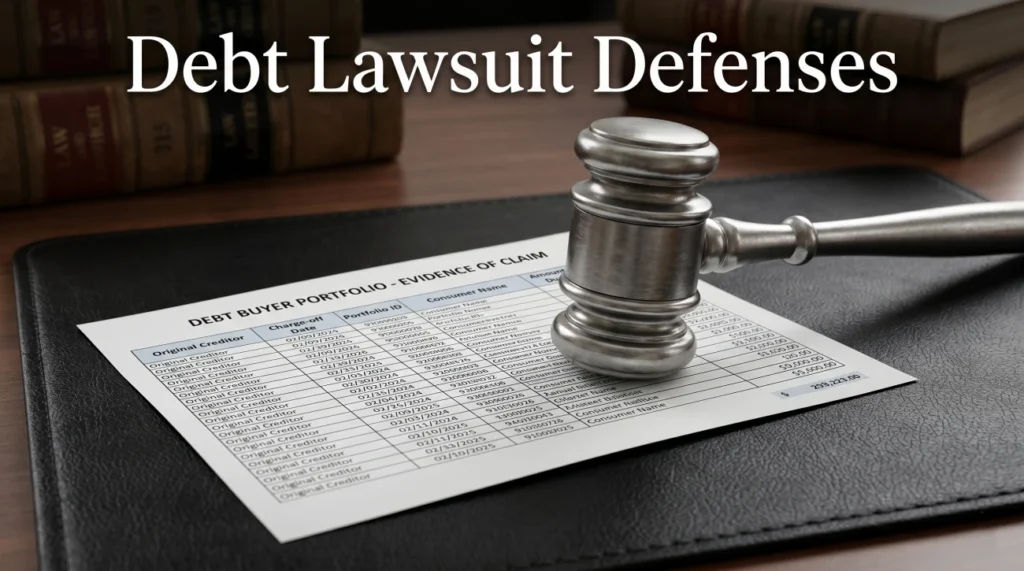
Most consumers assume that when a debt is sold, a physical file folder containing original contracts, signed applications, and years of itemized billing statements changes hands. That is rarely what happens. Debts are sold in massive bulk portfolios, sometimes containing tens of thousands of accounts at once.
“When I reviewed account files at a national debt buyer, the ‘documentation’ we received for a new portfolio was often just an Excel spreadsheet. It contained a name, a Social Security number, an address, and a final balance. If a consumer actually showed up in court and demanded the original signed contract, the legal team often had to scramble to request it from the original bank. Half the time, the bank couldn’t find it, and we had to drop the case.”
This structural reality is your biggest advantage. A debt buyer who files a lawsuit must legally prove three specific things to win: they must prove they own your specific debt, they must prove the amount is correct, and they must prove they filed within the legal time limit. Because of how debt is packaged and sold, many debt buyers have significant gaps in their documentation for at least one of these three requirements.
If you understand where their paperwork is likely to fail, you know exactly which defenses to raise in your response.
Defense 1: Lack of Standing and Broken Chain of Title
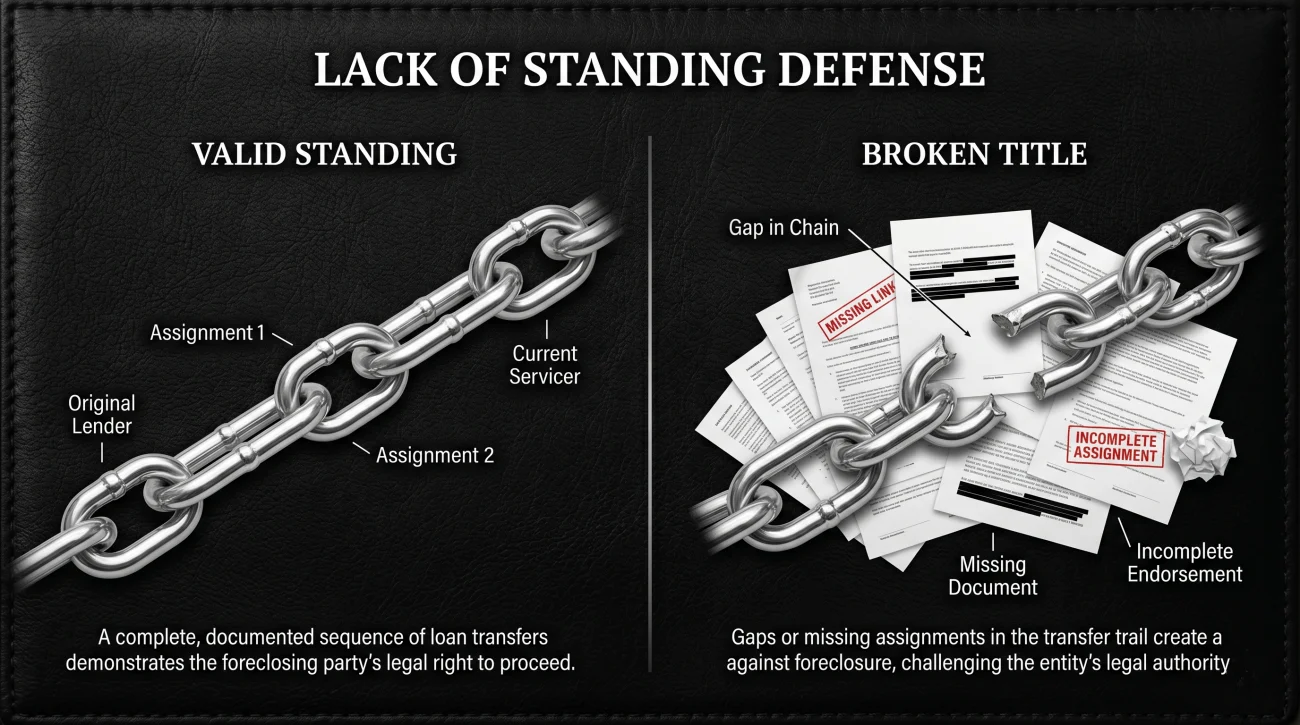
This is frequently the most powerful affirmative defense you can raise against a third-party debt buyer. “Standing” simply means the plaintiff has the legal right to sue you. To have standing, a debt buyer must prove they actually own your specific account.
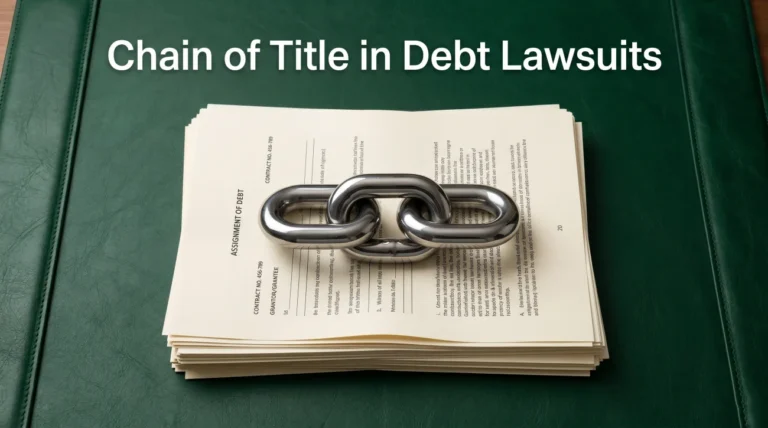
To prove ownership, they must establish a complete “chain of title.” This is the documented paper trail showing the exact path your account took from the original creditor to the company currently suing you. If Bank A sold it to Buyer B, who sold it to Buyer C, the current plaintiff (Buyer C) must show valid bills of sale for every single transfer.
More importantly, those generic bills of sale are not enough on their own. They must include an attachment or a schedule that specifically lists your name and your account number as being part of that specific sale. This is where debt buyers frequently fail.
Arguing with the judge that you do not owe the money because you lost your job and couldn’t pay.
Arguing that the plaintiff lacks standing because they have not produced an unbroken chain of title specifically identifying your account at each transfer.
When you demand strict proof of their chain of title during the discovery phase, you force them to produce documents they may not possess. If they cannot prove they own the debt, the court cannot grant them a judgment, regardless of whether the debt itself is valid.
Defense 2: The Statute of Limitations
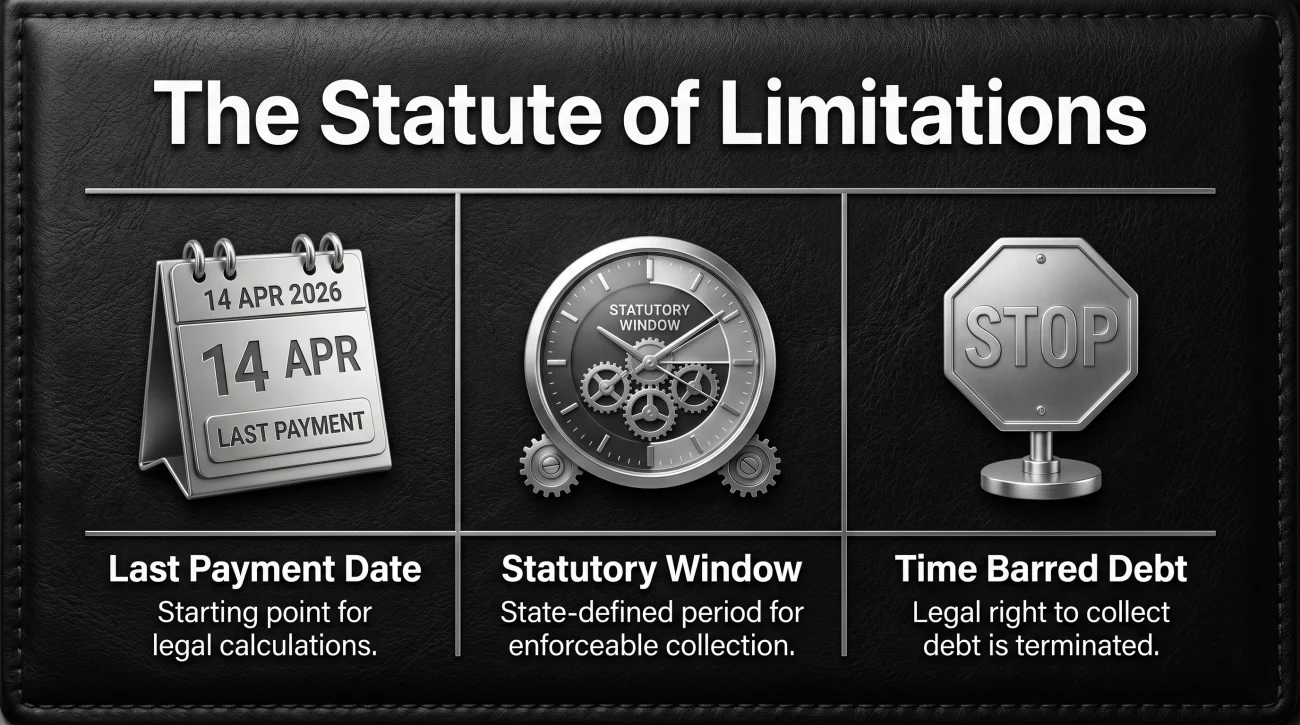
Every state has a legal time limit for how long a creditor or collector has to file a lawsuit against you for an unpaid debt. This is known as the statute of limitations. For credit card debt, this window is typically between three and six years from the date of your last payment, though it varies by state.
If a collector files a lawsuit after this window has closed, the debt is considered “time-barred.” The expiration of the statute of limitations is an absolute defense. If the clock ran out before they filed the paperwork at the courthouse, the judge must dismiss the case.
<strong⚠️ Warning: The court will not automatically check the statute of limitations for you. It is an affirmative defense. If you do not explicitly raise it in your written Answer, you waive your right to use it, and the collector can win a judgment on an expired debt.
Debt buyers frequently purchase old, time-barred accounts for pennies on the dollar and push them through the legal system anyway, banking on the fact that most people do not know their state’s legal deadlines. Always check your own records, such as old bank statements or your credit report, to verify the exact date of your last payment. If you need to understand how the broader legal timeline fits into your situation, our guide on being sued by a debt collector breaks down the entire process from summons to resolution.
Defense 3: Factual Disputes (Wrong Amount, Paid, or Not Yours)
While procedural defenses like standing and the statute of limitations are highly effective, you may also have straightforward factual defenses based on the reality of the account. Because of how data degrades when debts are sold, the facts on their spreadsheet are often wrong.
The Amount is Incorrect
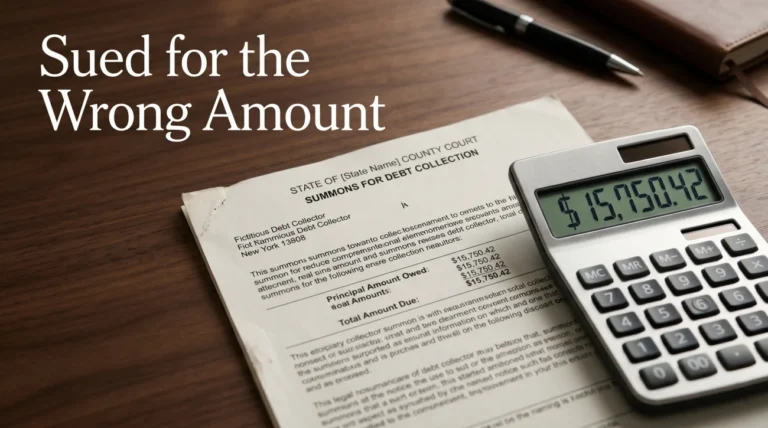
When a portfolio is sold, the buyer usually receives a single, lump-sum balance figure. They do not see the years of layered fees, post-default interest, and collection costs that previous agencies may have stacked on top of the principal. Under federal law, they cannot collect any amount that was not expressly authorized by the original contract. If they cannot produce the original signed credit agreement to prove you agreed to a 29% default interest rate, they cannot legally enforce that inflated balance. You can dispute the amount without disputing the existence of the account.
The Debt Was Already Paid or Settled
I have reviewed numerous files where a consumer settled with the original creditor right around the time the portfolio was being packaged for sale. The payment data simply did not transfer to the new buyer’s system. The debt buyer suing you often genuinely does not know you already paid it. If you have a cancellation letter, a cleared check, or a previous settlement agreement, presenting this documentation is a complete defense.
Mistaken Identity or Authorized User
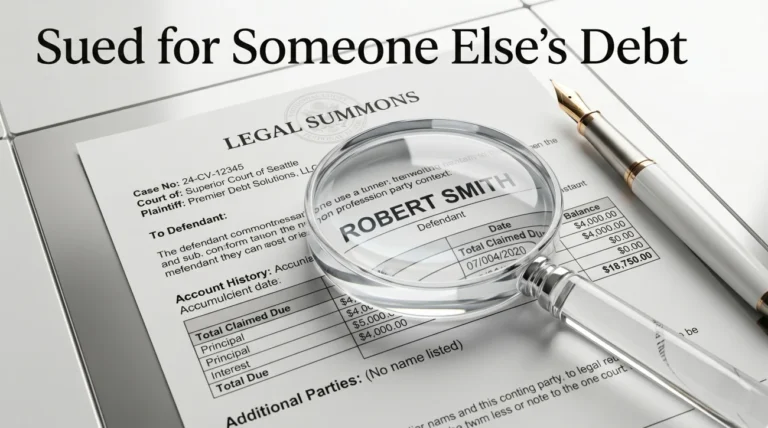
Debt buyers do minimal verification before filing suit. During my time in the industry, if a name and a zip code matched the spreadsheet, the lawsuit was greenlit. We rarely had the original application to check if a “Junior” was being sued for a “Senior’s” debt, or if the person was merely an “authorized user” on a spouse’s credit card. If you are an authorized user, you are generally not legally liable for the balance because you never signed the contract. The burden is on them to produce a document with your signature.
Defense 4: Procedural Errors and Collector Violations
Sometimes, the most effective way to defeat a lawsuit has nothing to do with the debt itself, but rather how the collector attempted to collect it. You can build a strong defense—or even a counterattack—around their procedural shortcuts or illegal tactics.
Improper Service: To sue you, the collector must notify you formally according to your state’s strict rules of civil procedure. Process servers are paid per delivery, and in the industry, there is a documented problem known as “sewer service”—where a server simply lies on their affidavit and claims they handed you the papers when they actually dumped them or served an old address. If you can prove you were never properly served, the court lacks jurisdiction over you. This defense can sometimes be used to vacate a judgment even years after it has been entered.
FDCPA Counterclaims: The Fair Debt Collection Practices Act (FDCPA) governs how third-party collectors can treat you. If the collector crossed the line into illegal territory leading up to the lawsuit, you can file a counterclaim against them within the exact same case. Common violations include calling you at work after being told to stop, threatening you with arrest, or suing you on a debt they know is past the statute of limitations.
An FDCPA counterclaim shifts the leverage dramatically. Suddenly, the collector is not just trying to win your money; they are facing the prospect of paying your attorney fees and statutory damages. Faced with a valid counterclaim, many collection law firms will quickly offer to drop their lawsuit to avoid liability.
How to Actually Raise Your Defenses
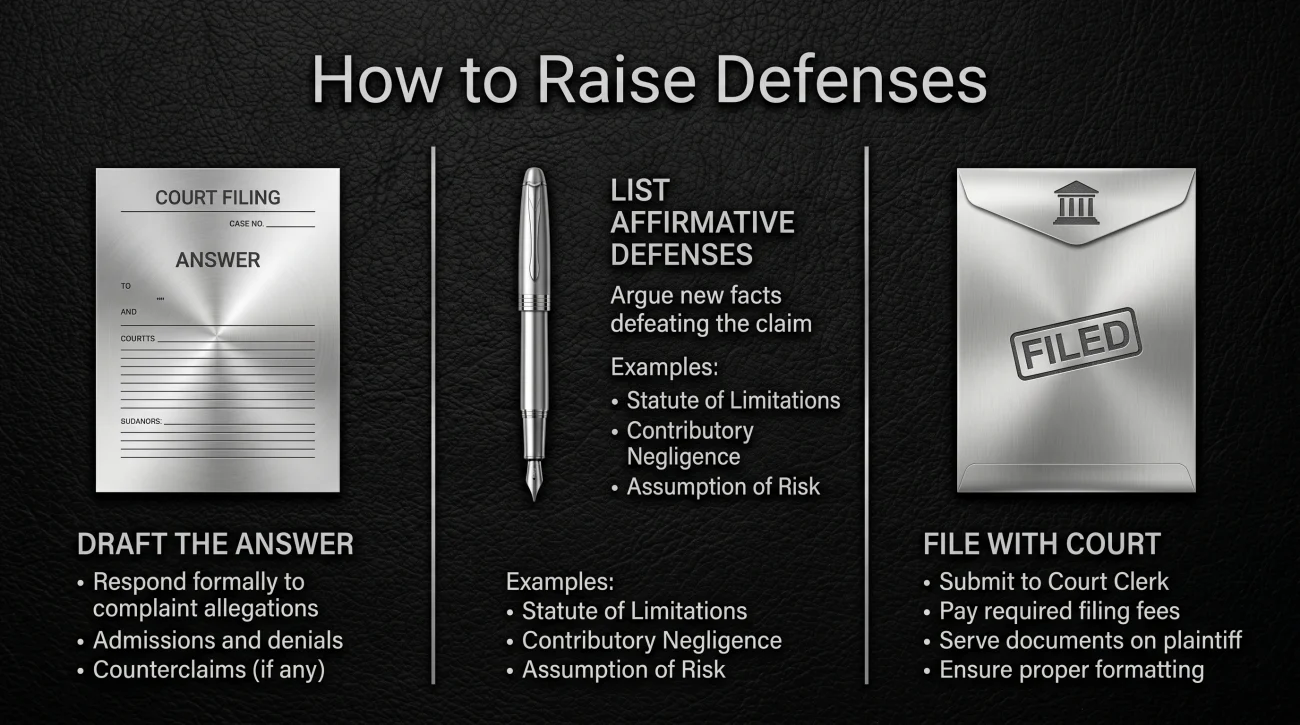
Having a valid defense does nothing for you if you do not communicate it to the court in the correct format. You cannot just show up on the date of your hearing and start explaining your side of the story. Defenses must be asserted in writing.
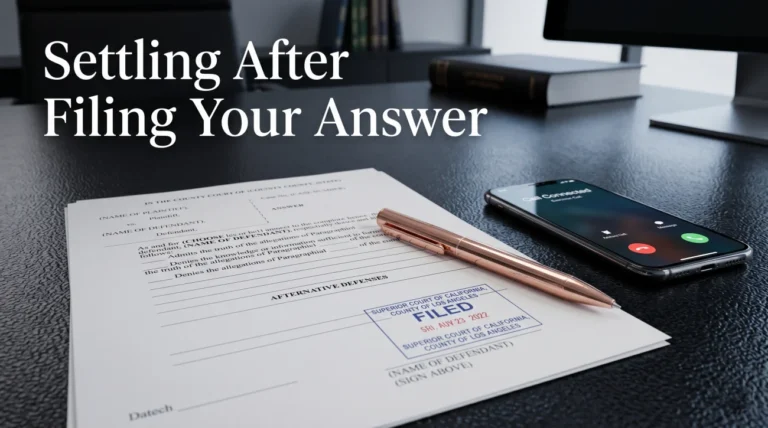
When you file your formal Answer to the lawsuit, there is a specific section dedicated to “Affirmative Defenses.” This is where you list every defense you believe might apply to your case. You do not have to definitively prove them at the moment you file the Answer; you are simply preserving your legal right to argue them later during the discovery phase or at trial.
A basic affirmative defense for the statute of limitations might look like this:
Defendant asserts the affirmative defense of the statute of limitations. The alleged debt arises from an account for which the date of last activity occurred more than the applicable statutory period prior to the filing of this lawsuit. Plaintiff’s claim is therefore time-barred.
If you are unsure how to format your overall response, our guide on how to answer a debt collection summons covers the step-by-step mechanics of submitting the paperwork. Once your Answer and defenses are filed, the collector’s calculus changes. They now know they are dealing with a defendant who understands the rules, which frequently opens the door to settling the debt collection lawsuit on much more favorable terms.
Signs You Have Strong Defensive Grounds
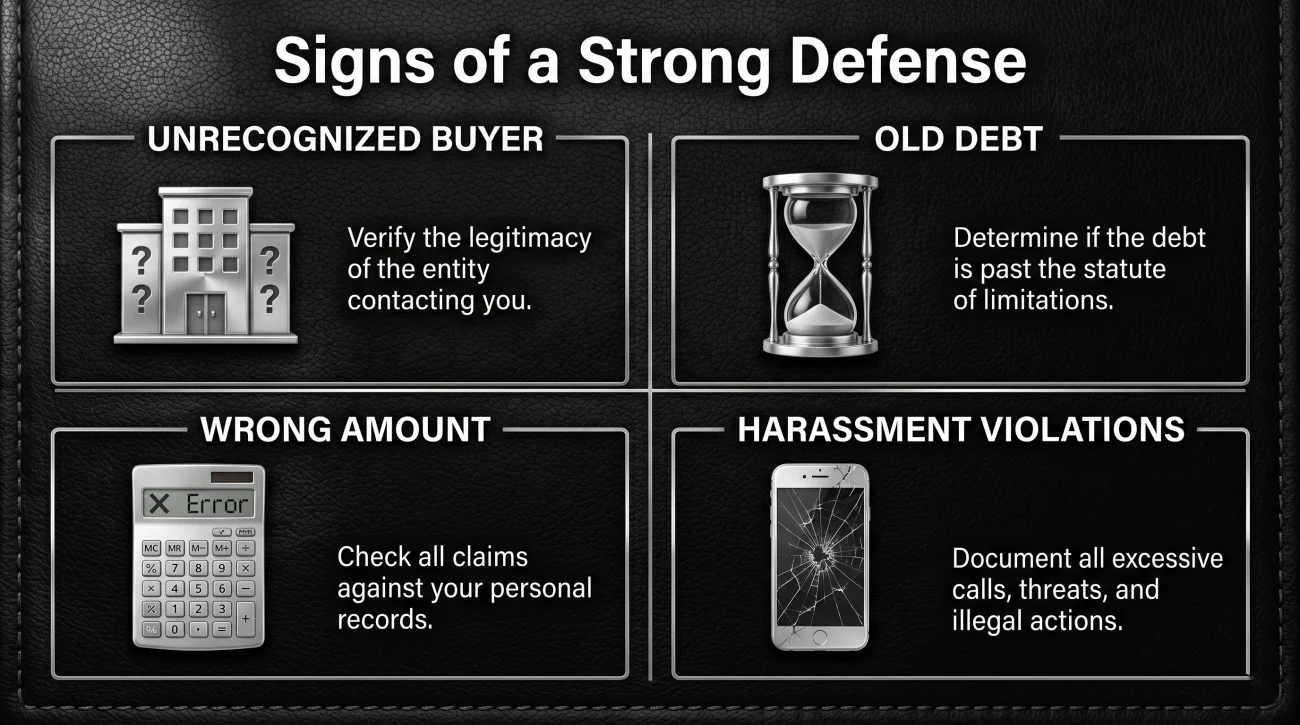
Evaluating your position quickly is critical when the response clock is ticking. You are in a strong position to defend or negotiate favorably if any of the following apply to your situation:
- 📌 You don’t recognize the plaintiff: The lawsuit was filed by a debt buyer (like Midland, Portfolio Recovery, or LVNV) rather than your original bank, opening up chain of title defenses.
- 📌 The debt is old: Your last payment to the original creditor was more than three to six years ago, meaning the statute of limitations may have expired.
- 📌 The math doesn’t match: The balance claimed in the complaint is significantly higher than your last known statement, and no itemized breakdown was provided.
- 📌 The documentation is thin: The complaint does not include a copy of the original signed credit agreement, relying instead on a generic billing summary.
- 📌 You experienced harassment: The collector used aggressive, deceptive, or harassing tactics before filing the suit, creating potential FDCPA counterclaim leverage.
If your situation involves a large balance, complex documentation gaps, or clear FDCPA violations, handling it alone carries high risk. This is the exact moment to look into evaluating whether you need a debt lawsuit attorney. An experienced consumer defense attorney can identify defective chain of title documents instantly and use them to force a dismissal or a highly favorable settlement.
Final Thoughts on Lawsuit Defenses
The most common mistake consumers make in a debt collection lawsuit is assuming that because they recognize the original debt, they have no way to defend themselves. That is a fundamental misunderstanding of civil litigation. A lawsuit is not a moral test; it is a legal process testing whether the plaintiff has the evidence required by law to take your money.
By filing an Answer and asserting valid defenses, you force the debt buyer to do the work. In many cases, you will find that doing the work is the one thing their business model was never designed to handle.
❓ FAQ
📜 Do I have to prove I don’t owe the debt?
No. I’ve seen defendants panic trying to find old bank records to prove they don’t owe something. In civil court, the burden rests entirely on the plaintiff. The collector must prove the debt exists, that they own it, and the amount is correct. You do not have to prove a negative.
⏳ What happens if I forget to list the statute of limitations in my Answer?
You generally lose the right to use it. The judge will not raise it for you. If you fail to explicitly list the statute of limitations as an affirmative defense in your written Answer, the collector can win a judgment on a debt that is decades old.
📑 Is a credit card statement enough to prove they own my debt?
Usually, no. In my experience, debt buyers often try to slide by with just a recent billing statement. But a statement only shows a balance history. It does not prove the specific terms of the contract, nor does it establish a chain of title showing how the current plaintiff legally acquired the account.
🏢 Can I use these defenses in small claims court?
Absolutely. Even though small claims or justice courts operate with a much more informal environment, the fundamental legal requirements remain exactly the same. The debt buyer must still prove standing, adhere to the statute of limitations, and verify the amount.
🗣️ Can I just tell the judge my defenses on the court date?
No, and this is a mistake that causes many people to lose automatically. Legal defenses must be asserted formally in writing by filing an Answer before your deadline expires. If you just wait to talk to the judge, a default judgment may already be entered before you step foot in the room.
🛑 Does asking for proof reset the statute of limitations?
No. Requesting validation, demanding proof of chain of title, or filing a legal Answer demanding proof does not restart the clock. However, be careful: making a partial payment or explicitly acknowledging the debt is valid in writing can reset it in many states.
🤝 If I raise defenses, does that mean I can’t settle?
The exact opposite is true. Raising strong legal defenses is what forces a collector to the negotiating table. When a debt buyer realizes their weak documentation is going to be tested in court, they are usually much more willing to settle for a lower amount to avoid the risk of losing entirely.
👨⚖️ What is an affirmative defense?
An affirmative defense is a legal reason why the plaintiff should not win, even if their basic claims are true. Think of it as saying, “Even if I did borrow the money, you still can’t sue me because the statute of limitations expired.”
🏦 Are defenses different if my original bank is suing me?
Yes. Original creditors (like Chase or Discover) rarely have “chain of title” or standing issues because they never sold the debt. When facing an original creditor, your defenses should focus more on the statute of limitations, improper calculation of fees, or identity theft.
⚖️ Can a debt lawsuit be dismissed because of improper service?
Yes. If the process server lied about handing you the papers or left them at a house you moved out of years ago, the court lacks personal jurisdiction over you. Challenging improper service can result in the case being dismissed or a default judgment being vacated.
What each stage of litigation requires and where your leverage sits.
- What the lawsuit process looks like from summons to judgment
- What to file, when to file it, and what happens if you do not
- The legal arguments that can defeat a debt collection lawsuit
- What a default judgment allows collectors to do and how to fight one
- How to negotiate a resolution once litigation has started
Once judgment is entered, collectors gain tools they did not have before.
- The FDCPA violations collectors commonly commit during the collection process
- How to respond to a debt lawsuit and what defenses are available to you
- How a judgment becomes a garnishment order on your paycheck
- When a collector uses a judgment to freeze your bank account instead
- How to settle before the judgment turns into something harder to stop
Disclosure: The content on this site reflects direct experience inside the debt collection industry and is grounded in federal law and regulation. It is informational in nature. Reading it does not constitute legal advice and does not create any professional relationship. If you are dealing with a lawsuit, a judgment, or a legal deadline, consult a licensed attorney in your state before acting.