- Most consumers assume a debt lawsuit must end in either a judgment or a settlement, but a significant percentage of cases are dismissed entirely when challenged.
- A dismissal “with prejudice” is the ultimate goal because it permanently prevents the collector from ever suing you for that specific debt again.
- Debt buyers frequently file lawsuits with incomplete documentation, and forcing them to prove their case often leads to voluntary dismissal.
- Certain defenses, like an expired statute of limitations or a bankruptcy discharge, mandate that the court throw the case out if properly raised.
The Third Outcome No One Tells You About
When a stack of court papers lands on your kitchen counter, the panic usually forces your mind down one of two paths. You assume you will either lose in court and have your wages garnished, or you will be forced to negotiate a settlement you cannot truly afford. Most people believe the system is designed to end in a payout for the collector. There is a third outcome that happens far more frequently than the industry wants consumers to know.
Cases get thrown out.
During my 12 years working inside third-party collection agencies and a national debt buyer, I saw the litigation strategy from the inside. Debt buyer law firms file lawsuits in massive volumes. Because they buy portfolios of defaulted accounts for pennies on the dollar, they often file complaints equipped with nothing more than a spreadsheet row containing your name, a balance, and an account number.
They file these cases expecting you to ignore the paperwork. When a consumer actually responds, demands proof, and raises the right defenses, the dynamic completely changes. Lawsuits that look intimidating on the surface routinely crumble when subjected to basic legal scrutiny. Getting a case dismissed is not about finding a magic loophole. It is about understanding what the collector is legally required to prove and pointing out to the court when they cannot do it.
The Crucial Distinction Between Dismissal Types
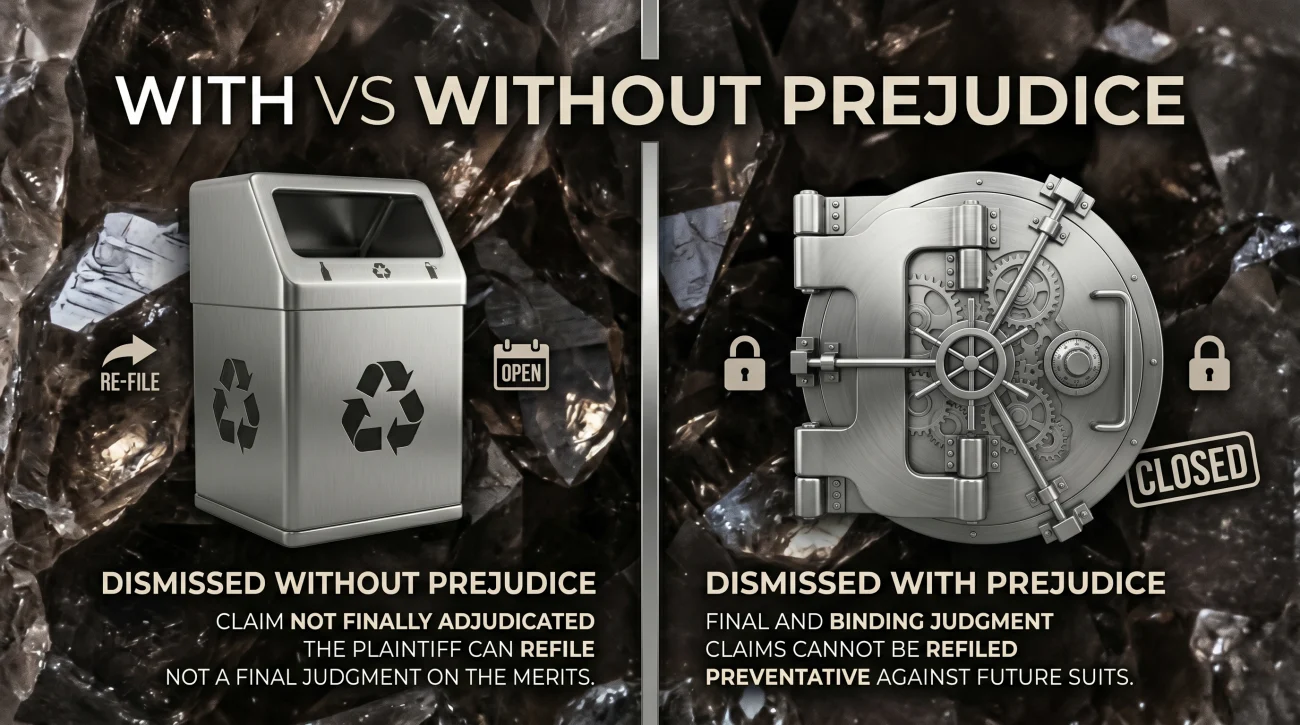
Before you start looking at ways to get a debt collection case thrown out, you have to understand that not all dismissals mean the same thing. In the legal system, a case can be closed temporarily, or it can be closed permanently. If you do not know the difference, you might think you have won, only to be served with papers for the exact same debt six months later.
Courts dismiss cases in one of two ways. The first is a dismissal “without prejudice.” This means the judge is throwing the case out, but the plaintiff is allowed to fix their mistakes and try again. For example, if a collector filed a lawsuit but failed to serve you the papers correctly, the judge might dismiss the case without prejudice. The collector takes a procedural loss, but they still own the debt, and they can simply file a new lawsuit, pay a new filing fee, and serve you properly the second time.
The second type is a dismissal “with prejudice.” This is the outcome you actually want. When a debt lawsuit is dismissed with prejudice, it means the case is permanently closed. The court has ruled that the collector is legally barred from ever filing a lawsuit against you for that specific debt again. It is a complete and final victory.
The collector offers to drop the case if you stop pushing for discovery documents. You agree without checking the terms, and the court enters a standard dismissal. Two years later, the debt is sold to a new agency, and you are sued all over again.
You file a motion explicitly requesting the case be dismissed “with prejudice.” If the judge grants it, that specific debt can never be litigated against you again by anyone.
Whenever you are fighting a lawsuit, responding to a summons, or negotiating an exit, the words “with prejudice” must be your primary focus. Knowing the exact type of dismissal you need is the critical setup; the next step is forcing the court’s hand.
The Defenses That Force a Case to Be Thrown Out
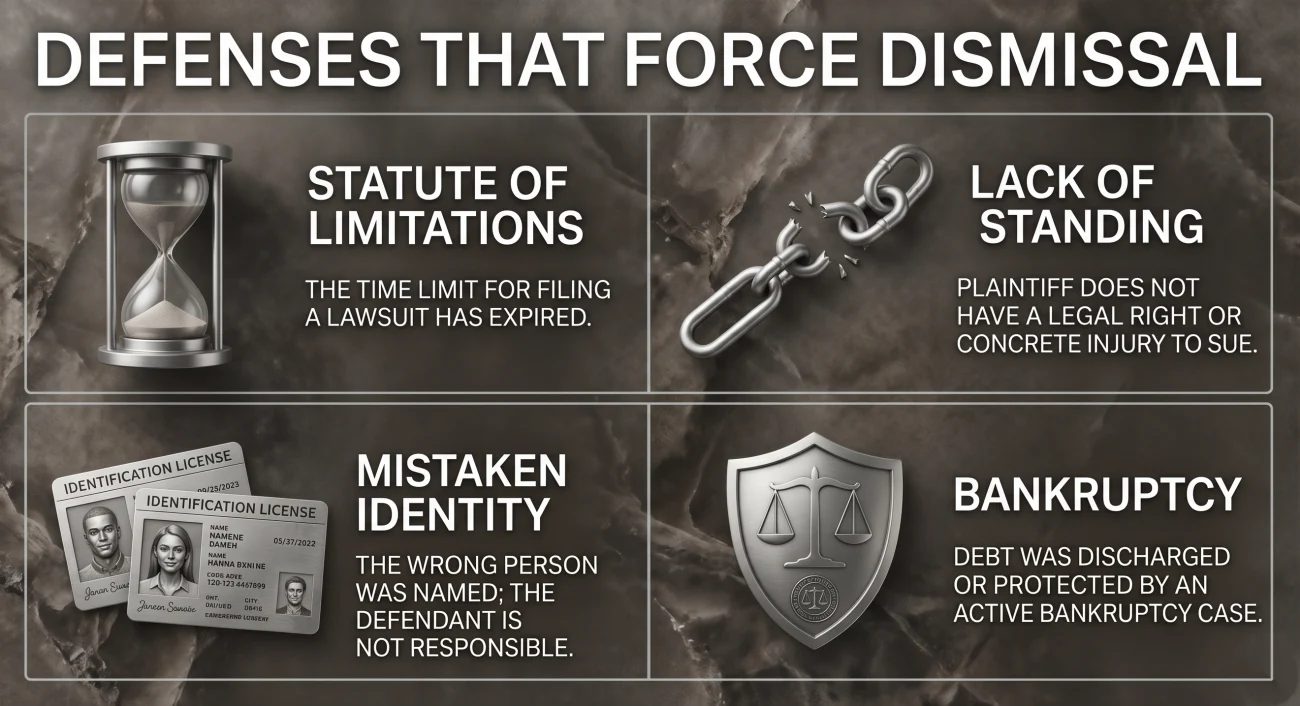
To get that permanent dismissal, you must give the judge the legal justification to grant it. You cannot simply ask a judge to dismiss a case because you cannot afford to pay. The court requires a legal reason to throw a lawsuit out. These reasons are called affirmative defenses. If you prove certain defenses, the judge has no choice but to dismiss the action. You must raise these formally when you respond to the complaint.
The Expiration of the Legal Time Limit
Every state limits how long a creditor or debt collector has to sue you for an unpaid debt. This is called the statute of limitations. For credit card debt, this window is typically between three and six years from the date of your last payment, depending on where you live. Once that clock runs out, the debt is considered time-barred.
If a debt buyer sues you on a time-barred debt, and you point this out to the court, the lawsuit is dead. However, the judge will not check the math for you. You have to actively raise the statute of limitations defense in your answer. If you fail to raise it, the court will let the lawsuit proceed, and you could end up with a judgment on a debt that was legally too old to enforce.
The Inability to Prove Ownership
This is the most common reason debt buyer lawsuits fail. A company like Portfolio Recovery or Midland Funding is not the bank you originally borrowed money from. To sue you, they must prove they have the legal right to do so, establishing an unbroken paper trail from the original creditor directly to them. In legal terms, this is called standing.
When debt portfolios are sold, the buyer usually receives a digital spreadsheet, not a warehouse of physical contracts. They get a name, a balance, and an account number. When you challenge a debt buyer’s lack of standing, you are forcing them to produce the original signed agreement and the specific bill of sale identifying your account. Because they bought a spreadsheet, they often cannot magically produce these physical documents. When they cannot produce the paper trail, the court must dismiss the case.
“In my time reviewing accounts for litigation, the chain of title was always our weakest link. We would buy a portfolio of ten thousand accounts. The bill of sale would simply say ‘Portfolio A.’ If a consumer demanded to see the specific document showing their individual account was transferred to us, we often had to scramble to request it from the seller. If the seller didn’t have it, we had to drop the case.”
Mistaken Identity and the Burden of Proof
A common misconception is that if you are sued for an account that isn’t yours, you have to prove it belongs to someone else. This is legally backward. The burden of proof is on the plaintiff. They must prove that you authorized the charges.
Debt buyers sometimes match a name to a file without verifying the Social Security Number or signature. This frequently happens with common names (like John Smith) or between family members sharing a similar name. If they lack the original application with your exact identifying details, their case collapses. You do not have to prove a negative or launch a massive investigation into who stole your identity just to defend the civil suit. You simply have to demand that they meet their burden of proving you opened the account.
The “Already Paid” Disconnect
Debt buyers frequently purchase accounts that were settled with a previous collection agency because the payment data did not update fast enough before the portfolio was sold. The buyer genuinely doesn’t know you paid.
If you have the bank statements or the settlement letter proving the balance was resolved, presenting this evidence kills the lawsuit instantly. A debt that has been satisfied cannot be litigated, no matter who currently claims to own it.
Debts Already Eliminated by a Federal Court
If you previously filed for bankruptcy and the debt in question was included in your discharge, it no longer legally exists. A bankruptcy discharge creates a permanent federal injunction against any future collection efforts. The court has already ruled that you do not owe this money.
Unfortunately, debt buyers sometimes purchase old portfolios without checking the bankruptcy status of the accounts. They receive a spreadsheet showing an unpaid balance and blindly file a lawsuit. Suing on a discharged debt is not just a mistake; it is a severe violation of a federal court order.
To stop this immediately, you must provide the court and the collector with a copy of your bankruptcy discharge order. If you are targeted this way, raising the bankruptcy discharge defense will not only get the debt lawsuit dismissed immediately, but it may also give you grounds to pursue the collector for sanctions for violating the discharge injunction.
Procedural Paths: How Dismissals Actually Happen
Knowing your defenses is only the first step. You also have to understand the mechanical process of how a judge actually throws a case out. Cases do not just vanish on their own. The court has to take a specific action, or the plaintiff has to withdraw. Understanding the broader context of what happens when you are sued by a debt collector helps you see where these procedural exits appear on the timeline.
The Motion to Dismiss
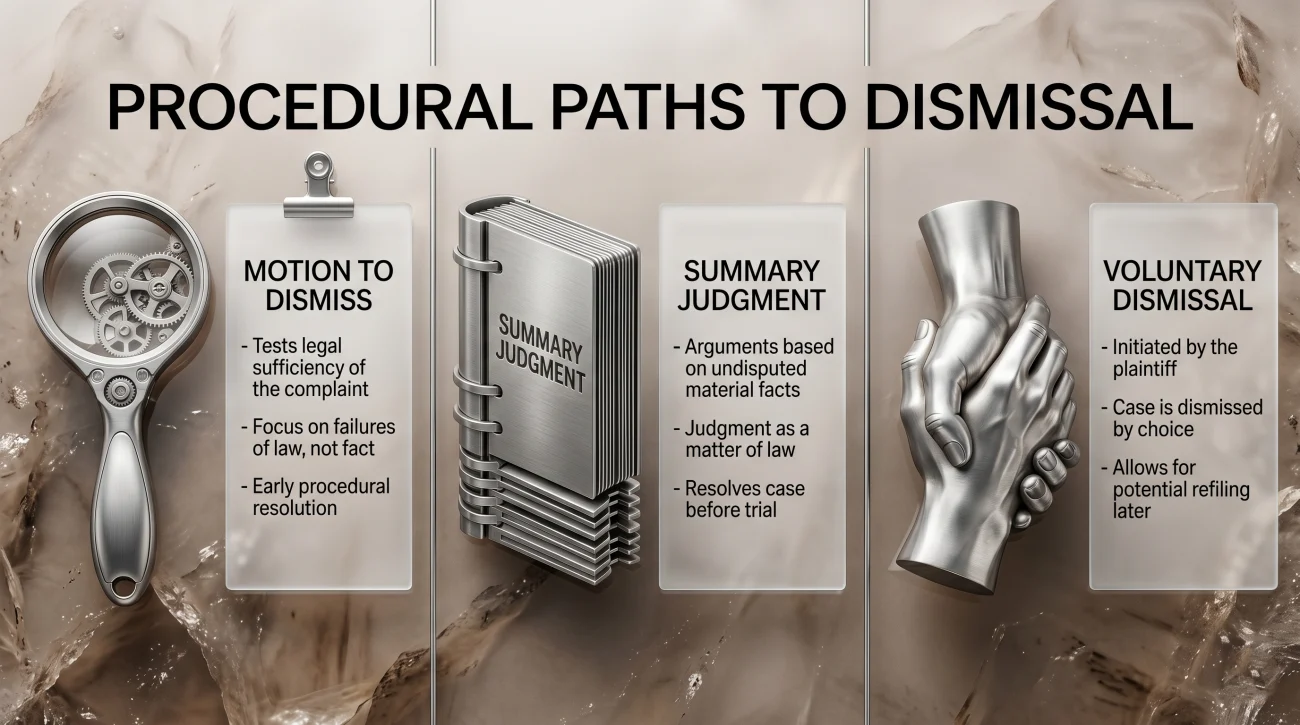
A Motion to Dismiss is a formal request asking the judge to throw the case out very early in the process, usually before you even file a full answer, or alongside it. You file this motion when there is a blatant, undeniable defect on the face of the complaint.
For example, if the complaint clearly shows the debt is ten years old, and your state’s limit is four years, you can file a Motion to Dismiss. The judge looks at the dates, sees the math, and ends the case. However, courts only grant these early motions if the defect is obvious. If the collector argues about the date of your last payment, the judge will deny the motion and force the case to proceed so evidence can be examined.
Motion for Summary Judgment
This path usually opens up later in the lawsuit, after both sides have had a chance to request documents from each other in a phase called discovery. Let us say you challenged the debt buyer’s standing, and you sent them a formal request to produce the original signed contract and the complete chain of title. The deadline passes, and they produce nothing but a generic spreadsheet.
At this point, you can file a Motion for Summary Judgment. You are essentially telling the judge: “Your Honor, we have gone through the discovery phase. The plaintiff has produced absolutely zero evidence to support their claims. There is no need for a trial because they have no proof.” If the judge agrees that the collector’s evidence is totally insufficient, they will dismiss the lawsuit in your favor.
If the judge does not grant summary judgment, or if the collector realizes they are about to lose that motion, the case often takes a sudden turn toward the third procedural path.
The Voluntary Dismissal
This is the most common way contested debt collection lawsuits end, yet it is rarely discussed. A voluntary dismissal happens when the debt collector formally tells the court they are dropping the case of their own free will.
It comes down to simple economics. Debt buyer law firms want cheap, easy default judgments. When you file a strong answer, demand evidence, and raise solid defenses, you become expensive. An attorney has to spend hours reviewing your file, responding to your discovery requests, and preparing for hearings. If you owe $2,500, and it will cost the firm $1,500 in attorney time to fight you, with a high risk of losing because their documentation is weak, the rational business decision is to walk away. Often, a collector will reach out offering a heavily discounted settlement right before they file a voluntary dismissal, trying to extract a few hundred dollars out of a weak case before officially giving up.
| Dismissal Path | When It Happens | Why It Happens |
|---|---|---|
| Motion to Dismiss | Early (Right after you are served) | Obvious legal defect on the paperwork (e.g., clearly expired statute of limitations). |
| Summary Judgment | Middle (After discovery phase) | Collector fails to produce mandatory evidence, making a trial unnecessary. |
| Voluntary Dismissal | Anytime (Often right before trial) | Collector realizes the cost of fighting you exceeds the value of winning, or they know they lack proof. |
Lack of Evidence and the Burden of Proof
A staggering number of debt collection lawsuits are fundamentally flawed from the moment they are filed. According to data highlighted by JG Wentworth, approximately 33% of debt collection lawsuits contain procedural errors, insufficient documentation, or other flaws that can be exploited by informed defendants. When one in three cases contains a fatal flaw, the odds are remarkably high that a debt buyer’s complaint against you is missing a crucial piece of evidence.
Consumers often walk into court feeling terrified because they know they owe the money, and they assume they have to prove they do not owe it. This is entirely backwards. In civil litigation, the collector is the one who brought the lawsuit. Therefore, the collector must prove every single element of their claim.
Weston Legal notes a critical point regarding this dynamic: a debt lawsuit can absolutely be dismissed simply for a lack of evidence. Collectors must prove you owe the debt, that the amount they are demanding is exactly correct to the penny, and that they have the legal ownership required to sue you. When they cannot meet that burden, you have the right to demand the case be tossed.
💡 Pro Tip: Your stance throughout the lawsuit should be simple and repetitive: the plaintiff has the burden of proof, and they have failed to meet it. You are not required to build an elaborate narrative or prove your innocence; you only need to consistently highlight their lack of required evidence.
Signs Your Case Has Strong Dismissal Grounds
If you are staring at a summons right now, the anxiety is likely overwhelming. You need to know if your specific situation actually warrants fighting back to force a dismissal. You do not want to waste time if the collector’s case is airtight. However, if you see the weaknesses in their armor, you need to act aggressively.
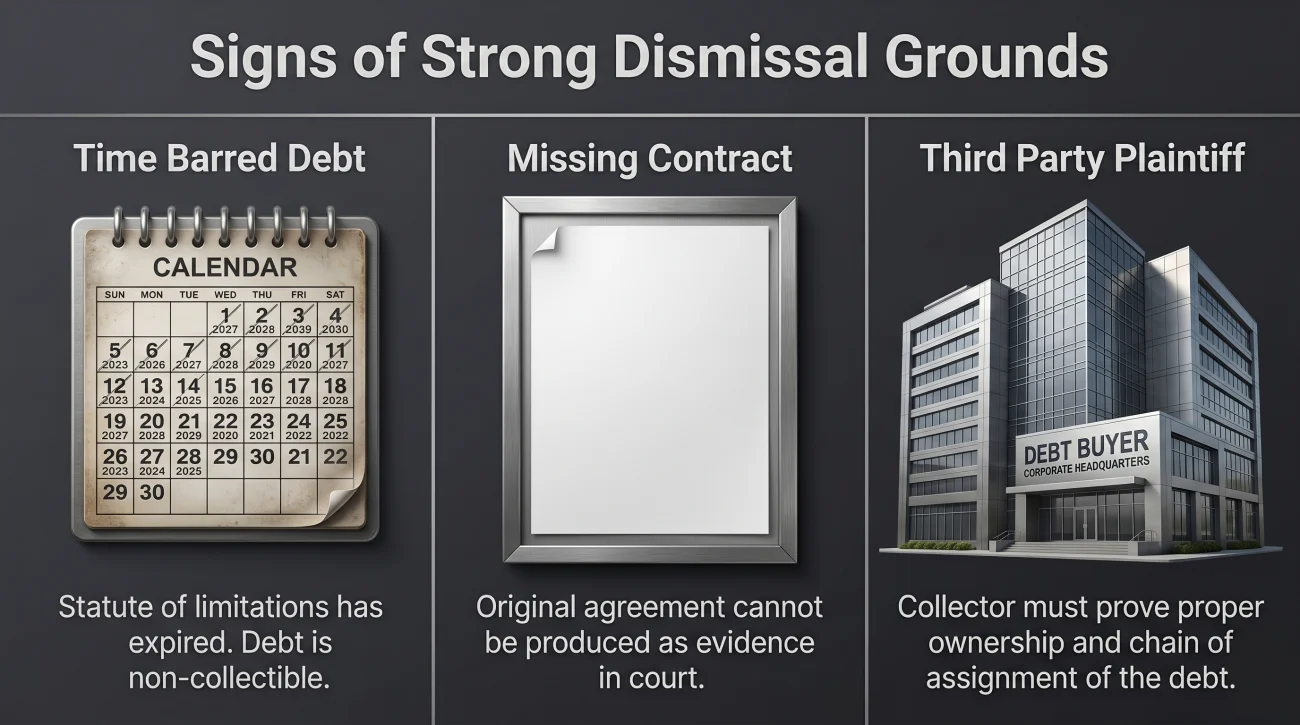
Here are the clear signs that your lawsuit has strong grounds for being thrown out completely:
- 📌 The lawsuit was filed by a third-party debt buyer you have never heard of, not your original bank.
- 📌 The complaint attached a recent billing statement, but completely failed to attach the original signed credit agreement.
- 📌 You know your last payment on the account was made more than four to six years ago.
- 📌 The debt was included in a bankruptcy filing that has already been discharged.
- 📌 You were only an authorized user on the credit card, not the primary account holder who signed the contract.
If any of these apply to your situation, the plaintiff is highly vulnerable. They are hoping you do not recognize these flaws and simply let them take a default judgment. You have real leverage, and you need to use it before the court deadline expires.
Turning Defenses Into Action
Identifying that a collector lacks evidence is only half the battle. To actually get the case thrown out, you have to execute the mechanical steps. First, you must file a written Answer preserving your defenses before the deadline. Second, you must use the discovery phase to formally request their chain of title and original contract. Third, if they fail to produce it, you must file the proper motion asking the judge for a dismissal.
The legal system is unforgiving when it comes to formatting and deadlines. One missed timeline or improperly worded denial can result in an automatic loss, regardless of how weak the collector’s evidence was.
If you have identified multiple grounds for dismissal, or if navigating the procedural rules of discovery and motion filing feels too risky, professional intervention changes the calculus entirely. When a debt buyer sees that you are represented, they know an attorney will demand full documentation and will not miss deadlines. Take a hard look at whether you need a debt lawsuit attorney to step in, manage the procedural hurdles, and execute the dismissal strategy for you.
Final Thoughts on Stopping the Machine
Debt collection litigation is an assembly line. It is designed to process human financial distress into court-ordered judgments as cheaply and quickly as possible. The entire machine relies on speed, volume, and silence from the consumer.
By filing an answer and raising a valid defense, you throw a wrench into that machine. You force an automated process to slow down and require actual human labor, attorney hours, and physical evidence. Once the machine is forced to stop running on autopilot, it often breaks down entirely. Stand your ground, demand that they meet their legal burden of proof, and do not let them win by default.
❓ FAQ
⚖️ Will a judge automatically dismiss my case if the debt is too old?
No. The judge will not calculate the statute of limitations for you. You must actively state this as an affirmative defense in your written answer. If you fail to raise it, the case will proceed, and you could lose.
📄 Does a billing statement prove they own the debt?
No. A billing statement only shows a balance existed at a certain time. It does not prove the specific terms of the contract, nor does it prove that the current debt buyer legally purchased the right to collect from you.
📈 What happens to my credit report if the lawsuit is dismissed?
A dismissal stops the collector from enforcing a judgment, but it does not automatically erase the original delinquent account from your credit report. The original negative mark will typically remain for seven years from the date of your first missed payment.
⏳ How long does it take to get a case thrown out?
If there is an obvious defect, a motion to dismiss can happen within weeks. If you have to wait for the discovery phase to prove they lack evidence, it can take several months before a summary judgment is granted.
📝 Can I write a letter to the judge asking for a dismissal?
No. Judges cannot accept informal letters. You must file a formal legal document, such as an Answer with affirmative defenses, or a formal Motion to Dismiss, following your local court’s formatting rules.
💳 If the lawsuit is dismissed, do I still owe the debt?
It depends on why it was dismissed. If it was dismissed with prejudice due to the statute of limitations, they cannot sue you, but the debt might still exist on paper. If it was dismissed because of mistaken identity, you never owed it.
🤝 Can they still call me after the case is dismissed with prejudice?
While they are legally barred from suing you again for that specific debt, you may still need to send a formal cease and desist letter to stop phone calls or written collection attempts, depending on your state’s laws.
What each stage of litigation requires and where your leverage sits.
- What the lawsuit process looks like from summons to judgment
- What to file, when to file it, and what happens if you do not
- The legal arguments that can defeat a debt collection lawsuit
- What a default judgment allows collectors to do and how to fight one
- How to negotiate a resolution once litigation has started
Once judgment is entered, collectors gain tools they did not have before.
- The FDCPA violations collectors commonly commit during the collection process
- How to respond to a debt lawsuit and what defenses are available to you
- How a judgment becomes a garnishment order on your paycheck
- When a collector uses a judgment to freeze your bank account instead
- How to settle before the judgment turns into something harder to stop
Disclosure: The content on this site reflects direct experience inside the debt collection industry and is grounded in federal law and regulation. It is informational in nature. Reading it does not constitute legal advice and does not create any professional relationship. If you are dealing with a lawsuit, a judgment, or a legal deadline, consult a licensed attorney in your state before acting.