- If you were only an authorized user on a credit card, you are generally not legally responsible for the balance. The primary cardholder holds the liability.
- Debt buyers frequently sue authorized users by mistake because the generic spreadsheets they purchase often fail to distinguish between authorized users and joint account holders.
- Under federal law, the burden of proof is on the collector to show that you actually signed an agreement accepting liability for the account.
- Filing an Answer that raises this specific defense forces the debt buyer to produce the original signed contract, which they rarely have.
- A major exception exists if you live in a community property state and the primary cardholder is your spouse.
Sued for a Card You Didn’t Open: The Authorized User Reality
You checked your mail and found a stack of court papers. Your name is listed as a defendant. The lawsuit is for a credit card balance, but there is a massive problem: it is not your credit card. You remember the account because a parent, a spouse, or a business partner gave you a card with your name on it to buy groceries or cover emergencies. You were just an authorized user. Now, a debt collection agency is trying to force you to pay the entire defaulted balance.
I spent 12 years working inside third-party collection agencies and a national debt buyer. I have seen hundreds of these specific cases cross my desk. Facing an authorized user credit card debt lawsuit is a uniquely frustrating experience because you are staring at a legal document demanding thousands of dollars for an account you never officially opened.
The truth is, when you are sued for authorized user debt, the collector is almost always operating on bad data. They bought a massive portfolio of defaulted accounts, and their system simply grabbed every name attached to an account number and generated lawsuits.
You do not have to pay for someone else’s broken contract. But you cannot simply ignore the court papers and assume the judge will figure it out. If you do nothing, the collector will win by default. You need to understand how this mistake happens, the basic principles that protect you, and exactly how to force the collector to prove a case they cannot win.
Authorized User vs. Joint Account Holder: The Signature That Matters
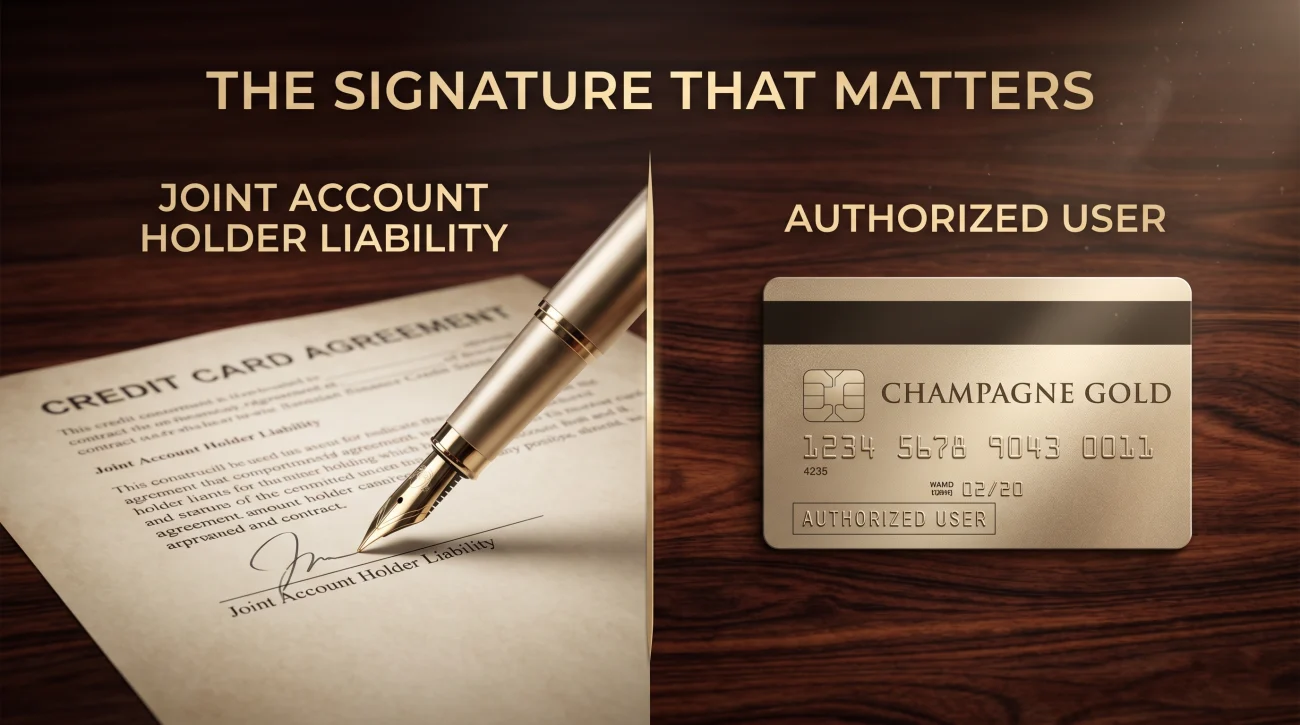
The entire defense against this type of lawsuit rests on one fundamental legal distinction: the difference between an authorized user and a joint account holder. Collectors will frequently blur this line on the phone, hoping you do not know the difference. In court, the difference is everything.
An authorized user is simply someone the primary account holder permitted to use the account. You get a card with your name on it. You can make purchases. But you never signed a credit agreement with the bank. You never submitted an application agreeing to be financially responsible for the balance. The primary cardholder essentially told the bank, “Let this person use my line of credit, and I will pay for it.” Because you never signed a contract, you have no contractual liability to the bank or to the debt buyer who later purchased the account.
A joint account holder, or a cosigner, is entirely different. A joint account holder signed the original credit application alongside the primary borrower. By signing that document, they agreed to share full legal and financial responsibility for the entire debt. If the account defaults, the bank can pursue either person for the full amount.
Signed the credit application. Subject to a hard credit check during approval. Legally bound by the cardmember agreement. Fully liable for the lawsuit.
Did not sign the application. No hard credit check required to be added. Not bound by the financial terms of the cardmember agreement. Not liable for the debt.
If you are certain you never signed an application for this specific account, you are an authorized user, and you are generally not responsible for debt lawsuit claims attached to it. However, the collector’s attorneys will proceed as if you are fully liable until you force them to stop.
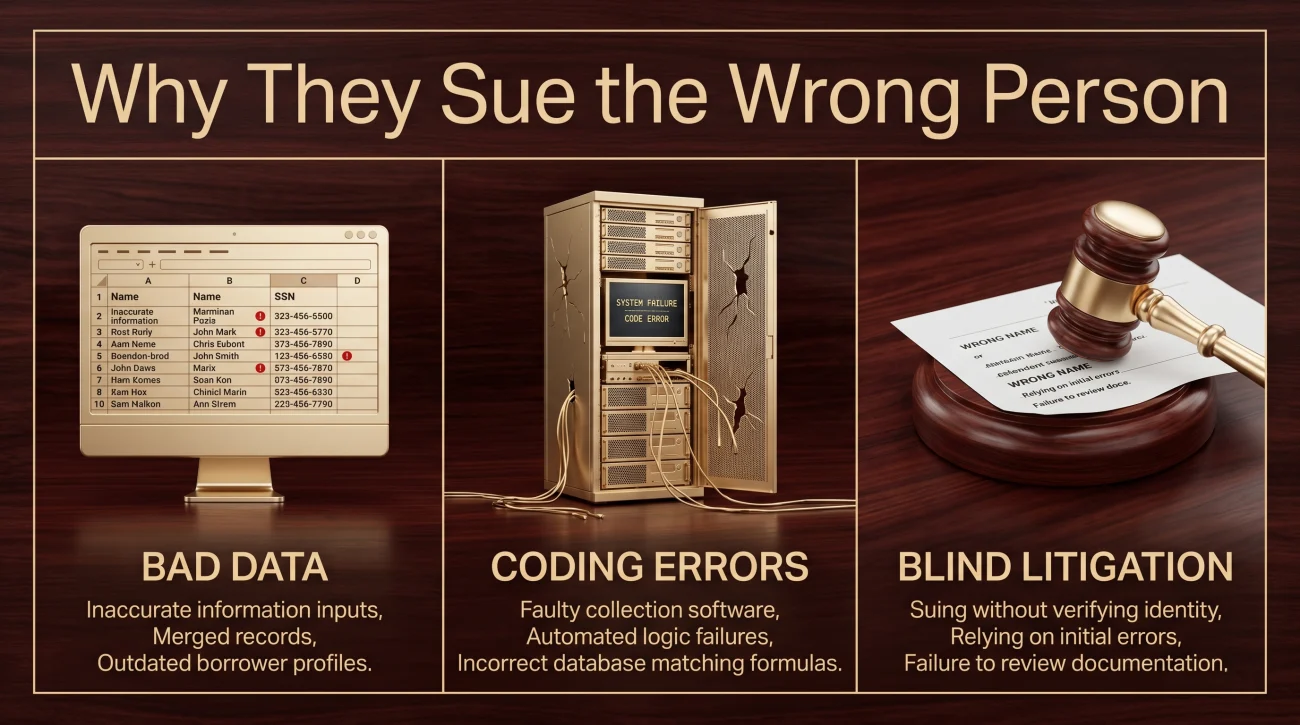
Why Debt Buyers Sue the Wrong Person: The Erroneous Coding Problem
You might be wondering why a sophisticated financial institution or law firm would sue someone who is clearly not legally responsible. The answer is found in how the debt buying industry operates behind closed doors.
When a major bank charges off a credit card, they eventually sell it. They package thousands of defaulted accounts into a portfolio and sell them to a debt buyer for pennies on the dollar. The debt buyer does not receive a massive file cabinet full of original, signed paper applications. They receive a digital spreadsheet.
“In the agencies where I worked, the data we received from debt buyers was incredibly thin. We would look at a screen showing an account number, a balance, a date of last payment, and two names. The system rarely had a specific data field distinguishing an authorized user from a joint account holder. If your name was in the file, our system generated a collection letter and, eventually, a lawsuit.”
This is the erroneous coding problem. Debt buyers frequently misinterpret or miscode the data they receive. Because your name was attached to the account to issue you a physical piece of plastic, your name ends up in the “Name 2” column on their spreadsheet. When the debt buyer’s automated system scrubs that spreadsheet to file mass litigation, it simply pulls “Name 1” and “Name 2” and lists both as defendants.
They are suing you based on a data structure error, not based on verified proof of liability. While this realization makes the lawsuit less intimidating, you still have to navigate the legal process to correct their assumption. You can learn more about how to challenge these data assumptions by reviewing the broader debt collection lawsuit defenses that apply when a collector cannot verify their claims.
The Burden of Proof: Why You Don’t Have to Prove a Negative
When someone is sued as an authorized user on a credit card, their first instinct is usually to start gathering evidence to prove they didn’t sign anything. They spend hours digging through old emails or calling the original bank, trying to prove a negative. You do not have to do this.
In the civil court system, the fundamental rule is that the party filing the lawsuit bears the burden of proof. The debt buyer must step into court and show that the use of the card was authorized by a contract you actually signed.
This means the plaintiff must produce documentation showing you agreed to be financially liable. If you did not sign an application, they cannot produce one. You do not have to prove you were only an authorized user; they have to prove you were a joint account holder. This burden of proof inversion is exactly how you handle situations where a collector is chasing the wrong person, much like the strategies used in a mistaken identity debt collection lawsuit.
How to Raise the Authorized User Defense in Your Answer
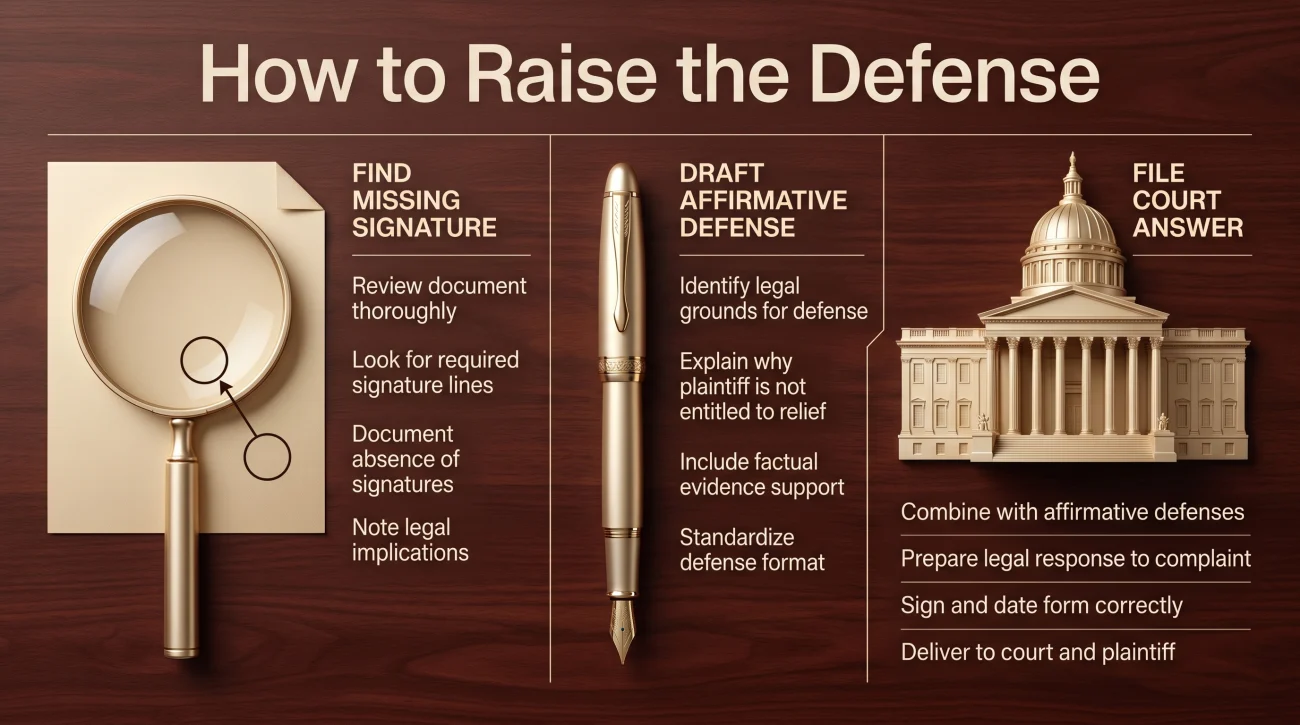
Knowing you are not liable is only the first step. You must formally inject this fact into the legal process. If you receive a summons and complain to the collector on the phone but fail to file a written Answer with the court, the collector will get a default judgment against you. The court assumes everything in the complaint is true unless you formally dispute it.
To protect yourself, you must file a written Answer before the deadline listed on your summons. See our comprehensive guide on being sued by a debt collector to understand exactly how the lawsuit timeline operates.
Inside your Answer, you need to respond to the numbered paragraphs, but you also need to include a section called “Affirmative Defenses.” This is where you raise the authorized user defense. When my former agency received an Answer that clearly pointed out the lack of a signed application, the file usually got pulled from the automated litigation queue for manual review.
When drafting your Affirmative Defenses, you want to be clear and factual. You are stating for the record that you have no contractual liability.
What an Affirmative Defense Should Convey:
Rather than using complex legal jargon, an effective defense conceptually points out that you were merely an authorized user, not a joint account holder or cosigner. It simply states for the record that you never signed a contract agreeing to pay the balance, meaning the collector has no documentation showing you are financially obligated.
By filing this, you have drawn a line in the sand. You have told the court and the plaintiff’s attorney that you know the rules, and you are demanding that they produce a signed contract they do not possess.
Common Mistakes That Accidentally Create Liability
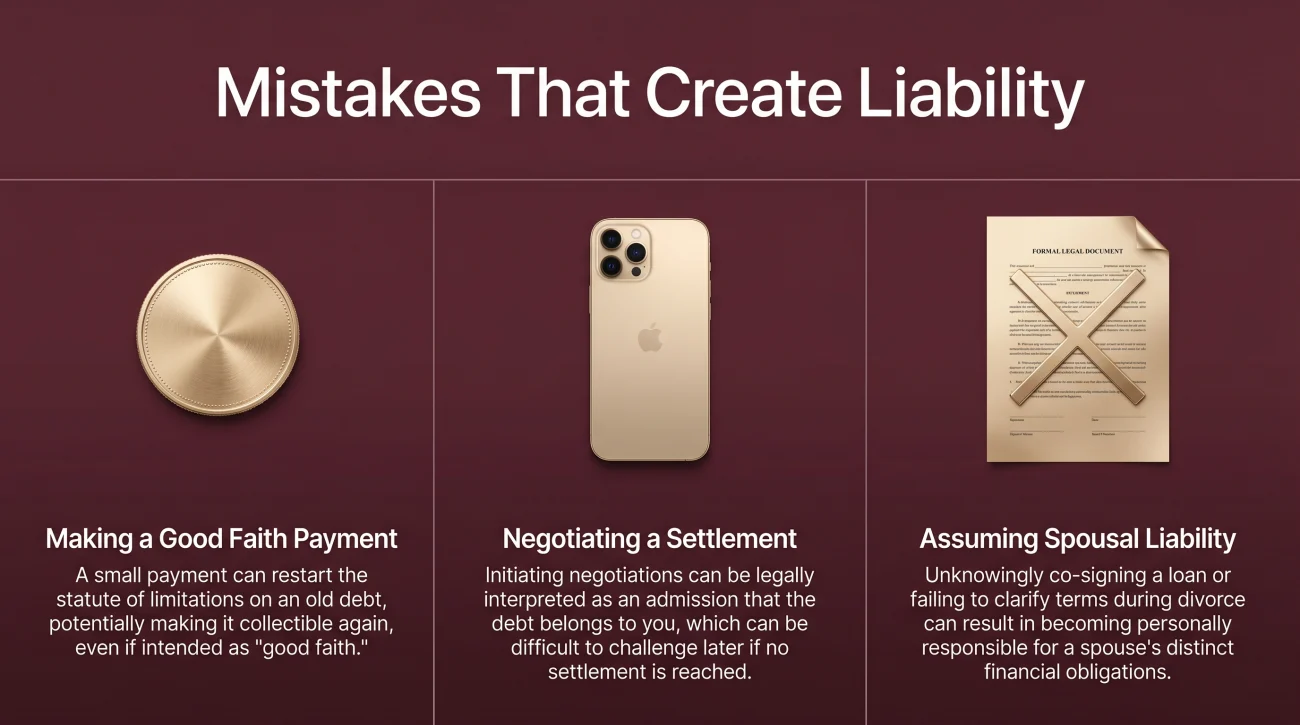
While an authorized user is generally not liable, consumers often make critical errors out of fear that can inadvertently damage their case before discovery even begins. Collectors count on you making these mistakes.
⚠️ Warning: The biggest mistake is making a “good faith” payment to make the collector go away. On the collection floor, if a panicked consumer offered $50 just to make the calls stop, it was often viewed internally as an admission of liability. In some jurisdictions, making a payment on an account can be argued as an acknowledgment of the debt.
Another common mistake is trying to negotiate a settlement. If you tell the plaintiff’s attorney, “I know I’m an authorized user, but I’ll give you $500 to drop this,” you are acting like someone who owes the money. If you do not owe the debt, you should not be negotiating to pay it. Your stance should remain firm: you lack contractual liability, and the case should be dismissed.
Finally, do not assume that because the primary cardholder is a family member, you must protect them by taking the fall. The debt buyer has a legal process to follow. If they sued the wrong person, it is their responsibility to correct it. Do not let collection pressure force you into assuming a legal burden that is not yours.
What Happens in Discovery to Force a Dismissal
After you file your Answer raising the authorized user defense, the case moves into a phase called discovery. This is where both sides can formally request documents from each other. This is your opportunity to dismantle the debt buyer’s case entirely.
Because they sued you based on a spreadsheet error, their legal file is likely empty when it comes to actual contracts bearing your signature. During discovery, the focus typically shifts to finding the single piece of evidence that matters: your signature.
In a typical case, defendants look for the original, signed credit card application, any cardmember agreement bearing their signature, or internal bank records that clearly distinguish an authorized user from a joint account holder.
When a debt buyer is forced to look for these documents, their attorney knows they have a problem. They will review their file and see that they have nothing connecting you to financial liability. They might try to send you a generic billing statement with your name printed on it. This is a common bluff. A billing statement simply shows a balance; it does not prove you agreed to pay it. We cover this specific bluff extensively in our guide on the debt buyer no original contract defense.
Faced with a defendant who demands the original application, many debt buyers will voluntarily dismiss the lawsuit against the authorized user rather than spend more money trying to prove an unwinnable case.
The Community Property State Exception
There is one massive exception to the authorized user defense, and it requires careful attention. If the primary cardholder is your spouse, and you live in a community property state, the rules change significantly.
Community property states generally include Arizona, California, Idaho, Louisiana, Nevada, New Mexico, Texas, Washington, and Wisconsin. In these states, debts incurred by one spouse during the marriage are often considered community debt, meaning both spouses share the financial responsibility, regardless of whose name is technically on the contract.
If you fall into this category, the simple authorized user defense may fail. The debt buyer could argue that under state family law, the debt belongs to the marital community. If you are dealing with spousal debt in one of these states, you need to evaluate the case differently. You should still force the collector to prove they actually own the debt, which you can do by challenging their documentation, as explained in our guide on lack of standing in debt collection lawsuits, but you cannot rely solely on the authorized user argument.
Signs This Defense Fits Your Lawsuit (And When to Act)
If you are holding a summons right now, you need to evaluate the facts quickly. The clock on your response deadline is ticking. You are likely in a strong position to use the authorized user defense if several of the following conditions apply to your case:
- You remember being handed the card by a parent, child, or former business partner, but you specifically recall never filling out an application or providing your Social Security number to the bank for approval.
- The lawsuit complaint lists two defendants (you and the primary cardholder), but the attached documents only show billing statements, not a signed contract.
- The plaintiff suing you is a third-party debt buyer (like Midland Funding, Portfolio Recovery, or Jefferson Capital) rather than the original bank that issued the card.
- The account does not appear on your personal credit report as a joint account, or it appears clearly marked with “Authorized User” status.
- You do not live in a community property state, or the primary cardholder is not your spouse.
If these signs align with your situation, you have a highly defensible case. Do not let the formal appearance of court documents convince you to surrender to a clerical error. If you are facing a tight deadline, dealing with a particularly aggressive debt buyer, or if you simply want an expert to force the dismissal for you, you need to know what to do if you need professional help challenging a lawsuit before the window to answer closes.
Final Thoughts: Stand Firm on the Facts
Being pulled into a lawsuit for an account you didn’t open is alarming, but once you realize it stems from a systemic data error, the path forward becomes clear. The debt collection model relies on the assumption that you will be too intimidated to fight back. By filing a factual Answer and challenging their documentation, you dismantle that assumption. Stand your ground, refuse to negotiate a debt you do not legally owe, and force the system to correct its mistake.
❓ FAQ
💳 Can an authorized user be sued for credit card debt?
Yes, debt collectors frequently sue authorized users, but usually by mistake. Because their automated systems often cannot tell the difference between an authorized user and a joint account holder, they sue anyone whose name is attached to the file. However, being sued does not mean you are legally liable.
✍️ Do I need to find my old account documents to win?
No. A common mistake is spending hours trying to dig up old records to prove you didn’t sign anything. In civil court, you do not have to prove a negative. The debt collector is the one bringing the lawsuit, which means they are required to produce the signed contract proving you accepted financial responsibility.
📄 What should I say in my Answer to the court?
You should include an affirmative defense stating that you were an authorized user, not a joint account holder or cosigner. You must state clearly that you never signed a credit agreement obligating you to pay the balance and demand that the plaintiff provide strict proof of your contractual liability.
💍 Am I responsible if the primary cardholder is my spouse?
It depends on where you live. If you live in a community property state (like Texas, California, or Arizona) and the debt was incurred during your marriage, you may be held liable regardless of your authorized user status. In common law states, the authorized user defense generally still protects you.
📞 Should I call the collection agency and explain the mistake?
No. If you have been served with a lawsuit, calling the agency will not stop the legal process, and anything you say can be used against you. You must file a written Answer with the court. An informal phone call does not protect you from a default judgment.
📉 Will being sued as an authorized user ruin my credit?
If the account goes to a default judgment because you do not respond, the public record could impact you. However, as an authorized user, you can also dispute the account directly with the credit bureaus to have it removed from your report entirely, as you are not financially responsible for it.
💸 Should I just pay a settlement to make the lawsuit go away?
No. If you are truly an authorized user and not a spouse in a community property state, you owe nothing. Paying a settlement validates their error and costs you money you are not legally obligated to pay. Fight the lawsuit by demanding they produce the signed contract.
⚖️ What happens if the debt buyer can’t produce the original application?
If you request the original signed application during the discovery phase and the debt buyer cannot produce it, they cannot establish your legal liability. In most cases, the debt buyer will voluntarily dismiss the lawsuit rather than go to trial with zero evidence.
📬 What if the original cardholder passed away?
The death of the primary cardholder does not transfer liability to an authorized user. The debt belongs to the deceased person’s estate. Collectors may pressure you to pay, but unless you signed as a joint account holder, you are not responsible for the deceased person’s credit card balance.
🛑 Can a billing statement prove I am liable?
No. A billing statement simply shows a balance and a name; it is not a contract. Debt buyers often try to submit billing statements as proof of liability, but courts generally require the original signed cardmember agreement to prove that you actually agreed to the terms and accepted responsibility for the debt.
What each stage of litigation requires and where your leverage sits.
- What the lawsuit process looks like from summons to judgment
- What to file, when to file it, and what happens if you do not
- The legal arguments that can defeat a debt collection lawsuit
- What a default judgment allows collectors to do and how to fight one
- How to negotiate a resolution once litigation has started
Once judgment is entered, collectors gain tools they did not have before.
- The FDCPA violations collectors commonly commit during the collection process
- How to respond to a debt lawsuit and what defenses are available to you
- How a judgment becomes a garnishment order on your paycheck
- When a collector uses a judgment to freeze your bank account instead
- How to settle before the judgment turns into something harder to stop
Disclosure: The content on this site reflects direct experience inside the debt collection industry and is grounded in federal law and regulation. It is informational in nature. Reading it does not constitute legal advice and does not create any professional relationship. If you are dealing with a lawsuit, a judgment, or a legal deadline, consult a licensed attorney in your state before acting.