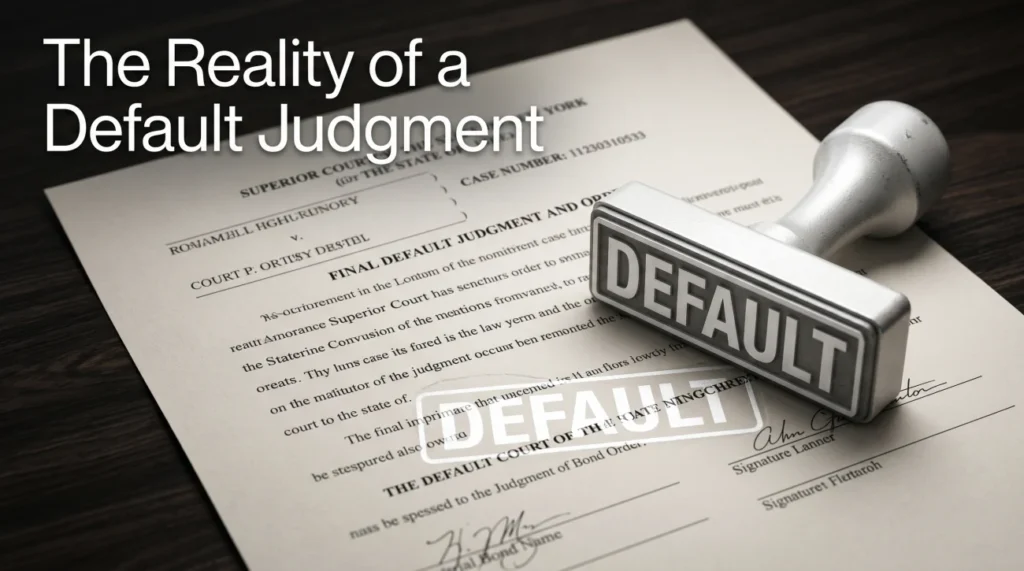
- A default judgment occurs when a debt collector wins their lawsuit automatically because you did not file a response by the deadline.
- This transforms an unverified debt claim into a powerful court order, granting the collector the right to garnish wages, freeze bank accounts, and place liens on property.
- In the portfolios I managed, we mathematically expected 70 to 90 percent of lawsuits to end in default. It is a business model built entirely on consumer inaction.
- You can sometimes vacate or undo a default judgment if you prove a valid legal reason, such as never being properly served with the lawsuit papers.
When Silence Costs You Everything: The Reality of Default Judgments
In my 12 years working inside third-party collection agencies and debt buying firms, the most celebrated days on the collection floor had nothing to do with successful negotiations. The biggest wins came when the court clerk returned a stack of stamped papers confirming our default judgments. With those signatures, accounts that were completely stalled suddenly became enforceable court orders.
A debt collection default judgment is what happens when a collector sues you and you do not show up to fight back. It is the worst possible outcome for a consumer, yet it is exactly how the vast majority of debt lawsuits end.
Most people who receive a lawsuit summons feel paralyzed. They assume that because they recognize the original creditor’s name, they have no defense. They think ignoring the papers will delay the process, or that the judge will somehow notice if the collector’s paperwork is flawed. That is not how the civil court system works.
When you do not respond, the court assumes you agree with everything the collector is claiming. The judge does not demand to see the original contract. They do not check if the statute of limitations has expired. They simply hand the collector a default judgment. Understanding what this judgment actually enables, why collectors rely on it so heavily, and how you might still be able to fight it is critical if you want to protect your paycheck and your bank account.
How a Default Judgment Actually Happens
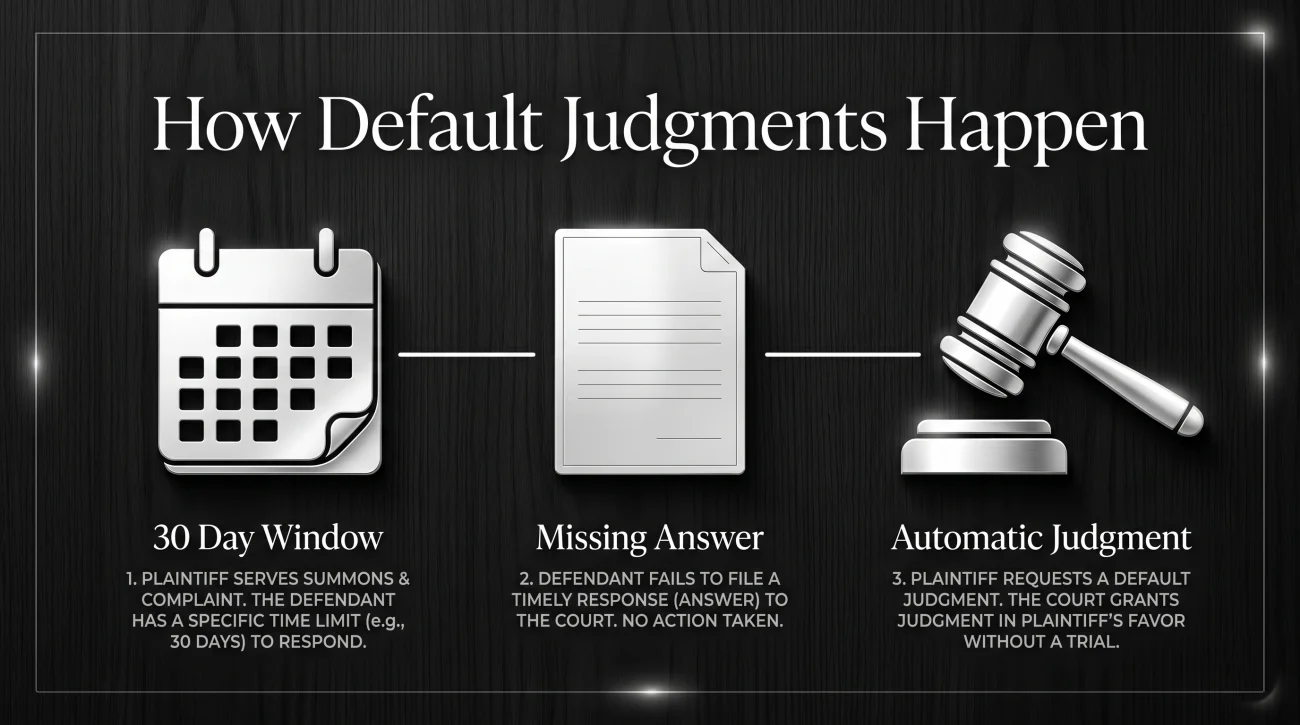
A default judgment does not appear out of thin air. It is the final step in a specific procedural sequence that relies entirely on your inaction.
The process begins when the collector files a complaint with the court and serves you with a summons. You are given a strict deadline to file a written response, usually 14 to 30 days depending on your state. When that window closes without you filing an Answer, the collector’s attorney simply submits a Motion for Default Judgment to the court.
“Inside the agency, we tracked response deadlines religiously. The moment day 31 hit on a 30-day summons, the file was moved to the default queue. We knew that once we filed that motion, we rarely had to produce a single piece of original documentation to win the case.”
The judge reviews the motion, sees that you failed to respond, and signs the order. At that exact moment, the collector’s unverified claim transforms into a legally binding judgment. If you had filed even a basic response, you would have forced them to prove their case. For a guide on what that initial response looks like, see how to respond to a debt collection lawsuit.
The 70% Default Rate: A Business Model, Not a Legal Outcome
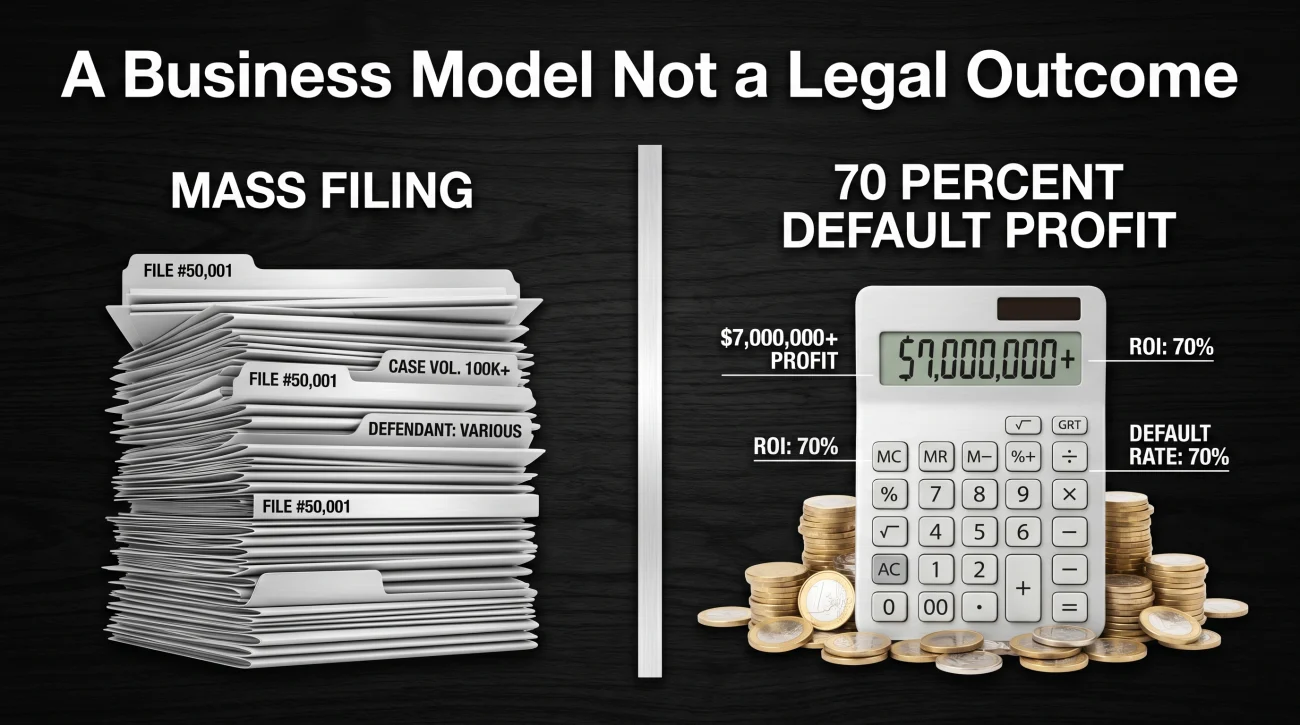
To understand why default judgments are so dangerous, you need to understand the economics of the debt buying industry. When a debt buyer purchases a portfolio of old credit card accounts, they pay pennies on the dollar. They receive a spreadsheet with names, addresses, and balances. They rarely receive the original signed contracts or complete billing histories.
If they had to go to trial and prove their case for every single account, their business model would collapse. Litigation is expensive. Gathering evidence is time-consuming. Instead, they file lawsuits in massive volumes.
In every portfolio of old accounts I reviewed, we mathematically expected between 70 and 90 percent of consumers to ignore the lawsuit. This is the most important concept you can grasp: a default judgment is a business model. It is a mathematical bet that you will be too intimidated or too confused to file a piece of paper. When you understand that the collector is actually counting on your absence because they lack the documentation to beat you in a fair fight, your perspective on the lawsuit changes entirely.
If you want to know exactly what kind of documentation they are usually missing, review the common debt collection lawsuit defenses that expose these weaknesses.
What a Default Judgment Gives the Collector
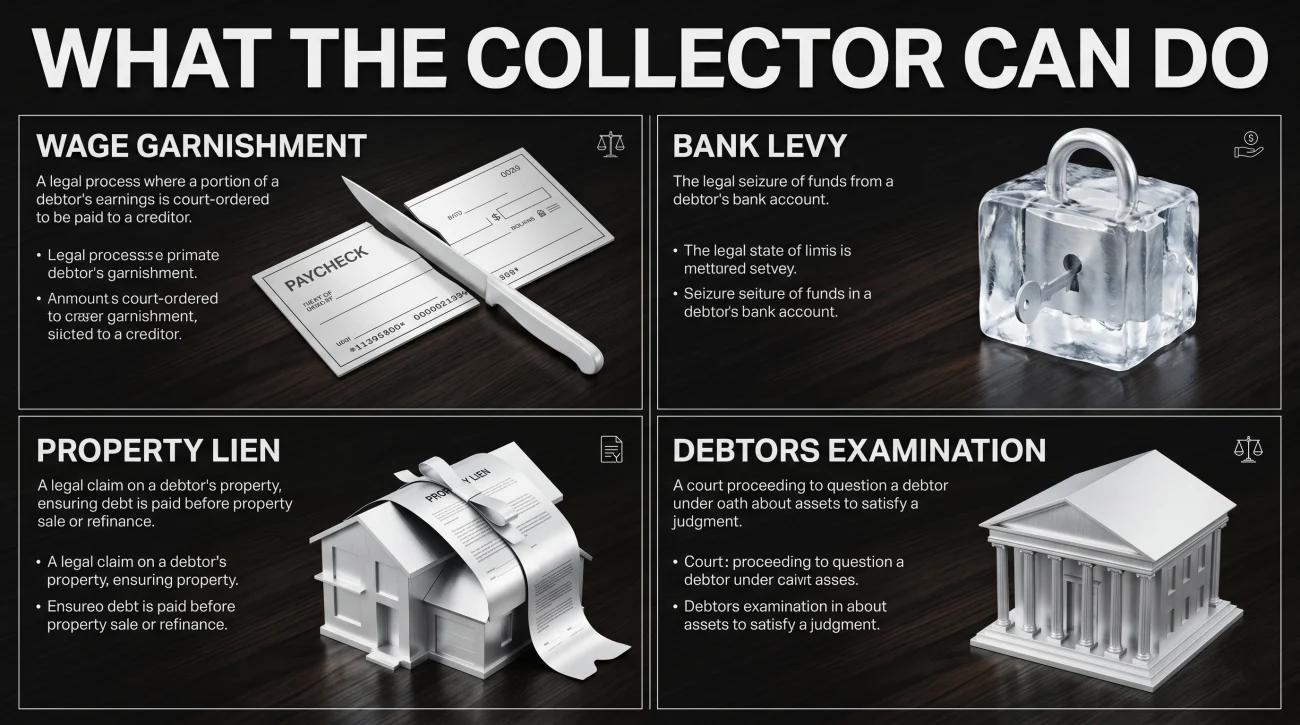
Before a judgment is entered, a debt collector has very little actual power. They can call you, send letters, and report the account to credit bureaus. They cannot force you to pay.
The moment a default judgment is signed, that dynamic flips. The collector is granted aggressive enforcement tools by the state. From the collection floor, these tools were our ultimate leverage because we no longer had to ask for your money. We could simply take it.
- 📌 Wage Garnishment: Instead of calling to demand a payment, the collector obtains a court order directing your employer to withhold a percentage of your paycheck and send it directly to them. Under federal law, this is often up to 25% of your disposable earnings.
- 📌 Bank Account Levies: This was the most effective immediate weapon. We would serve an order on your bank, freezing your account and transferring the funds to satisfy the judgment. This usually happens without any advance warning to you.
- 📌 Property Liens: This is a long-term waiting game. The collector records the judgment in your county, placing a lien on your home. It prevents you from selling or refinancing the property until the judgment is paid out of the proceeds.
- 📌 Debtor’s Examinations: This is a heavy psychological tool. The court orders you to appear under oath and answer questions about where you work, where you bank, and what assets you own. Ignoring this summons is not just a missed meeting. It can lead to a bench warrant for contempt of court.
Furthermore, judgments grow. In most states, post-judgment interest begins accruing immediately. A $4,000 default judgment can easily grow to $6,000 over a few years of statutory interest additions.
Can You Get Out of It? How to Vacate a Default Judgment
Discovering a default judgment against you is terrifying, but it is not always permanent. Courts can “vacate” or erase the judgment, which rewinds the clock and gives you the opportunity to file an Answer and defend yourself. However, you must prove specific legal grounds to get this second chance.
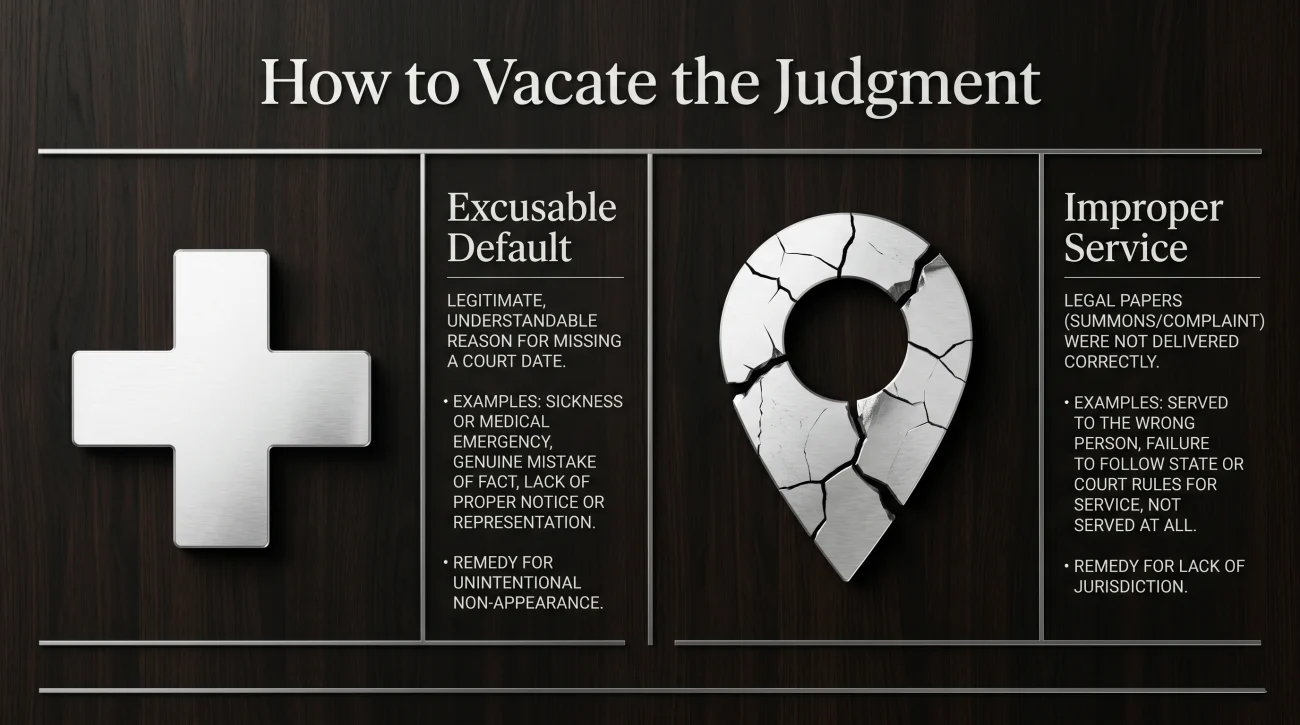
Excusable Default
You can ask the court to vacate the judgment if you had a valid, unavoidable reason for missing the deadline. Examples include a severe medical emergency, being deployed on active military duty, or a major family crisis. For excusable default, courts generally require you to prove two things: your valid reason for missing the deadline, AND that you have a meritorious defense against the debt itself. You have to show the judge that if given the chance, you actually have a valid argument to make.
Lack of Personal Jurisdiction (Improper Service)
This is the most common and powerful ground for vacating a judgment. If the collector never served you with the lawsuit papers properly, the court never had legal authority over you in the first place. “Sewer service” is a documented industry practice where process servers falsely claim they delivered papers. If you can prove you lived in a different state, were out of the country, or the physical description on the service affidavit does not match anyone in your household, the judge must vacate the judgment.
⚠️ Warning: The clock is ticking. In many states, you only have a short window (often 30 days to 6 months) from the date you discover the judgment to file a motion to vacate based on excusable default. Jurisdictional challenges often have longer or no time limits, but acting immediately is always the safest route.
The “Judgment Proof” Reality and Its Limits
Many consumers panic over a default judgment without realizing that the collector still might not be able to take anything from them. If your financial situation is protected by law, you may be what is commonly called “judgment proof.”
Federal and state laws exempt certain types of income from garnishment and levy. If your only source of income is Social Security, disability benefits, veterans benefits, or unemployment, a collector cannot legally take those funds to satisfy a consumer debt judgment. Additionally, if you do not own a home and have no significant assets, the collector holds a piece of paper that they cannot currently enforce.
However, judgment proof is a temporary status, not a permanent identity. The judgment does not disappear. Judgments typically last 10 to 20 years depending on your state, and collectors can usually renew them before they expire. If you are judgment proof today but get a well-paying job or inherit money five years from now, the collector will be waiting with an actively accruing judgment ready to garnish your new wages.
If Your Wages Are Already Being Garnished
If you first learned about a default judgment because your employer notified you of a wage garnishment, you are in a financial emergency. The worst thing you can do is wait to see how much they take. You have three primary paths to stop the bleeding.
First, immediately check your state’s exemption laws. If the garnishment is dipping into protected income or pushing your take-home pay below the poverty threshold protected by your state, you must file a claim of exemption with the court right away. Second, if you were never properly served with the original lawsuit, you can file an emergency motion to vacate the judgment. In many courts, filing this motion will temporarily halt the garnishment while the judge reviews your case. Finally, you can attempt to settle the debt collection lawsuit directly with the collector’s attorney, offering a lump sum to release the garnishment order.
Signs the Judgment Was Improperly Obtained
If you just discovered a default judgment on your record, your first step should be to request a copy of the entire case file from the court clerk. Look closely at how the collector won the case. You may have strong grounds to challenge the judgment if you spot any of the following flaws:
- ⚠️ The service record is suspicious: You pulled the court docket and the “Affidavit of Service” describes papers being handed to someone who does not match the physical description of anyone in your household.
- 📋 The address was wrong: The court records show that all legal notices and the summons were mailed to an apartment or house you moved out of years prior to the lawsuit.
- ❌ The math does not make sense: The default judgment was granted for an amount significantly higher than your original balance, packed with unexplained collection fees or unauthorized interest rates.
- ⚖️ The plaintiff is a stranger: The judgment is held by a debt buyer you do not recognize, and the court file contains no original signed contract linking you to the debt.
If you spot these issues, the judgment is vulnerable. The most effective step you can take next is consulting a debt lawsuit attorney who knows how to navigate the local court’s vacate procedures and expose these documentation failures.
Final: The Illusion of Absolute Power
A default judgment gives a debt collector immense legal authority, but it is often built on a fragile foundation. They did not win because they had an airtight case with perfect documentation. They won because you were not there to ask for proof.
The moment you step back into the process, whether by claiming your legal exemptions, filing a motion to vacate based on improper service, or forcing a post-judgment settlement negotiation, you shatter the illusion that they hold all the cards. The system is intimidating by design, but it has rules. Learning how those rules actually apply to your situation is how you protect your livelihood.
Specific Default Judgment Guides and Next Steps
Because a default judgment triggers so many different aggressive collection tactics, resolving your situation depends entirely on what the collector is doing right now. A frozen bank account requires a different response than a property lien. To help you navigate your exact problem, I have organized detailed guides covering every phase of the default judgment aftermath. Find the scenario that matches your situation below to learn exactly what to do next.
| Topic & Guide | What You Will Learn |
|---|---|
| What Is a Default Judgment? | The exact timeline of how courts grant these judgments and the specific legal powers they hand over to the debt collector. |
| How to Vacate a Default Judgment | The legal process to completely undo a judgment, reopen your case, and the specific grounds (like improper service) courts require. |
| Missed the Deadline? Read This First | What happens in the critical window right after you miss the response deadline but before the judge actually signs the final order. |
| Understanding Wage Garnishment | How paycheck deductions work, the strict federal limits on how much they can take, and the notice your employer must provide. |
| Income Exempt From Garnishment | The specific types of federal benefits and protected income that collectors are legally forbidden from taking. |
| Handling a Bank Account Levy | Why your account was frozen without warning, the 21-day holding window, and how to file emergency exemption claims. |
| Judgment Liens on Property | How collectors place a hold on your real estate, what it blocks you from doing, and why they rarely force you to sell your home. |
| How Long Does a Judgment Last? | The dangerous reality of judgment renewal windows, and how compounding interest can double your debt over time. |
| Settling After a Judgment | How to negotiate a lump-sum payoff to release a garnishment or levy, and why the terms are tougher than before the lawsuit. |
| The “Judgment Proof” Status | How to determine if you have no legally attachable assets or income, rendering the collector’s judgment practically useless. |
| How to Stop an Active Garnishment | The four actionable paths to halt deductions that have already started hitting your paycheck. |
| The Debtor’s Examination | What to expect when the court orders you to reveal your assets under oath, and the severe risks of ignoring the summons. |
❓ FAQ
🕵️♂️ How do collectors find my bank account to freeze it?
Collectors use skip tracing databases, but their easiest method is looking at your own history. If you ever wrote a personal check to the original creditor, or made an online payment from a checking account before you defaulted, that routing and account number is in your file.
🗺️ Can a default judgment from one state follow me to another?
Yes. If a collector wins a judgment against you in one state and you move, they can file a process called “domestication of a foreign judgment” in your new state. Once domesticated, they can use your new state’s laws to garnish wages or levy accounts there.
📉 Will vacating the judgment fix my credit score?
Not necessarily. While vacating the judgment removes the legal court order, the underlying delinquent account will likely still remain on your credit report. Civil judgments themselves were removed from credit reports by the major bureaus in 2017, but the original unpaid debt history is separate.
🧑⚖️ Can I go to jail for an unpaid default judgment?
No, you cannot be sent to jail simply for failing to pay a civil debt judgment. However, if the court orders you to appear for a debtor’s examination and you ignore the order, the judge can issue a bench warrant for contempt of court.
💳 Does filing for bankruptcy wipe out a default judgment?
In most cases involving consumer debt like credit cards or medical bills, yes. Filing for Chapter 7 or Chapter 13 bankruptcy triggers an automatic stay that halts garnishments, and a successful discharge will wipe out the underlying debt, rendering the judgment void.
👀 Is a default judgment a matter of public record?
Yes. Court judgments are public records. While they no longer appear on standard credit reports, they will show up in background checks, public record searches, and specialized reports used by landlords and some mortgage lenders.
🛑 Can I still negotiate a settlement if my wages are already being garnished?
Yes, but your leverage is much lower. Once a collector has an active garnishment, they are receiving guaranteed payments. To convince them to stop the garnishment, you usually need to offer a significant lump-sum payment that gives them the money faster than the garnishment would.
🏠 What happens to a judgment lien if I never sell my house?
The lien sits on the property and continues to accrue statutory interest. If you never sell, the lien must eventually be addressed if you try to refinance your mortgage, or it will become an encumbrance on your estate that your heirs must deal with if the property is passed down.
🚫 What if the default judgment is for a debt created by identity theft?
If the debt was fraudulent, you have strong grounds to file a motion to vacate the judgment. You will need to provide documentation such as an FTC Identity Theft Report and a police report to prove to the court that you never opened the account in question.
⏱️ Does making a payment on a judgment restart how long it lasts?
Unlike the statute of limitations on a regular debt, a court judgment has a fixed lifespan set by state law (often 10 to 20 years). Making a payment reduces the balance but does not typically change the expiration date of the judgment itself, though collectors can easily file to renew the judgment before it expires.
What each stage of litigation requires and where your leverage sits.
- What the lawsuit process looks like from summons to judgment
- What to file, when to file it, and what happens if you do not
- The legal arguments that can defeat a debt collection lawsuit
- What a default judgment allows collectors to do and how to fight one
- How to negotiate a resolution once litigation has started
Once judgment is entered, collectors gain tools they did not have before.
- The FDCPA violations collectors commonly commit during the collection process
- How to respond to a debt lawsuit and what defenses are available to you
- How a judgment becomes a garnishment order on your paycheck
- When a collector uses a judgment to freeze your bank account instead
- How to settle before the judgment turns into something harder to stop
Disclosure: The content on this site reflects direct experience inside the debt collection industry and is grounded in federal law and regulation. It is informational in nature. Reading it does not constitute legal advice and does not create any professional relationship. If you are dealing with a lawsuit, a judgment, or a legal deadline, consult a licensed attorney in your state before acting.