Federal Student Loan Wage Garnishment: How Administrative Garnishment Works and Why 2025-2026 Changes Everything

Federal Student Loan Wage Garnishment

The Department of Education does not need a court judgment to garnish your wages. They use an administrative process that bypasses the local court system entirely. Federal student loan garnishment is limited to 15 percent of your disposable earnings, which is lower than the standard limit for consumer debts. You have exactly 30 days from … Read more

Child Support Wage Garnishment: Why the Rules Are Different – and What You Can Actually Do

Child Support Wage Garnishment

Child support wage garnishment does not require a court lawsuit or a trial to begin; an Income Withholding Order is issued automatically by state agencies. Federal law allows child support to take up to 65 percent of your disposable earnings, which is drastically higher than the 25 percent limit for standard consumer debts. Filing for … Read more

Wage Garnishment Limits by State: Which States Protect More Than Federal Law Requires

Wage Garnishment Limits By State

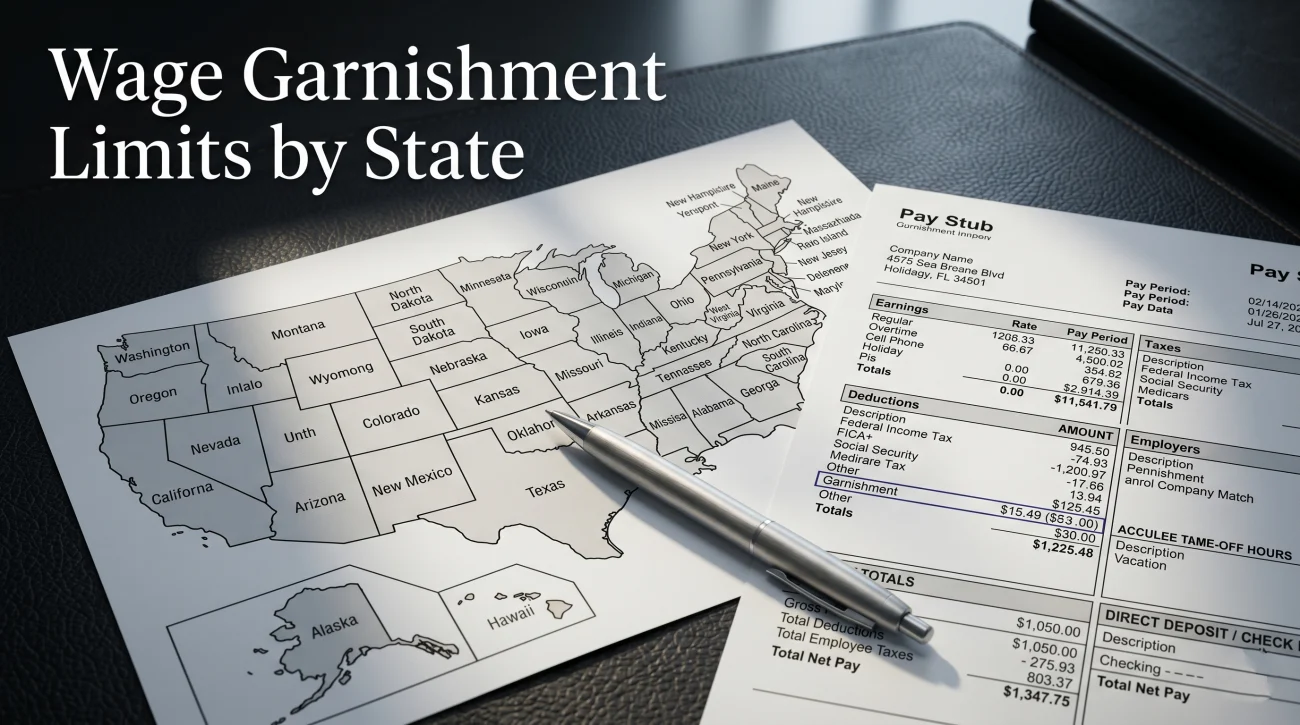
Federal law caps consumer wage garnishment at 25 percent of your disposable earnings, but many states have passed laws to lower that limit and protect more of your paycheck. When state laws conflict with federal laws regarding garnishment limits, your employer is legally required to use whichever calculation leaves you with more take-home pay. Four … Read more

States That Don’t Allow Wage Garnishment for Consumer Debt

States That Prohibit Wage Garnishment

Texas, Pennsylvania, North Carolina, and South Carolina generally prohibit wage garnishment for standard consumer debts like credit cards and medical bills. This protection only applies to your paycheck. Once that money is deposited into your bank account, a creditor can still freeze the account and seize the funds. Government debts completely bypass these state laws. … Read more

How Much of Your Wages Can Be Garnished? The 25% Rule and When It Doesn’t Apply

How Much Wages Can Be Garnished

The amount garnished is not based on your final take-home pay. It is calculated using a specific legal definition called “disposable earnings,” which only excludes legally required tax deductions. Voluntary deductions like health insurance premiums and 401k contributions do not protect your wages. The court considers that money available for debt collection. For consumer debt, … Read more

Types of Wage Garnishment: Why the Debt Type Changes Everything About Your Options

Types Of Wage Garnishment

The type of debt you owe is the single most important factor in a wage garnishment, dictating how much warning you get and what percentage of your check is taken. Private creditors must sue you and win a court judgment before they can touch your paycheck, but government agencies can garnish your wages administratively without … Read more

How Wage Garnishment Works: From Judgment to Paycheck Deduction

How Wage Garnishment Works

Wage garnishment is not a single event; it is a rigid legal process that starts long before the money leaves your paycheck. For consumer debts, a collector must win a lawsuit first. For government debts, they bypass the courts entirely. Your employer receives the legal order before you do. They have no legal choice but … Read more