Debt Collector Adding Fees You Don’t Owe: What’s Permitted and What’s an FDCPA Violation
Debt Collector Adding Fees Not In Contract

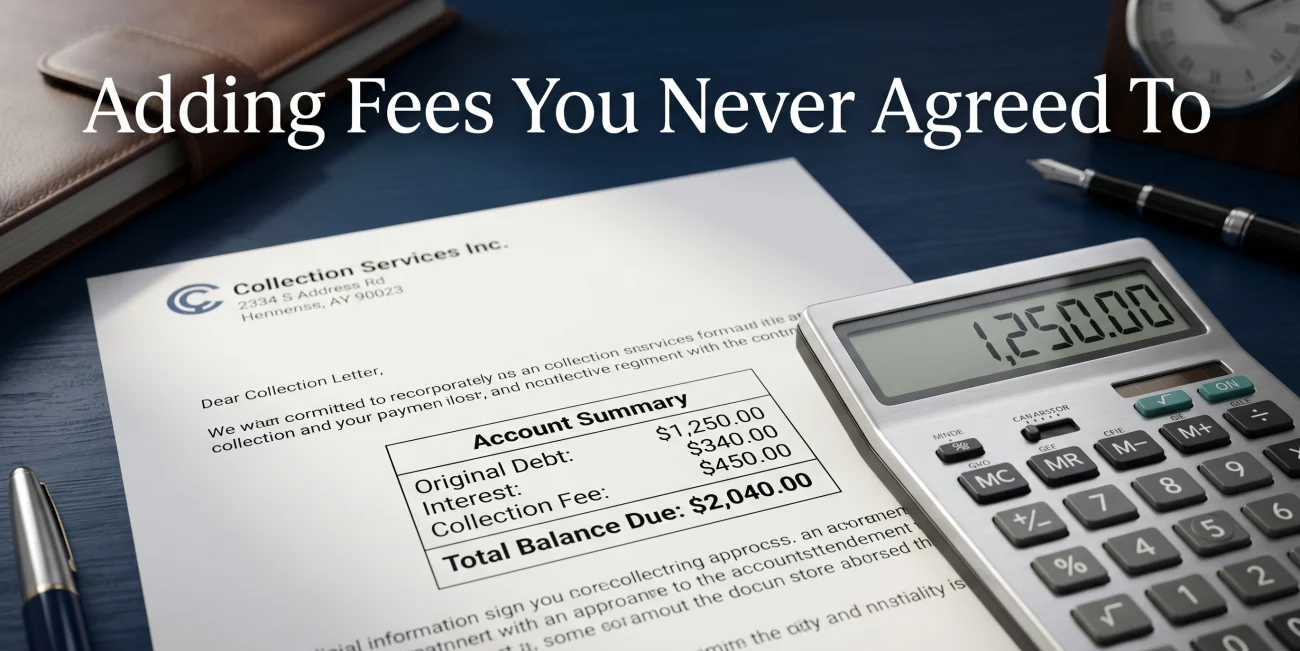
Debt collectors can only charge fees or interest that were explicitly authorized by your original credit agreement or permitted by state law. Adding unauthorized charges like generic “collection fees” or “handling fees” is a direct violation of the Fair Debt Collection Practices Act (FDCPA). Debt buyers frequently purchase accounts without the original signed contract, meaning … Read more
Can You Sue a Debt Collector? How FDCPA Lawsuits Work

Can You Sue A Debt Collector

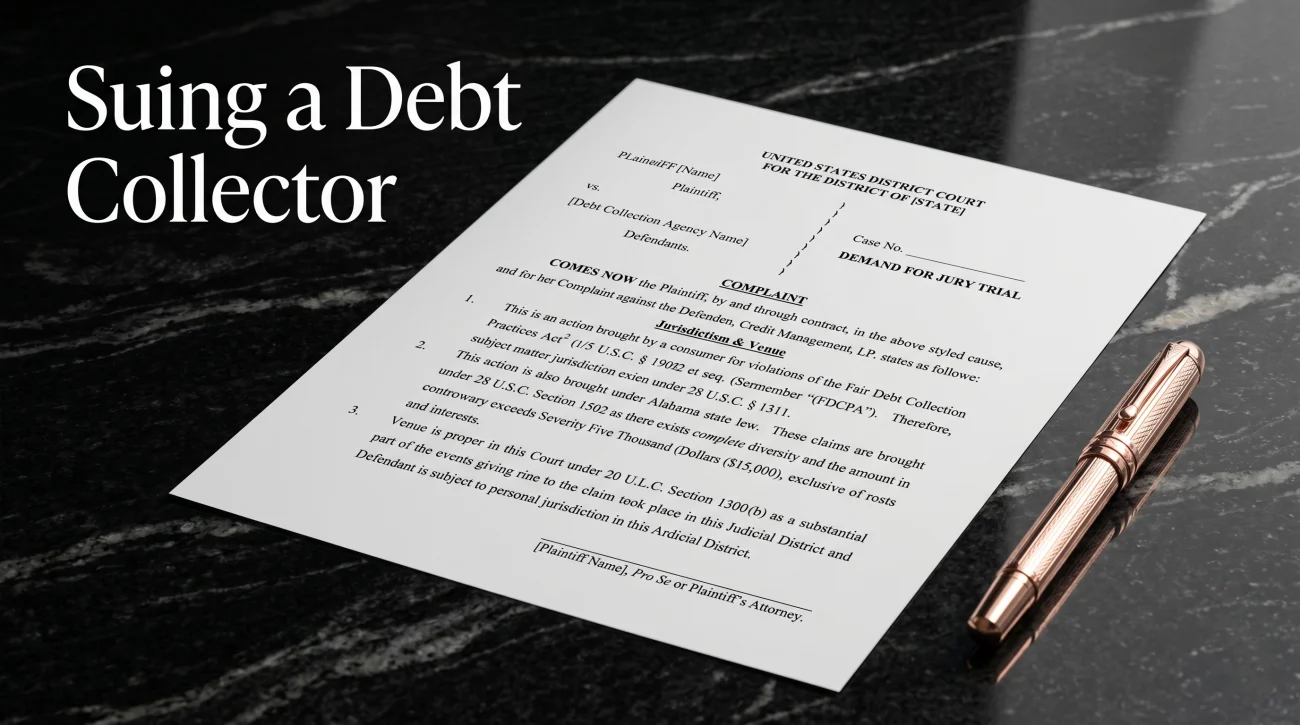
You can sue a debt collector for violating federal law (the FDCPA), and it often costs you nothing out of pocket because the law forces the collector to pay your attorney fees if you win. You can recover up to $1,000 in statutory damages per lawsuit, plus actual damages (like lost wages or therapy costs) … Read more

Debt Collector Still Calling After Your Cease and Desist Letter: What Every Call Is Worth Now

Debt Collector Ignoring Cease And Desist

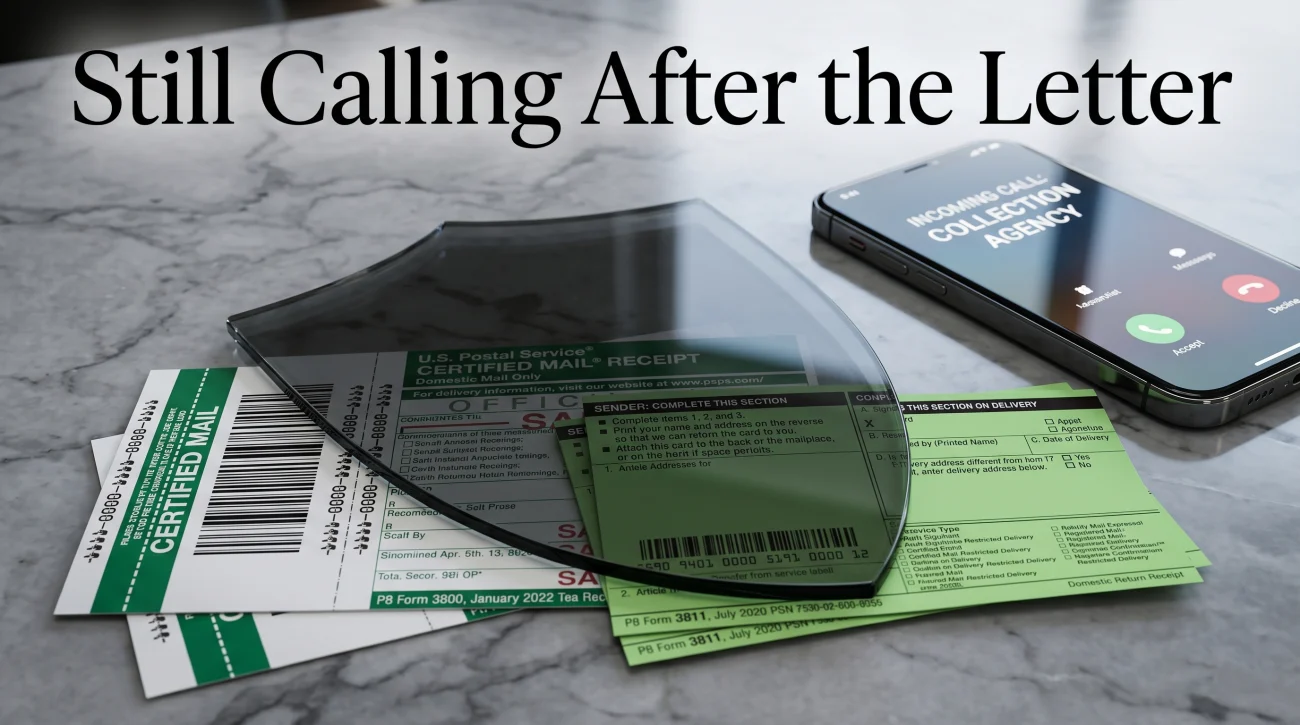
When a debt collector keeps calling after receiving your written cease and desist letter, they are handing you documented federal violations. Each contact after a written stop request is a violation of the FDCPA, which can entitle you to statutory damages and leverage in your case. Collectors often continue calling due to internal system lags, … Read more

FDCPA Counterclaim in a Debt Collection Lawsuit: When Their Violations Become Your Leverage

FDCPA Counterclaim Debt Collection Lawsuit

Filing an FDCPA counterclaim allows you to sue the debt collector back within the same lawsuit they filed against you. If the collector violated federal law during the collection process, you can demand actual damages, up to $1,000 in statutory damages, and attorney fees. A counterclaim drastically shifts the settlement leverage, as the collector now … Read more

Debt Collector Provided No Validation Notice? What This Violation Means

Debt Collector No Validation Notice

By federal law, a debt collector must send you a written validation notice within five days of their first communication with you. While mailroom errors happen, failing to send this notice is often a calculated tactic and a documentable FDCPA violation. Missing this notice means your 30-day window to dispute the debt never legally started, … Read more

Wrong Amount in a Debt Collection Lawsuit: How to Challenge Unauthorized Fees and Inflated Balances

Wrong Amount Debt Collection Lawsuit Defense

You can dispute the amount a debt collector is suing you for without denying that a debt exists, and this is a complete defense against the inflated portion of their claim. Debt buyer lawsuit balances are frequently inflated with unauthorized post-default interest and collection fees that the original contract never allowed. Under the FDCPA, collectors … Read more

Debt Collector Calling the Wrong Person? How to Make Them Stop

Debt Collector Calling Wrong Person

Telling an agent they have the wrong number usually fails because automated dialing systems do not update across the entire collection floor based on one conversation. Consumer protection rules prohibit agencies from repeatedly calling your number once you have clearly stated you are not the debtor. To stop the calls, you need to transition from … Read more

Debt Collector Told Your Employer About Your Debt: This Is a Clear FDCPA Violation

Debt Collector Told My Employer About My Debt

It is a clear violation of federal law for a debt collector to tell your employer, manager, or coworkers that you owe a debt. While collectors can call your workplace to verify your employment status or ask for your contact information, the moment they disclose the nature of the call, they cross a legal line. … Read more

Debt Collector Impersonating an Attorney: What Is and Isn’t Legal

Debt Collector Impersonating Attorney

Attorneys can legally collect debts, but a debt collector cannot falsely claim to be an attorney or imply a lawyer has reviewed your file if they have not. Sending a “meaningless attorney letter” where a lawyer’s name is stamped on a mass mailing without actual legal review is a violation of federal law. If a … Read more

Debt Collector Threatening to Sue You: When It’s a Bluff and When It’s Real

Debt Collector Threatening Lawsuit

A debt collector threatening a lawsuit without the actual intent or legal ability to file one is committing a federal violation under the FDCPA. Lawsuit threats are often a bluff for small balances (under $1,000) or very old debt, driven by the fact that court costs exceed the potential recovery. Threats are usually real when … Read more