- Most major credit card agreements contain an arbitration clause that forces disputes out of a public courtroom and into a private arbitration forum.
- Debt buyers often drop lawsuits when forced into arbitration because the private filing fees (often $2,000 to $4,000) completely erase their potential profit.
- Filing a Motion to Compel Arbitration must be done early in the lawsuit process to avoid accidentally waiving your right to use this powerful defense.
The Fine Print That Can Neutralize a Collection Lawsuit
When you are served with a debt collection lawsuit, the environment feels entirely designed to work against you. The collector has an attorney and the court system on their side, relying on the fact that you likely do not know civil procedure. But if the lawsuit is based on a credit card debt, there is a very high probability that the original creditor embedded a specific rule in the fine print of your account agreement called an arbitration clause. This guide will explain exactly how this clause functions, why it changes the financial reality for the debt buyer, and how you can raise it as a defense.
Originally, banks put arbitration clauses into their contracts to protect themselves from massive consumer class action lawsuits. They wanted to force individual consumers into private, out-of-court proceedings. However, in the context of a third-party debt collection lawsuit, this corporate shield can be turned into one of the most effective consumer defense strategies available.
During my twelve years working inside the debt collection industry, I watched debt buyer law firms process thousands of lawsuit files a week. They rely on cheap, volume-based litigation. When a consumer effectively forces a case out of the local courthouse and into private arbitration, it breaks the mathematical formula that makes debt buying profitable. The strategy does not rely on proving the debt is fake. It relies on making the debt too expensive to collect.
Understanding the Arbitration Clause
To use this strategy, you first need to understand what you are actually invoking. An arbitration clause is a legally binding provision within a contract that requires both parties to resolve any disputes through a private arbitrator rather than a public court of law.
Most major credit card issuers, including Chase, Capital One, Citibank, Discover, and Bank of America, include mandatory arbitration clauses in their standard cardmember agreements. When you opened the account and used the card, you legally agreed to these terms.
The critical factor in a debt collection lawsuit is that the arbitration clause travels with the debt. When an original creditor sells a charged-off account to a debt buyer, the buyer inherits both the rights and the restrictions of the original contract. If the original contract dictates that disputes must be handled in arbitration, the debt buyer is legally bound by that requirement. They cannot selectively enforce the parts of the contract that demand payment while ignoring the parts that restrict how that payment is collected.
How to Find Your Specific Agreement
A common hurdle for consumers is that they no longer have the original paperwork from an account they opened five or ten years ago. Fortunately, you do not need your personal paper copy to prove the clause exists.
The Consumer Financial Protection Bureau (CFPB) maintains a comprehensive, public database of credit card agreements. You can search this database by the issuer’s name and the approximate year the account was active. By retrieving the standard agreement that was in effect during your account’s lifespan, you can locate the exact arbitration language and use it as evidence in your legal response.
The Insider Economics: Why Arbitration Wins Cases
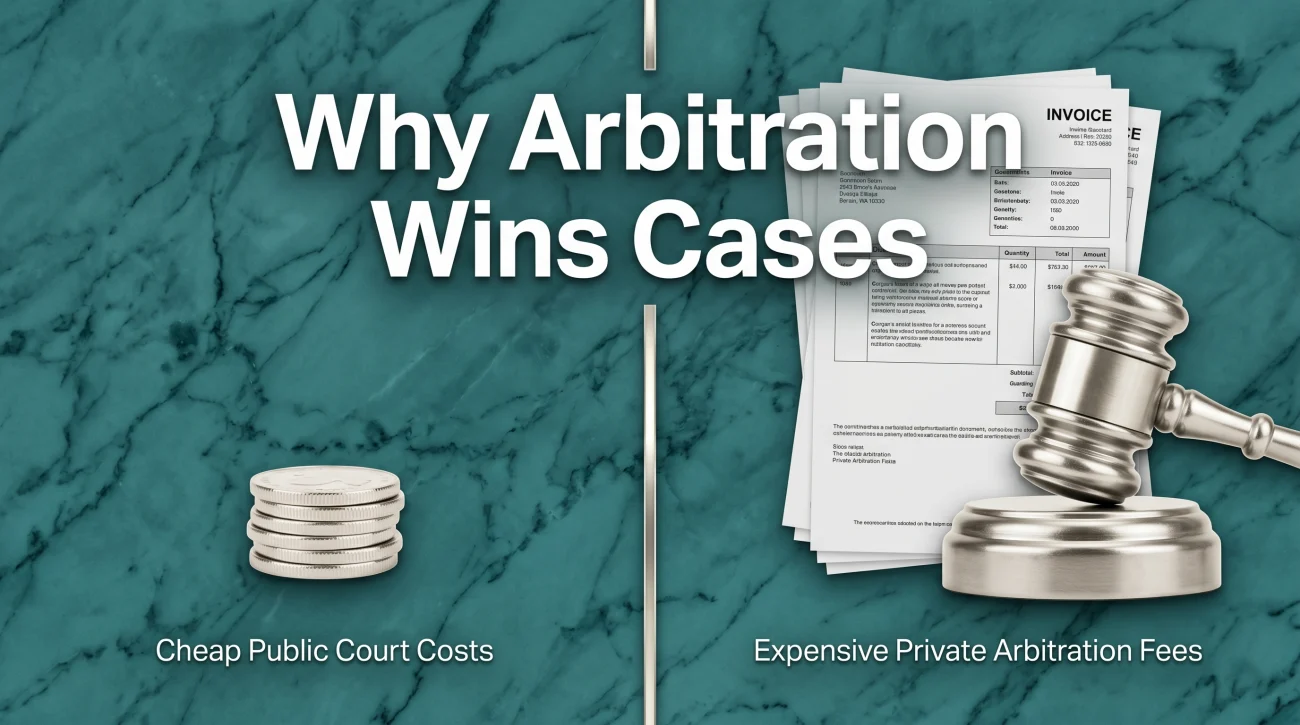
To fully grasp why filing a motion to compel arbitration is so effective, you must look at the lawsuit the way the debt buyer looks at it. It is entirely about return on investment.
Debt buyers purchase portfolios of defaulted accounts for pennies on the dollar. A $4,000 credit card balance might have cost the debt buyer $200 to acquire. Filing a civil lawsuit in a local county court is highly efficient for them. The court filing fee is typically between $50 and $150. Because the vast majority of consumers fail to respond, the debt buyer routinely secures a default judgment. They spend a couple of hundred dollars to win the legal right to garnish thousands.
“When I reviewed contested accounts for litigation viability, a consumer invoking arbitration was an immediate red flag. We were set up to litigate cheaply in bulk. Arbitration forums are not cheap, and they are not built for bulk. The moment a case was successfully pushed to arbitration, the cost to proceed often exceeded the actual face value of the debt we were trying to collect.”
Private arbitration forums, such as the American Arbitration Association (AAA) or JAMS, charge significant administrative and arbitrator fees. Unlike a local courthouse heavily subsidized by taxpayers, these are private businesses.
Crucially, most consumer credit agreements and consumer arbitration rules state that the business entity initiating or responding to the claim must pay the vast majority of these fees. The consumer’s fee is usually capped at a nominal amount, often around $250. The debt buyer, however, can be required to pay filing fees, case management fees, and hourly arbitrator fees that quickly escalate.
As noted by consumer defense firms analyzing this tactic, bringing a debt collection lawsuit in a local court is cheap. But in arbitration, the debt buyer often has to pay $2,000 to $4,000 in upfront fees. Furthermore, unlike in a standard court case, the debt buyer frequently cannot recover these specific administrative costs in the final arbitration award.
If a debt buyer is suing you for a $3,500 balance, spending $3,000 in non-recoverable arbitration fees to chase that money is terrible business math. Faced with this reality, many debt buyers will simply walk away.
How to Invoke the Strategy in Court
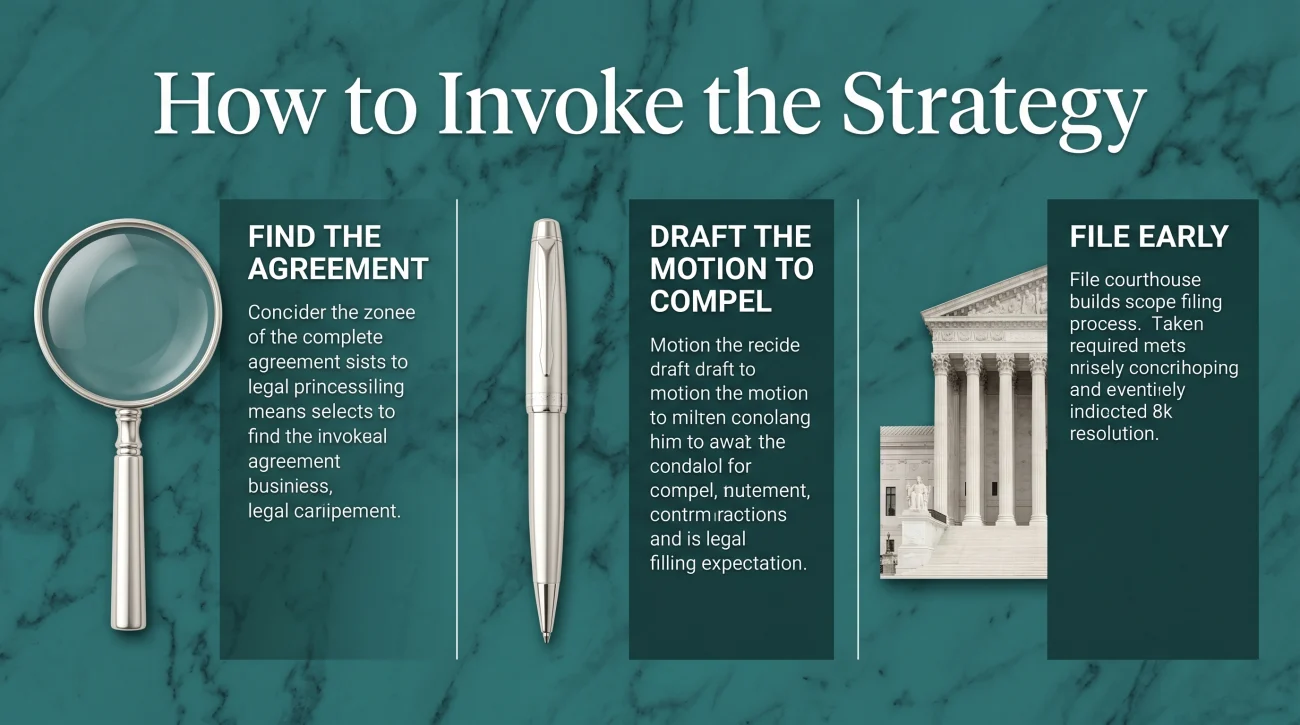
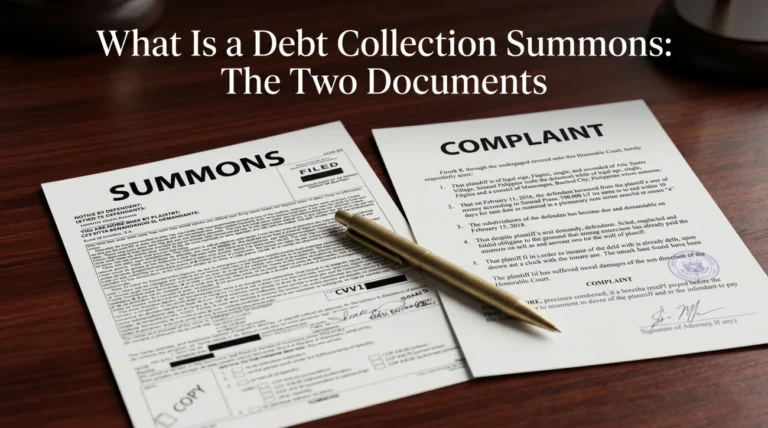
Knowing that the debt buyer wants to avoid arbitration is only half the battle; you still have to legally force them into it. You cannot simply tell the collector over the phone that you want to switch venues. Because they have already filed a lawsuit against you in a public court, you must formally ask the judge to enforce the contract and remove the case from their courtroom.
This is accomplished by filing a formal legal document called a Motion to Compel Arbitration.
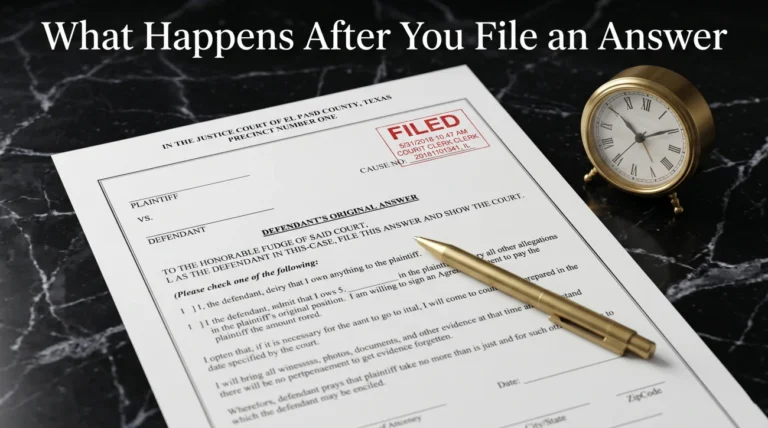
To effectively invoke this defense, the motion is typically filed either simultaneously with your initial Answer to the lawsuit or very shortly after. Your filing should include a copy of the credit card agreement containing the arbitration clause, a statement demonstrating that the current lawsuit falls under the scope of that clause, and a specific request that the judge halt the current court proceedings.
What Happens When the Motion is Granted
Winning this motion shifts the entire balance of power, but it does not mean the lawsuit simply vanishes overnight. When a court agrees that the arbitration clause is valid, they generally do not throw the case in the trash immediately.
If the motion is granted, the court does not dismiss the case outright. Instead, the lawsuit is abated. This means the court puts the lawsuit on pause indefinitely while the dispute is sent over to the arbitration forum for resolution.
At this point, the burden shifts back to the debt buyer. They must now formally initiate the claim with AAA or JAMS and pay the hefty initiation fees. In many cases, the debt buyer simply refuses to pay the invoice from the arbitration forum. If they fail to initiate the arbitration within a reasonable timeframe, you or your attorney can return to the judge, point out that the plaintiff abandoned the process, and request that the abated lawsuit be permanently dismissed.
Limitations and The Risk of Waiver
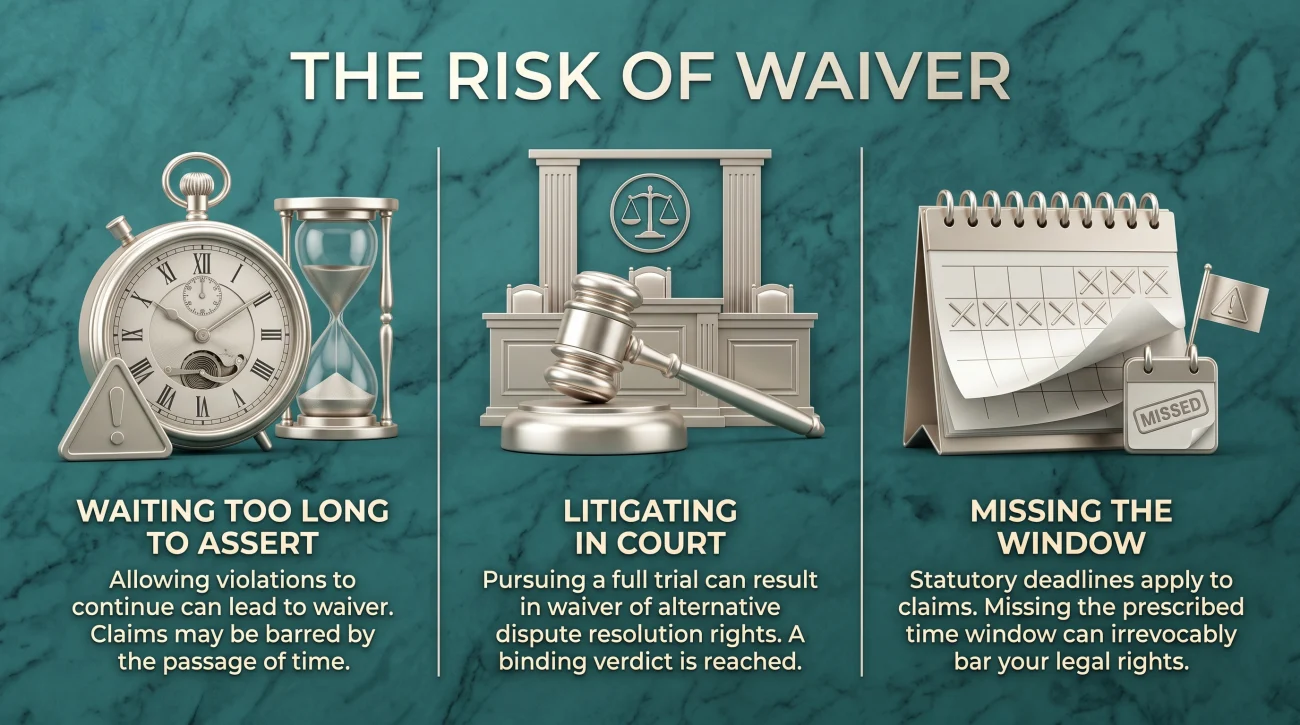
While forcing arbitration is an incredibly potent defense, it is not a magic loophole that works in every single scenario. You must be aware of the limitations before relying entirely on this strategy to protect your assets.
First, not all credit card agreements contain an arbitration clause. Certain credit unions and specific banks have removed them from their contracts. If the clause does not exist in the agreement that governed your account, you cannot invent it. Additionally, if the original creditor sent an updated terms of service notice that added an arbitration clause, and you opted out of that clause by sending a letter within the allowed timeframe, the protection does not apply.
The most dangerous risk, however, is the concept of waiver. You can lose your right to compel arbitration if you wait too long to ask for it.
⚠️ Warning: If you actively participate in the court lawsuit for months, file various discovery motions, and wait until the eve of trial to suddenly demand arbitration, the judge will likely deny your request. You will be deemed to have “waived” your arbitration rights by choosing to litigate in court.
Recent federal court rulings have tightened this window. Appellate courts have increasingly emphasized that a party who engages in litigation behavior that prejudices the other side cannot suddenly pull the ripcord and demand arbitration later.
If you intend to use the arbitration defense, you must assert it at the very beginning of your case. It should be one of the primary defenses you raise when responding to the lawsuit.
Finally, arbitration is not a guaranteed victory. If the debt buyer decides the balance is large enough to justify the fees, they may pay them and proceed. At that point, you will face an arbitrator. Arbitrators can and do rule in favor of debt collectors if the collector produces valid evidence. The strategy relies on the economic deterrent, not on an automatic legal victory.
When to Use the Arbitration Strategy
Being served with lawsuit papers triggers immediate anxiety. You may be wondering if you should try to fight the case using an arbitration strategy or if you should look for other options. Evaluating your specific situation against the math of arbitration is the best way to decide.
The arbitration strategy is highly viable and worth immediate exploration if your situation matches these specific criteria:
- The debt is a major credit card: The account originated from a large national bank known for arbitration clauses, such as Chase, Citibank, or Capital One.
- The plaintiff is a debt buyer: The company suing you is a third-party purchaser (like Midland Funding, Portfolio Recovery, or LVNV) rather than the original bank. Debt buyers are far more sensitive to the unrecoverable costs of arbitration than original creditors.
- The balance is relatively low: The amount claimed in the lawsuit is under $10,000. When the balance is low, the steep upfront costs of a private forum represent a massive, unacceptable loss for the collector. If you are being sued for $40,000, the collector may gladly pay the fee to protect their potential judgment.
- You are early in the process: You have just received the summons or are currently preparing your initial Answer. You have not yet engaged in lengthy court hearings or deep discovery.
If your case fits these parameters, an arbitration demand could be the leverage you need to stall the collector’s momentum. However, drafting a proper Motion to Compel Arbitration requires precise legal formatting and an understanding of your local court’s rules.
If you need assistance analyzing your credit agreement and filing the necessary motions to protect your rights, exploring professional legal representation is the safest next step.
Combining Arbitration with Other Defenses
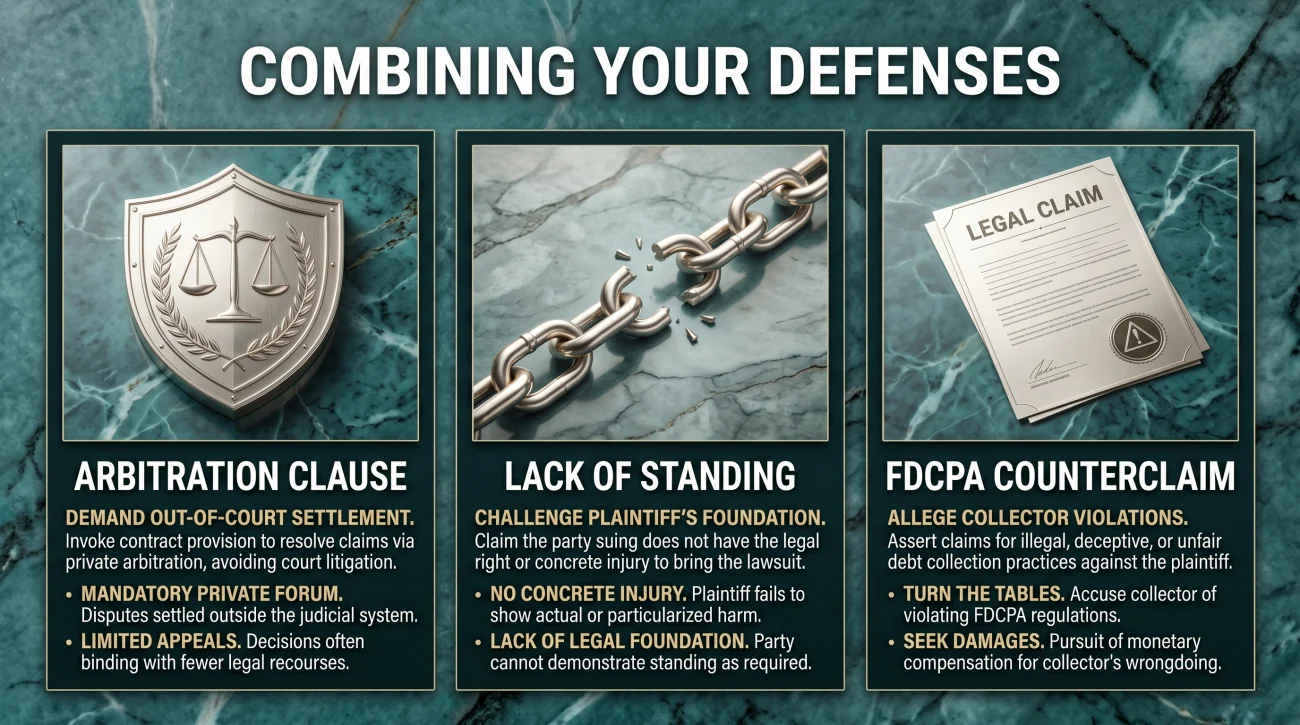
A robust defense rarely relies on a single argument. While the motion to compel arbitration attacks the venue of the lawsuit, you should also be preparing to attack the substance of the collector’s claims. Stacking these defenses is what truly breaks a debt buyer’s resolve.
“In the collections floor, we classified accounts by risk. A consumer who just filed a general denial was a low risk. But a consumer who filed a Motion to Compel Arbitration while simultaneously demanding our chain of title documents? That file was immediately flagged. The combination of high upfront forum fees and weak underlying documentation usually led to our attorneys closing the file without further action.”
When you file your Answer, you must preserve your substantive rights alongside your venue challenge. If the debt buyer cannot produce a clear, unbroken paper trail proving they actually bought your specific account, they face a lack of standing defense. If a collector is already hesitant to pay a hefty arbitration filing fee, realizing they might pay that fee and still lose because they lack the proper paperwork often pushes them to walk away entirely.
Furthermore, if the debt buyer violated the law prior to suing you, such as calling your workplace after being told to stop or threatening you with arrest, you may have grounds for an FDCPA counterclaim against the collector. This is the ultimate deterrent. A debt buyer facing expensive arbitration fees is a problem; a debt buyer facing those fees plus the risk of paying your attorney fees and statutory damages for an FDCPA violation is an active liability. They are highly motivated to drop cases that expose them to that level of financial risk.
Final Thoughts: Taking Back Control of the Venue
Being sued for a debt feels like you are being dragged into the collector’s arena, where they know all the rules and hold all the cards. The entire system is built to intimidate you into defaulting or settling on their terms.
Assuming that because you signed a contract years ago, you have no options and must accept a default judgment or a terrible settlement in court.
Using the exact terms of the contract the collector is trying to enforce to push the dispute into a private forum that makes the collection effort financially irrational.
Asserting your right to arbitration flips the dynamic completely. You are no longer just a passive defendant hoping for leniency. By enforcing the fine print of your own contract, you are dictating where and how the battle is fought. It forces the debt buyer off their comfortable, low-cost assembly line and into a rigorous, expensive process they never intended to navigate. Understanding this leverage is how you stop reacting out of fear and start defending yourself effectively.
❓ FAQ
⚖️ What is a motion to compel arbitration in a debt lawsuit?
It is a formal legal request asking the judge to pause or dismiss the current court lawsuit because the original contract requires all disputes to be handled by a private arbitrator instead of a public court.
💰 Do I have to pay the expensive arbitration fees?
Usually not. Most consumer arbitration clauses and forum rules restrict the consumer’s share of the filing fee to a small amount (often $250). The business pursuing the claim is typically required to cover the heavy administrative and arbitrator fees.
🏦 Do debt buyers have to follow the original bank’s contract?
Yes. When an agency buys a defaulted account, they are bound by the exact terms of the original paperwork. They cannot cherry-pick the parts of the contract that allow them to demand payment while ignoring the provisions that dictate how disputes must be handled.
⏳ Can I ask for arbitration right before my trial date?
No. If you actively participate in the court lawsuit for an extended period, the judge will likely determine that you waived your right to arbitrate. You must file the motion early, ideally alongside your initial Answer.
🛑 Will an arbitration clause definitely get my case dismissed?
No. It is a highly effective strategy, but not a guarantee. If the judge grants the motion, the case is usually paused (abated). It only leads to a functional dismissal if the debt buyer subsequently refuses to pay the arbitration fees and abandons the claim.
📄 How do I prove my contract has an arbitration clause?
You can search the Consumer Financial Protection Bureau (CFPB) database of credit card agreements to find the standard contract your bank was using during the time your account was active, and attach that to your motion.
🏢 What if the original creditor is suing me, not a debt buyer?
The strategy can still be used, but it is often less effective. Original creditors sometimes have more resources and a higher willingness to actually pay the arbitration fees to secure a judgment compared to third-party debt buyers.
What each stage of litigation requires and where your leverage sits.
- What the lawsuit process looks like from summons to judgment
- What to file, when to file it, and what happens if you do not
- The legal arguments that can defeat a debt collection lawsuit
- What a default judgment allows collectors to do and how to fight one
- How to negotiate a resolution once litigation has started
Once judgment is entered, collectors gain tools they did not have before.
- The FDCPA violations collectors commonly commit during the collection process
- How to respond to a debt lawsuit and what defenses are available to you
- How a judgment becomes a garnishment order on your paycheck
- When a collector uses a judgment to freeze your bank account instead
- How to settle before the judgment turns into something harder to stop
Disclosure: The content on this site reflects direct experience inside the debt collection industry and is grounded in federal law and regulation. It is informational in nature. Reading it does not constitute legal advice and does not create any professional relationship. If you are dealing with a lawsuit, a judgment, or a legal deadline, consult a licensed attorney in your state before acting.