- Federal law protects your job if your wages are garnished for a single debt, regardless of how many times a creditor attempts to levy that specific debt.
- This protection disappears the moment your employer receives a garnishment order for a second, separate debt.
- The law protects you from being fired, but courts have also ruled that employers cannot demote, suspend, or discipline you based on a single garnishment.
- Some states, like Colorado and Florida, offer much stronger job protections than the federal baseline.
- If you are illegally terminated, your recourse is filing a complaint with the Department of Labor’s Wage and Hour Division, not the debt collector.
The Panic of the HR Notice
During my 12 years inside third party collection agencies, I listened to thousands of phone calls between debtors and collectors. When a wage garnishment was involved, the primary fear was rarely about the money itself. The immediate, panicky question was almost always the same: “Are they going to fire me for this?”
It is a valid fear. Having your employer involved in your financial problems is humiliating. You worry that HR or your manager will view you as irresponsible or a liability. From the collection side, we knew this fear was one of the strongest leverage points we had. A debtor who ignored letters for two years would suddenly call in a panic the day their payroll department received a withholding order.
While that panic is understandable, there is a strict legal boundary here that most consumers, and frankly, some employers, do not fully understand. Federal law provides a very specific shield around your job when a wage garnishment hits. However, that shield comes with a massive loophole: the “one debt” rule. Understanding exactly where your protection starts and where it completely vanishes is critical if you want to keep your paycheck flowing.
The Federal Shield: CCPA Title III
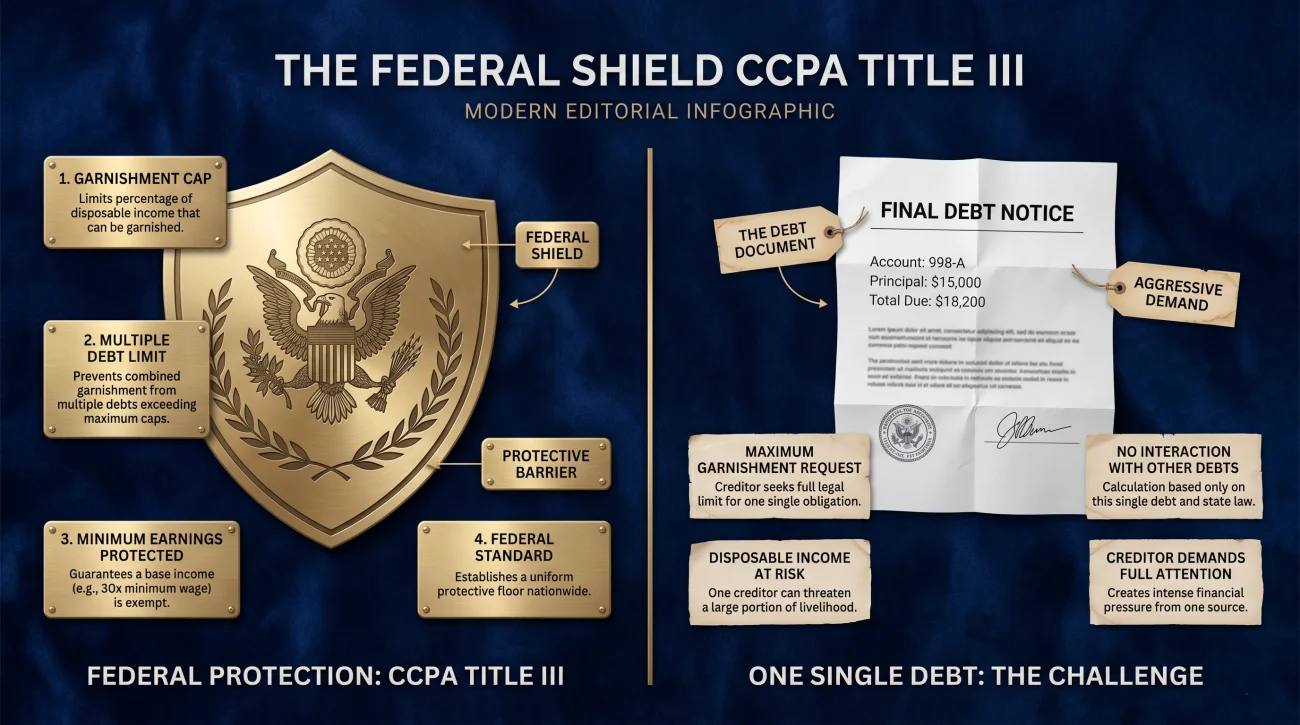
The baseline protection for workers facing wage garnishment comes from Title III of the Consumer Credit Protection Act (CCPA). This is a federal law, meaning it applies in every state, regardless of your local labor laws.
The CCPA states clearly that an employer cannot discharge, refuse to employ, or take any disciplinary action against an employee simply because their wages have been garnished for one single debt.
If you have a judgment against you for a defaulted credit card, and the court orders your employer to start withholding money, your employer cannot legally walk you to the door. They cannot fire you because they find the paperwork annoying, and they cannot fire you because they think the garnishment reflects poorly on the company.
If your employer violates this baseline rule, they face serious consequences. The Department of Labor enforces this provision, and employers who willfully violate it can be forced to reinstate the employee, pay back wages, and in extreme cases, face criminal prosecution. But this protection is not absolute. To use it successfully, you have to understand its exact limits.
The One Debt Rule and Its Dangerous Limit
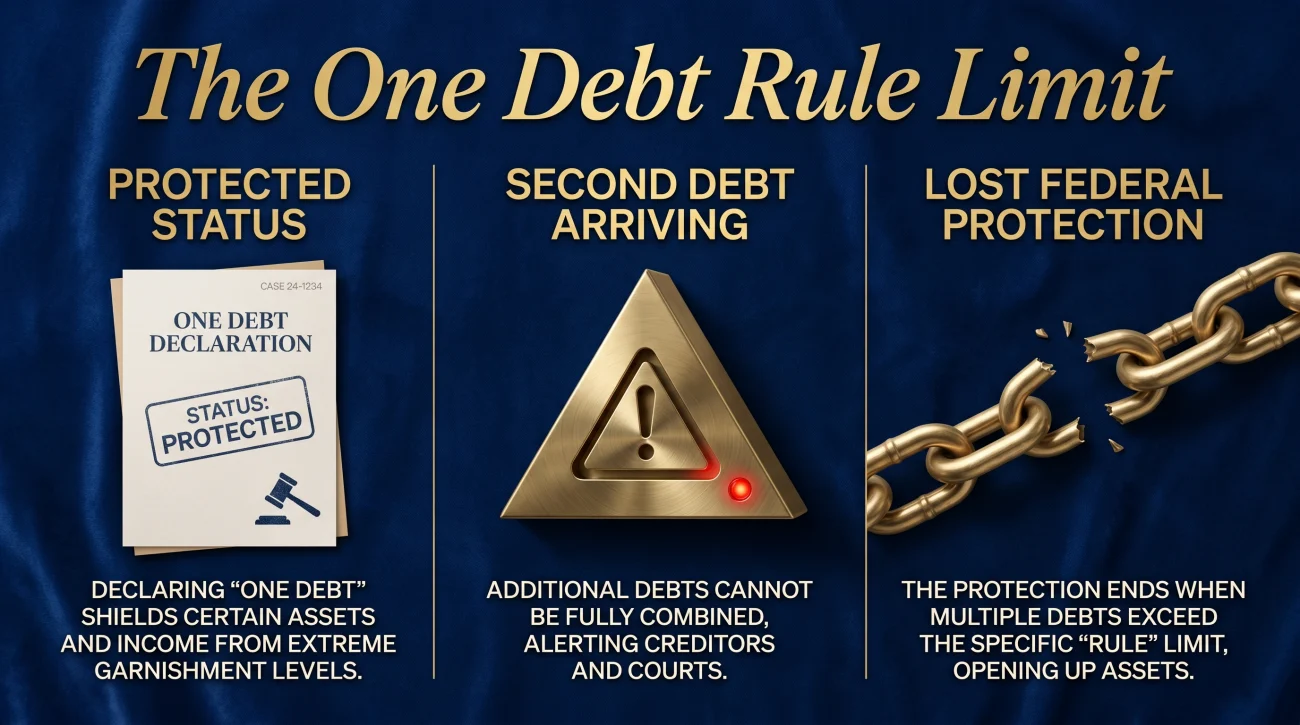
The protection provided by the CCPA has a very sharp edge. The law specifically protects you for “any one debt.” If your employer receives a garnishment order for a second, distinctly separate debt, the federal protection evaporates instantly.
Key Point: The federal protection only covers you if you have a garnishment for a single indebtedness. It is a one strike protection policy for your job security.
This is where I saw many consumers lose their footing. They assumed that because they could not be fired for wage garnishment, they were permanently safe. They were not. If you have a garnishment running for an old medical bill, and six months later your employer receives a new withholding order for a defaulted personal loan, your employer is now legally permitted to terminate your employment under federal law.
It does not matter if the maximum wage garnishment amount allowed by your state prevents the second creditor from actually getting paid right away. The mere fact that the employer received the second order for a second debt removes the CCPA termination protection.
Assuming you are protected from termination as long as the total amount being deducted from your paycheck does not exceed the legal limit.
Understanding that job protection is based purely on the number of underlying debts, not the dollar amount being taken.
Regardless of the Number of Levies
There is a critical nuance in the legal text that often confuses both employees and HR departments: “regardless of the number of levies made.”
A levy is the actual attempt to collect the money. Sometimes, a single debt requires multiple levies. For example, if a collector garnishes your wages, but you take a two month unpaid medical leave, that original garnishment order might expire or be returned unsatisfied. When you return to work, the collector has to send a brand new levy order to your employer for that same exact judgment.
Because this creates a new pile of paperwork, employers often mistakenly believe they finally have grounds to terminate. We dealt with this exact misunderstanding constantly:
“In the collection agency, we frequently had to reissue garnishment orders. HR directors would sometimes call us, clearly frustrated by the repeat paperwork, asking if this meant they could finally terminate the employee for multiple garnishments. We had to tell them no. Because it was the exact same underlying judgment, the employee was still protected under federal law.”
Multiple pieces of paper do not equal multiple debts. As long as all the collection attempts trace back to one single indebtedness, your job is federally protected.
Is Your Employer Crossing the Line?
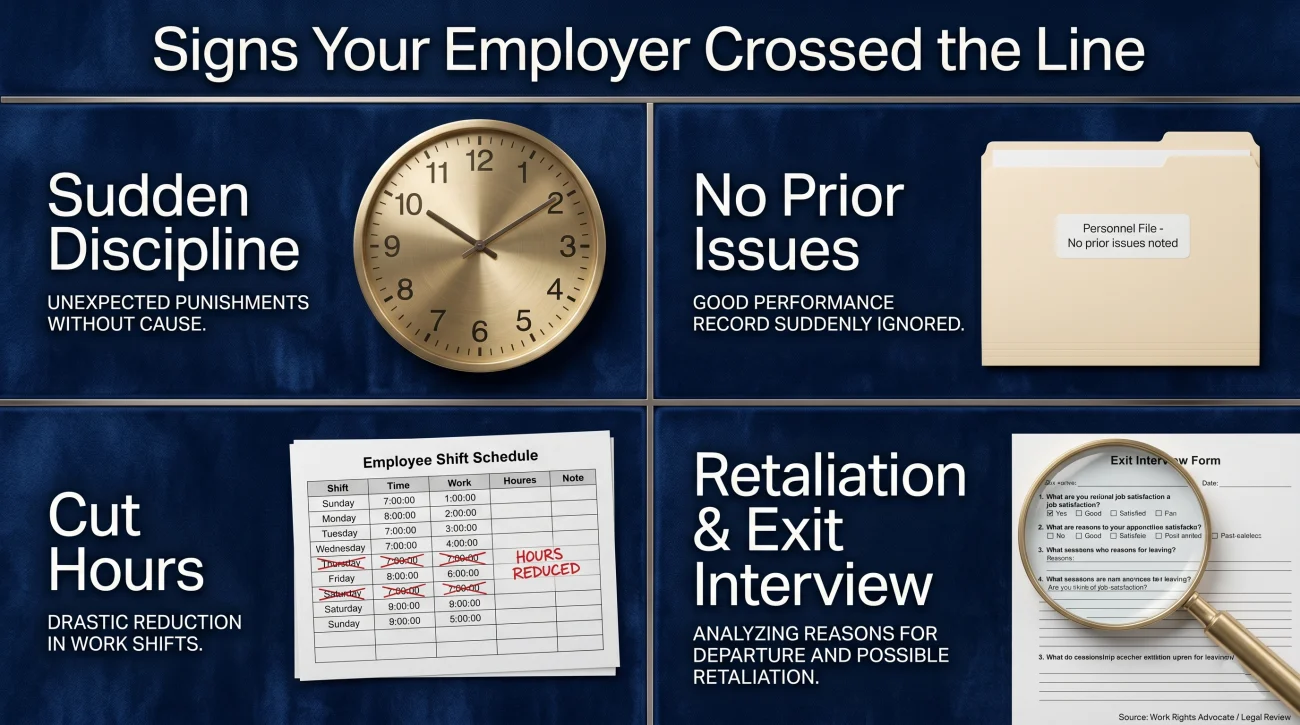
Knowing the rules is one thing, but spotting when they are being broken is another. When an employer wants to get rid of an employee who has a garnishment, they rarely put it in writing. They know the law. Instead, they often disguise the termination as a performance issue, or they create an uncomfortable environment designed to make you quit. If you are currently dealing with a garnishment, you need to recognize the red flags that indicate your employer is violating the CCPA.
📌 Note: The timeline is your strongest piece of evidence. If you have years of good performance reviews, and you are suddenly disciplined within days of HR receiving a legal order, the correlation is hard for an employer to deny.
Signs that your termination or discipline may have violated federal law:
- ⚠️ You were fired, suspended, or demoted within a few weeks of your employer receiving a single garnishment order.
- ⚠️ You have a clean personnel file with no prior documented performance issues.
- ⚠️ Your manager or HR representative explicitly cited the garnishment, your “financial reliability,” or the “administrative burden” as a reason for letting you go.
- ⚠️ Your employer reduced your hours significantly right after the payroll deductions started.
If you are experiencing these signs, you need to act quickly to preserve your rights. You must evaluate if you have a wrongful termination case based on your garnishment before you sign any severance agreements or exit paperwork.
The HR Perspective: Why Employers Hate Garnishments
To navigate this situation, it helps to understand why an employer might want to fire someone over a debt in the first place. It is almost never about moral judgment. It is about administrative cost and legal liability.
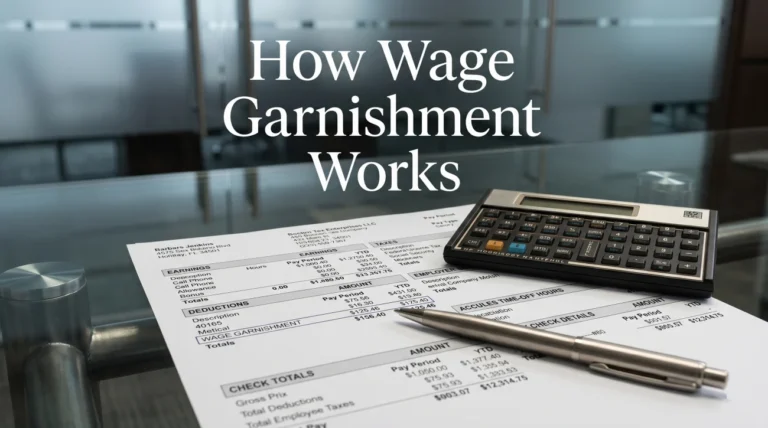
When an employer receives a garnishment order, they are forced to become a collection arm for a stranger. The mechanics of how wage garnishment is set up by employers requires strict compliance. HR or payroll must calculate disposable earnings, apply the correct federal or state percentage formulas, ensure voluntary deductions are handled correctly, and remit the payment to the court or the creditor on time, every single pay period.
If the employer makes a math error, or if they fail to withhold the money entirely, the creditor can sue the employer directly for the amount they failed to collect. This creates a massive liability for the company.
Small businesses, in particular, often lack automated payroll software that can handle these calculations easily. For them, a garnishment is a manual, time consuming headache. This is why the pressure to terminate often happens in smaller companies where the owner is dealing with the paperwork directly. Understanding this helps you see why the “one debt” rule is a compromise between protecting the worker’s livelihood and limiting the employer’s administrative burden.
But while the federal government struck that specific compromise, several states decided that the worker’s livelihood needed even more protection.
When State Law Offers Stronger Protection
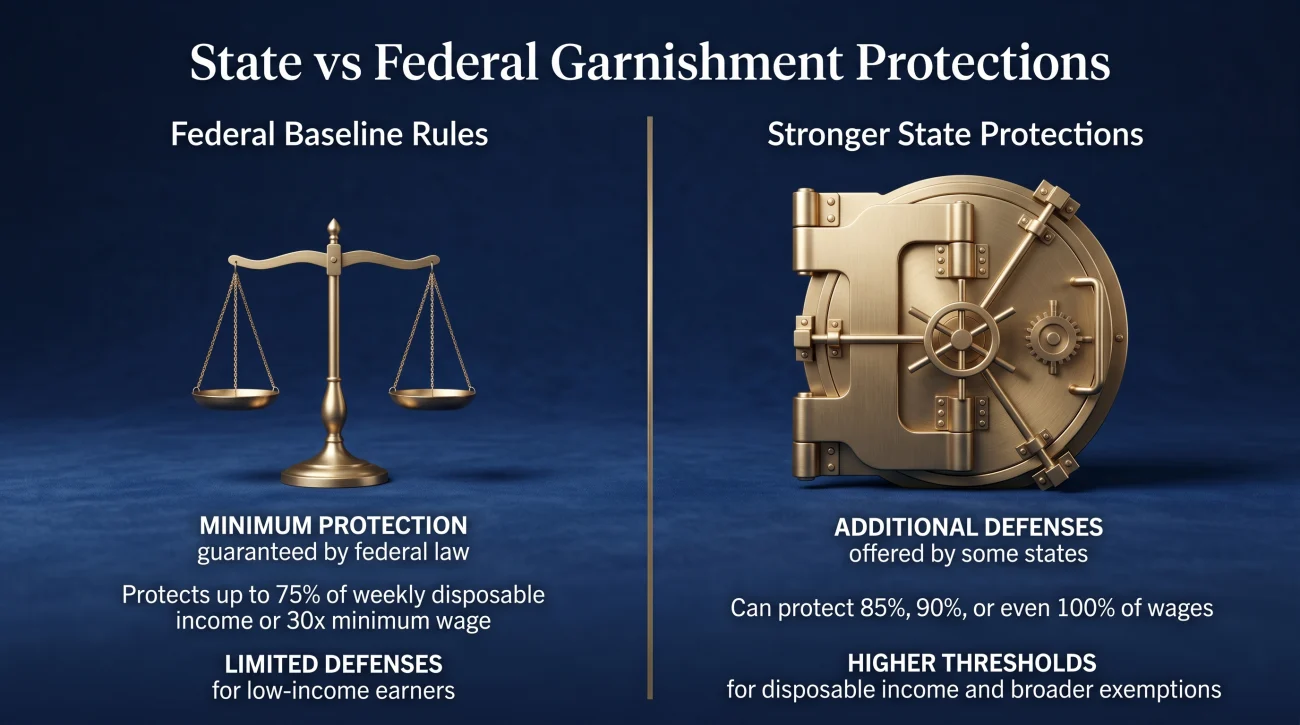
The CCPA is the floor of your protection, not the ceiling. Many states have looked at the federal one debt rule and decided it is not protective enough. If you live in a state with stronger job protections, your employer must follow the state law.
| Jurisdiction | Protection Level | Termination Allowed? |
|---|---|---|
| Federal (CCPA) | One single indebtedness | Yes, if 2 or more debts are garnished. |
| Colorado | Any number of garnishments | No, termination is prohibited regardless of how many debts. |
| Florida | Child support specific | No disciplinary action allowed for child support garnishments; carries civil penalties. |
| Washington | Up to 3 garnishments | Cannot be fired unless you have 3 or more separate garnishments within a single year. |
In states like Colorado, the administrative burden on the employer is considered secondary to keeping the employee in the workforce. Even if you have three different credit card judgments and a medical bill hitting your payroll department, a Colorado employer cannot legally fire you for it.
Always check your specific state labor laws. If you are dealing with rules for multiple garnishment orders at the same time, knowing whether your state supersedes the federal limitation is the difference between keeping and losing your job.
Disciplinary Action Beyond Firing
The law does not just prevent employers from handing you a pink slip. The CCPA prohibits employers from taking “any disciplinary action.” Courts and the Department of Labor interpret this broadly to prevent employers from finding loopholes.
If your employer cannot legally fire you, they might try to force you out. They cannot legally do this either. The following actions, if taken because of a single debt garnishment, are generally considered violations of the CCPA:
- Suspending you without pay.
- Demoting you to a lower paying position.
- Transferring you to an undesirable shift or location as punishment.
- Stripping you of regular overtime hours immediately after the order arrives.
Proving these actions were tied directly to the garnishment requires documentation. If your manager pulls you into an office to discuss the garnishment, follow the standard documentation protocol immediately afterward.
“Hi [Manager Name], I want to follow up on our brief meeting today regarding the payroll notice. As we discussed, I am handling the matter, and you mentioned that the company does not like dealing with this type of paperwork and that it could impact my upcoming shift schedule. I want to assure you it will not affect my daily performance.”
This creates a time stamped paper trail showing that management explicitly linked your job standing to the garnishment order.
What to Do If You Are Terminated
If your employer crosses the line and fires you for a single wage garnishment, you have specific avenues for recourse. You do not complain to the debt collector or the court that issued the judgment. You must deal directly with the Department of Labor.
Step 1 is to explicitly state your rights during the exit interview, but do so calmly. Do not threaten a lawsuit. Just state the facts.
💡 Pro Tip: If HR tells you that you are being let go because of the garnishment, say: “I understand the company’s position, but federal law under the CCPA prohibits termination for a single debt garnishment. I would like the official reason for termination provided to me in writing.”
Step 2 is to contact the Wage and Hour Division (WHD) of the U.S. Department of Labor. They are the federal agency responsible for enforcing Title III of the CCPA. You can file a complaint directly with them. They will investigate the timeline of your termination and your personnel file.
Step 3 is to evaluate your need for private counsel. While the WHD can investigate, having an attorney review your case can open up other avenues, especially if state laws were violated. If you have been fired illegally, understanding the broader mechanics of how to stop the garnishment and protecting your livelihood must happen simultaneously.
Final Thoughts: Don’t Let Them Push You Out
Having a debt collector reach into your workplace is incredibly stressful, but the law provides a safety net for your first mistake. The single indebtedness rule ensures that one financial misstep does not cost you your livelihood.
I have seen too many people quit out of sheer embarrassment before the employer even said a word. Do not do their job for them. Keep your head down, confirm to HR that you are actively resolving the legal matter, and do not give them an unrelated performance excuse to let you go. And most importantly: if you know a second judgment is looming out there, you are now on a ticking clock. You must intercept it and settle it before that second piece of paper ever lands on your HR director’s desk.
❓ FAQ
📞 Can I be fired if my employer gets two orders for the same debt?
No. Federal law protects you regardless of how many levies or orders are sent, as long as they all stem from one single underlying debt. Multiple attempts to collect one judgment do not remove your protection.
📝 Does my employer have to tell me before garnishing my check?
Federal law requires employers to notify you, but the timing varies. In many cases, the notice arrives at the exact same time your first paycheck is reduced, because the employer is legally required to begin withholding immediately upon receiving the court order.
⚖️ Can I sue my employer if they fire me over one garnishment?
Yes, but the first step is usually filing a complaint with the Department of Labor’s Wage and Hour Division. They can investigate and potentially force your employer to reinstate you and pay lost wages. You may also consult an employment attorney for civil action.
💼 What if my employer demotes me instead of firing me?
Demotions, suspensions, and pay cuts tied directly to a single garnishment are considered “disciplinary actions.” Under the CCPA, taking any disciplinary action based on one garnishment is illegal, just like an outright firing.
👨👩👧 Does child support count as a debt for termination rules?
Yes. The federal one-debt protection applies to child support income withholding orders as well. Furthermore, many states have specific, stricter laws that heavily penalize employers who try to discipline workers for child support garnishments.
🏢 Can a company refuse to hire me because of an active garnishment?
No. The CCPA specifically states that an employer cannot “refuse to employ” you based on a garnishment for any one debt. If a background or credit check reveals a single garnishment, they cannot use it as the reason to deny you the job.
🛑 How do I prove I was fired because of the garnishment?
Proof is usually established through timelines and personnel files. If you have a clean performance history and are suddenly fired within days of a garnishment order arriving, the Department of Labor looks closely at that correlation. Written communications from HR citing the garnishment are your best evidence.
Garnishment sits at the end of a process that starts earlier. These cover the full picture.
- How courts allow collectors to reach your paycheck and your bank
- Wage Garnishment Limits by State: Which States Protect More Than Federal Law Requires
- Multiple Wage Garnishments at the Same Time: Priority Rules and What Happens to Your Paycheck
- Can Social Security Be Garnished? What's Protected, and the Bank Account Trap That Isn't
- IRS Wage Levy: Why It's Different and How the IRS Can Take Almost Everything
Garnishment is a symptom. These cover the options that address what caused it.
- The collector behavior that typically comes before the garnishment order
- How the lawsuit you may have missed is what created the garnishment
- How wage garnishment works and the options available to stop or limit it
- When a collector goes after your bank account instead of your wages
- How settling the underlying debt stops the garnishment permanently
Disclosure: The content on this site reflects direct experience inside the debt collection industry and is grounded in federal law and regulation. It is informational in nature. Reading it does not constitute legal advice and does not create any professional relationship. If you are dealing with a lawsuit, a judgment, or a legal deadline, consult a licensed attorney in your state before acting.