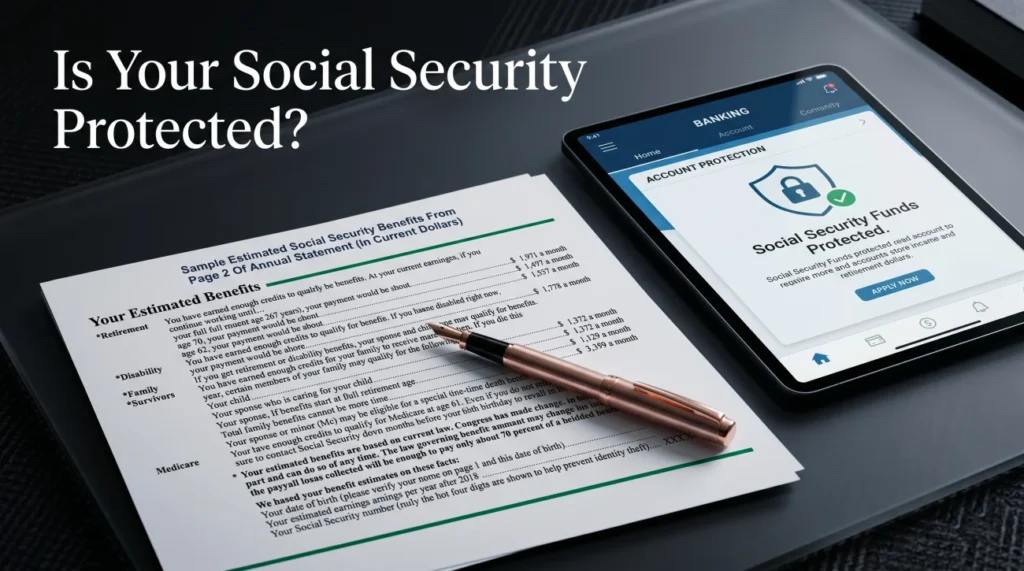
- Social Security and other federal benefits are strictly protected from consumer debt garnishment at the source, meaning private creditors cannot take these funds directly from the government before you receive them.
- Once your benefits are deposited into a bank account, a special federal rule automatically protects two months’ worth of direct deposits from being frozen by a debt collector.
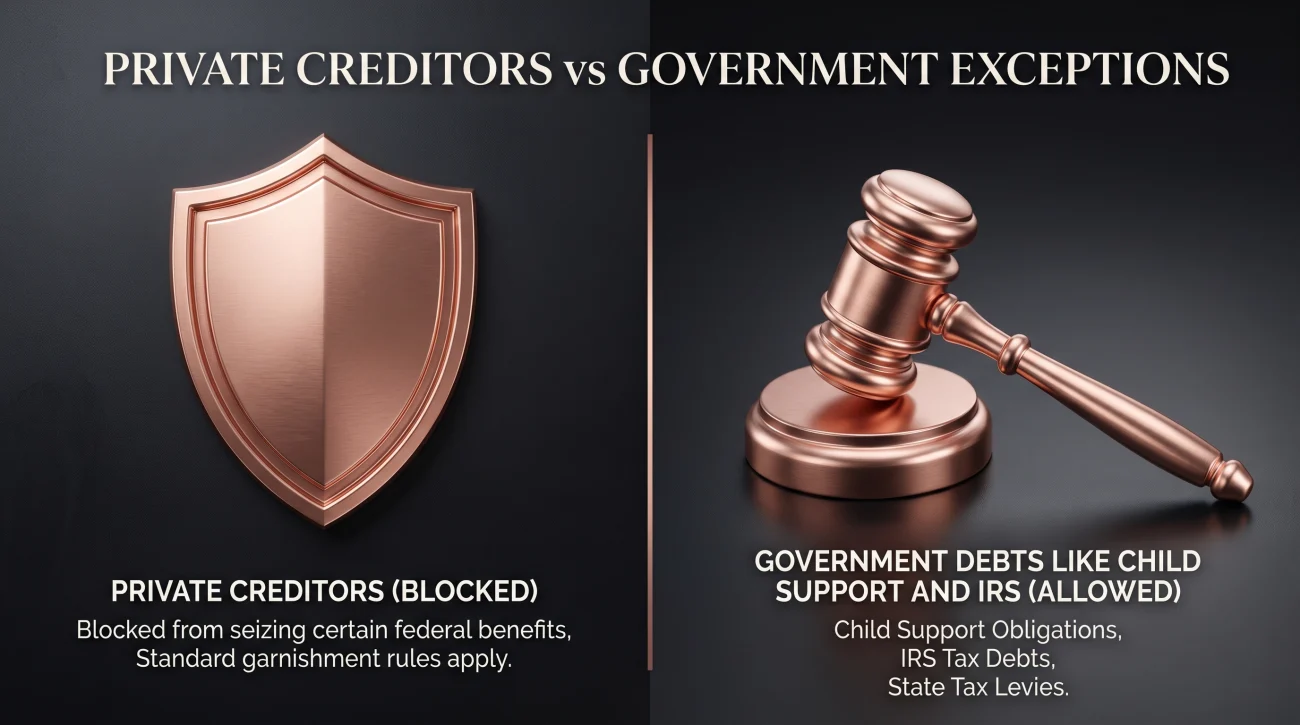
- While private creditors are blocked, government agencies collecting child support, federal student loans, and IRS tax debts have special authority to garnish certain Social Security benefits.
The Truth About Social Security and Debt Collection
When you rely on a fixed income from Social Security, Supplemental Security Income, or disability benefits, the threat of a debt collector taking your money is terrifying. You need every dollar just to cover basic living expenses like housing, groceries, and medical care. The good news is that federal law provides a massive shield around these funds.
In my years working inside third-party collection agencies, I reviewed countless account files where consumers were surviving solely on federal benefits. The collection floor knew exactly what these income sources meant. Social Security benefits are protected from private debt collection. We could call, we could send letters, and the original creditor could even file a lawsuit. However, when it came to actually forcing a payment from a Social Security check, we had no legal mechanism to do it.
But that protection is not absolute, and it contains a dangerous trap. While the money is perfectly safe before it reaches you, the rules change the moment those funds are deposited into your checking or savings account. Furthermore, not all debt collectors are private companies. If you owe the government, the protections you assume you have might not apply at all.
Understanding exactly what is protected, what is vulnerable, and how to structure your bank accounts is the only way to ensure your lifeline remains completely untouched by collection efforts.
What Is Protected From Consumer Debt Garnishment
To build that defense, the first step is separating the type of debt you owe. If you are dealing with a consumer debt, your federal benefits enjoy the highest level of protection available under the law. Consumer debts include credit cards, medical bills, personal loans, payday loans, auto deficiencies, and private student loans.
If a private creditor sues you and wins a court judgment, they will typically try to execute a wage garnishment. This is a legal order sent to an employer to withhold a portion of a paycheck. However, the federal government is not a standard employer, and federal benefits are not standard wages.
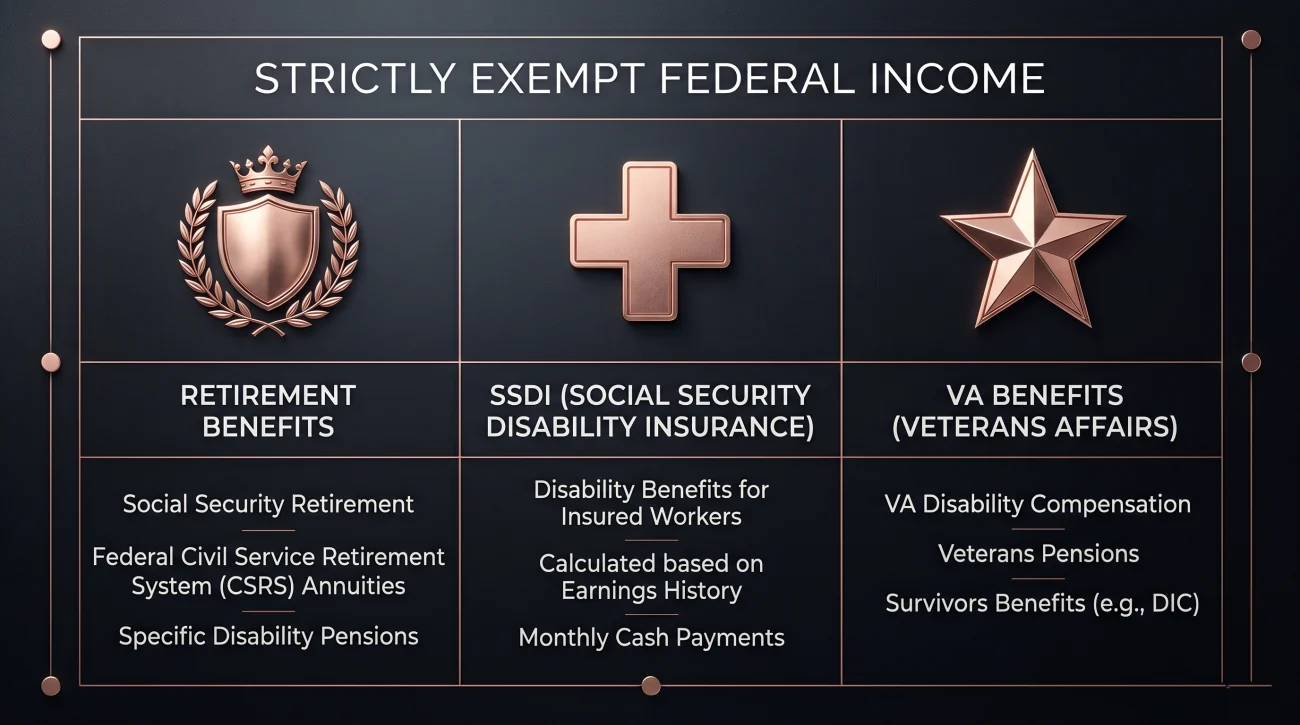
The following income sources are strictly exempt from consumer debt garnishment at the source:
- Social Security Retirement benefits
- Social Security Disability Insurance (SSDI)
- Supplemental Security Income (SSI)
- Veterans Affairs (VA) benefits
- Railroad Retirement Board benefits
- Federal civilian and military retirement benefits
A private debt collector cannot send a garnishment order to the Social Security Administration and demand they cut a check. The administration will simply reject the order. Your monthly benefit amount will be paid to you in full, regardless of how many civil judgments private creditors have piled up against you.
“During my time at a national debt buyer, our skip-tracing software would flag accounts where the primary income was identified as Social Security or VA benefits. For consumer accounts, these were often marked as low-probability for legal enforcement. We knew that even if we spent the money to win a court judgment, we could not garnish the income at the source.”
The Exceptions: When Government Debts Can Reach Your Benefits
The shield around Social Security is incredibly strong against credit card companies. It is much weaker when the entity trying to collect the money is another branch of the government or the family court system. If you owe specific types of non-consumer debt, portions of your benefits can be garnished directly at the source.
Child Support and Alimony
Family support obligations take priority over almost everything else. Social Security Retirement benefits and Social Security Disability Insurance (SSDI) can be garnished to pay court-ordered child support and alimony. The percentage taken can be substantial, often up to 50 or 60 percent of the benefit depending on your circumstances.
Defaulted Federal Student Loans
If you default on a federal student loan, the Department of Education can use a process called the Treasury Offset Program to take a portion of your Social Security Retirement or SSDI benefits. They do not need a court order to do this. They can typically take up to 15 percent of your benefit, but federal law requires that you must be left with at least $750 per month (or $9,000 per year).
📌 Note: The Department of Education occasionally pauses Social Security offsets for administrative reasons or repayment reforms, but these pauses are rarely permanent. Borrowers should always operate under the assumption that offsets could resume at any time. Understanding how different collection categories operate is vital to knowing your specific risks.
IRS Tax Debts
The IRS holds the most aggressive collection powers of any agency. Through the Federal Payment Levy Program, the IRS can levy up to 15 percent of your Social Security Retirement or SSDI benefits to pay back taxes. They will send you a final notice of intent to levy before this happens, giving you a window to set up a payment plan or request hardship status.
The Ultimate Exception: Supplemental Security Income (SSI)
There is one form of federal benefit that enjoys absolute protection across the board: Supplemental Security Income (SSI). Because SSI is a needs-based program for individuals with extremely low income and resources, it is fully exempt from all forms of garnishment and levy. This includes child support, federal student loans, and even IRS tax debts. If your only income is SSI, it cannot be garnished at the source under any circumstances.
The Bank Account Trap: What Happens After Deposit
This is where the majority of consumers face a crisis. They know their Social Security is protected from private debt collectors. But they confuse wage garnishment (taking money at the source) with a bank levy (freezing money sitting in an account).
Even though a private creditor cannot garnish your Social Security check from the government, they can absolutely ask a court to freeze your checking account once that money has been deposited. For decades, this created a nightmare scenario. Debt collectors would freeze accounts, leaving seniors with no access to their legitimate Social Security funds while they spent weeks fighting in court to prove the money was exempt.
To stop this abuse, the federal government created a powerful rule known as 31 CFR Part 212. This rule provides an automatic safety net for your deposited federal benefits.
The Two-Month Lookback Rule
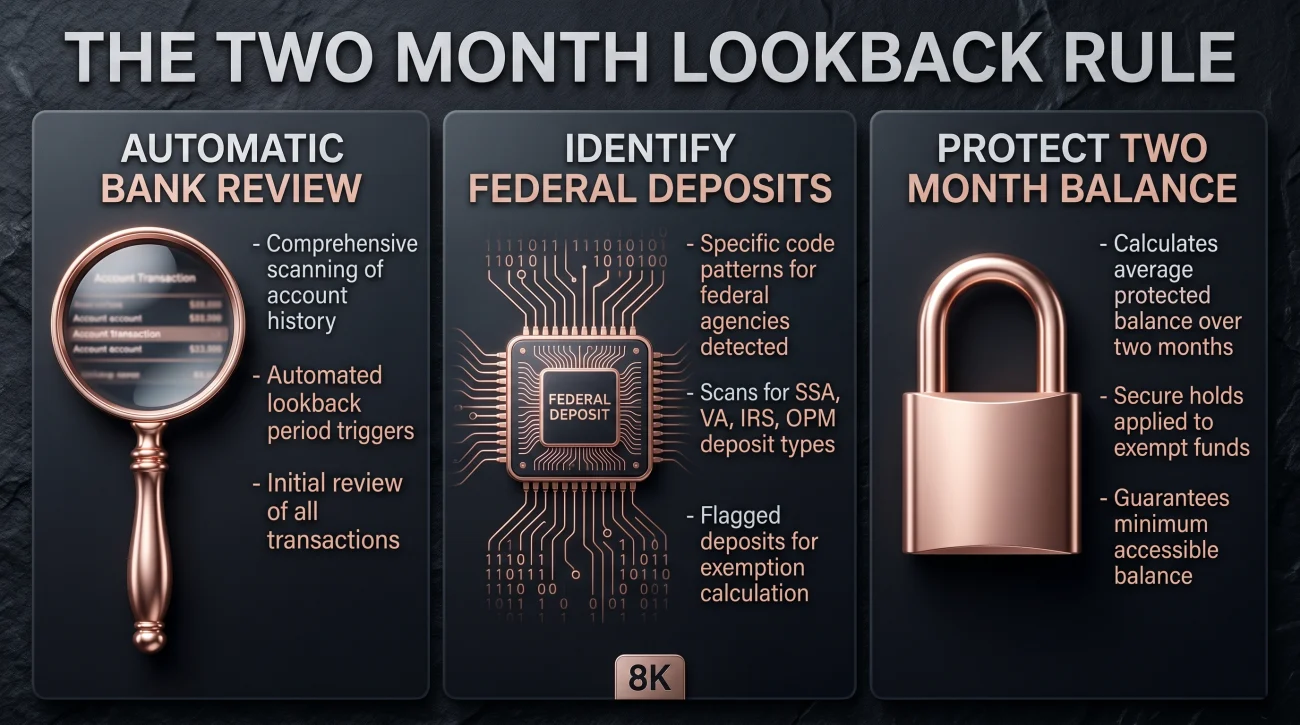
Under 31 CFR Part 212, banks are legally required to perform an automatic review of your account before they comply with a debt collector’s freeze order. When the bank receives a levy order, they must look at the previous two months of activity in your account.
The bank must identify any federal benefits deposited electronically during that two-month period. They do this by recognizing specific codes attached to the direct deposits. The bank must calculate the total amount of federal benefits deposited in those 60 days. That exact total becomes your protected amount, and the bank is legally forbidden from freezing it.
How the Calculation Works in Practice:
Imagine your only income is a Social Security direct deposit of $2,000 per month. Over the last two months, exactly $4,000 was electronically deposited into your checking account.
A debt collector sends a $5,000 levy order to your bank.
The bank performs the required lookback. They see the $4,000 in coded federal deposits. The bank must automatically protect up to $4,000 in your account. You do not have to fill out any forms, make any phone calls, or go to court. The bank simply leaves that money available for your use and informs the collector that the funds are exempt.
The Ceiling: When Automatic Protection Ends
The automatic protection rule is incredibly effective, but it has a built-in limitation. It only automatically protects the value of two months’ worth of deposits. It does not automatically protect your entire life savings, even if every penny of that savings came from Social Security.
Let us look at a scenario where the two-month ceiling creates a massive problem. Suppose you receive $2,000 a month in Social Security. You are very frugal, and over the past five years, you have saved $20,000 in that same checking account. All of it is Social Security money.
A debt collector sends a levy order to your bank. The bank does its two-month lookback and identifies $4,000 in direct deposits. The bank automatically protects that $4,000. But what happens to the remaining $16,000? The bank will freeze it and prepare to send it to the debt collector.
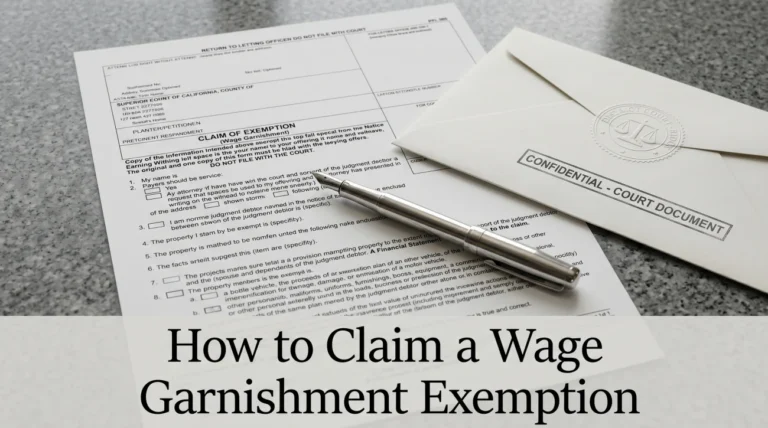
That $16,000 is still legally exempt from collection because it originated from Social Security. However, it has lost its automatic protection. To get it unfrozen, you must now go to court and file formal paperwork proving the source of those older funds. This is a complex process that requires showing detailed banking history. If you find yourself in this situation, filing a formal claim of exemption quickly is your only path to recovering the frozen savings.
The Paper Check Vulnerability
The two-month ceiling is not the only way you can lose automatic protection. The system relies entirely on the banking network reading electronic deposit codes. If you still receive your Social Security or VA benefits via a paper check that you physically deposit or cash at the bank teller, you have zero automatic protection.
The bank cannot automatically trace a paper check deposit back to a federal source during a levy review. If a collector freezes your account, all the money from your paper checks will be locked. You will have to fight it in court. Switching to direct deposit is the easiest and most important step you can take to protect your income.
The Danger of Commingling Funds
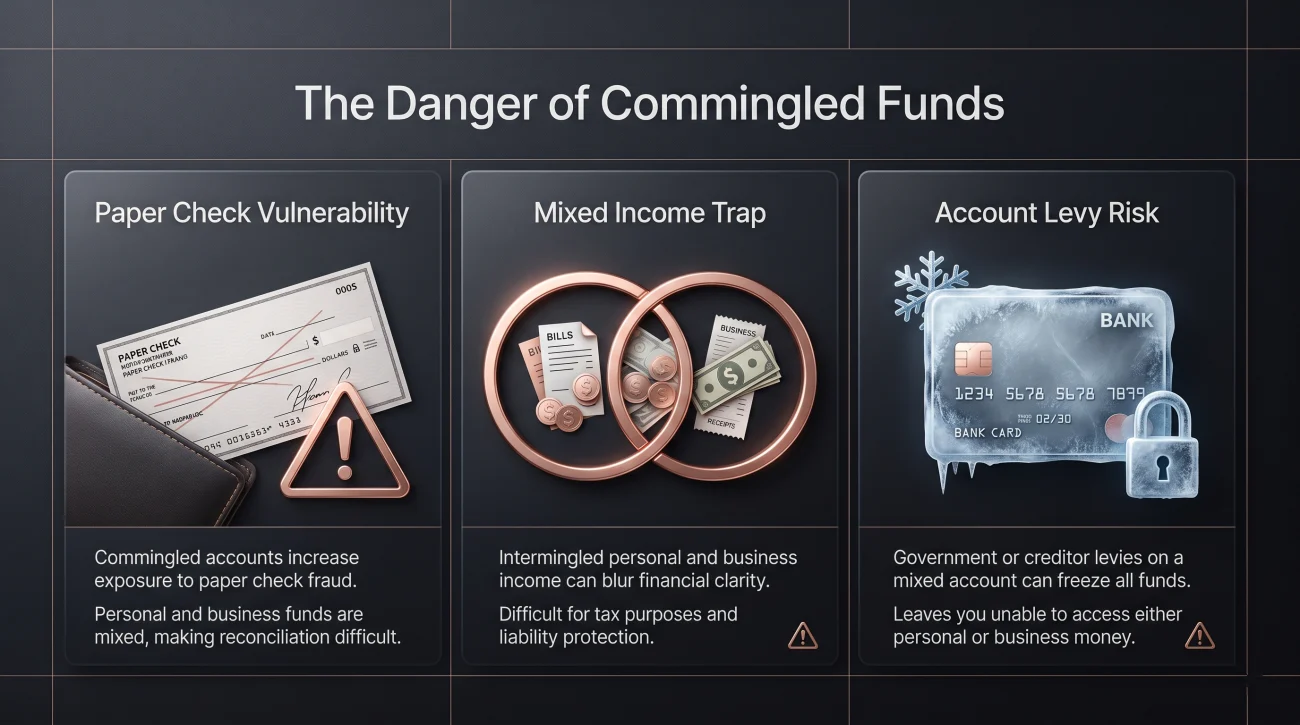
Debt collectors look for vulnerabilities. If they know you receive Social Security, they will not bother trying to garnish your wages. Instead, they will run asset searches looking for a bank account where you have mixed your protected benefits with unprotected money.
Commingling funds means combining different sources of income into one account. For example, you might deposit your Social Security, your spouse’s part-time paycheck, and a birthday check from your child all into the same joint checking account. Alternatively, you might transfer money from your main checking account into a separate savings account.
When you commingle funds, tracing what is protected and what is not becomes an accounting nightmare. If the bank freezes the account above the two-month automatic limit, you will have a very difficult time proving to a judge which specific dollars belong to Social Security and which belong to the part-time job. Collectors rely on this confusion to force settlements.
Depositing a $1,500 Social Security check and a $500 paycheck from a part-time job into the same account, then transferring $300 a month into a separate savings account.
Having one dedicated checking account that receives only your Social Security direct deposit. You pay your essential bills out of this account. You keep a separate account for any part-time work or side income.
Maintaining a dedicated account that receives only federal benefits provides a clean, undeniable paper trail. If a collector attempts a levy on that account, the bank will see only protected funds, and the automatic rules will apply perfectly.
Signs Your Benefits Are at Immediate Risk
If you rely on federal benefits and owe a debt, you must monitor your financial situation closely. While the laws are on your side, procedural errors by banks and aggressive tactics by collectors still happen. You need to act if you notice any of the following signs:
- ⚠️ Your bank account was suddenly frozen, and the balance contains primarily Social Security funds accumulated over many months or years.
- ⚠️ You received a Notice of Intent to Offset from the Department of the Treasury regarding an old student loan or tax debt.
- ⚠️ A debt collector is threatening to garnish your Social Security checks directly to pay off a credit card or medical bill.
- ⚠️ Your bank ignored the two-month lookback rule and froze your entire account balance despite clear federal direct deposits.
- ⚠️ You receive your federal benefits via paper check and have a civil judgment entered against you.
If your account has already been frozen improperly, or if you are facing a government offset that threatens your ability to buy food or medicine, consulting a professional to evaluate your collection defense options is crucial. They can file the emergency motions needed to unfreeze your protected money.
How to Handle Collectors When You Are Protected
Even when your bank account is secure and your money is legally untouchable, the phone calls and letters from debt collectors can still be relentless. If your only income is Social Security or SSI, and you have no significant assets like a paid-off house or expensive vehicles, you are what the legal system calls “judgment proof” or “collection proof.” This means that even if a debt collector sues you and wins a judgment, there is no legal way for them to force you to pay.
However, being collection proof does not stop the phone calls on its own. To stop the harassment, you can send the collector a written notice explaining your financial status. This is not a legal requirement, but it is a practical step that often causes debt buyers to close the file and move on.
Sample Collection Proof Notification:
“I am writing to inform you that I am currently judgment proof. My sole source of income is [Social Security / SSI / Disability], which is exempt from garnishment and levy under federal law. I do not own any non-exempt assets or real estate. Any attempt to levy my bank account will fail, as the funds are protected under 31 CFR Part 212. I demand that you cease all further communication regarding this account.”
Send this letter via certified mail with a return receipt. Do not include your bank account number or any specific financial documents. The goal is simply to put them on notice that spending money to pursue you legally will result in zero recovery for them. Understanding the complete framework for halting collections will help you evaluate when a simple letter is enough versus when court action is required.
Final Thoughts on Protecting Your Benefits
The safety net provided to Social Security recipients is robust, but it requires basic maintenance on your part to work perfectly. Private debt collectors have no legal right to touch your federal benefits to pay off old credit cards or medical bills. The law is firmly on your side.
Your job is to ensure the banking system can easily recognize your protected money. Switch to direct deposit immediately if you haven’t already. Never commingle your benefits with other income streams. Debt collectors prey on confusion and mixed accounts because it allows them to freeze funds and force you into a desperate settlement. Do not give them that opportunity. By isolating your benefits, you remove the only leverage they have. If they cannot touch your money, they have no power over you.
❓ FAQ
📞 Can a debt collector garnish my Social Security check directly?
No. Private debt collectors, such as credit card companies or collection agencies, cannot send a garnishment order to the Social Security Administration. Your benefits are fully protected at the source from consumer debts.
🏛️ Is SSI protected from IRS tax levies?
Yes. Supplemental Security Income is fully exempt from all forms of garnishment and levy, including IRS tax debts, child support, and student loan offsets. It is the most heavily protected form of income.
🏦 Do I need to tell my bank that my deposits are from Social Security?
If you use direct deposit, no. The bank’s system automatically reads the federal routing codes attached to your deposit. The two-month lookback protection happens automatically without any action required from you.
💰 What happens if I move my Social Security money to a savings account?
If you transfer the funds yourself, they lose the automatic coding that tells the bank they are federal benefits. If a levy occurs, the savings account may be frozen, and you will have to go to court to prove the money originated from Social Security.
👨👧 Can child support take my Social Security Disability (SSDI)?
Yes. Court-ordered child support and alimony are exceptions to the federal protection. Both Social Security Retirement and SSDI can be garnished directly at the source to fulfill family support obligations.
🧾 How does the bank know my deposits are federal benefits?
The U.S. Treasury attaches a specific electronic identifier (a character code) to all federal benefit direct deposits. When a bank receives a garnishment order, they are required by federal rule to scan for this specific code over the last 60 days.
🎓 Can federal student loans take my Social Security?
Yes, but with limits. The Department of Education can offset up to 15 percent of your Social Security Retirement or SSDI for defaulted loans, provided you are left with at least $750 per month. They cannot offset SSI benefits.
❄️ What should I do if my bank account with Social Security is frozen?
First, verify if the bank left two months’ worth of deposits available to you as required by law. If they froze older benefit funds or made an error, you must immediately file a Claim of Exemption with the court that issued the levy order.
✉️ Is a paper Social Security check protected the same way as direct deposit?
No. While the money is technically still exempt, a paper check does not trigger the bank’s automatic protection rule. If your account is levied, the bank will freeze paper check deposits, forcing you to prove the source of the funds in court.
⚖️ Can a debt collector force me to pay out of my Social Security?
No private collector can force you to use your Social Security to pay a debt. If a collector threatens to take your Social Security income over a credit card or medical bill, they are violating the Fair Debt Collection Practices Act. By understanding the formulas used to calculate deductions, you can clearly see that zero percent of this income is available to them.
Garnishment sits at the end of a process that starts earlier. These cover the full picture.
- How courts allow collectors to reach your paycheck and your bank
- How Much of Your Wages Can Be Garnished? The 25% Rule and When It Doesn't Apply
- How to Claim a Wage Garnishment Exemption: The Forms, Deadlines, and What Happens Next
- Types of Wage Garnishment: Why the Debt Type Changes Everything About Your Options
- Can Your Employer Fire You for Wage Garnishment? The One-Debt Rule
Garnishment is a symptom. These cover the options that address what caused it.
- The collector behavior that typically comes before the garnishment order
- How the lawsuit you may have missed is what created the garnishment
- How wage garnishment works and the options available to stop or limit it
- When a collector goes after your bank account instead of your wages
- How settling the underlying debt stops the garnishment permanently
Disclosure: The content on this site reflects direct experience inside the debt collection industry and is grounded in federal law and regulation. It is informational in nature. Reading it does not constitute legal advice and does not create any professional relationship. If you are dealing with a lawsuit, a judgment, or a legal deadline, consult a licensed attorney in your state before acting.