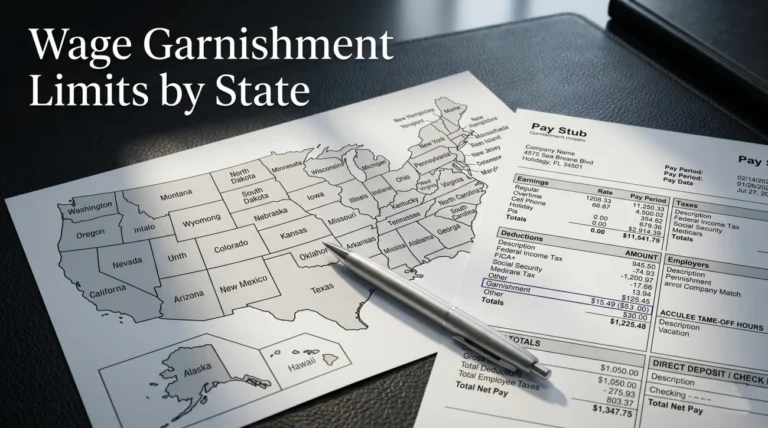
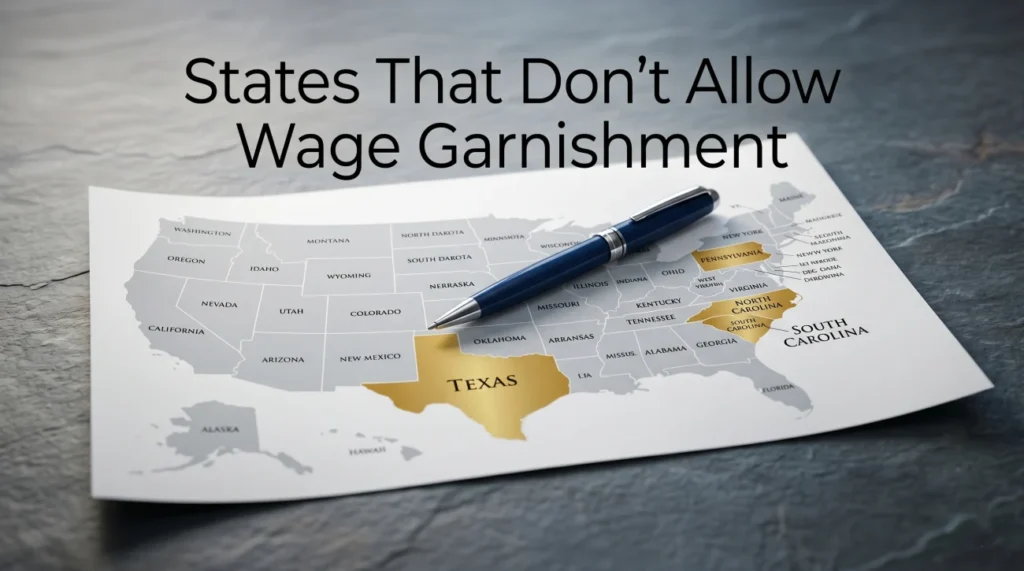
- Texas, Pennsylvania, North Carolina, and South Carolina generally prohibit wage garnishment for standard consumer debts like credit cards and medical bills.
- This protection only applies to your paycheck. Once that money is deposited into your bank account, a creditor can still freeze the account and seize the funds.
- Government debts completely bypass these state laws. The IRS, Department of Education, and child support enforcement can garnish your wages in all fifty states.
- Working for a national corporation creates a dangerous loophole. If your employer has headquarters in another state, a creditor might successfully enforce an out of state garnishment order against you.
- Do not ignore a lawsuit simply because you live in a protected state. Creditors rely on default judgments to pursue bank levies and property liens instead of your paycheck.
The Four States Where Your Paycheck Is Safe (Mostly)
During my years working inside third party collection agencies, I regularly monitored calls where collectors tried to apply pressure to consumers living in Texas or Pennsylvania. A newer collector would often use a standard script, casually mentioning that the agency might seek a judgment to deduct money straight from the consumer’s paycheck. The experienced consumers would usually laugh, confidently stating that their state does not allow wage garnishment, and then hang up the phone.
Those consumers were partially right. Living in one of the four states that heavily restrict paycheck deductions gives you a massive tactical advantage against a debt buyer or credit card company. When a creditor knows they cannot automatically tap into your weekly earnings, the creditor’s entire approach changes. However, assuming that your money is entirely untouchable is a critical mistake.
The collection industry is incredibly adaptive. When the front door of wage garnishment is locked by state law, creditors immediately start looking for the side doors. They look at your banking habits, the corporate structure of the company you work for, and the origin of the debt itself.
This guide will break down exactly how the protections in Texas, Pennsylvania, North Carolina, and South Carolina actually work. More importantly, we are going to expose the specific loopholes that collection agencies use to bypass these state laws. Understanding the difference between paycheck protection and total financial immunity is the key to surviving a collection lawsuit without losing your livelihood.
The Consumer Debt Shield: How the Four States Work
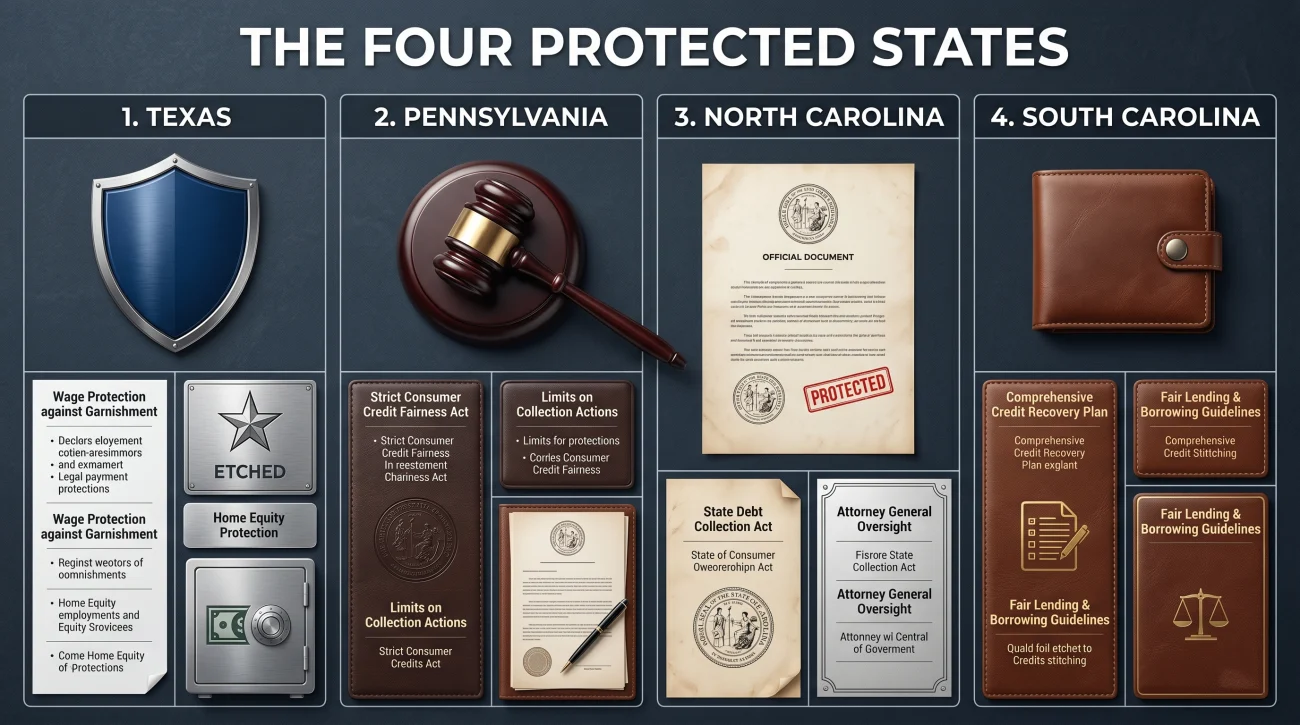
To understand the strength of these protections, you first need to understand what standard standard employer deduction mechanics look like in the rest of the country. In most jurisdictions, a creditor sues you, wins a judgment, and then serves a writ to your employer’s payroll department. The employer is then legally forced to withhold a portion of your income.
Texas, Pennsylvania, North Carolina, and South Carolina have enacted legislation that breaks this chain. In these jurisdictions, civil courts simply will not issue a wage garnishment order for a standard consumer debt. If a credit card company or a medical billing group wins a lawsuit against you, they are handed a piece of paper confirming you owe the money, but they are denied the tool they normally use to collect it directly from your boss.
Texas and South Carolina: The Strongest Borders
Texas and South Carolina offer the most comprehensive walls against consumer debt collection. In Texas, the state constitution specifically protects current wages for personal services from being garnished. If a collection attorney attempts to file a motion to garnish wages for a defaulted personal loan in a Texas court, the motion will be immediately dismissed. South Carolina operates under a similarly strict blanket ban for consumer credit contracts.
Pennsylvania and North Carolina: Protected with Nuance
Pennsylvania protects wages from standard consumer debts, but the state leaves the door open for very specific local obligations. While a credit card company cannot touch your paycheck, Pennsylvania law allows wage attachment for residential lease judgments (unpaid rent) and certain local tax obligations. North Carolina also blocks the credit card companies but allows its own state agencies to garnish up to 10 percent of your gross wages for unpaid state taxes or public hospital bills.
| State | Consumer Debt Protection | Notable State Level Exceptions |
|---|---|---|
| Texas | Complete ban | None for private civil consumer debt |
| South Carolina | Complete ban | None for private civil consumer debt |
| Pennsylvania | Complete ban | Back rent for residential leases, local taxes |
| North Carolina | Complete ban | State taxes, ambulance services, public hospital bills |
It is crucial to note that these bans only apply to the states mentioned above. Every other state uses a calculation based on federal law or their own state caps. If you do not live in one of these four locations, you need to verify standard state income protection caps to know exactly how much of your paycheck is at risk.
What These States Cannot Protect You From
The most common misconception I encountered in the industry was consumers believing their state law protected them from absolutely everyone. State laws only govern state courts and private civil disputes. When you owe money to the government or have domestic obligations, state borders do not matter.
There is no state in the country that can prevent the federal government from taking your income. If you default on a federal student loan, the Department of Education uses an administrative process to bypass the local court system entirely. They can legally order your Texas or Pennsylvania employer to withhold 15 percent of your disposable pay.
The Internal Revenue Service is even more aggressive. Tax levies ignore state consumer protection laws completely. The IRS does not adhere to standard percentage limits, instead using a very strict calculation that leaves you with barely enough to cover basic living expenses. You cannot use your state residency as a defense against a federal tax levy.
Finally, child support and alimony are universally enforceable. Family court obligations are heavily prioritized under federal law. An employer in South Carolina or North Carolina will immediately process an income withholding order for domestic support, often taking up to 60 percent of your paycheck.
“I have seen countless debtors ignore letters from the Department of Education because they lived in Texas and assumed they were immune to garnishment. The shock they experience when their HR department notifies them of an active federal withholding order is immense. State laws only protect you from private corporations. The government plays by its own rulebook.”
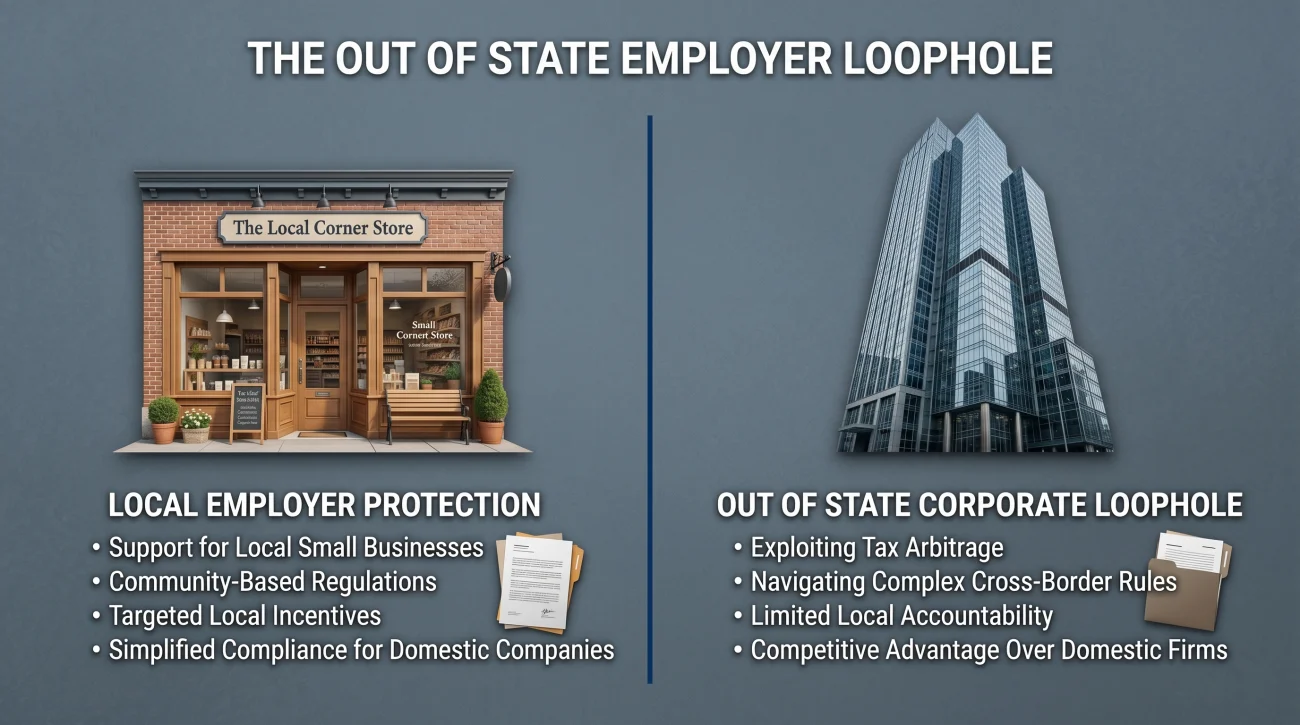
The Out of State Employer Loophole
This is the insider operational tactic that most legal blogs completely miss. It is the backdoor that aggressive debt buyers use to garnish wages of residents living in protected states.
The protection offered by Texas, Pennsylvania, North Carolina, and South Carolina relies on the jurisdiction of the court. If you live and work in Texas for a local Texas business, a creditor has to sue you in Texas. The Texas court will enforce the state ban, and your paycheck remains safe.
However, the modern workforce is heavily corporate. Millions of people live in these protected states but work for massive national corporations headquartered in states like Delaware, New York, or California. This corporate structure creates a jurisdictional loophole.
If a creditor obtains a valid judgment against you, they can domesticate that judgment in the state where your employer is headquartered or maintains a registered corporate presence. They then ask that out of state court to issue a wage garnishment order directly to your employer’s corporate payroll department. Because the court issuing the order has personal jurisdiction over the corporate entity, corporate HR often complies with the order, regardless of where the actual employee sits.
You live in South Carolina, so South Carolina laws govern your paycheck unconditionally.
You live in South Carolina, but your payroll is processed by a national retail chain headquartered in Ohio. A creditor might enforce an Ohio garnishment order against the corporate office, bypassing your local protections.
I saw this happen repeatedly during my time in the industry. The general rule corporate legal departments follow is that if the issuing court has authority over the company, the order is valid. While some employees successfully fight this by citing their home state’s labor laws, the burden is heavily placed on the employee to file emergency motions to stop the corporate payroll department from complying.
If you work for a local mom and pop shop, your shield is strong. If you work for a Fortune 500 company, your shield has a significant weak point.
The Bank Account Threat: Where the Shield Ends
The second most common way creditors defeat these four protected states is by simply waiting until payday. This is a crucial distinction that trips up thousands of consumers every year: wage garnishment and bank account garnishment are two completely different legal mechanisms.
Texas law prevents a creditor from intercepting your wages while they are still in the hands of your employer. But the exact second that money is deposited into your checking account, it loses its classification as protected wages. It immediately becomes standard liquid cash in a financial institution.
Collection attorneys know this. When they realize they are dealing with a resident of a non garnishment state, their standard operating procedure shifts. They will win the default judgment, skip the employer entirely, and issue a writ of garnishment directly to the major banks in your area. They look for your checking account, often timing the levy for a Friday afternoon right after direct deposits typically clear.
To defend against this, you must have perfect documentation habits and be highly proactive about your banking choices. A proactive defense means regularly checking local court records for unexpected default judgments and closely monitoring your vulnerable bank accounts around Friday direct deposits.
If your bank account is frozen, you will suddenly find yourself unable to buy groceries or pay rent, even though your paycheck was technically never touched by your employer. While states like Texas and North Carolina have exemptions you can claim to unfreeze some funds, filing those claims takes weeks. During that time, your cash is locked.
If you are trying to calculate exactly how much a creditor is allowed to seize once they bypass these state protections and hit your bank, or if you need to understand the standard federal deduction calculations for unprotected income, you must read the actual statutes. Assuming your money is safe simply because of your zip code is a recipe for a frozen bank account.
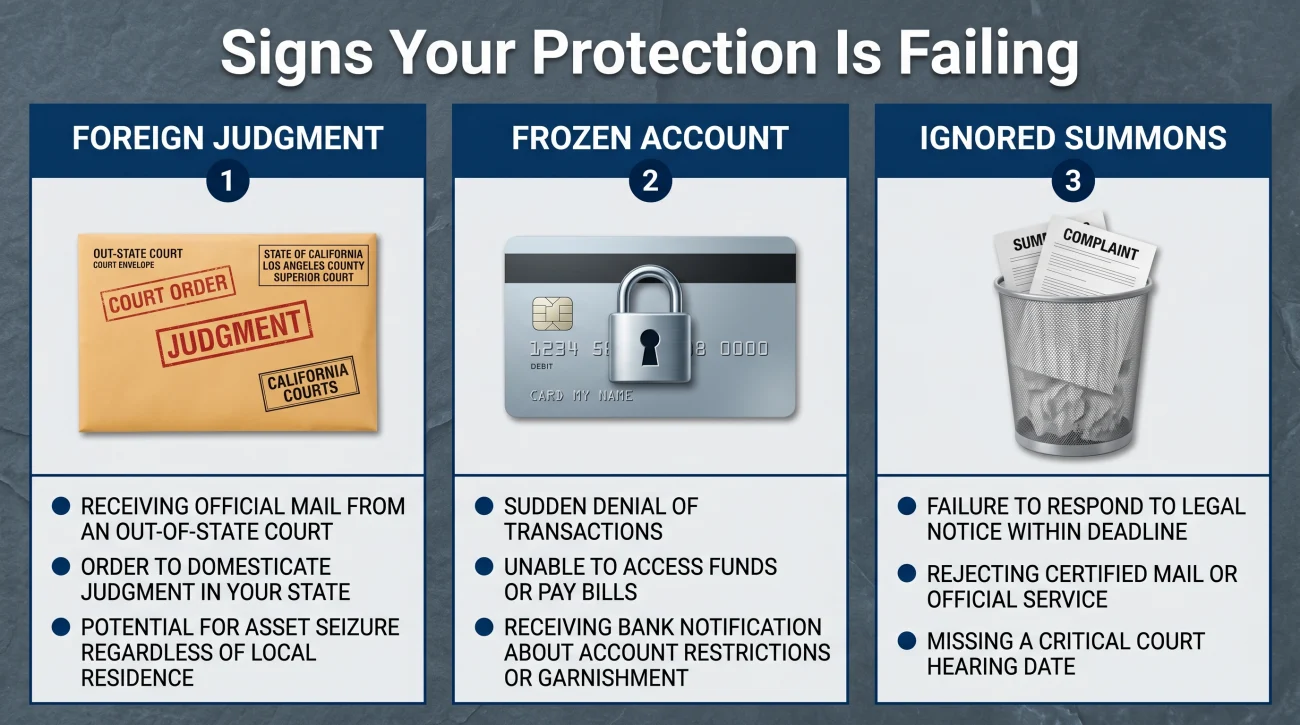
Signs Your State Protection Is Failing
Relying on state law to act as an invisible shield requires constant vigilance. Collection agencies push boundaries constantly, betting that corporate HR departments will prioritize compliance over employee advocacy. If you live in one of the four protected states, you must watch for specific warning signs that your protection is being bypassed.
The most alarming sign is receiving a formal notice of garnishment in the mail that references a court located in a different state. This indicates the creditor is actively exploiting the national employer loophole. They are attempting to force your corporate headquarters to process the deduction before you have time to assert your residency rights.
Another major red flag is discovering a hold on your checking account. Many consumers falsely believe their bank made a technical error because they assume their state residency prevents any type of seizure. If your debit card is declined and the bank mentions a legal hold, the creditor has successfully executed an end run around your state’s wage protection.
A more subtle sign is receiving a summons for a lawsuit and choosing to ignore it. Consumers in Texas and Pennsylvania often throw away court papers, thinking that since their wages cannot be touched, the lawsuit is harmless. This guarantees the creditor will win a default judgment, which they will immediately use to hunt for your bank accounts or place liens on your property.
If you encounter any of these scenarios, the passive approach is no longer viable. You cannot write a letter to your employer citing state law and expect the problem to vanish. You need to have a legal professional evaluate your out of state garnishment risk immediately. An attorney who understands corporate jurisdiction can file the necessary emergency motions to block an out of state order or lift an illegal bank levy before your next rent payment is due.
Practical Strategies for Residents of Protected States
While hiring an attorney is the safest defensive move when a levy hits, you also need an offensive plan. Living in a state that bans consumer wage garnishment is an incredible advantage, provided you know how to use it. Your primary goal is to leverage this protection to force the creditor into a highly favorable settlement, rather than waiting for them to find a loophole.
First, never ignore a court summons. Even if your wages are safe, a judgment acts as a ticking time bomb. Show up to court or hire defense counsel to challenge the debt. Force the collection agency to prove they own the account. If you make the lawsuit difficult and expensive for them, and they know they cannot easily garnish your wages even if they win, they are highly likely to drop the case or offer a settlement for pennies on the dollar.
Second, if you are negotiating with a collector prior to a lawsuit, do not be afraid to politely remind them of your residency. Experienced collectors calculate risk versus reward. If an account is located in South Carolina, the recovery probability score on that account drops significantly. Use this to your advantage when offering a lump sum payoff.
Here is an example of a written communication you can send to a collector who is making aggressive verbal threats over the phone regarding your paycheck.
Subject: Formal notice regarding collection threats and state residency
To Whom It May Concern:
I am writing in response to the recent phone calls from your agency regarding account number [Insert Number]. During these calls, your representatives repeatedly threatened to garnish my wages if I do not make an immediate payment.
I am a permanent resident of the state of [Insert State, e.g., Texas], and my employer is located within this state. As you are legally aware, state law strictly prohibits wage garnishment for this type of consumer debt. Continuing to threaten actions that cannot legally be taken is a direct violation of the Fair Debt Collection Practices Act (FDCPA).
All future communication must be in writing. I expect the verbal threats to cease immediately.
Sincerely,
[Your Name]
⚠️ Warning: Do not send this letter if you work for an out of state corporation. You do not want to dare a collection agency to test the corporate loophole. Only use this if your employment is firmly rooted locally.
Final Thoughts: Do Not Get Complacent
The laws in Texas, Pennsylvania, North Carolina, and South Carolina exist to keep families afloat during severe financial distress. They ensure that no matter how deep into consumer debt you fall, you will still have a paycheck to buy groceries and keep the lights on.
However, complacency is your worst enemy. Debt buyers are sophisticated financial operations. If state law blocks them from tapping your paycheck, they will immediately pivot to freezing your bank accounts. Monitor your bank balances closely, understand the structure of the company you work for, and always respond to legal notices. The shield your state provides only works if you stay actively engaged in your own financial defense to comprehensively halt the wage garnishment process before it evolves into a bank levy.
❓ FAQ
🛡️ Which states completely block wage garnishment for credit cards?
Texas, Pennsylvania, North Carolina, and South Carolina generally prohibit wage garnishment for standard consumer debts, which include credit cards, personal loans, and medical bills.
🏛️ Can the IRS garnish my wages if I live in Texas?
Yes. Federal tax levies supersede all state consumer protection laws. The IRS does not need a court order and can garnish wages in all fifty states without exception.
💼 What happens if I live in South Carolina but my company is in New York?
This creates a vulnerability. A creditor might obtain a judgment in New York and serve the garnishment order directly to your corporate headquarters. Corporate HR often complies based on their local jurisdiction, bypassing your state’s protection.
🏦 Are my bank accounts safe in these four states?
No. Wage protection only applies while the money is in the hands of your employer. Once your paycheck is directly deposited into your bank account, creditors with a judgment can attempt to freeze and seize the funds.
👶 Does Pennsylvania protect my paycheck from child support?
No. Child support and alimony are universally exempt from state wage garnishment bans. Family support obligations can be garnished from your paycheck regardless of where you live.
🎓 Can student loans be garnished in North Carolina?
Federal student loans can be garnished in every state through an administrative process. However, private student loans are treated as consumer debt and generally cannot be garnished in North Carolina.
⚖️ Should I ignore a lawsuit if my state bans garnishment?
No. Ignoring a summons guarantees the creditor will win a default judgment. Even if your wages are protected, they can use that judgment to target other assets.
📞 Can a debt collector threaten to garnish my wages in Texas?
If the debt is a standard consumer debt, threatening to garnish wages in a state where it is illegal is a violation of the Fair Debt Collection Practices Act (FDCPA). You can demand they stop communicating with you.
🏠 Does South Carolina protect my wages from an unpaid lease?
South Carolina protects wages from almost all civil judgments, including standard leases. However, Pennsylvania has a specific exception that allows wage garnishment for residential lease judgments.
⏱️ How quickly can they hit my bank account after payday?
Creditors often time bank levies specifically for payday Fridays. Once the writ is served to your bank, the funds are usually frozen immediately, sometimes within hours of your direct deposit clearing.
Garnishment sits at the end of a process that starts earlier. These cover the full picture.
- How courts allow collectors to reach your paycheck and your bank
- Can Your Employer Fire You for Wage Garnishment? The One-Debt Rule
- Child Support Wage Garnishment: Why the Rules Are Different - and What You Can Actually Do
- Multiple Wage Garnishments at the Same Time: Priority Rules and What Happens to Your Paycheck
- How Much of Your Wages Can Be Garnished? The 25% Rule and When It Doesn't Apply
Garnishment is a symptom. These cover the options that address what caused it.
- The collector behavior that typically comes before the garnishment order
- How the lawsuit you may have missed is what created the garnishment
- How wage garnishment works and the options available to stop or limit it
- When a collector goes after your bank account instead of your wages
- How settling the underlying debt stops the garnishment permanently
Disclosure: The content on this site reflects direct experience inside the debt collection industry and is grounded in federal law and regulation. It is informational in nature. Reading it does not constitute legal advice and does not create any professional relationship. If you are dealing with a lawsuit, a judgment, or a legal deadline, consult a licensed attorney in your state before acting.