- The clock is already ticking. You typically have 20 days or less to respond to a wage garnishment notice before your options severely narrow.
- Your employer often receives the legal order before you do. In many cases, the notice arrives around the exact same time your first paycheck is reduced.
- Filing a claim of exemption, negotiating a lump-sum settlement, or filing for bankruptcy are the most common ways to stop the deduction.
- You must count your deadline from the date printed on the court notice, not the day you opened the envelope.
The Reality of Receiving That Envelope
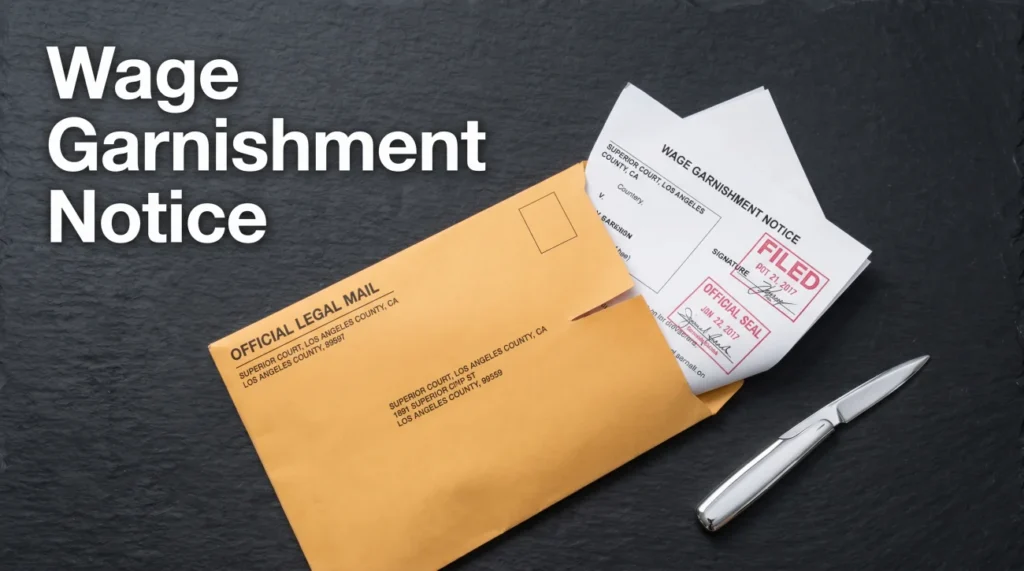
Finding a wage garnishment notice in your mailbox, or having your HR manager pull you aside to hand you a legal order, is one of the most stressful moments you can experience in the debt collection cycle. Panic sets in immediately. You start calculating how you are going to pay rent, keep the lights on, and feed your family if a massive chunk of your income disappears next Friday.
During my 12 years working inside third-party collection agencies and a national debt buyer, I saw exactly how this process operates from the other side. When a creditor finally secures the right to garnish your wages, they are not hoping you will fight back. They are relying on you freezing up. The system is designed to move fast, and if you do not understand what a wage garnishment notice means, the money will start flowing out of your paycheck automatically.
Most people assume that receiving a wage garnishment notice gives them plenty of advance warning. That is rarely how it actually plays out in the real world. By the time you are reading that document, the legal machinery is already in motion, and your employer is already bound by a court order. You have a very short window to act.
This guide will walk you through exactly what that notice means, how the critical response deadline works, and the four immediate options you have to protect your paycheck before the window closes.
What This Notice Actually Means (And Who Sent It)
When you hold an employer garnishment notice in your hands, you need to understand where it came from. This dictates every move you make next.
The notice you received tells you the identity of the creditor, the specific court case number, the total amount owed, and the percentage or amount that will be withheld per pay period. Crucially, it also outlines your right to claim exemptions and the deadline to contest the garnishment.
Here is the reality that catches almost everyone off guard: your employer likely received the order before you did. Federal law requires employers to notify you when they are ordered to garnish your wages, but the timing varies heavily by state. In some situations, the notice arrives concurrently with your first reduced paycheck. Your employer did not betray you. They simply had no choice. Once the order reached their payroll department, they were legally required to begin withholding immediately. If you want to understand the exact mechanics of how payroll processes these orders, reviewing how the employer wage garnishment process functions will clear up a lot of confusion.
“When I managed collection portfolios, one of the most common complaints we heard from consumers was, ‘I never got any warning!’ They thought the garnishment notice was supposed to be a polite heads-up. In reality, it is a notification of an action that is already happening.”
You also need to identify the type of debt immediately. If the notice is for a consumer debt like a credit card or medical bill, the creditor had to sue you and win a court judgment first. If the notice is from the IRS, the Department of Education, or a child support enforcement agency, they did not need a court judgment at all. The debt type changes your legal options entirely. But regardless of the debt type, the clock is running.
The 20-Day Window: How the Deadline Clock Works
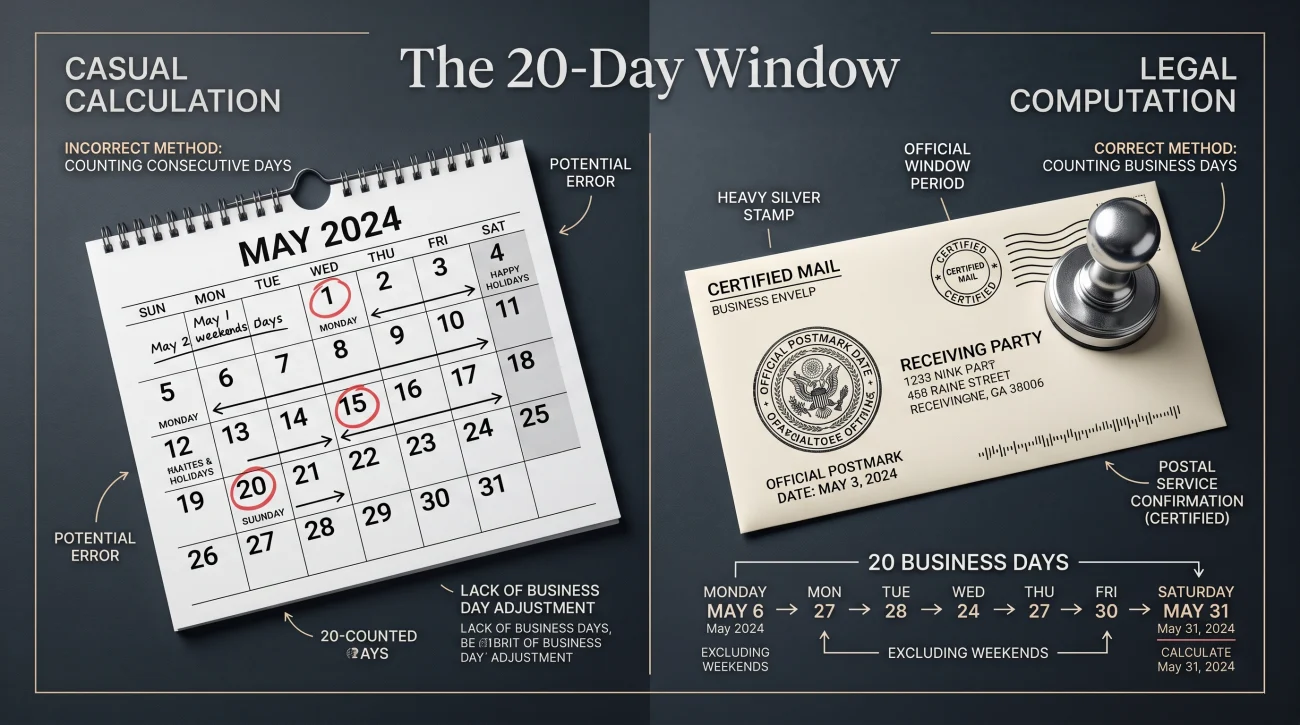
If you take away nothing else from this guide, understand this: you have a strictly enforced deadline to respond. If you miss it, you forfeit your right to fight the deduction.
In most states, you have 20 days to file a Claim of Exemption or request a hearing. Some states give you even fewer days. But the biggest mistake consumers make is misunderstanding when that clock actually starts ticking.
Courts do not care when you got around to checking your mailbox. They calculate the wage garnishment notice deadline based on the date of mailing or formal service. If you wait until day 18 to start looking for forms, you are going to run out of time.
⚠️ Warning: Do not assume weekends and holidays do not count. Unless your state laws explicitly state “business days,” you must assume the deadline includes every calendar day. If day 20 falls on a Sunday, your paperwork usually needs to be filed by Friday.
Now that you know the timeline is tight, let’s look at the four concrete options you have to stop the bleeding.
Option 1: Claim a Legal Exemption
The law recognizes that taking a massive percentage of your paycheck could leave you unable to feed your family or keep a roof over your head. That is why wage garnishment exemptions exist. However, exemptions are almost never automatic. You have to actively raise your hand and claim them.
There are generally two routes to claiming an exemption:
- 📌 Categorical Exemptions: This applies if your family status or income type qualifies you under the law. For example, if you provide more than half the financial support for a dependent, you may qualify as “head of household.” In states like Florida, this can protect 100% of your wages. Alternatively, if your income comes from protected sources like Social Security or VA benefits, that money cannot be taken for consumer debts.
- 📌 Financial Hardship: If the garnishment prevents you from meeting basic, essential living expenses like rent, utilities, and basic groceries, many courts allow you to petition for a hardship reduction. You will need to provide a detailed budget proving your expenses.
To exercise this option, you must file a Claim of Exemption form with the court that issued the order. If you want a detailed breakdown of the exact forms and what happens at the court hearing, see our guide on the procedural steps for claiming an exemption.
Key Point: Filing a claim of exemption does NOT immediately stop the payroll deduction. Your employer must continue withholding your wages until they receive a new order from the judge. This means your checks will still be short while you wait for your hearing date.
Option 2: Negotiate Directly With the Creditor
Many people assume that once a creditor gets a garnishment order, they hold all the cards and will not negotiate. From an insider’s perspective, this is absolutely false.
Creditors like cash today much more than a slow drip of payments over the next three years. Administering a garnishment takes time, requires tracking, and carries the constant risk that you might quit your job, get fired, or file for bankruptcy. If you can offer a lump-sum settlement or a voluntary payment plan that avoids the payroll department, many creditors will agree to file a release of garnishment.
If you want to approach the creditor’s attorney to negotiate, it is crucial to remain completely unemotional. The mistake most consumers make is calling the collection firm in tears or in a rage. To get a deal done, you must drop the emotion entirely and treat it like a cold business transaction.
Sample script for negotiating a garnishment release:
“I am calling regarding case number [Insert Case Number]. A garnishment has been ordered against my wages. If this garnishment proceeds, it will cause severe financial hardship, and I will be forced to explore bankruptcy to protect my family’s housing. However, I want to resolve this. I have access to [Insert reasonable lump sum amount, e.g., 40% of the total debt] today if you agree to consider the account settled in full and immediately release the garnishment order with my employer.”
Never offer money you do not actually have, and never agree to a deal unless the creditor puts the release terms in writing first. If you are dealing with an aggressive collection law firm and the balance is substantial, it is often wise to seek professional help to handle the negotiation. Knowing how to find an attorney to stop wage garnishment can level the playing field, as collection lawyers take settlement offers from defense attorneys much more seriously than they take calls from consumers.
Option 3: Challenge the Underlying Judgment
For consumer debts, a wage garnishment can only happen if the creditor sued you and won a judgment. But what if you were never sued? Or more accurately, what if you were never legally notified that you were being sued?
In the collection industry, we see cases of “sewer service” all the time. This happens when a process server claims they handed you the lawsuit paperwork, but they actually left it at an old address, gave it to a stranger, or threw it away. Because you didn’t know about the lawsuit, you didn’t show up to court, and the creditor won a “default judgment” automatically.
If you truly had no idea this lawsuit existed until your HR department handed you the garnishment notice, you might be able to challenge the judgment itself.
Identify improper service + File Motion to Vacate + Ask judge to pause garnishment
By filing a Motion to Vacate the default judgment, you are asking the court to throw out the judgment because your due process rights were violated. If the judgment is vacated, the garnishment collapses with it. If you suspect you are a victim of improper service, reviewing the steps on how to fight a default judgment is your logical next step. Your immediate action step within the 20-day window is to pull your complete case file from the court clerk to see exactly who signed the proof of service. Because overturning a judgment involves strict legal procedures, having a professional evaluate that case file is highly recommended to ensure you do not miss a technical requirement. But what if the judgment is perfectly valid, the debt is yours, and you simply cannot afford the deduction? That is when you have to look at the nuclear option.
Option 4: File for Bankruptcy to Trigger the Automatic Stay
When you are completely overwhelmed, facing multiple garnishments, and have no way to pay your essential bills, bankruptcy is the ultimate emergency brake.
The moment you file a bankruptcy petition, a federal injunction called the “automatic stay” goes into effect immediately. You do not have to wait for a judge to approve your case. The very second the paperwork is filed and date-stamped by the federal court, almost all collection activities must stop.
“Inside a collection agency, nothing stops a file faster than a bankruptcy notice. We could have a garnishment actively pulling funds, but the moment that Chapter 7 case number hits our desk, we legally have to back off instantly.”
You or your attorney simply notify your employer’s payroll department and the creditor that you have filed, providing the federal case number. The employer is legally required to halt the deductions. To understand which debts are discharged and which ones survive, read the complete overview of how bankruptcy impacts active garnishments.
📌 Note: The automatic stay does not stop wage garnishment for child support or alimony. Domestic support obligations take priority and will continue regardless of your bankruptcy filing.
Your First 24 Hours: A Concrete Action Plan
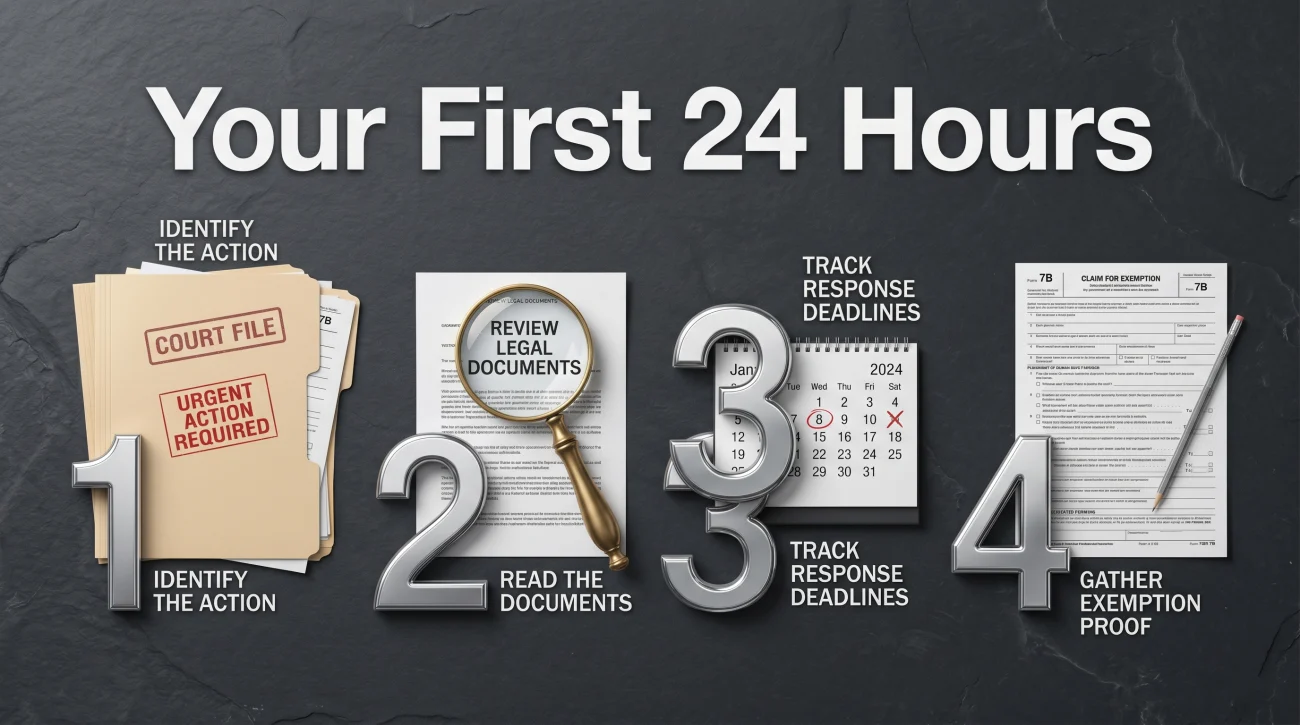
When you receive a wage garnishment notice what to do next must be systematic. Do not let anxiety paralyze you. Follow this exact workflow in the first 24 hours:
- 📋 Step 1: Verify the court case number. Look at the top of the notice. Call the clerk of the court listed to confirm the judgment is real and active. Scammers sometimes send fake notices to employers to extort money.
- 📌 Step 2: Determine the debt type. Is it a credit card judgment? A federal student loan? An IRS tax levy? Your options change drastically depending on who is taking the money, and this dictates which deadline rules apply to you. Understanding all the different ways to approach each garnishment type is critical before you make a move.
- ⏰ Step 3: Calculate your exact deadline. Look at the date the notice was issued or mailed. Count forward 20 days (or whatever timeframe your specific state allows). Write that absolute final deadline on your calendar.
- 📋 Step 4: Assess your exemptions. Look at your dependents and your income sources. Determine immediately if you qualify for a head of household or federal benefit exemption.
Signs You Need Professional Help Before the Window Closes
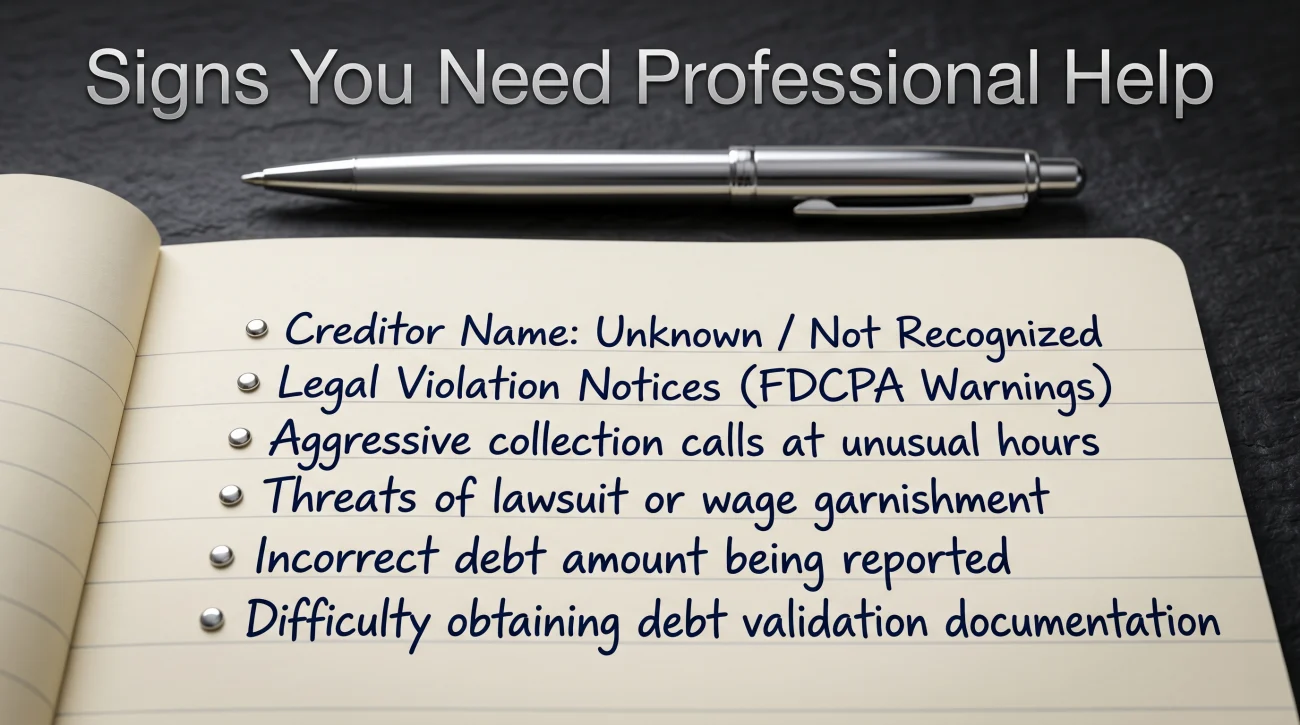
Handling a garnishment on your own is possible, but it carries immense risk. If you make a procedural mistake, your paycheck takes the hit. You need to know when a situation has escalated beyond DIY remedies.
You should strongly consider professional legal intervention if any of the following apply to your situation:
- You do not recognize the creditor listed on the notice at all.
- The debt amount is substantial, and the 25% deduction will leave you unable to pay for rent, food, or basic utilities.
- You are absolutely certain you were never served with lawsuit papers, meaning the underlying default judgment might be invalid.
- The debt collector used abusive, harassing, or deceptive tactics before getting the judgment, which may be a violation of the Fair Debt Collection Practices Act (FDCPA), the federal law that penalizes illegal collection behavior.
If you are facing these complexities and your deadline is rapidly approaching, guessing at court procedures is dangerous. Having your case evaluated by someone who understands your state’s specific court rules is the safest path forward. Taking the time to understand what a lawyer can do when a debt collector sues you can be the difference between saving your paycheck and losing thousands of dollars. If the garnishment is already in motion, consulting a professional focused on wage defense is your most urgent priority.
Final Thoughts on Protecting Your Paycheck
Receiving a wage garnishment notice is a brutal financial shock. It feels invasive and overwhelming. But remember that the document in your hand is not the end of the road. It is simply a legal mechanism that has rules, boundaries, and limits.
The collection industry banks on the fact that most consumers will ignore the paperwork out of fear. Do not fall into that trap. Whether you claim an exemption, negotiate a release, challenge a bad judgment, or file for bankruptcy, taking decisive action is the only way to regain control of your income. Focus on your deadline, choose your path, and move forward. Your paycheck is your livelihood. Protect it with the exact same urgency the collectors used to target it.
❓ FAQ
⏰ What happens if I completely miss the deadline on the notice?
If you miss the deadline, your employer will begin withholding the funds, and your right to an initial hearing is usually waived. However, you can often still file a claim of exemption later if you experience a substantial change in financial circumstances, though it will not recover the money already taken.
🏢 Why did my employer get the garnishment notice before I did?
Because your employer controls the payroll, the court or agency must serve them with the legal order to legally bind them to withhold the funds. Federal and state laws require the employer to notify you, but this often results in you receiving the warning just days before your check is cut.
💸 Can a wage garnishment take my entire paycheck?
For consumer debts like credit cards, federal law limits garnishment to 25% of your disposable earnings. However, child support can take up to 65%, and IRS tax levies have no percentage cap, meaning they can take a significant majority of your income based on their exemption tables.
📅 How long does it take to get a hearing date after filing an exemption?
Once you file your Claim of Exemption, it typically takes the court two to three weeks to schedule a hearing, depending on their current backlog. Keep in mind that your employer must continue withholding your wages during this waiting period until the judge makes a final ruling.
🤝 Who do I negotiate with if the debt was sold to a debt buyer?
If a debt buyer (not your original creditor) sued you and won the judgment, you must negotiate directly with the debt buyer’s attorney of record listed on your notice. Do not call your original credit card company, as they no longer own the account or control the garnishment.
⚖️ What happens if I was never sued before receiving the notice?
If the debt is a consumer debt, the creditor must have a judgment. If you were never served lawsuit papers, you may be a victim of “sewer service.” You can file a Motion to Vacate the default judgment. However, government debts like taxes and student loans do not require a lawsuit first.
🛡️ Will filing for bankruptcy stop my employer from garnishing me?
Yes, for most debts. Filing for bankruptcy triggers an “automatic stay” that immediately halts consumer debt garnishments. You must notify your employer and the creditor of your bankruptcy case number. Note that bankruptcy does not stop child support garnishments.
📉 Can my employer fire me because of this notice?
Under federal law, your employer cannot fire you for having a wage garnishment for a single debt. However, if you receive garnishment orders for two or more separate debts, that federal protection is lifted, and you could face termination.
Garnishment sits at the end of a process that starts earlier. These cover the full picture.
- How courts allow collectors to reach your paycheck and your bank
- Types of Wage Garnishment: Why the Debt Type Changes Everything About Your Options
- Wage Garnishment Limits by State: Which States Protect More Than Federal Law Requires
- How Much of Your Wages Can Be Garnished? The 25% Rule and When It Doesn't Apply
- Can Your Employer Fire You for Wage Garnishment? The One-Debt Rule
Garnishment is a symptom. These cover the options that address what caused it.
- The collector behavior that typically comes before the garnishment order
- How the lawsuit you may have missed is what created the garnishment
- How wage garnishment works and the options available to stop or limit it
- When a collector goes after your bank account instead of your wages
- How settling the underlying debt stops the garnishment permanently
Disclosure: The content on this site reflects direct experience inside the debt collection industry and is grounded in federal law and regulation. It is informational in nature. Reading it does not constitute legal advice and does not create any professional relationship. If you are dealing with a lawsuit, a judgment, or a legal deadline, consult a licensed attorney in your state before acting.