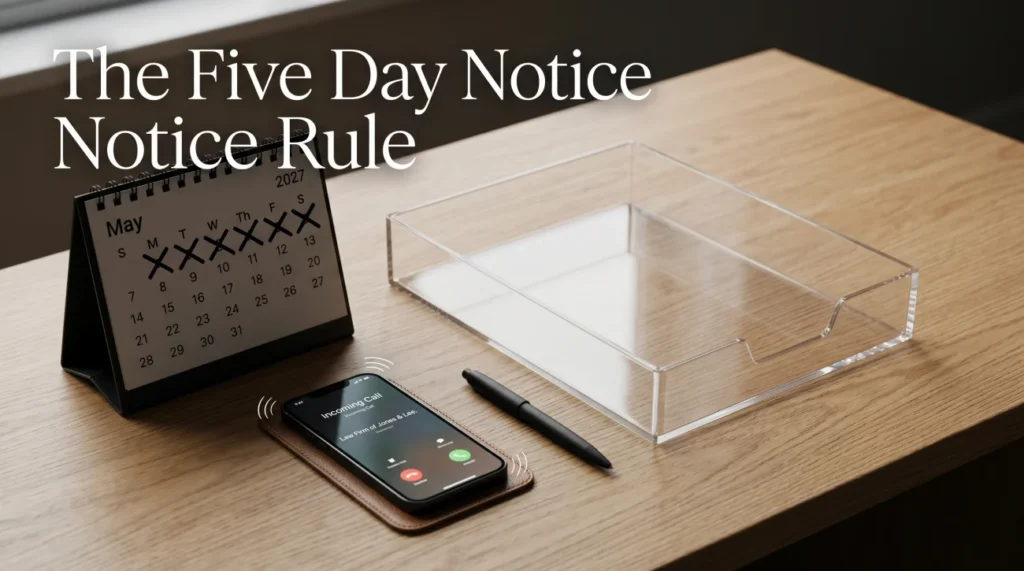
- By federal law, a debt collector must send you a written validation notice within five days of their first communication with you.
- While mailroom errors happen, failing to send this notice is often a calculated tactic and a documentable FDCPA violation.
- Missing this notice means your 30-day window to dispute the debt never legally started, preserving your leverage to demand proof.
The Five-Day Rule Collectors Hope You Do Not Know
You get a phone call from someone claiming you owe thousands of dollars. They are aggressive, they want a payment today, and they rattle off an account number. You hang up and wait for the paperwork to arrive so you can review what they are talking about. But a week passes, then two weeks, and nothing shows up in your mailbox. If you are dealing with a debt collector and no validation notice ever arrives, you are not just experiencing bad customer service. You are experiencing a violation of federal law.
During my twelve years working inside third-party collection agencies and a national debt buyer, I saw exactly how the initial contact phase is orchestrated. The law requires us to send a written notice within five days of first talking to you. But I also saw how often that rule was conveniently ignored, especially on older accounts or portfolios where our agency simply did not have the backup documentation to prove the debt.
Most consumers assume that if a collector did not send a letter, it just got lost in the mail. In reality, withholding the validation notice is often a calculated move. Sending that notice triggers your right to dispute the debt, and collectors know that once you dispute it, they have to pause their collection efforts and do actual work to verify the account. By keeping you in the dark, they hope you will pay out of fear before you realize you have rights.
This guide will walk you through exactly what this violation means, how it impacts your timeline to respond, and the specific steps you should take to force them to show their hand.
What the Law Actually Requires on First Contact
To understand why this missing piece of mail is so critical, you have to understand the framework of the Fair Debt Collection Practices Act (FDCPA). This is the federal law that governs exactly what third-party agencies can and cannot do.
Under Section 1692g of the FDCPA, a collector operates on a strict deadline. Within five days after their initial communication with you, they must provide a written notice containing specific details about the debt. If their very first contact with you was a letter, that letter usually serves as the notice. But if their first contact was a phone call, a text message, or an email, the clock starts ticking immediately. They have five days to get that written notice into your hands.
This is not an optional courtesy. The law does not say they only have to send it if you ask for it. It is a mandatory disclosure. Knowing these federal debt collection rules is the foundation of protecting yourself from predatory tactics.
What You Were Supposed to Receive
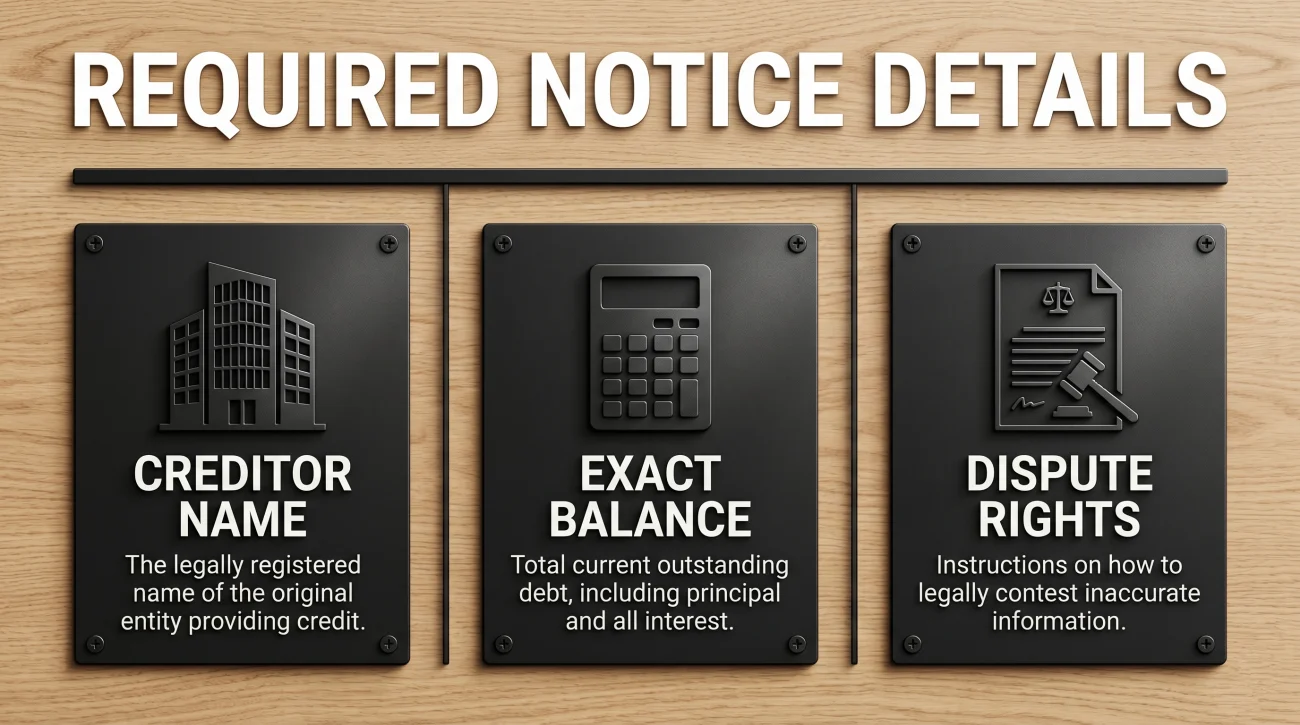
The validation notice gives you the exact information you need to figure out if the debt is real, if the amount is accurate, and who originally owned it. According to the rules updated by the CFPB in Regulation F, a compliant notice must include:
- The name and mailing address of the collection agency.
- The name of the original creditor to whom the debt is owed.
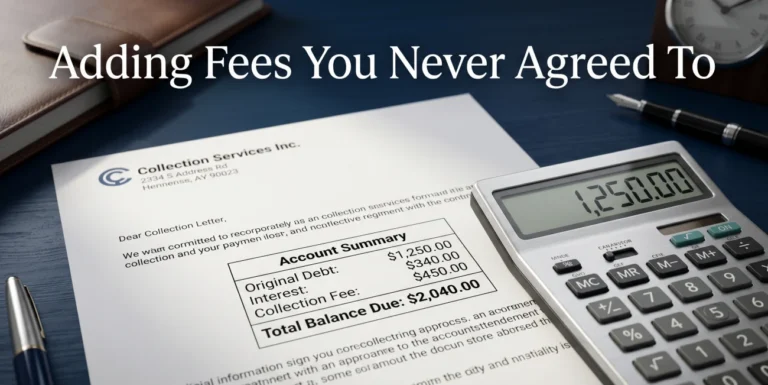
- The exact current amount of the debt, including an itemization of interest, fees, payments, and credits.
- A clear statement of your right to dispute the validity of the debt within 30 days.
- A tear-off reply form that you can use to easily send your dispute.
If you never received this document, you were deprived of the exact information the law says you need to make an informed financial decision. But understanding why they didn’t send it is just as important as knowing they were supposed to.
Why Collectors Skip the Notice (The Insider Reality)
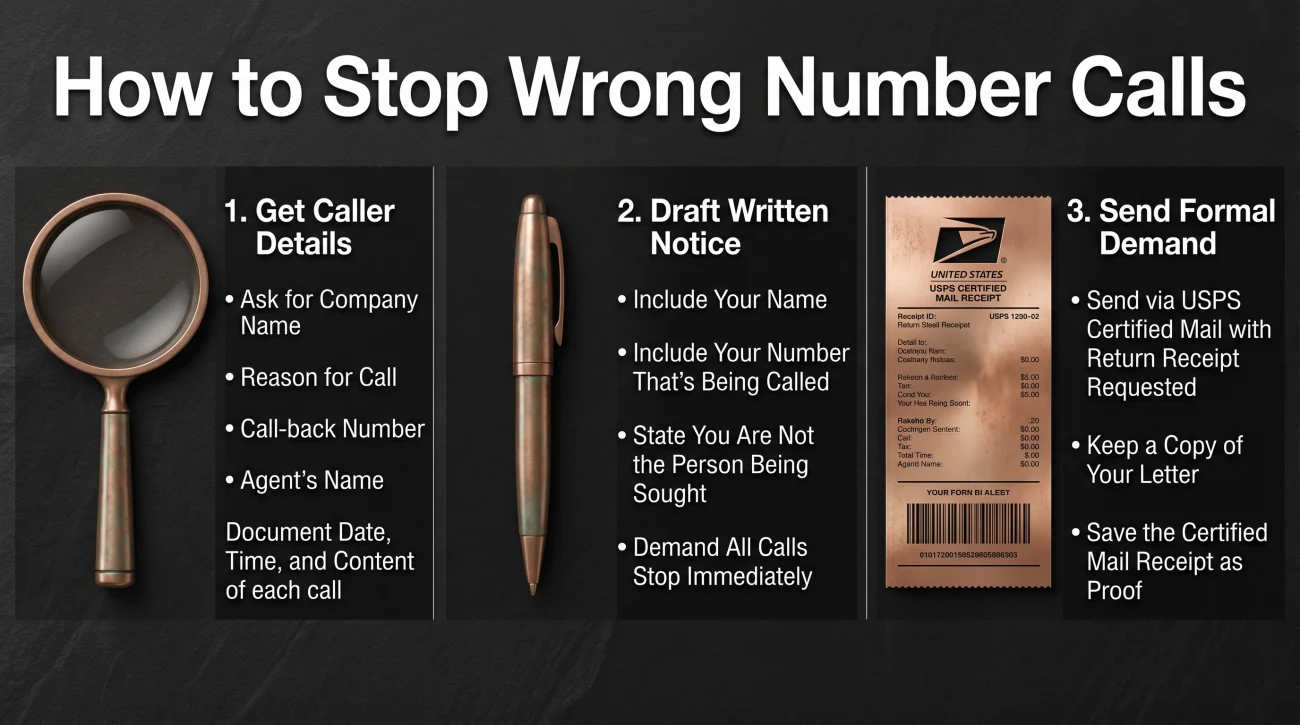
To be fair, sometimes a missing validation notice genuinely is a clerical error. A collection agency might have purchased a portfolio with bad skip-tracing data, resulting in your notice being mailed to an address you left five years ago. Or, an automated mailing system might have glitched.
However, when a missing letter is paired with persistent, urgent phone calls, that pattern is rarely a coincidence. When a debt buyer purchases defaulted accounts, they pay pennies on the dollar for what is essentially a massive spreadsheet. They rarely get the original signed contracts or the full itemized fee structures. They just get data.
“When I managed a floor of collectors, we knew exactly which portfolios lacked supporting documentation. If a consumer demanded validation on those accounts, we couldn’t provide it. So, some agencies operate on a ‘collect first, validate later’ model. If they don’t send the notice, you might not realize you have the right to demand the proof they don’t possess.”
By failing to send the notice, aggressive collectors accomplish two things at once. First, they avoid officially starting your 30-day dispute window, keeping the pressure on uninterrupted. Second, they attempt to secure a quick “good faith” payment over the phone before the paperwork arrives to reveal the debt is time-barred or unverified.
⚠️ Warning: Never make a payment over the phone just to get a collector to stop calling if you have not received written documentation. Paying anything can reset the statute of limitations and legally validate a debt you might otherwise not have had to pay.
What the Missing Notice Means for Your 30-Day Window
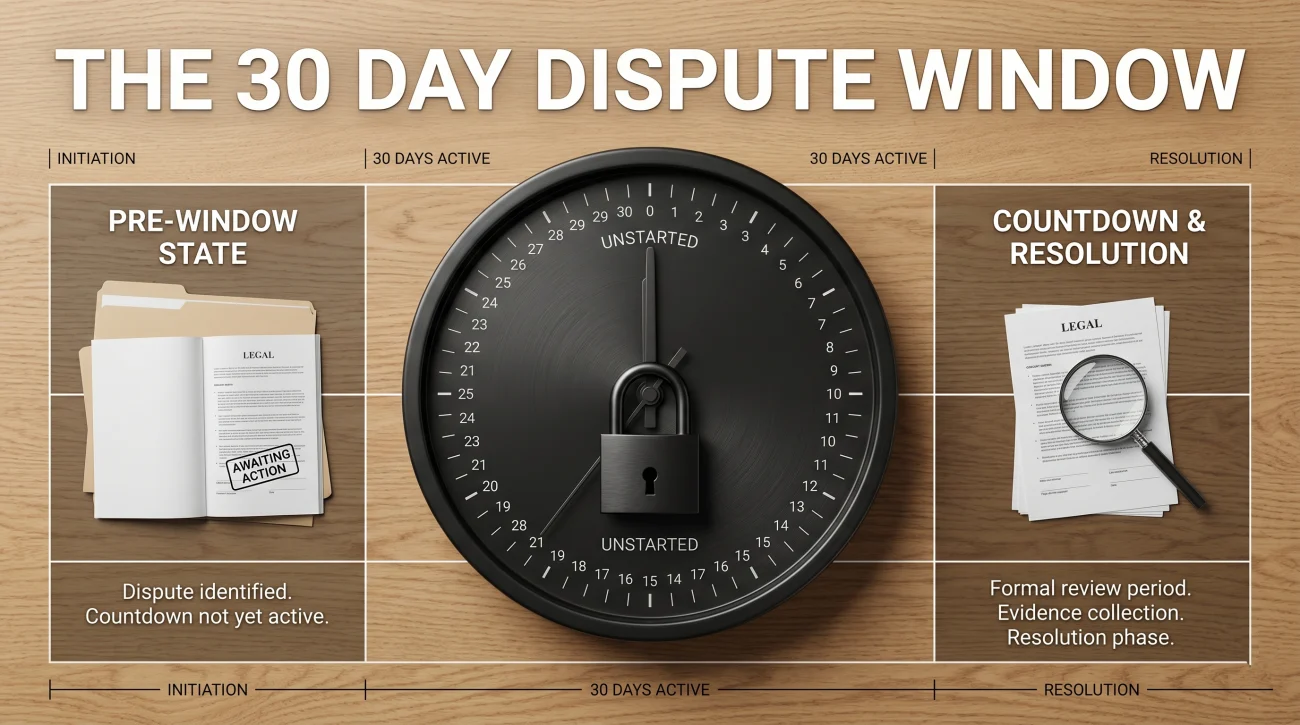
Because the validation notice is designed to trigger your right to dispute, not receiving it often creates a deep sense of panic regarding deadlines. Collectors will routinely use this confusion against you. A common tactic is for an agent to call a month later and say, “We mailed the notice 45 days ago. You didn’t dispute it, so you missed your window and now you have to pay.”
This is legally misleading. The reality is that the 30-day dispute clock begins when you receive the notice, not when the collector claims they generated it. If no debt validation notice was ever received, the clock arguably never started. You have not waived your rights, and you have not admitted you owe the debt by default.
The specific leverage of the 30-day window is that disputing within that timeframe forces the collector to completely pause all collection activity until they provide proof. Even if a collector insists the window has closed, the FDCPA still allows you to dispute a debt and demand verification at any time. Their failure to provide the initial notice does not erase your consumer protections. In fact, it becomes a documented violation that you can use to protect yourself.
The FDCPA Violation and Your Leverage
Transitioning from confusion to action requires recognizing that the missing notice is a direct violation of Section 1692g of the FDCPA. It is a substantive breach of your rights, but you need to know how that violation translates into actual leverage.
Many consumers read about FDCPA violations and immediately assume they are entitled to a $1,000 check. The reality inside the industry is more nuanced. A single skipped letter, if the collector immediately backs off when challenged, rarely leads to a lucrative lawsuit. However, when a collector skips the notice and continues to harass you, call your workplace, or make empty threats, that pattern creates immense legal leverage.
“During my time managing accounts, the files that ended up costing our agency money in FDCPA lawsuits rarely started with a grand, malicious scheme. They started exactly like this: a skipped validation notice, followed by an agent pushing too hard on the phone. We knew that if a consumer had documented the missing notice and then logged our subsequent calls, our legal defense was gone. We often just closed the file and walked away.”
If you are being aggressively pursued, documenting their failure to send the notice builds a wall of defense. If they attempt to sue you later, or if you decide to explore legal action against them, a documented trail showing they ignored federal disclosure requirements from day one makes their case incredibly weak.
How to Proceed When You Never Received the Notice
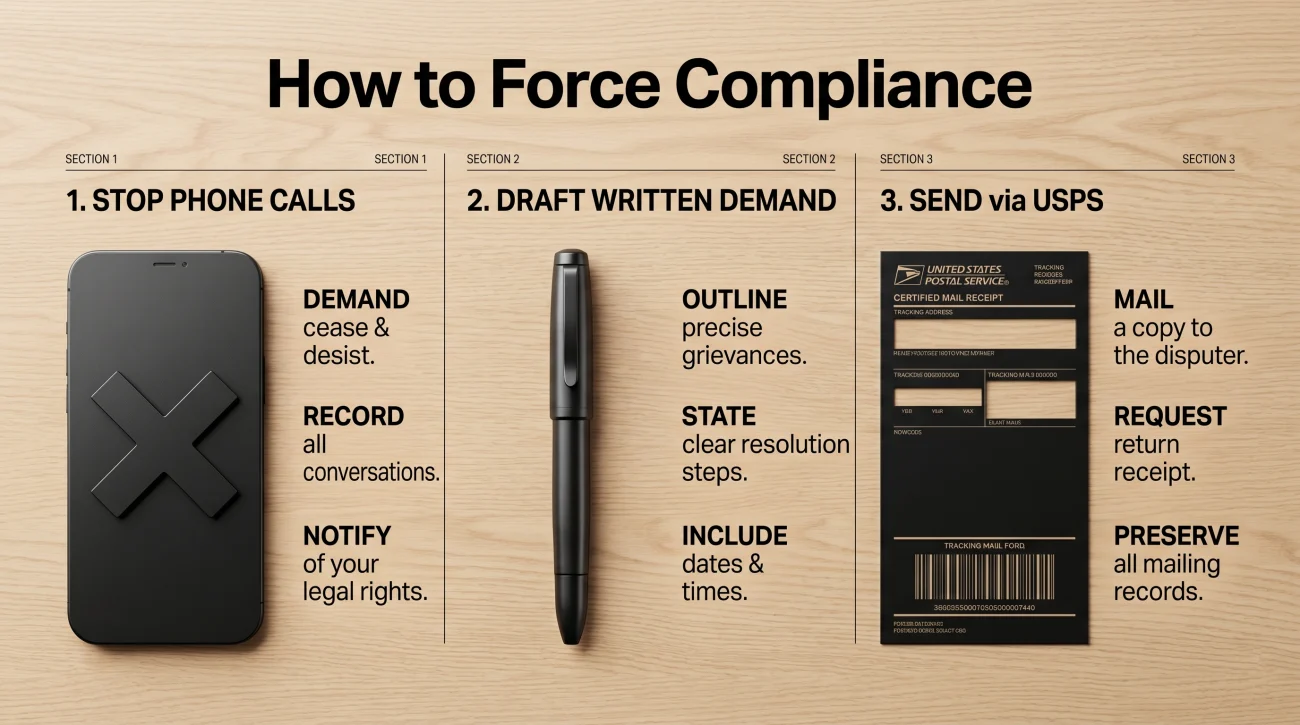
Once you realize the collector is operating outside the rules, you must move the battleground. You need to shift all communication out of the realm of unrecorded phone calls and into a documented paper trail. Here is the exact process to force compliance.
Step 1: Break Their Rhythm on the Phone
Collectors rely on momentum. When they call, they will try to pull you into an argument about the balance or pressure you to verify your banking details. You must break this rhythm. Do not argue. Do not explain your financial hardship. You only need to say one sentence: “I have not received the written validation notice required by law. I will not discuss this account until I have it in writing.” Then, hang up. Reclaiming your psychological control on the phone is the first step to stopping the harassment.
Step 2: Send a Written Validation Demand
You need to send a letter explicitly stating that you were contacted, you never received the required 5-day notice, and you are now formally demanding validation. This puts them on notice that you know your rights.
Always send this letter via USPS Certified Mail with a Return Receipt requested. This gives you a hard date and a signature proving they received your demand. That green certified mail card is the ultimate proof that you did your part while they failed to do theirs.
Step 3: What to Include in Your Letter
Keep your letter direct and clinical. You do not need to threaten them with a lawsuit; simply noting their failure to comply is enough. You can use a structure like this:
Date: [Current Date]
To: [Collection Agency Name]
[Collection Agency Address]
Re: Account Number (if known) or Phone Number they called
To Whom It May Concern,
I am writing in response to a phone call I received from your agency on [Date of Call]. During that call, your representative attempted to collect a debt.
As of today, more than five days have passed since that initial communication, and I have not received the written validation notice required by 15 U.S.C. § 1692g of the Fair Debt Collection Practices Act.
Please be advised that I dispute this debt in its entirety. I am requesting full validation of this debt. I require you to provide the name and address of the original creditor, an itemized breakdown of the amount claimed, and documentation proving you have the legal authority to collect this account.
Until this validation is provided, all collection activity must cease immediately. I request that all future communications regarding this matter be made exclusively in writing to the address below.
Sincerely,
[Your Name]
[Your Mailing Address]
💡 Pro Tip: Keep a copy of the letter you sign, along with the certified mail receipt. Create a physical folder for this specific collector. If you ever need to prove that they ignored your rights, this folder is all you will need.
When a Missing Notice Pairs With Aggressive Tactics
A missing piece of mail is frustrating, but it becomes a severe problem when the collector uses your lack of information against you. If you haven’t received a notice, you might be wondering if it’s worth fighting about or if you should just wait. The answer depends entirely on how the collector is behaving right now.
The failure to send a validation notice is a major red flag when it is combined with any of these current escalation tactics:
- They are threatening legal action over the phone: A collector who threatens to sue you, garnish your wages, or “send a process server” today, while simultaneously refusing to mail you the required validation notice, is almost certainly bluffing and violating the FDCPA.
- They are calling your workplace: Using social pressure by contacting your employer or coworkers, while keeping you blind to the actual details of the debt, is a predatory tactic designed to force a panicked payment.
- The debt sounds completely unfamiliar: If you are being pursued for an account you never opened, or if they are calling the wrong person entirely, they may be withholding the notice because putting a fabricated or wrongfully assigned debt on official letterhead creates massive liability for them.
If you are experiencing these aggressive tactics without ever receiving a written notice, the collector is not just making a clerical error; they are actively denying you your rights. Your next step is evaluating whether the pressure you are facing is legally actionable harassment.
Final Thoughts: Reframing the Missing Notice
It is easy to feel powerless when a debt collector holds all the cards and refuses to send you the paperwork. But you need to reframe how you view a missing validation notice. It is not a sign that you are in trouble; it is a sign that the collector is sloppy, disorganized, or deliberately breaking the rules.
Pleading with the collector on the phone to send the letter, feeling anxious that you are missing a deadline, and letting them dictate the timeline.
Recognizing their failure as an FDCPA violation, using it as a legal shield, and stepping off the phone to force them into a written, documented process.
Do not let a collector’s failure to follow federal law pressure you into making a blind financial decision. Send your written demand, keep your receipts, and let their lack of compliance become your strongest defense.
❓ FAQ
📱 Does a text message count as a validation notice?
Under recent CFPB rules, collectors can use electronic communications like text or email for initial contact. However, the message must contain all the legally required information (amount, original creditor, your rights, and a tear-off/opt-out method). A simple text saying “Call us about your debt” does not meet the legal standard of a validation notice.
📞 If their first contact is by phone, do they still have to write to me?
Yes. The phone call counts as the “initial communication.” The law requires them to send the detailed written validation notice within five days of that first phone call, regardless of what was discussed or agreed upon during the conversation.
🏠 What if I missed the validation notice because I moved?
If the collector mailed the notice to your last known address and it was returned or you simply didn’t live there anymore, they have technically attempted to comply with the FDCPA. However, your right to dispute the debt remains intact once you actually become aware of the collection efforts.
🤐 Can I just ignore them if they never send the letter?
Ignoring them is risky. While their failure to send the notice is a violation, ignoring them doesn’t stop them from reporting the debt to credit bureaus or eventually filing a lawsuit. It is always safer to send a written dispute demanding validation so you create a documented paper trail of their non-compliance.
The full FDCPA framework and the four areas where it matters most.
- Your legal rights when collectors call, write, or threaten to sue
- When they can call, what they cannot say, and how to make it stop
- How to identify FDCPA violations and what you can do with them
- Why the age of a debt determines what a collector can legally do
- Your right to demand proof before paying or acknowledging anything
Harassment is one thing. Lawsuits, garnishments, and frozen accounts are another.
- When collector behavior crosses the line the FDCPA was written to prevent
- What to do if a collector files suit after their calls have not worked
- What collectors can do to your wages once a judgment is entered
- How a bank levy works and which funds the law protects from seizure
- How to resolve the debt that collectors have been calling about
Disclosure: The content on this site reflects direct experience inside the debt collection industry and is grounded in federal law and regulation. It is informational in nature. Reading it does not constitute legal advice and does not create any professional relationship. If you are dealing with a lawsuit, a judgment, or a legal deadline, consult a licensed attorney in your state before acting.