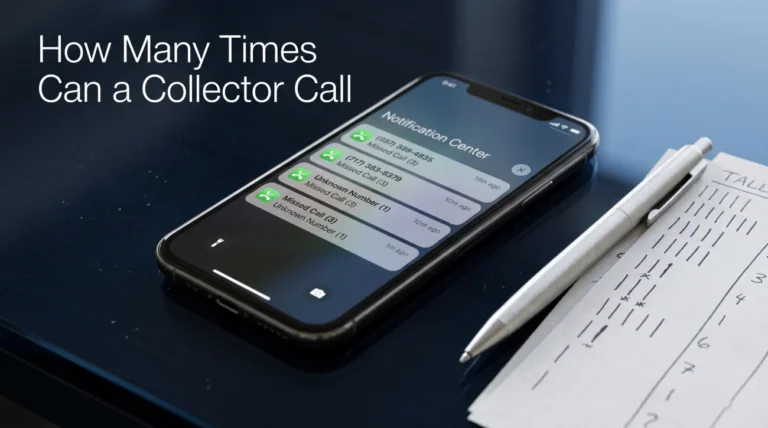
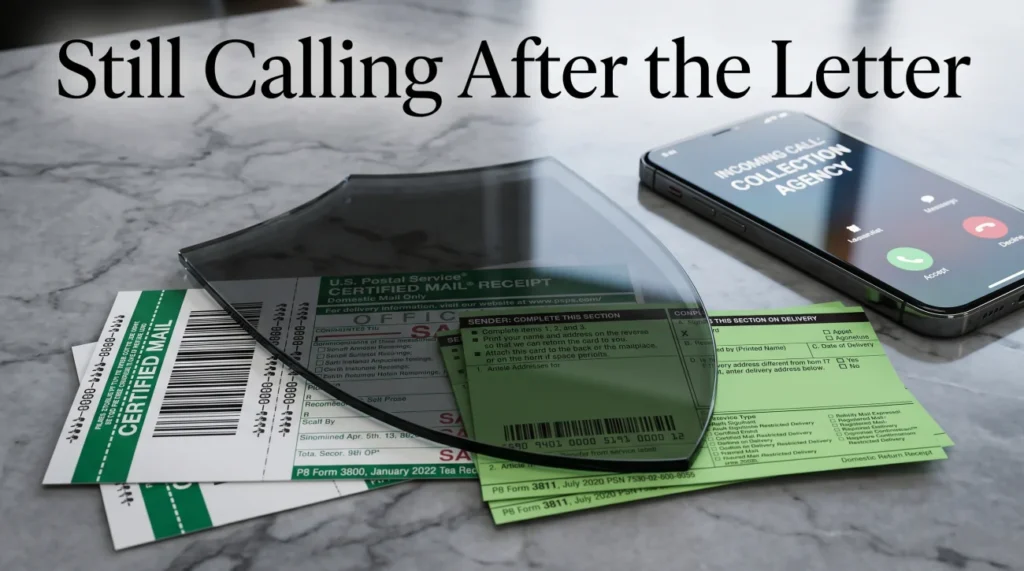
- When a debt collector keeps calling after receiving your written cease and desist letter, they are handing you documented federal violations.
- Each contact after a written stop request is a violation of the FDCPA, which can entitle you to statutory damages and leverage in your case.
- Collectors often continue calling due to internal system lags, account transfers, or deliberate tests of your boundaries, not because your letter failed.
- You must document every subsequent call, keep your certified mail receipt, and shift your mindset from feeling powerless to actively gathering evidence against them.
When Your Stop Request Seems to Fail
You did exactly what you were supposed to do. You wrote the letter, paid for certified mail, and kept the receipt. You checked the tracking number and saw it was delivered. You finally felt a sense of relief, expecting the relentless phone calls to end. Then, two days later, the phone rings. It is the exact same collector, asking for the exact same payment.
For most consumers, a debt collector still calling after a cease and desist letter feels like a complete defeat. It feels like the law does not matter and the collector is untouchable. But sitting on the other side of the collection floor for over a decade, I saw this exact scenario play out thousands of times. I can tell you that the collector is not untouchable. In fact, by ignoring your letter, they just made the biggest mistake they can make on your account.
When a collection agency won’t stop calling after a letter, you have not failed. The dynamic of the entire situation has just shifted entirely in your favor. This guide will explain exactly why they are still calling, what those calls are now legally worth to you, and how to turn their non-compliance into your strongest weapon.
The Legal Boundary: What a Cease and Desist Letter Actually Does
Before we look at why the calls are continuing, we have to establish exactly what the law requires. The Fair Debt Collection Practices Act (FDCPA) gives consumers a specific, absolute right to stop communication. This is not a suggestion for the collector. It is a strict federal mandate.
Once a third-party debt collector receives your written request to stop contacting you, they must comply immediately. They cannot call your cell phone, they cannot call your workplace, and they cannot send you text messages. The law permits them exactly one final communication. This final contact can only be used to tell you that they are terminating further communication, or to notify you that they or the creditor intend to invoke a specific remedy, such as filing a lawsuit.
Any other type of contact, especially a demand for payment, is illegal. A debt collector violating a cease and desist letter crosses a hard line in the sand. If you want to understand the full scope of these boundaries, you should review the comprehensive guidelines surrounding debt collection laws to see exactly how strict these communication rules are.
The Insider Reality: Why They Keep Calling Anyway
If the law is so strict, why is a debt collector calling after I told them to stop in writing? Many consumers assume the agency is run by cartoon villains deliberately mocking the federal government. While deliberate abuse happens, the reality inside a collection agency is usually far more chaotic and bureaucratic.
There are three primary reasons a collector contacting you after a written stop request continues to happen. Understanding which one applies to your account helps you determine how to respond.
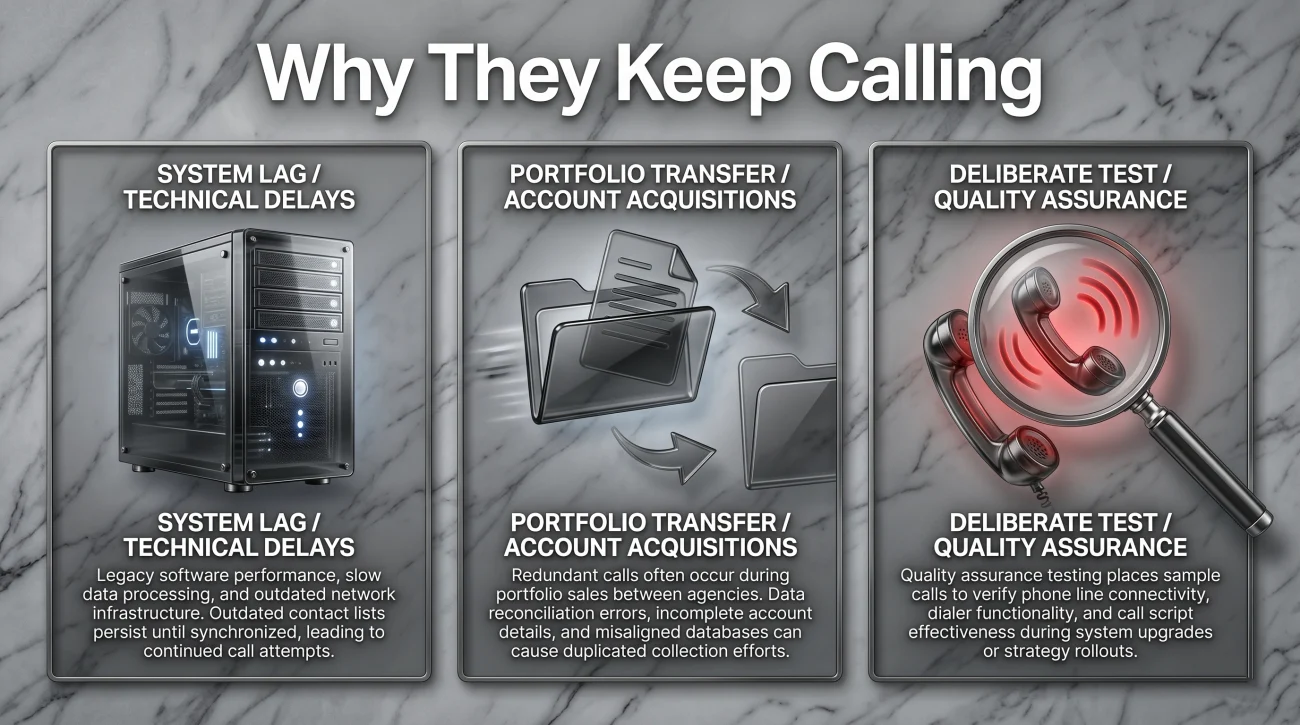
Reason 1: The System Lag
Collection agencies process thousands of pieces of mail a week. When your certified letter arrives, it goes to a mailroom or a compliance department. Someone has to open it, scan it, find your account number, and manually update the software system to flag your file as “Do Not Call.”
“Inside the agency, there was often a 48 to 72-hour delay between the mailroom signing for a certified letter and the floor agent’s screen actually locking down. The agent making the call on Tuesday morning genuinely did not know the letter arrived on Monday afternoon. They were just dialing the next number on their screen.”
This system lag does not excuse the violation. The agency is still legally responsible the moment they sign for the letter. But it explains why you might get one or two rogue calls immediately after delivery.
Reason 2: The Portfolio Transfer
Debt is bought and sold constantly. Sometimes, right around the time you send your letter, the agency sells your account to a completely different debt buyer. Alternatively, they might transfer the file to a different internal desk or a contracted law firm. When this data transfer happens, the “Cease Communication” flag is sometimes lost or ignored in the data import.
If a new agency calls you, they might legitimately not have the letter you sent to the previous company. However, the original agency had a duty to process your request, and the failure of their data transfer system is a systemic issue, not your fault.
Reason 3: The Deliberate Test
This is the malicious scenario. Some aggressive agencies operate on the assumption that consumers do not actually know their rights. They assume you downloaded a random cease and desist letter template from the internet but lack the confidence or knowledge to enforce it.
These collectors will call you a few days after receiving the letter just to see what you do. If you answer the phone, get upset, and start arguing about the debt, they know your letter was a bluff. They will keep pressing. This is a calculated risk on their part, weighing the chance of you suing them against the chance of intimidating you into a payment.
The Power Reframe: What Every Call Is Worth Now
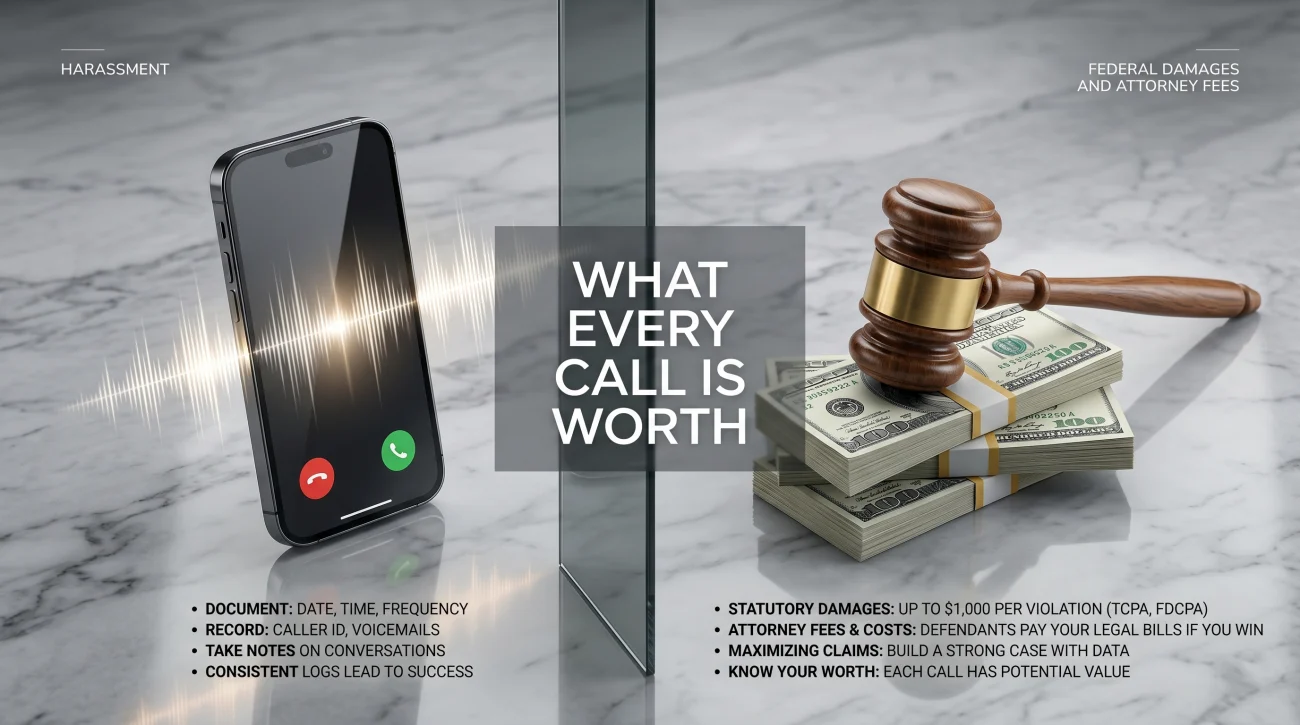
Once you understand that continued calls are often a calculated risk rather than a system error, your reaction to the ringing phone needs to change. Instead of viewing each call as ongoing harassment, treat it as an active evidence printer. The collector has made a choice to test your boundaries; your job now is to make them pay for that choice.
Federal law provides specific avenues for compensation when collectors violate your rights. Beyond reimbursement for any actual harm you suffered, the law includes provisions designed to punish the agency financially for crossing the line. Furthermore, it contains a fee-shifting provision, meaning that if a collector violates your rights, the court can force the collection agency to pay your attorney fees. This specific provision was written into the law so everyday people could afford to hold massive financial corporations accountable.
When the collector calls you after signing for your certified letter, they are handing you a strict liability violation on a silver platter. If they call you five times in a week after getting that letter, they are demonstrating a clear, willful pattern of illegal harassment. If you want to know exactly how this leverage translates into real-world action, you should review the mechanics of how you can hold a debt collector legally accountable in court.
Getting angry on the phone, yelling at the collector that you sent a letter, and trying to convince them to stop calling you. This just gives them more engagement.
Letting the call go to voicemail, saving the recording, taking a screenshot of the missed call log, and adding it to your evidence file with a smile.
What Continued Calls Do NOT Mean
As empowering as it is to hold the collector accountable for phone harassment, we need to separate their bad behavior from the actual debt itself. Sending a letter to stop the phone calls does not erase the money you owe. The debt still exists, and the creditor still has legal avenues to pursue it.
If a collector realizes they can no longer reach you by phone, their next logical step is often to review the file for litigation. You need to be prepared for the possibility that the phone calls will stop, only to be replaced by formal court papers.
This is why you cannot simply ignore the entire situation just because you sent a letter. If the agency decides to file a lawsuit, your strategy must pivot immediately toward defending that case. A collector violating phone rules does not automatically invalidate their right to sue, so you should quickly research when to bring in professional litigation defense to protect your assets.
Signs You Have Strong Documented Violations
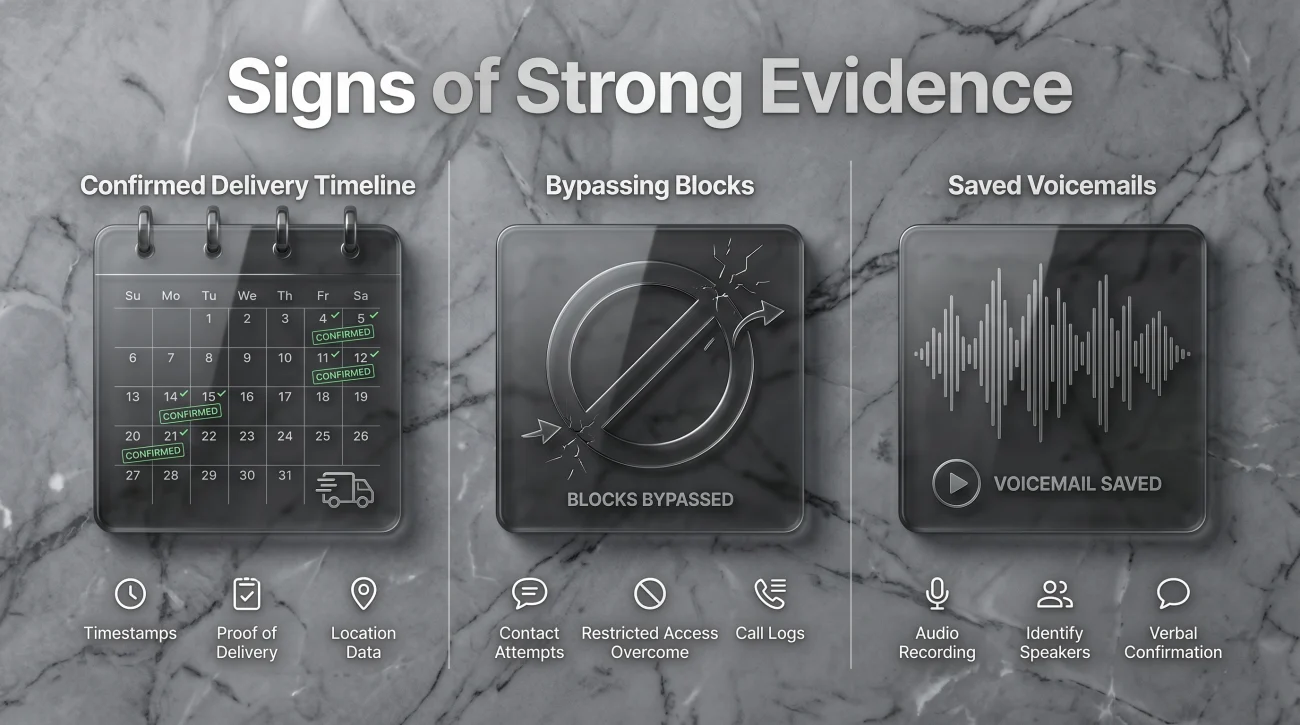
It is easy to feel overwhelmed when the phone keeps ringing, but you need to assess your leverage objectively. You are holding a very strong hand right now if you can verify any of these specific urgency signals:
- You have a confirmed delivery timeline: You can match the exact date and time the agency received your letter against your cell phone call logs showing contact made after that exact moment.
- They are bypassing blocks: The collector called from a new, unrecognized number immediately after you blocked their primary number, proving intentional evasion of your boundaries.
- Voicemails prove the identity: They left a voicemail mentioning your name, the debt, or their company name after the delivery date, completely destroying any defense they might have about “accidentally” dialing the wrong number.
- They escalated to severe threats: Frustrated by your letter, the agent left a message or told you on the phone that the police are coming. This compounds the violation heavily. If this happens, review exactly why threats of arrest are always illegal to add to your claim.
- The account was transferred without notice: A brand new agency started calling you about the exact same debt, proving the original agency failed to pass along the legally binding cease communication directive when they sold the file.
If you possess this kind of concrete evidence, you are no longer a victim of harassment. You are a consumer holding actionable proof of federal violations. Your next steps are entirely about organizing that proof.
How to Document Every Contact and Take Action
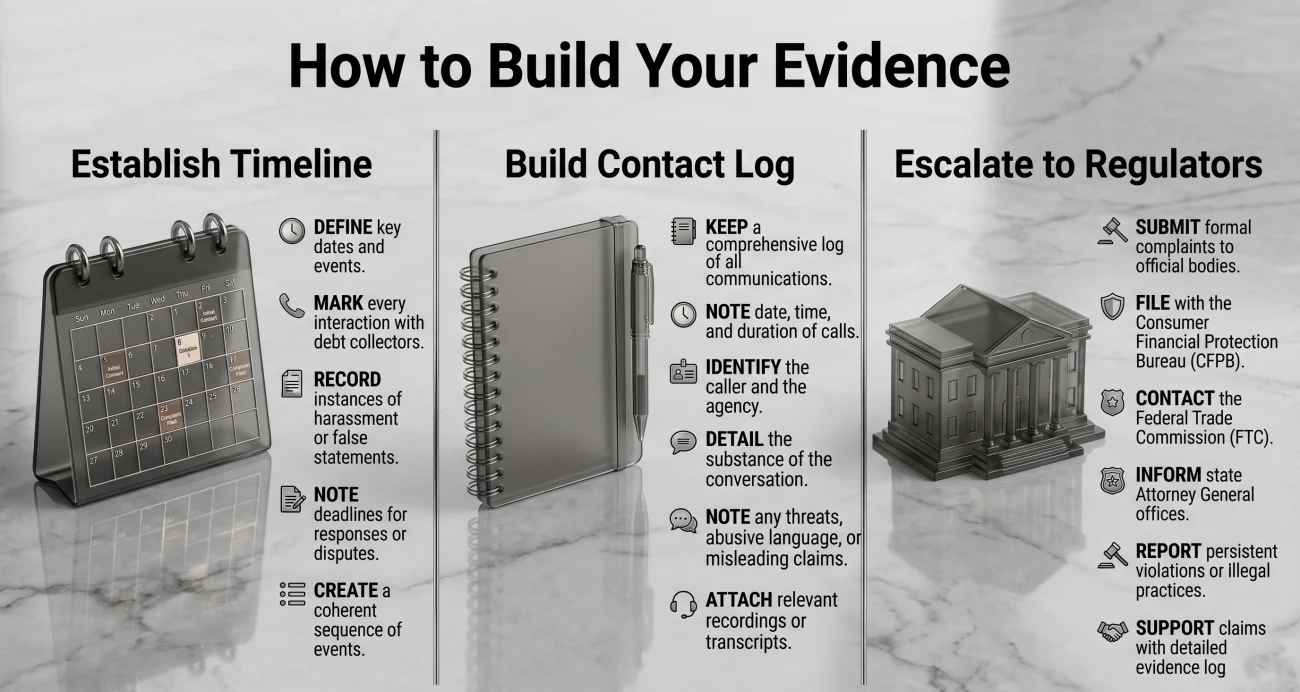
To turn your frustration into leverage, you need perfect records. Courts and regulatory agencies do not operate on feelings; they operate on data. When I reviewed files flagged for potential compliance issues, the consumer’s own organized log was often the most dangerous piece of evidence against the agency.
The moment you realize a debt collector ignoring cease and desist rules is happening to you, start a dedicated evidence file. First, establish your timeline. Take the exact date and time your letter was confirmed delivered by the postal service and draw a hard line in your records. Anything after this moment is what matters.
Next, build a contact log. Do not rely on your phone’s recent calls list, as those eventually delete themselves. Create a physical notebook or a digital spreadsheet. You want to track every single attempt they make.
Sample Harassment Log Entry
Date: October 14, 2025
Time: 2:15 PM EST
Caller ID / Number: 800-555-0199
Agency Name (if known): Apex Financial Recovery
Action: Missed call. Left a 30-second voicemail.
Notes: Voicemail saved to Google Drive. Agent “Mike” demanded a call back regarding a “time-sensitive financial matter.” This is the 4th call since the USPS confirmed my cease letter was delivered on October 10th.
Once you have a solid log of three to five calls after the delivery date, you have a pattern. This is not a system lag; this is a policy of harassment. Your next move is to escalate the issue to the federal level. You can submit your evidence log directly to the regulatory bodies that oversee these agencies. To ensure your complaint lands on the right desk, follow the specific protocols for submitting an official regulatory complaint.
💡 Pro Tip: Never delete a voicemail from a collector who is violating your stop request. Even if the message is just dead air or someone breathing into the phone, the timestamp and the caller ID origin are critical pieces of digital evidence.
Final Thoughts on Taking Control
Inside a collection agency, files are categorized by risk and reward. A consumer who argues on the phone is seen as a reward opportunity. A consumer who quietly logs every illegal call, saves the voicemails, and tracks the exact delivery date of their cease communication letter is categorized as a massive liability.
Once an agency’s compliance department or managing attorney sees that level of organized documentation, the aggressive tactics usually hit a brick wall. If the relentless calls are causing severe stress and you are ready to make them pay for crossing the line, it is time to have your evidence evaluated by a professional. Learn more about your options for putting an end to persistent collection agency harassment today.
❓ FAQ
📞 Does the collector have to confirm they received my letter?
No, they don’t have to send you a confirmation letter. The FDCPA allows them one final contact to tell you they are ceasing communication or taking a specific action, but they aren’t obligated to send a receipt. This is why tracking your own delivery confirmation is essential.
⏱️ How long does it take for a cease and desist letter to work?
Legally, your protection begins the exact moment they sign for the letter. While agencies often experience a 48 to 72-hour internal processing lag, any call received after a full week is no longer a system delay: it is a deliberate compliance failure. If a week has passed and the calls haven’t stopped, you should immediately escalate the issue to a regulatory complaint or an attorney.
📱 What if they text me instead of calling?
A broad cease and desist letter applies to all forms of communication. If you told them to stop contacting you entirely, sending a text message or an email is just as illegal as making a phone call.
🗣️ Should I answer the phone and tell them I sent a letter?
It is generally better not to answer. Arguing on the phone gives them the engagement they want. Let it go to voicemail, document the call in your log, and let your certified mail receipt do the talking.
🛑 Can they still sue me after I tell them to stop calling?
Yes. A cease and desist letter only stops the communication; it does not erase the debt. If they believe the debt is valid and within the statute of limitations, they maintain the right to file a lawsuit against you.
🏢 What if they sell the debt to a new agency?
If the debt is sold, the new agency may not have your letter on file and might start calling. You will need to send a new cease and desist letter to the new agency, but you should also document the original agency’s failure to transfer the file properly.
💰 How much is a violation worth?
Beyond holding them accountable, federal law allows consumers to seek compensation for these violations. This can include reimbursement for actual harm you suffered, additional penalties to punish the collector’s behavior, and having the agency cover your legal costs.
📧 Can I send the letter by email?
While email creates a digital record, sending the letter via USPS Certified Mail with a return receipt requested is the industry gold standard. It provides undeniable, court-accepted proof of exactly when the agency received your demand.
📝 What exactly makes the calls illegal?
Federal consumer protection laws establish a strict boundary: once a collector receives your written request to stop communication, their right to contact you about the debt is revoked. Continuing to demand payment after that point is a direct violation of your rights.
🤝 Will reporting them actually stop the calls?
Submitting a well-documented complaint to the CFPB often results in the agency closing your file immediately to avoid regulatory scrutiny. If that fails, having an attorney send a demand letter based on your call log almost always forces compliance.
The full FDCPA framework and the four areas where it matters most.
- Your legal rights when collectors call, write, or threaten to sue
- When they can call, what they cannot say, and how to make it stop
- How to identify FDCPA violations and what you can do with them
- Why the age of a debt determines what a collector can legally do
- Your right to demand proof before paying or acknowledging anything
Harassment is one thing. Lawsuits, garnishments, and frozen accounts are another.
- When collector behavior crosses the line the FDCPA was written to prevent
- What to do if a collector files suit after their calls have not worked
- What collectors can do to your wages once a judgment is entered
- How a bank levy works and which funds the law protects from seizure
- How to resolve the debt that collectors have been calling about
Disclosure: The content on this site reflects direct experience inside the debt collection industry and is grounded in federal law and regulation. It is informational in nature. Reading it does not constitute legal advice and does not create any professional relationship. If you are dealing with a lawsuit, a judgment, or a legal deadline, consult a licensed attorney in your state before acting.