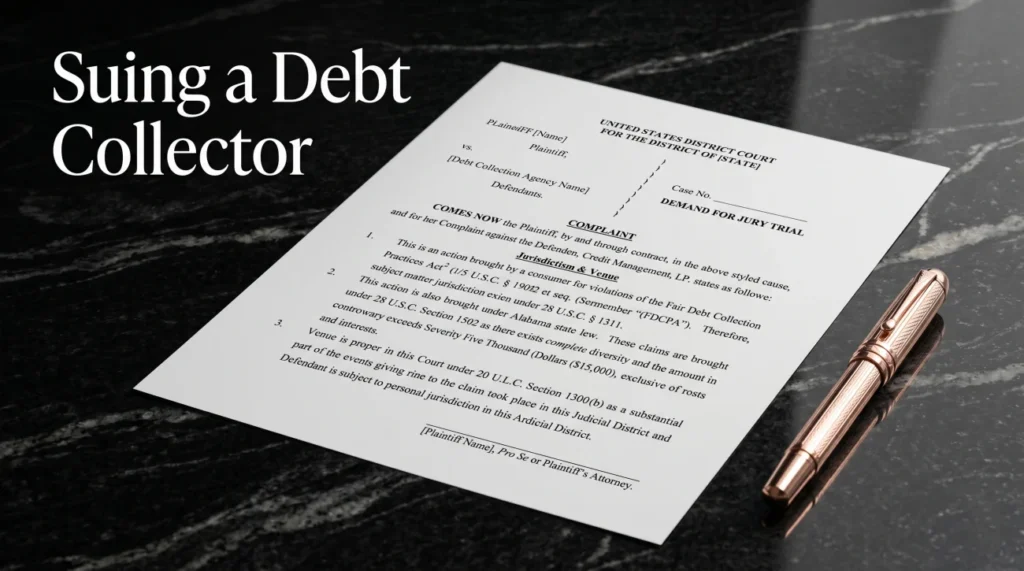
- You can sue a debt collector for violating federal law (the FDCPA), and it often costs you nothing out of pocket because the law forces the collector to pay your attorney fees if you win.
- You can recover up to $1,000 in statutory damages per lawsuit, plus actual damages (like lost wages or therapy costs) and legal fees.
- The strongest cases are built on documented evidence of severe violations: threats of arrest, calls after a written cease and desist, or disclosing your debt to an employer.
- Suing a collector penalizes their illegal behavior, but it does not erase the underlying debt you owe.
The Reality of Taking Legal Action Against a Collector
During my twelve years inside third-party collection agencies, I watched agents cross legal lines daily. Sometimes it was a rookie mistake. More often, it was a calculated risk. Agency managers know that out of every thousand consumers who experience an illegal threat or harassing phone call, only a handful will actually do anything about it.
The primary reason consumers don’t fight back is a simple assumption: “I’m already in debt. I can’t afford a lawyer to sue a collection agency.”
Collectors bank on that assumption. But under federal debt collection laws, specifically the Fair Debt Collection Practices Act (FDCPA), that assumption is completely wrong.
You absolutely can sue a debt collector. More importantly, the law is specifically designed so that pursuing an FDCPA lawsuit often costs the consumer nothing up front. When you understand how the fee structures work and what actually happens inside an agency when a lawsuit lands on their desk, the power dynamic shifts entirely.
If you have been harassed, lied to, or threatened, here is exactly how suing a debt collector works from the inside out, what you can actually win, and how to determine if your situation crosses the threshold for legal action.
The Financial Reality: Why Suing Often Costs You Nothing
Let’s address the biggest hurdle first: the cost of legal representation. If you are struggling to pay a credit card bill, paying a lawyer $300 an hour to sue a collection agency sounds impossible.
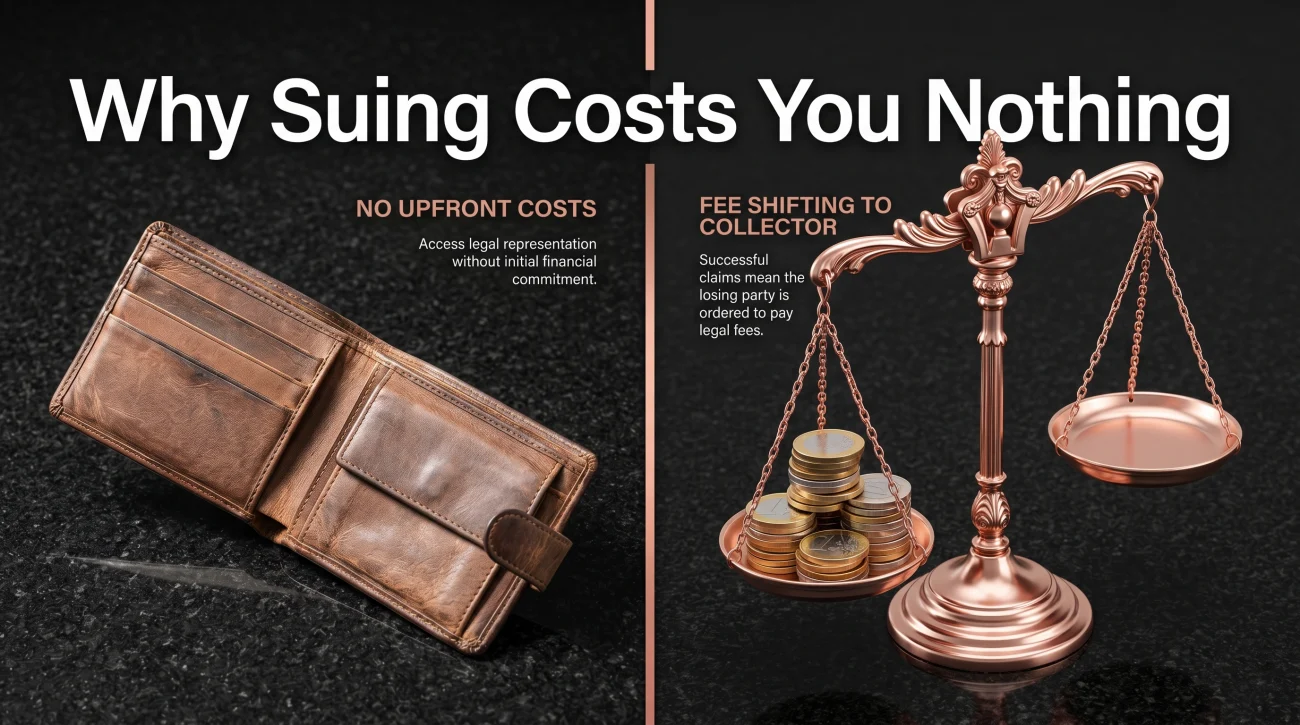
Congress understood this when they drafted the FDCPA in 1977. They knew that if consumers had to pay their own legal fees, the law would be toothless. To solve this, they included a “fee-shifting” provision in the statute.
How the Fee-Shifting Provision Works
Under the FDCPA, if a consumer successfully proves that a debt collector violated the law, the court must order the debt collector to pay the consumer’s reasonable attorney fees and court costs. The bad actor foots the bill for your lawyer.
Because of this provision, consumer protection attorneys routinely take cases on an FDCPA attorney contingency basis. This means:
- You do not pay a retainer fee to start the case.
- You do not pay hourly billing rates.
- The attorney gets paid their fees directly by the collection agency as part of a settlement or court award.
What Happens If You Lose the Lawsuit?
A common and entirely valid fear is what happens if the judge rules against you. Because these cases are taken on contingency, losing typically means your attorney absorbs the loss of their time: you do not owe them hourly fees. You still owe the original debt, of course.
Could you be forced to pay the collector’s legal fees? Under the FDCPA, a court can only order a consumer to pay the agency’s attorney fees if it determines the lawsuit was filed in “bad faith and for the purpose of harassment.” This is an extremely high bar. Consumer protection attorneys screen cases carefully specifically to avoid this scenario. If an attorney takes your case, it is because they believe the evidence is strong enough to mitigate that risk.
What Can You Actually Recover in an FDCPA Lawsuit?
Once the fee barrier is removed, the next question is what the lawsuit is actually worth. When agencies weigh the cost of fighting a lawsuit against settling it, they are calculating exposure across two specific damage buckets.
Debt Collector Statutory Damages
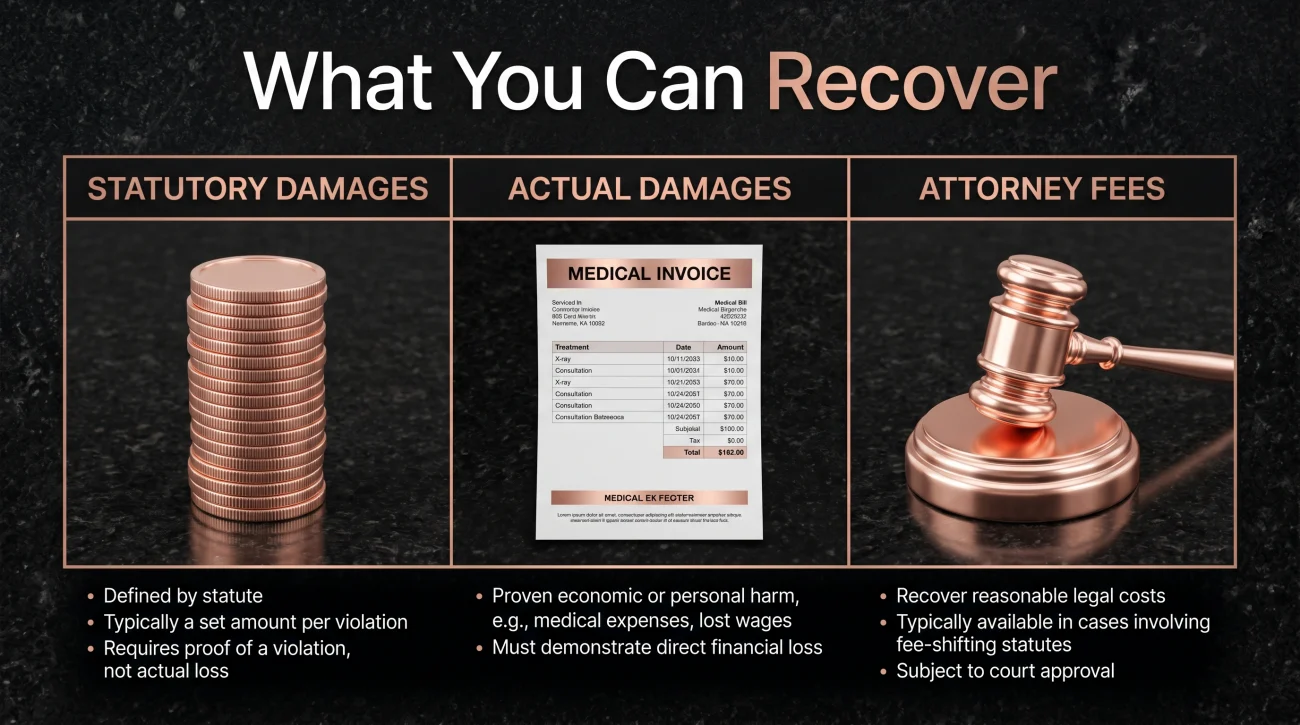
The FDCPA allows you to recover up to $1,000 in statutory damages. A common misconception is that this means $1,000 per phone call or per violation. It does not. The $1,000 cap is per lawsuit.
Even if a collector called you at midnight five times in a row, the maximum statutory damage award you can receive from a judge for that specific lawsuit is $1,000. However, the sheer number of violations still matters, as judges use the frequency and persistence of the abuse to determine if you should receive the full $1,000 rather than a lesser amount.
Actual Damages
Unlike statutory damages, there is no legal cap on actual damages. Actual damages represent the real-world, quantifiable harm you suffered because of the collector’s illegal actions. This is where cases become highly significant.
Examples of actual damages include:
- Lost wages: If you were fired or suspended because a collector illegally contacted your employer and disclosed your debt.
- Medical expenses: Costs for therapy, counseling, or medication required to deal with severe anxiety or stress caused by relentless harassment.
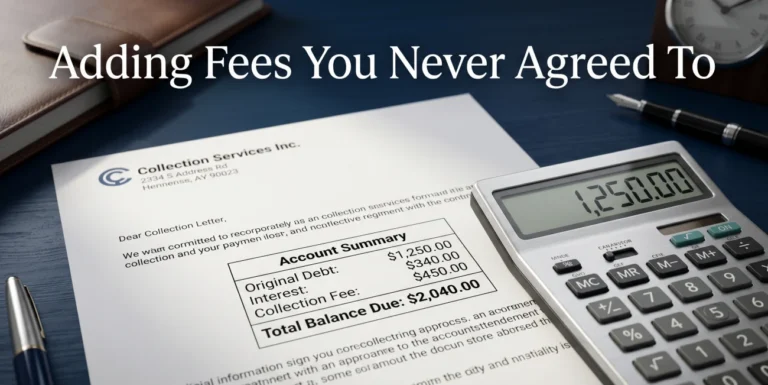
- Financial losses: If you paid unauthorized fees the collector illegally added to your balance, or if you faced overdraft fees because they processed a payment without authorization.
| Damage Type | What It Covers | Legal Limit |
|---|---|---|
| Statutory Damages | Penalty for the violation itself, regardless of harm. | Up to $1,000 per lawsuit. |
| Actual Damages | Measurable financial or severe emotional harm. | No cap (must be proven with evidence). |
| Attorney Fees | Your lawyer’s legal costs. | Paid by the collector if you win. |
Proving actual damages requires a strict paper trail, such as letters from an employer, medical records, or bank statements. If you cannot prove actual damages, you can still sue solely for the $1,000 statutory damages based on the illegal behavior itself.
The Strongest FDCPA Violations That Build a Case
Not every annoying phone call is grounds for an FDCPA lawsuit. Debt collectors are legally allowed to be persistent. To successfully sue a collection agency, you need evidence of a clear, actionable FDCPA violation.
When I reviewed escalated files internally, it was obvious which accounts had crossed into liability territory. There are specific violations that attorneys look for because they are undeniable and give the consumer immense leverage in negotiations.
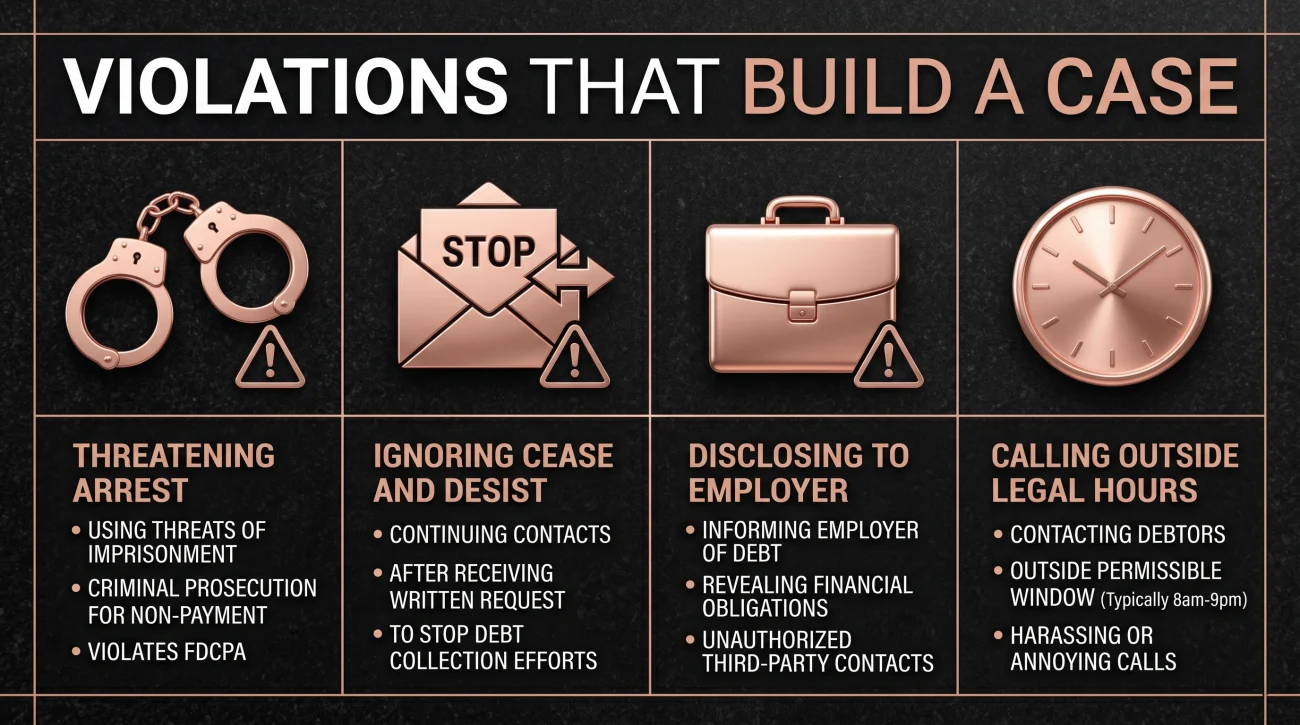
Threatening Arrest or Criminal Charges
You cannot go to jail for unpaid consumer debt in the United States. Period. When a debt collector threatens you with arrest, jail time, or claims they are sending the police to your home, they are committing a severe, deliberate FDCPA violation. This is a calculated scare tactic designed to override your logic with panic, and it makes for an incredibly strong lawsuit.
Ignoring a Cease and Desist Letter
If you send a written letter via certified mail telling a collector to stop contacting you, they are legally required to stop (with one minor exception to send a final notice). When a debt collector continues calling after receiving a cease and desist, the case practically writes itself. You have the certified mail receipt proving they got the letter, and your call logs proving they ignored it.
Disclosing Debt to Your Employer or Family
A collector can call a third party once to ask for your location information. They cannot mention that you owe a debt. If a collector tells your boss, your coworkers, or your relatives that you are in collections, they have violated your privacy. This is a common trigger for actual damages if the disclosure impacts your job standing.
Calling Outside Permitted Hours
The law is very clear: collectors cannot call before 8:00 a.m. or after 9:00 p.m. in your local time zone. A documented pattern of late-night or early-morning calls is a straightforward, easily proven violation.
The Debt Collector Lawsuit Process: How It Actually Works
Recognizing these violations is only the first step. If a collector has crossed one of those lines, understanding how the legal machinery operates takes away the intimidation factor. Most consumers picture dramatic courtroom trials, but the reality is much more procedural and bureaucratic.
The Timeline of Legal Action
Once you retain a consumer protection attorney, the debt collector lawsuit process generally follows these steps:
- Demand Letter: Your attorney will often start by sending a formal demand letter to the collection agency, outlining the violations, providing the evidence, and demanding a settlement.
- Filing the Complaint: If the agency ignores the letter or refuses to settle, your attorney files a formal complaint in federal or state court.
- The Discovery Phase: This is where your lawyer asks the agency to produce their call recordings, agent notes, and internal training manuals.
- Resolution: The case either goes to trial or is settled out of court.
Why the Discovery Phase Forces Settlements
The vast majority of FDCPA lawsuits never see the inside of a courtroom. They end in a negotiated debt collector settlement. The reason for this lies in the Discovery Phase, which is the most dangerous part of a lawsuit for an agency.
“Inside an agency, a single plaintiff is an annoyance. But a discovery request asking for all call recordings from ‘Agent 42’ over a six-month period is a corporate emergency. If your attorney finds out the agent was using an illegal arrest-threat script on 500 other people, a $1,000 individual lawsuit just became a multi-million dollar class action. That risk is why they settle quickly.”
To prevent their internal practices from becoming public court records, and to avoid exposing themselves to class-action status, agencies usually prefer to write a check and close the file privately. A crucial tool they use in this process is the non-disclosure agreement (NDA). By settling out of court, the agency will typically require an NDA as a condition of settlement, which keeps their operational mistakes permanently hidden from the public and regulators.
What You Need to Gather Before Calling an Attorney
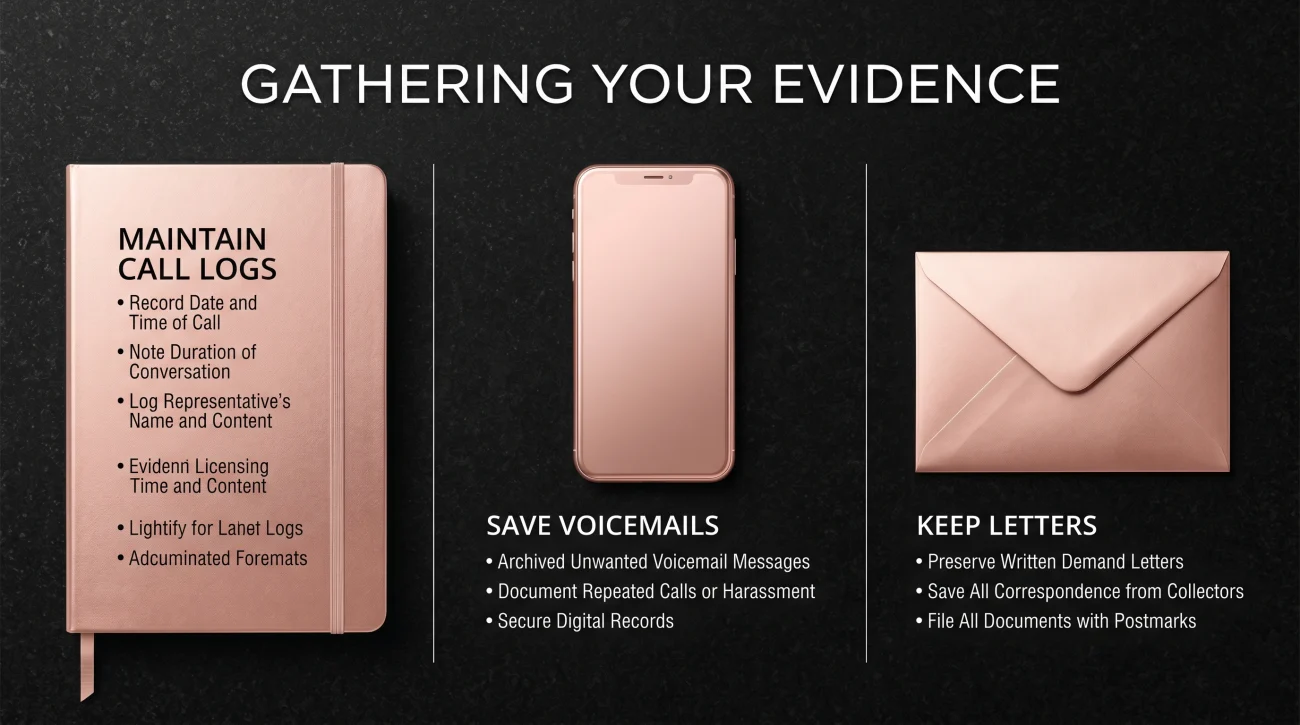
That swift settlement process only works if your attorney has leverage. That leverage comes entirely from what you can prove. If it is your word against a collection agency’s internal database, the agency usually wins.
Telling a lawyer: “They called me all the time, sometimes really late at night, and the guy was super rude and said I was going to be in big trouble.”
Handing a lawyer a log that says: “Tuesday the 14th, 9:15 PM. Received call from 555-0199. Agent named Mike stated ‘If you don’t pay this by tomorrow, we are sending the sheriff to your workplace.'”
How to Build a Bulletproof Evidence File
Do not wait until you are ready to sue to start gathering evidence. Create a dedicated folder today. Use this simple formula for your notes:
[Date and Time] + [Caller ID / Agent Name] + [Exact quote of any threats or claims]
Beyond hand-written logs, you must secure the physical and digital evidence. A phone can break or be lost, taking your evidence with it. Follow these steps:
- Screen-record threatening voicemails while they play, capturing the caller ID and timestamp on your screen, and back that video file up to a cloud drive.
- Keep all collection letters and the envelopes they came in, as the postmark date proves when correspondence was actually sent.
- Screenshot all text messages.
Alongside gathering your own evidence, you should also report the debt collector to the Consumer Financial Protection Bureau (CFPB). Filing a CFPB complaint creates an official, time-stamped government record of your grievance, which attorneys can reference to validate the timeline of your lawsuit.
What Suing a Debt Collector Does NOT Accomplish
Even with a bulletproof evidence file and a strong attorney, it is vital to understand the boundaries of what an FDCPA lawsuit actually achieves. While suing an abusive collector is a powerful tool for accountability, consumers often enter this process with false expectations.
⚠️ Warning: Suing a debt collector for harassment does not magically erase the underlying debt you owe.
The FDCPA governs the behavior of the collector, not the validity of the contract you signed with the original creditor. If you win your FDCPA lawsuit and the collector is forced to pay you $1,000 for calling you at midnight, you may still legally owe the $4,000 credit card balance they were calling about.
However, an FDCPA lawsuit creates immense leverage. In many negotiated settlements, a consumer’s attorney will use the collector’s liability to negotiate a “mutual walkaway.” This means the agency agrees to pay your attorney fees, pay you a small settlement, and completely forgive the underlying debt to close the matter entirely. But this is a negotiated outcome, not an automatic legal requirement.
Signs You Need to Speak with an Attorney Right Now
Enduring the collections process is stressful enough without having your federal rights violated. Knowing when to stop trying to handle it yourself and when to hand the file over to a professional is critical.
If you are experiencing any of the following, you have moved past standard collections and likely have a documentable case:
- 📌 A collector stated or implied you would be arrested, jailed, or face criminal charges.
- 📌 You sent a written cease and desist letter via certified mail, and the calls have continued.
- 📌 The collector contacted your employer, HR department, or coworkers and disclosed that you owe money.
- 📌 The collector used profanity, racial slurs, or explicitly abusive language on a call or in a voicemail.
- 📌 The collector threatened to seize your property or garnish your wages without having an actual court judgment against you.
Final Thoughts: Flipping the Leverage
Debt collectors rely entirely on a manufactured power imbalance. They use scripts, auto-dialers, and aggressive deadlines to make you feel cornered. The entire system is built on the assumption that you do not know the rules they are bound by, and more importantly, that you won’t do anything even if you catch them breaking those rules.
An FDCPA lawsuit flips that dynamic overnight. By simply documenting their actions and engaging a professional who knows how to use the law, you turn their pressure tactics into their own financial liability.
If you are trying to determine whether the contact you have been receiving crosses the line into illegal harassment, review your call logs against the FDCPA standards. If you already have documented violations in hand, it is time to stop arguing with agents on the phone and consider discussing your case with a legal professional who handles consumer rights litigation.
❓ FAQ
🗣️ Can I sue a debt collector for calling too much?
Yes, if the frequency of calls is intended to annoy, abuse, or harass you. Under CFPB guidelines, calling more than seven times in a seven-day period about the same debt is presumed to be illegal harassment and can be grounds for an FDCPA lawsuit.
💰 How much money can I get if I sue a collection agency?
You can receive up to $1,000 in statutory damages per lawsuit. If you can prove actual damages (like lost wages or therapy bills resulting from the harassment), you can recover those specific financial amounts with no legal cap.
⏱️ How long does an FDCPA lawsuit take?
It varies widely. If the agency recognizes a clear violation and wants to avoid litigation costs, a settlement can be reached in a few months. If a formal lawsuit is filed and goes through discovery, it can take six months to over a year.
📝 Do I need a lawyer to sue a debt collector?
Legally, no; you can file a lawsuit “pro se” (representing yourself). However, because the FDCPA forces the collector to pay your attorney fees if you win, it is highly recommended to hire an experienced consumer protection attorney rather than fighting corporate lawyers alone.
📞 Can I sue if they just left a threatening voicemail?
Yes. A recorded voicemail containing an FDCPA violation, such as threatening arrest, failing to disclose they are a debt collector, or threatening violence, is excellent evidence for a lawsuit. Never delete a threatening voicemail.
🗑️ If I sue them, does my debt go away?
Not automatically. Suing the collector penalizes them for illegal behavior, but it does not erase the contract you signed with the original creditor. However, debt forgiveness is frequently negotiated as part of the lawsuit settlement.
📱 How do I prove they called me?
Keep a detailed written log of every call (date, time, and what was said). Save screenshots of your phone’s caller ID history, retain all voicemails by screen-recording them, and keep any letters they send. Your attorney can also subpoena the agency’s call records.
⚖️ What is the statute of limitations to sue a debt collector?
You have exactly one year from the date the FDCPA violation occurred to file a lawsuit in federal or state court. If you wait longer than one year, you lose your right to sue for that specific violation.
🏢 Can I sue the original creditor under the FDCPA?
Generally, no. The FDCPA applies specifically to third-party debt collectors and debt buyers. Original creditors (like your original credit card company or hospital) are usually exempt from the FDCPA, though they may be bound by state-level consumer protection laws.
🤝 Do most debt collection lawsuits settle out of court?
Yes. The vast majority of FDCPA lawsuits end in a negotiated settlement. Because these settlements typically include a non-disclosure agreement (NDA), you should be prepared to keep the details of the payout and the agency’s specific violations strictly confidential as a condition of receiving your check.
The full FDCPA framework and the four areas where it matters most.
- Your legal rights when collectors call, write, or threaten to sue
- When they can call, what they cannot say, and how to make it stop
- How to identify FDCPA violations and what you can do with them
- Why the age of a debt determines what a collector can legally do
- Your right to demand proof before paying or acknowledging anything
Harassment is one thing. Lawsuits, garnishments, and frozen accounts are another.
- When collector behavior crosses the line the FDCPA was written to prevent
- What to do if a collector files suit after their calls have not worked
- What collectors can do to your wages once a judgment is entered
- How a bank levy works and which funds the law protects from seizure
- How to resolve the debt that collectors have been calling about
Disclosure: The content on this site reflects direct experience inside the debt collection industry and is grounded in federal law and regulation. It is informational in nature. Reading it does not constitute legal advice and does not create any professional relationship. If you are dealing with a lawsuit, a judgment, or a legal deadline, consult a licensed attorney in your state before acting.