- Debt collectors can only charge fees or interest that were explicitly authorized by your original credit agreement or permitted by state law.
- Adding unauthorized charges like generic “collection fees” or “handling fees” is a direct violation of the Fair Debt Collection Practices Act (FDCPA).
- Debt buyers frequently purchase accounts without the original signed contract, meaning they often cannot prove you ever agreed to the extra fees they are trying to collect.
- Forcing a collector to provide an itemized breakdown triggers a pause in collection and often exposes their inability to legally justify the added amounts.
The Inflated Balance: When Collectors Add Fees You Never Agreed To
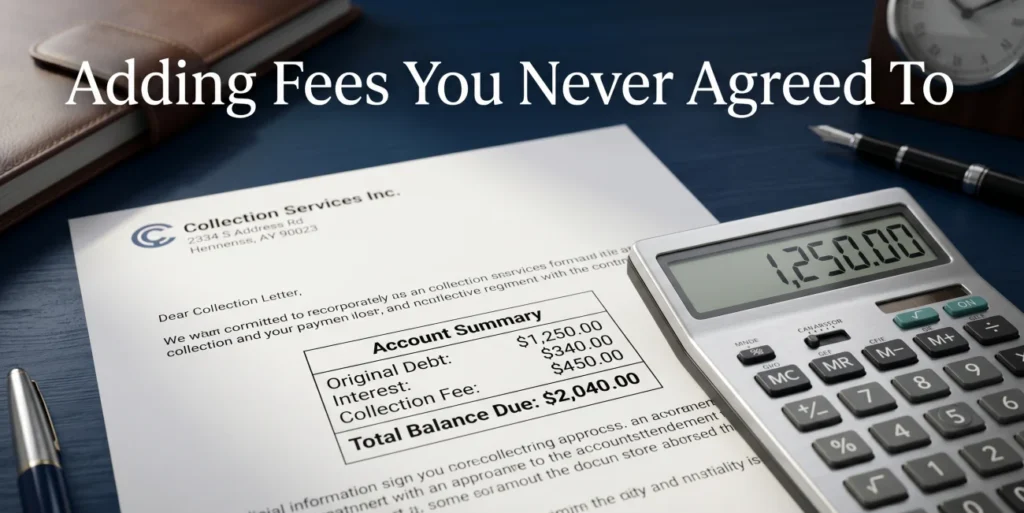
You open a collection letter and the balance makes no sense. You know you owed $1,500 on that credit card when it charged off, but the debt collector is now demanding $2,400. The math does not add up based on missed payments alone. The collector has added fees, charges, or inflated interest to your original debt. Some of these additions might be legal, but many of them are not.
I spent 12 years working inside third-party collection agencies and a national debt buyer. I have reviewed thousands of account files. I can tell you that the balance a collector quotes you is rarely just the principal you originally owed. It is a number that has been recalculated, often by a company that has no original documentation to back up their math.
When a collector adds unauthorized fees, they are not just making a billing error. They are breaking federal law. You need to understand what they are legally allowed to add, what they cannot add, and how to force them to prove their math.
What Debt Collectors Are Actually Permitted to Add
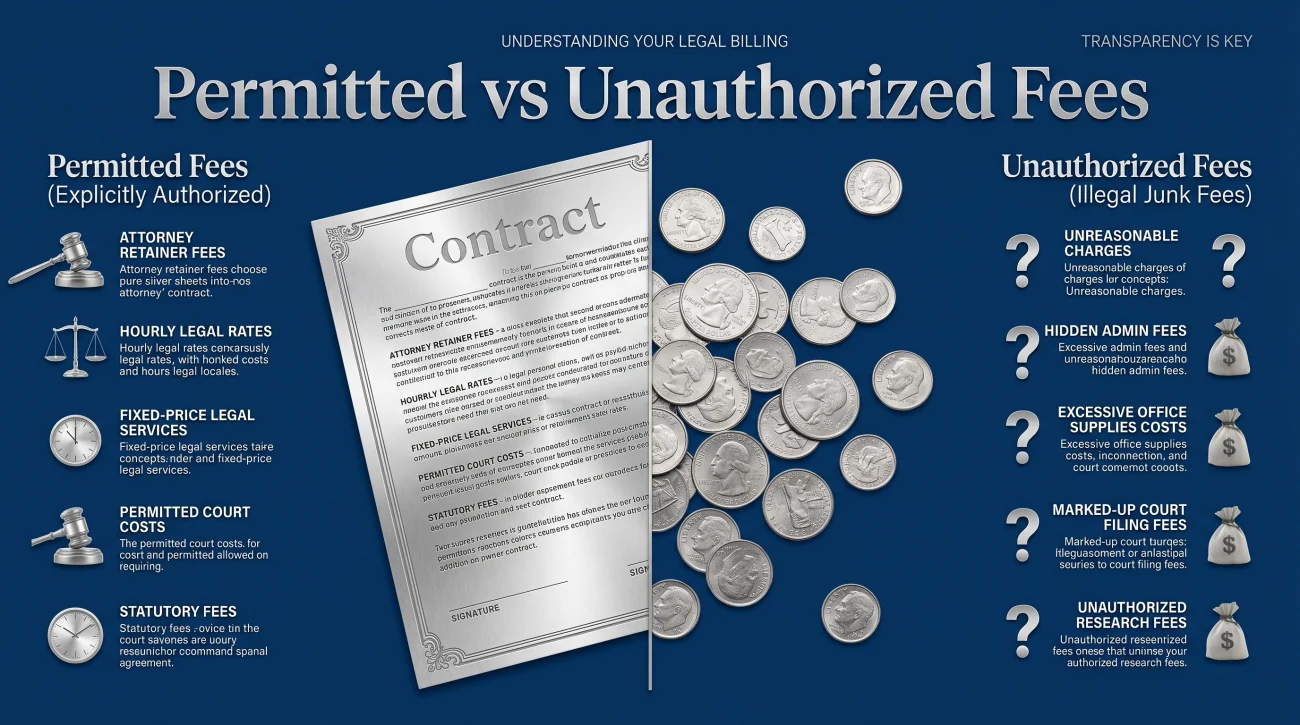
A debt collector cannot simply invent a fee because your account went into collections. Under the FDCPA, a collector can only collect an amount that is expressly authorized by the agreement that created the debt, or an amount that is permitted by law.
This means if a charge was not in the fine print of the contract you signed with the original creditor, the collector generally cannot add it now. There are specific types of additions that are typically legal.
- Accrued Interest: If your original credit card agreement stated that interest would continue to accrue on unpaid balances at a specific rate, the collector can usually continue charging that exact rate.
- Contractual Late Fees: If the original agreement permitted specific late fees, those may be applied as outlined in the contract.
- Court-Awarded Costs: If the collector sues you and wins a judgment, the court may award them legal fees and court costs, which are added to your balance.
The defining rule for all of these is documentation. If the original creditor’s contract allowed it, the collector inherits that right. If the contract did not allow it, the collector cannot invent it.
The Junk Fees: What Constitutes an FDCPA Violation
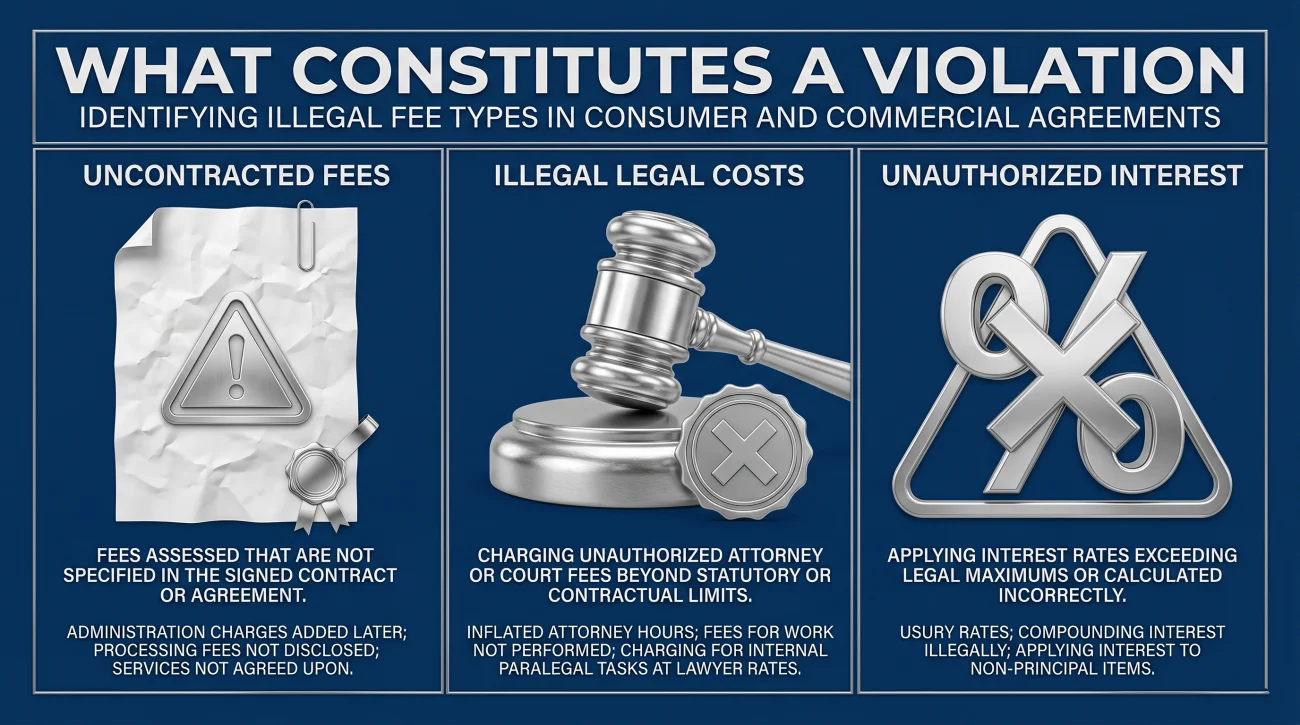
The problem arises when collectors add fees that have no basis in your original agreement. This is a direct violation of Section 1692f(1) of the FDCPA, which prohibits the collection of any amount unless such amount is expressly authorized by the agreement creating the debt or permitted by law.
In my experience, there are several specific types of charges that collectors frequently try to slip past consumers.
Every single unauthorized charge added to your balance is a separate potential FDCPA violation. This is highly actionable. Because the law requires collectors who violate the FDCPA to pay your attorney’s fees, you can often fight these charges without paying a lawyer out of pocket. You can learn exactly how this leverage works in our guide on how to sue a debt collector.
If you recognize the principal balance but the fees look wrong, you are dealing with a specific type of debt collector misrepresenting the amount owed, and you do not have to accept their numbers.
The Insider Reality: Why Debt Buyers Add Fees They Can’t Prove
You might wonder why a large collection agency would risk federal violations for a $50 fee. The answer lies in how the debt buying industry operates and the low quality of the data they purchase.
When a bank writes off credit card debt, they sell it to a debt buyer for pennies on the dollar. The debt buyer does not receive a warehouse full of signed paper contracts. They receive a digital spreadsheet containing names, account numbers, and a final balance figure.
“When we loaded a new portfolio of purchased debt into our system, we rarely had the original signed cardmember agreements. The system simply took the balance provided by the seller and, in some cases, automatically began applying a standard interest rate or adding flat collection fees based on company policy, not based on verifying the individual consumer’s contract.”
This is the documentation gap. The collector is adding fees based on “industry practice” because they do not have the original contract to tell them what was actually permitted. They assume you will simply pay the quoted balance without asking for proof.
How to Force the Collector to Prove Their Math
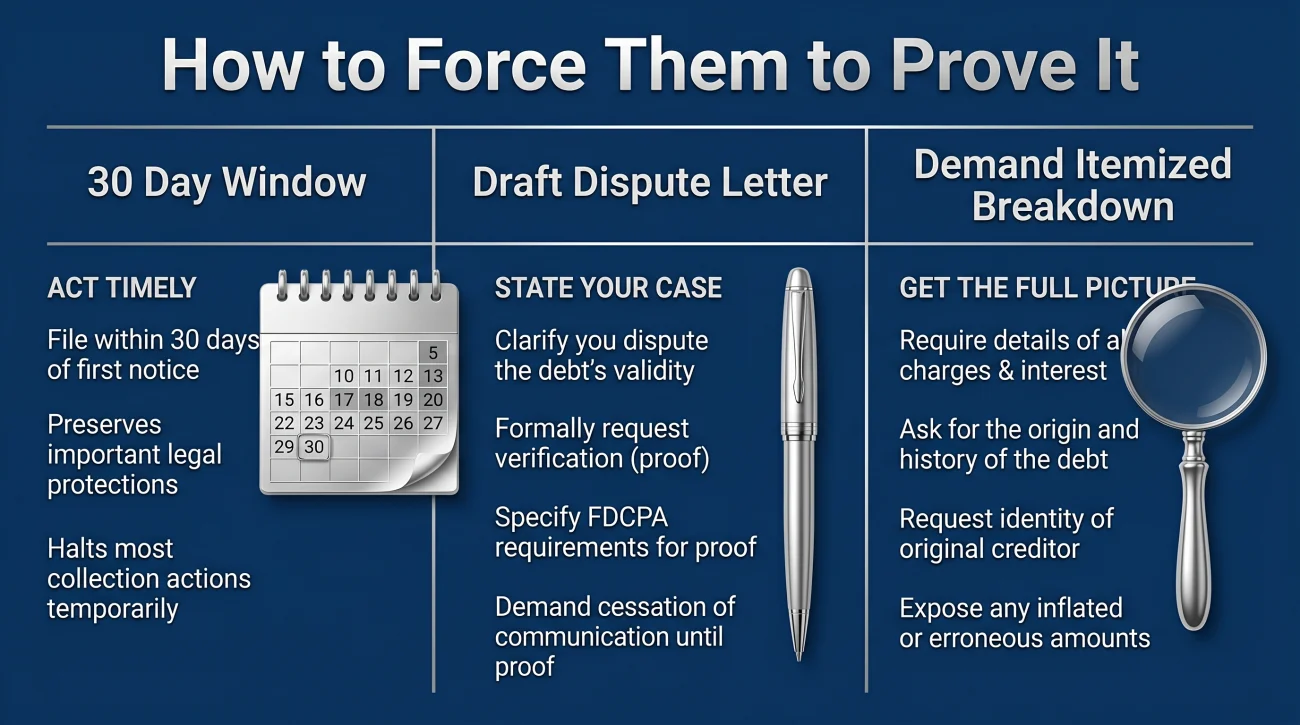
If you suspect a collector has inflated your balance with unauthorized fees, your strongest weapon is forcing them to itemize the debt. You do not have to take their word for what you owe.
You should send a written debt validation request within 30 days of their initial contact. In that letter, you must specifically demand a complete itemized breakdown of the balance.
What to request in your itemization demand:
Require the collector to provide the original principal balance at the time of charge-off. Demand a specific accounting of every dollar of interest applied since charge-off and the exact interest rate used. Require an itemized list of every fee added, along with a copy of the original signed contract highlighting the specific clause that authorizes each fee.
What happens after you send this letter is critical. Under the FDCPA, once they receive your written dispute within that 30-day window, they must completely pause all collection efforts. They cannot call you, write you, or report the debt to credit bureaus until they mail you the requested verification.
Because they rarely possess the original contract needed to legally justify the junk fees, they are backed into a corner. Faced with a consumer who knows the rules, many collectors will either quietly remove the unauthorized fees, return the account to the seller, or abandon collection efforts entirely to avoid liability.
Insider Signs the Fees on Your Account May Be Unauthorized
If you are looking at a collection letter or dealing with a collector on the phone, look beyond the obvious generic fees. On the collection floor, we saw specific patterns that almost always indicated a legally indefensible balance markup:
- 📌 The Statutory Rate Swap: The original bank stopped charging interest when the account charged off. The debt buyer purchased it and immediately began applying a 10% or 15% interest rate, claiming it is the “statutory maximum” for their state. If the original contract dictated the post-default rate (or stated 0%), they generally cannot unilaterally change it to a higher state maximum.
- 📌 The Pre-Lawsuit Bump: The balance suddenly jumps by several hundred dollars just before or right after a lawsuit is threatened. Debt buyers sometimes proactively add “anticipated legal fees” or “court costs” to your balance before a judge has actually awarded them. This is highly illegal.
- 📌 The Flat Percentage Markup: You owed exactly $2,000, but the collection letter demands exactly $2,400. A clean 20% markup applied across the board often means the agency’s automated system just tacked on a standard “collection fee” without checking if your specific contract allowed it.
- 📌 The “We’ll Tell You Later” Bluff: When you ask for an itemized breakdown of the balance on the phone, the collector becomes evasive or claims they “don’t have to provide that unless it goes to court.” This is a massive red flag.
If these signs are present, the collector is likely crossing a legal line. You need to understand what to do if a collector is violating the law to protect yourself and potentially hold them accountable. Furthermore, if you are certain the entire debt is fabricated or belongs to someone else, you are dealing with a broader issue covered in our guide on debt collectors pursuing debt you do not owe.
Final Thoughts: Break Their Business Model
Debt collectors rely on a predictable business model: they buy debt cheaply, add arbitrary fees to increase their profit margin, and gamble that you will simply trust the number printed on their formal letterhead. The moment you challenge their math and demand the underlying contract, you break that model. By refusing to pay for their presumptions, you strip away their leverage and expose the documentation gaps that define the modern debt buying industry.
❓ FAQ
💰 Can a collection agency charge me a fee for paying over the phone?
Generally, no. Unless your original contract explicitly stated you would pay a “convenience fee” for phone payments, adding this charge is an FDCPA violation. Collectors often try to add these processing fees to increase revenue, but they are rarely legally authorized.
📈 Is it legal for a debt buyer to keep adding interest to an old debt?
Only if the agreement you signed with the original creditor allowed for post-default interest to accrue. The debt buyer inherits that exact right. They cannot arbitrarily increase the interest rate beyond what the original contract allowed just because they purchased the account.
📄 What if the collector refuses to send an itemized breakdown of the fees?
If you request an itemized breakdown during the 30-day validation period and they refuse to provide it, they must completely cease collection efforts. Continuing to call or send letters about a disputed amount without providing written verification is a clear FDCPA violation.
Absolutely not. While an original contract might allow for the recovery of legal costs if they win a lawsuit against you, they cannot proactively add “attorney fees” to your balance during the standard collection process before a judge has awarded them.
🛑 Should I pay the principal balance even if the fees are wrong?
You should be extremely careful. Making a partial payment on an account where the balance is disputed can be interpreted by a court as acknowledging the entire inflated debt. It is far safer to dispute the unauthorized fees in writing before making any payment arrangements.
📝 How do I check what my original contract actually allowed?
The fastest way is to find an old billing statement from the original creditor before the account was charged off, which often details the penalty fees and interest rates. If you no longer have those, the burden is firmly on the debt collector to produce the contract proving the fees are valid.
📉 If I prove the fees are illegal, does the whole debt go away?
No. Proving that a collector added unauthorized fees means they cannot legally collect those specific markup amounts, and you likely have grounds to sue them for an FDCPA violation. However, it does not magically erase the original principal balance that you legitimately owed to the bank.
📞 Can I just tell them on the phone that the fees are wrong?
Verbal disputes are difficult to prove and are routinely ignored by collection floor agents. To protect your legal rights under the FDCPA and force a pause in collection, you must dispute the unauthorized amount in writing and send it via certified mail.
🏢 What if the original creditor added the fees before selling the debt?
If the original creditor (your bank) added late fees or interest according to the terms of your contract before selling the account, those additions are legal. The violation occurs when the third-party debt buyer starts inventing and adding new fees after purchasing the account.
💵 How much can I sue for if they add unauthorized fees?
Under the FDCPA, you can sue for up to $1,000 in statutory damages per lawsuit for violations, plus any actual financial damages you suffered. The law also requires the collector to pay your attorney’s fees if you win, which is why lawyers frequently take these cases at no upfront cost to you.
The full FDCPA framework and the four areas where it matters most.
- Your legal rights when collectors call, write, or threaten to sue
- When they can call, what they cannot say, and how to make it stop
- How to identify FDCPA violations and what you can do with them
- Why the age of a debt determines what a collector can legally do
- Your right to demand proof before paying or acknowledging anything
Harassment is one thing. Lawsuits, garnishments, and frozen accounts are another.
- When collector behavior crosses the line the FDCPA was written to prevent
- What to do if a collector files suit after their calls have not worked
- What collectors can do to your wages once a judgment is entered
- How a bank levy works and which funds the law protects from seizure
- How to resolve the debt that collectors have been calling about
Disclosure: The content on this site reflects direct experience inside the debt collection industry and is grounded in federal law and regulation. It is informational in nature. Reading it does not constitute legal advice and does not create any professional relationship. If you are dealing with a lawsuit, a judgment, or a legal deadline, consult a licensed attorney in your state before acting.