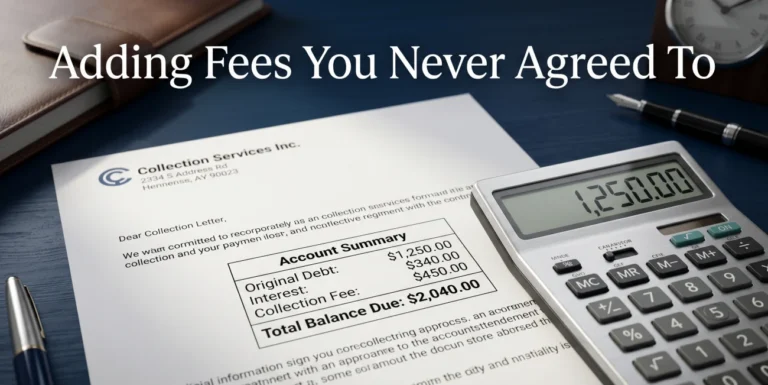

- Collectors do not just dial random numbers. Before the first call, they often pull a “soft inquiry” on your credit report to view your open accounts, payment history, and current address.
- Commercial skip tracing databases (like LexisNexis and TLO) aggregate public records, utility connections, and business filings to locate you within 24 hours.
- We didn’t just look for a phone number; we looked for leverage. Public social media profiles often handed us your employer’s information before we even asked.
- Collectors cannot legally access your bank account balances, tax returns, or medical records without a court order.
- The call timing (early morning or right after work) is a calculated tactic based on industry data to catch you in a low-resistance state.
The Shock of the First Contact: “How Did You Get This Number?”
There is a specific pause I used to hear on the other end of the line when someone answered my call. It was the sound of a person trying to figure out how a total stranger knew their unlisted cell phone number, their new home address, and the name of the company they just started working for three weeks ago.
When you are targeted by a debt collection agency, the experience feels invasive. It feels like someone has hacked your life. The reality is much more systematic, and in many ways, much more mundane.
Before I ever dialed a number, I knew more about the person I was calling than most people realize. Not because I was an exceptional investigator, but because every collector at every mid-to-large agency has access to the exact same commercial tools. The debt collection industry operates on a massive information asymmetry. We knew everything about your financial footprint. You knew absolutely nothing about us.
Understanding exactly what a debt collector sees on their screen before they say hello is the first step in leveling the playing field. When you know where their information comes from, their calls stop feeling like magic and start looking like what they actually are: a standardized database search.
Level 1: The Spreadsheet Data (What Came With the Account)
When an account lands on a collector’s desk, it rarely arrives as a thick, detailed file. When I opened a new file, I was usually looking at what we called “face value” data. It was just a single row on a massive digital spreadsheet.
That starting line gave me a name, the original creditor, the total balance claimed, and the dates of delinquency. It also gave me whatever physical address and phone numbers were on the original application from years ago. On older debts, we knew those phone numbers were almost always dead or disconnected before we even loaded the dialer.
“From the inside, this is where we were most vulnerable. If you were dealing with a debt buyer who purchased your account fourth-hand, that spreadsheet row was often missing critical documentation. The data degrades at every sale. We knew that half the time, we couldn’t actually prove the debt if the consumer pushed back. But we also knew most consumers wouldn’t push back.”
If a collector only has Level 1 data, they are essentially flying blind. They do not know if you are currently employed, if you have filed for bankruptcy, or if you still live in the same state. To figure that out, they move to the next level of the system.
Level 2: The Soft Credit Pull (Looking Inside Your Finances)
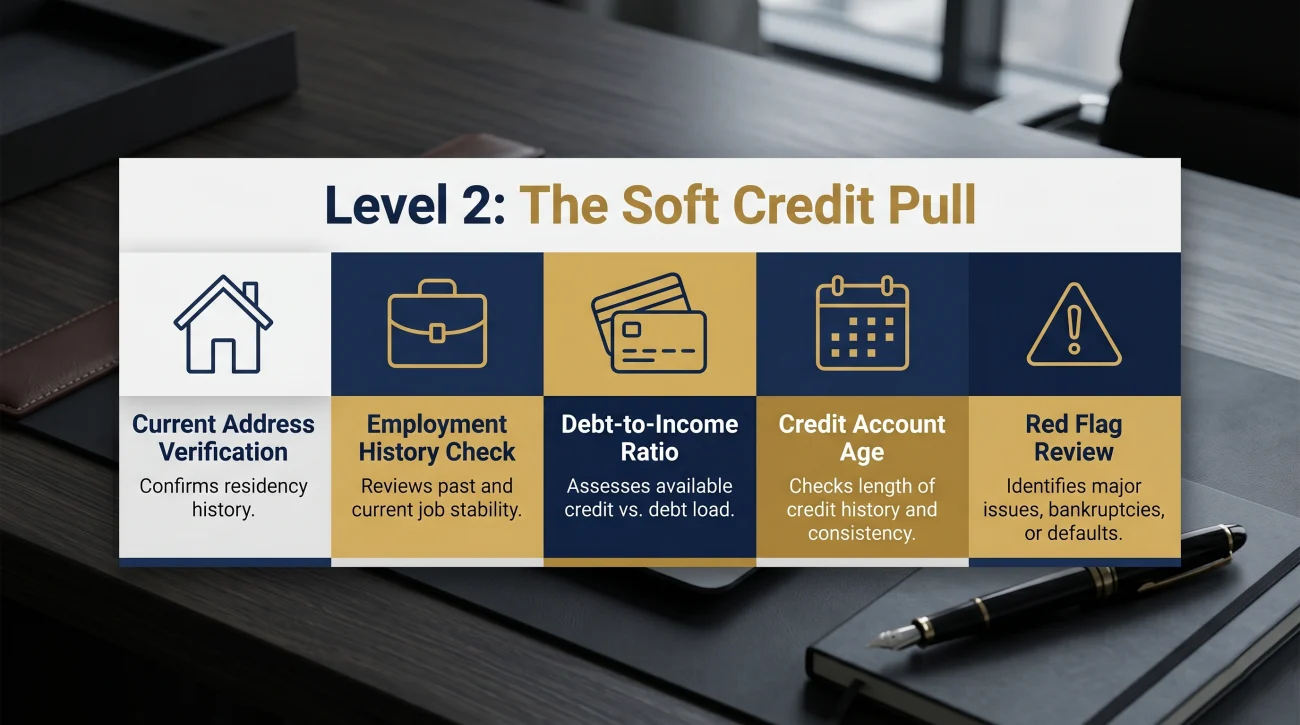
This is the step that surprises most consumers. Collection agencies do not need your permission to look at your credit report. Under federal credit reporting rules governing “permissible purpose,” a third-party debt collector can pull a soft inquiry without you ever receiving a notification.
On the collection floor, the soft pull was our strategic map. Before the first letter was mailed or the first call placed, an automated batch process would pull these reports for the entire newly purchased portfolio.
* Your current mailing address (updated by your active credit cards)
* Your current employer (if you recently applied for new credit)
* A list of all your open accounts, auto loans, and mortgages
* Your payment history across all other creditors
* Other collection accounts that are currently active
A soft inquiry does not lower your credit score, but it gives the collector a terrifyingly clear map of your financial health. If I saw you owed a $2,000 medical bill, but you had been paying your $600 auto loan on time every month, I knew you had cash flow. I knew you prioritized certain bills. We used that data to tailor our negotiation tactics.
We also relied heavily on automated credit triggers. If a consumer suddenly paid off a large credit card, opened a new line of credit, or applied for a mortgage, our system flagged it. We knew the person suddenly had access to cash, and my phone would be dialing them the next morning.
Level 3: Commercial Skip Tracing Databases
When the original phone numbers were disconnected and the credit report did not yield a good phone number, the file moved to skip tracing. This is where the debt collection industry leverages commercial data brokers.
I used to log into specialized platforms like LexisNexis, TLO, and IRB Search. These are not Google searches. They are expensive, restricted-access databases. A skilled skip tracer entering your name and old address into one of these platforms watches your life assemble on a screen in seconds.
People often asked me how to stop us from finding their new address. The truth is, the system is built to catch normal life events. The moment you fill out a USPS change-of-address form, or put the new electric or water bill in your name, that data feeds back to the brokers. You aren’t being followed by a private investigator; you are just living in a connected economy.
⚠️ Warning: Skip tracing tools automatically build “relational maps.” If you have ever co-signed a lease, shared a permanent address, or been listed as an emergency contact for someone, you are mathematically linked to them in these systems.
This explains why family members receive calls. The collector is not always targeting your family to embarrass you. Frequently, the database simply offered up your brother’s phone number as a “likely relative or associate” to try when your number failed.
The Social Media Mistake Consumers Make
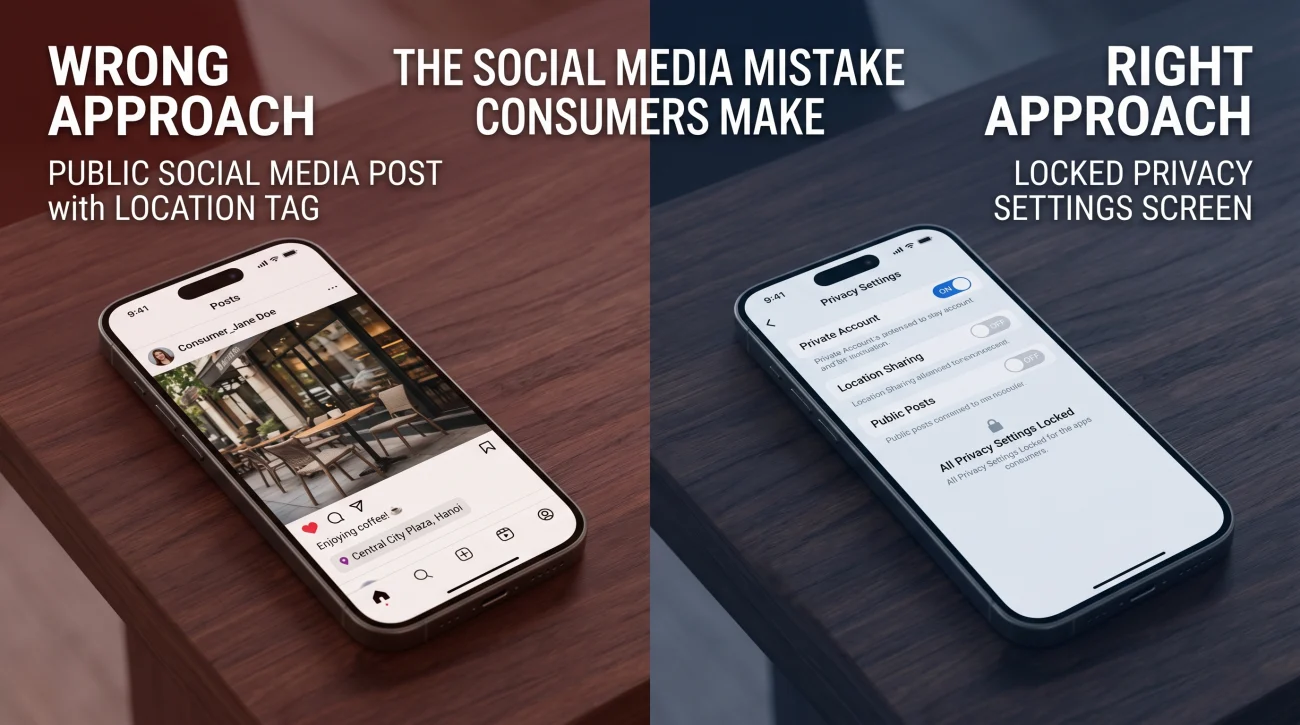
There is a widespread misconception that collectors need a subpoena to investigate you online. They do not. While there are strict federal compliance rules regarding digital communication, there is no rule against a collector simply reading what you post publicly.
When I trained new collectors, we actively looked for employment information. Knowing where a consumer works is the holy grail of debt collection because it opens the door to potential wage garnishment later down the line.
Skip tracing platforms index public social media data. A public LinkedIn update or a Facebook post announcing, “Just started my new job at [Company Name]!” is a direct gift to a debt collector. You just handed them your employer location.
They are looking for assets. A public photo of a new boat, a new car, or an expensive vacation gives the collector leverage. They will note the discrepancy between your claimed financial hardship and your public lifestyle, and they will adjust their settlement minimums accordingly.
The Science of the Dial: Timing and Number Rotation
The information advantage goes beyond just data. It extends to the psychology of when and how they use that data to contact you.
Call timing is not random. It is a documented science based on industry contact metrics. Experienced collectors know that calls placed between 7:45 AM and 8:30 AM (right before the traditional workday starts) and between 5:30 PM and 7:30 PM (right after work) yield the highest answer rates.
This is strategic. A collector who catches you before you have had your coffee, or just as you walk through the front door with groceries, is catching you in a lower-resistance state. You are unprepared. You are distracted. This makes you much more likely to make a verbal commitment or confirm sensitive information just to get off the phone.
Furthermore, their dialing software is designed to exhaust your options. When collectors see that a specific number always goes straight to voicemail, the system automatically rotates to the alternate numbers on your profile. If you have ever wondered why they cycle through local area codes, it is a tactic known as “local presence dialing,” designed to trick you into answering what looks like a neighbor’s phone call.
Between the automated dialing, the credit alerts, and the skip tracing databases, it is easy to feel like the agency holds all the cards. But that arsenal has hard limits.
What Collectors Cannot See (The Limits of Their Power)
Despite the vast amount of data available through skip tracing and credit bureaus, there are strict boundaries to what a third-party debt collector can access. They want you to believe they know everything, but they do not.
| What Collectors CAN Access | What Collectors CANNOT Access |
|---|---|
| Credit report data (open accounts, balances) | Your current bank account balances |
| Public property records and vehicle registrations | Your tax returns or IRS transcripts |
| Utility connection addresses | Your private medical records or diagnosis history |
| Employer names (if reported or public) | Your direct deposit routing information (without prior payment) |
A collector cannot simply look into your checking account to see if you have the funds to pay them. They cannot pull your tax return to verify your income. Unless you previously paid them with a specific bank account, or until they sue you and win a court judgment, your actual liquid cash remains hidden from them.
This is exactly why they push so hard on the phone to get you to volunteer this information. If they ask, “Are you currently working?” or “Where do you do your banking?”, they are asking because their database came up empty. Never volunteer data that fills in their blanks.
Final Thoughts: Reversing the Information Flow
The first thing I learned when I started in the industry was the skip tracing workflow. It felt like detective work at the time. It took a few years to understand that the person I was locating was often terrified when I called, completely unaware of the digital infrastructure that led me to their phone.
The imbalance of power in debt collection is entirely by design. The collector has the data, the training, and the element of surprise. You have an incoming call you were not prepared for.
The fastest way to break this dynamic is to stop talking and start demanding paper. The moment you answer a call, you are playing their game on their turf. The correct response is not to argue, explain your hardship, or confirm your data. The correct response is to hang up and force them to prove they legally hold the account in writing.
By using standard dispute formatting, you force the collector out of the shadows. You flip the script. Instead of them interrogating you based on a soft credit pull, you are legally requiring them to produce the original chain of title, the itemized balance, and their legal authority to collect. That is how you take the power back.
❓ FAQ
📞 How do debt collectors find my unlisted phone number?
They use commercial skip tracing databases that aggregate data from utility companies, voter registrations, and credit applications. Even if a number is unlisted in a public directory, it is often tied to a credit card application or a recent water bill activation that feeds into these systems.
👀 Do collection agencies actively monitor my credit report?
Yes. Collection agencies have permissible purpose to do a soft pull on your credit report. Many agencies use automated triggers that alert them if you open a new line of credit or pay off a large balance, signaling that you might have cash available.
💼 Will a debt collector contact my boss to find out what I make?
In practice, calling your workplace to discuss a debt is a massive compliance risk that reputable agencies strictly train collectors to avoid. They usually only call an employer to verify that you work there, but they already have that information if it is on your credit report or LinkedIn.
🛑 How do I stop them from finding my new address?
It is nearly impossible to completely hide a new address if you are setting up official utilities, updating your driver’s license, or forwarding your mail through the USPS. All of these actions create public records that eventually filter into skip tracing databases.
📱 Can a collector see my text messages or internet search history?
No. Debt collectors do not have wiretap authority or access to your private digital communications. They rely entirely on public records, credit reporting data, and whatever you choose to post publicly on social media profiles.
🏦 Can a debt collector see how much money I have in the bank?
No. Unless you have previously written them a check, set up an electronic payment, or they have sued you and obtained a court judgment, your actual bank account balances are private and hidden from their systems.
👨👩👧👦 Will they call my family members to ask about my finances?
Standard compliance protocols restrict collectors from telling your family members about the debt. They are generally only permitted to ask a third party for your contact information once, and they must not disclose who they are collecting for unless asked.
🕵️♂️ Do debt collectors hire private investigators to follow me?
For standard consumer debts, no. Hiring a private investigator is far too expensive. They rely entirely on digital skip tracing databases, which are cheaper and often faster than putting a physical person on the ground.
🚗 Can they find out if I just bought a new car?
Yes. Vehicle registrations are generally public records and are quickly indexed by skip tracing databases. Additionally, the auto loan will appear almost immediately on a soft credit pull.
🗑️ If I delete my social media, will it stop them from finding me?
No. While locking down or deleting social media stops them from finding your current employer via public posts, they still have access to your credit report, utility records, and voter registration data through their commercial databases.
References
Four areas of the collection process. Start wherever your situation applies.
Some situations have deadlines attached. These pages are written for those situations.
- When collector behavior crosses the line the FDCPA was written to prevent
- What to do if a collector files suit after their calls have not worked
- What collectors can do to your wages once a judgment is entered
- How a bank levy works and which funds the law protects from seizure
- How to resolve the debt that collectors have been calling about
Disclosure: The content on this site reflects direct experience inside the debt collection industry and is grounded in federal law and regulation. It is informational in nature. Reading it does not constitute legal advice and does not create any professional relationship. If you are dealing with a lawsuit, a judgment, or a legal deadline, consult a licensed attorney in your state before acting.