- The “Neighbor” Illusion: Collectors use local area codes to trick you into thinking it’s a local business calling; this is a calculated data-driven tactic to increase answer rates.
- Beyond Blocking: Agencies cycle through clean VOIP numbers faster than you can block them. Real progress starts with moving the conversation from the phone to a written paper trail.
- Strategic Leverage: Use a validation request to freeze the dialer or a written cease and desist to end phone contact. Every call after a written notice is a potential $1,000 violation.
The Whack-a-Mole Game: Why Your Block List Isn’t Stopping the Calls
You see a local number on your screen and pick it up, only to hear the same robotic pause and the familiar voice of a debt collector. You hang up and block the number. Ten minutes later, your phone rings again. Different number, same area code, same collector. It feels personal, it feels like harassment, and it feels like they are intentionally circumventing your privacy. Most consumers I have spoken with assume the collector is “spoofing” numbers illegally just to annoy them. While it is certainly annoying, the reality from inside the collection agency is much more clinical and calculated.
During my twelve years in the industry, I saw the evolution of call technology firsthand. We did not pick up a desk phone and dial numbers manually. We used sophisticated dialer systems that managed thousands of accounts simultaneously. When you block one number, the system simply moves your account to a different “trunk” or outgoing line. To the software, it is just a data point; to you, it is a relentless intrusion into your day. Understanding why they do this is the first step in regaining control over your phone.
In the agencies where I trained collectors, we monitored ‘answer rates’ by the hour. If a specific number started getting blocked or ignored by enough carriers, the system would automatically retire that batch and rotate in new ones. The goal was never to annoy you specifically, but to find a number that you hadn’t blocked yet.
The strategy is simple: saturation. If I can call you from a number you recognize, or at least don’t recognize as a “collector,” the odds of you picking up go up by hundreds of percent. In the collection business, an unanswered call is a zero-dollar event. An answered call, even an angry one, is a chance to collect. That contrast is exactly why your block list feels like it is failing you.
Strategic Silence: Turning the Dialer’s Persistence Against Them
Receiving calls from dozens of different numbers creates a sense of being hunted. It’s a psychological tactic designed to make you feel like you’ve lost control of your personal privacy. In the collection rooms I managed, we knew that a stressed debtor is a debtor who pays out of desperation. But you can flip this script by understanding what your silence actually does to a collection agency’s bottom line.
Every time you block a number or refuse to answer, you are costing the agency money. They have to pay for the VOIP lines, the data scrubs, and the agent’s time. Instead of viewing these changing numbers as a sign of their power, view them as evidence of their failure. They are rotating numbers because your “Strategic Silence” is working. You aren’t playing their game, and that forces them to burn resources.
Collectors hate silence. When a file doesn’t answer after fifty attempts across twenty different numbers, the dialer eventually flags that account as ‘unproductive.’ The goal is to move from being a ‘high-probability target’ to a ‘cost-prohibitive file.’
To regain your peace of mind while you prepare your response, use your phone’s built-in tools to filter the noise. By the time you’ve silenced unknown callers, you’ve removed the immediate stress of the ringing phone, allowing you to review the call logs once a day to gather the evidence you need for a harassment claim.
The Ghost in Your Phone: How They Find Your “Private” Numbers
One of the most common questions I get is, “I changed my number, how did they find me already?” This is where the insider concept of “Skip Tracing” comes in. In the industry, we don’t just rely on the phone number provided by the original creditor. We pay for access to massive databases that aggregate information from utility bills, credit applications, and public records.
When an agency buys a file, they “scrub” it through these databases. If you recently applied for a car loan, updated your address at the DMV, or even signed up for a store loyalty card, that data often finds its way to a skip tracer. The dialer then takes these new numbers and begins the rotation cycle all over again. Changing your number is rarely a long-term solution because they aren’t following you; they are following your data trail.
I remember training agents on how to use skip tracing tools. We could see every number ever associated with a name in seconds. If the primary number didn’t answer, the system would automatically cycle through every number in the file until a human voice was heard.
The Dialer’s Logic: Why the Numbers Keep Changing
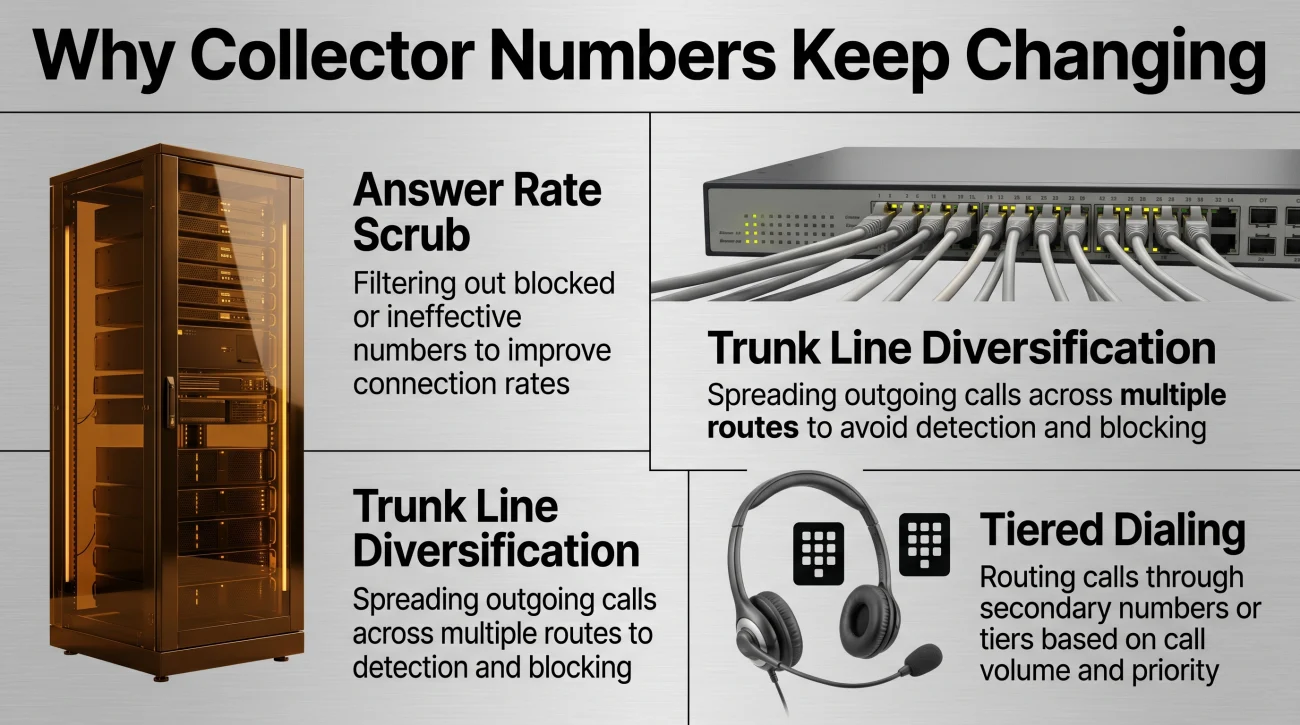
Inside a collection agency, there is a server running a Predictive Dialer. This software makes three primary decisions that result in you seeing different numbers on your screen. Understanding this helps you realize their tactics are systemic, not personal.
1. The Answer-Rate Scrub
Agencies purchase thousands of VOIP numbers. If a specific number starts getting flagged as “Spam” by carriers, its answer rate drops. The system recognizes this within hours and automatically retires that number, replacing it with a “clean” one. They are simply discarding “burned” numbers to keep the connection rate high.
2. Trunk Line Diversification
To avoid being caught by network-level spam filters, agencies route calls through different “trunks.” Each trunk might have a different caller ID profile. This diversification ensures that at least a percentage of their calls bypass the “Scam Likely” warnings on your smartphone.
3. The Agent Rotation and “Tiered” Dialing
Tier 1 agents are lower-paid “dialers” whose only job is to get a human on the line. Once you answer and show a willingness to talk, the file is often “escalated” to a Tier 2 “closer.” These closers operate from different desk extensions. When the closer takes over, the number on your screen changes because you have been moved to a “high-priority” segment of the system.
| Internal Tactic | What You Experience | The Real Purpose |
|---|---|---|
| Neighbor Spoofing | Local area code numbers | Tricking you into thinking it’s a local business or doctor. |
| Number Cycling | New numbers every 48 hours | Staying one step ahead of carrier spam filters. |
| Tiered Dialing | Switching from local to 800-numbers | Moving the file from an auto-dialer to a human “closer.” |
The “Circle of Contact”: When They Call Your Family and Neighbors
When number rotation fails to get you on the phone, collectors often move to a tactic that causes the most distress: third-party contact. I’ve seen this many times; when a debtor blocks all our numbers, we start “skip tracing” for relatives, neighbors, or even coworkers. The FDCPA allows this only for the purpose of obtaining “location information.”
The insider trick is that the collector knows the social pressure will get back to you. They might call your sister from a local number, identify as a “business matter,” and ask for your updated address. This isn’t usually an accident; it’s a way to let you know they are still watching. Under the law, they can only call each third party *once*. If they call your mom three times from three different numbers, that is a clear violation. Understanding this boundary is key to stopping the “harassment by proxy.”
Original Creditors vs. Third-Party Agencies
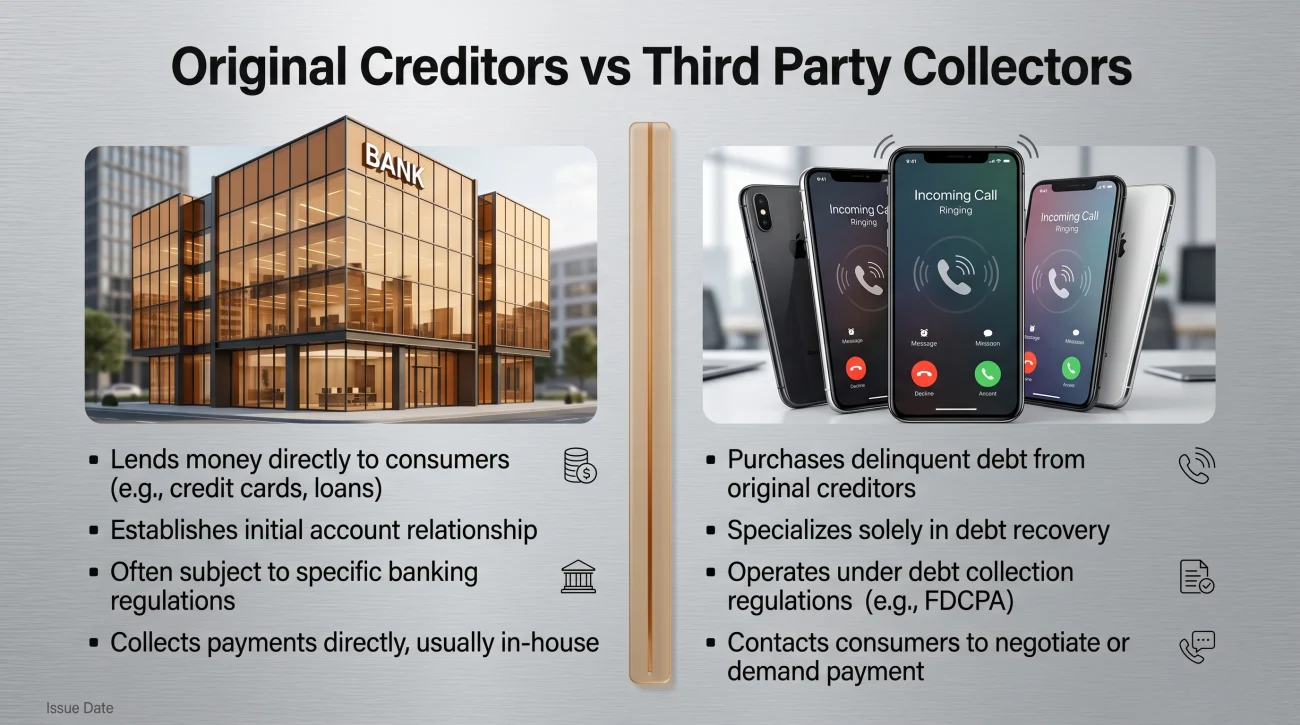
Original creditors (like Chase or Wells Fargo) often call from consistent numbers or corporate 800-numbers. They aren’t as aggressive with “spoofing” because they aren’t bound by the FDCPA in the same way third-party agencies are.
Third-party agencies and debt buyers are the ones who weaponize number rotation. They bought your debt for pennies on the dollar and their only path to profit is through high-volume contact. If the numbers on your screen are changing constantly and sharing your local area code, you are almost certainly dealing with a third-party agency. This is actually good news for you because third-party agencies are strictly regulated, giving you more legal grounds to fight back once you document the rotating number pattern.
When the Different Numbers Become Illegal
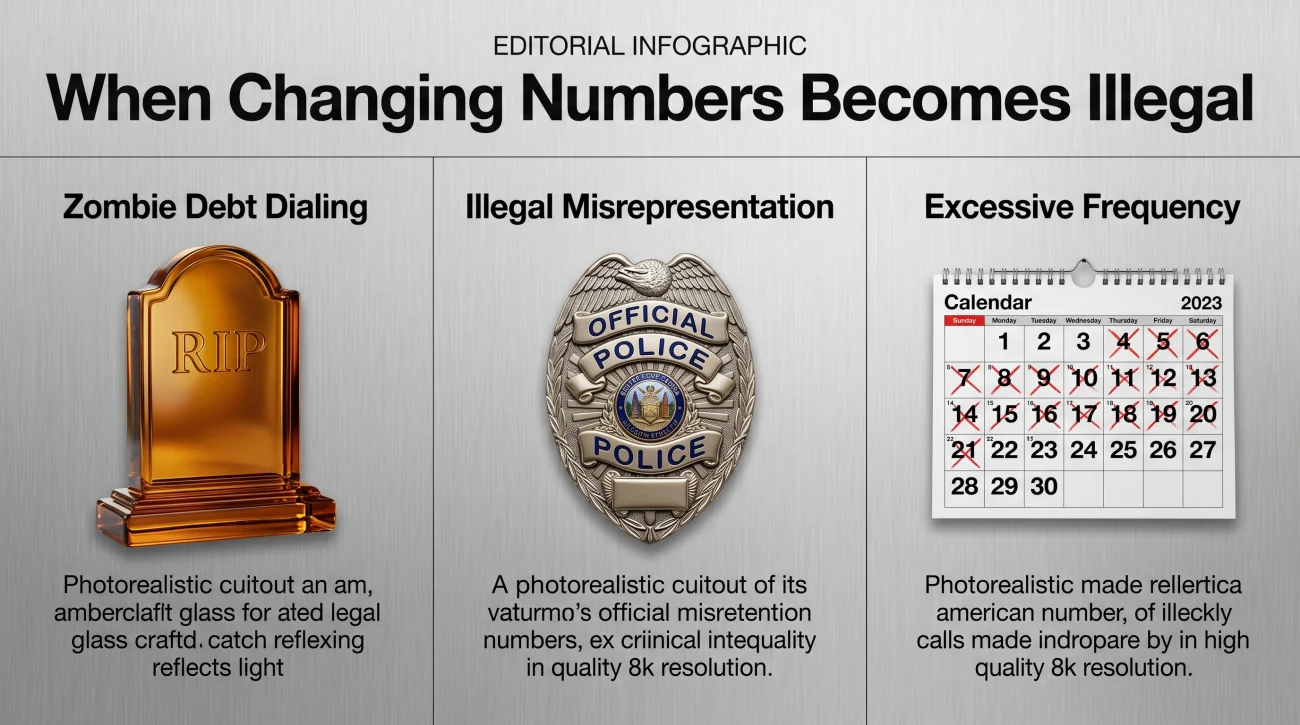
While the act of using multiple numbers isn’t illegal on its own, the FDCPA draws a line at harassment and misrepresentation. Here are the specific areas where rotating numbers become a legal liability for the agency.
The “Zombie Debt” Dialing Tactic
In many accounts I worked, the collector already knew the debt was past the statute of limitations, meaning they could no longer legally sue you. We called this “Zombie Debt.” Because they can’t legally sue you, they rely entirely on phone harassment. They use different numbers to keep calling you on a debt that is legally “dead” in hopes that the sheer volume of calls will get you to pay something just to make it stop. If the debt is too old to sue for, their phone calls are often all the leverage they have left.
The Misrepresentation Trap (The Nuclear Option)
If a collector spoofs a number to make your caller ID display “County Sheriff,” “IRS,” or any government title, they have committed a serious offense. This is deceptive, it is illegal, and it can lead to significant settlements for the consumer. Always screenshot any caller ID that displays a government or law enforcement title.
Key Point: A collector cannot use a deceptive number to trick you into believing they have government authority. If you see “Police” on your screen and it’s a debt collector, you likely have a strong case for damages.
Recording the Calls: What Happens When You Fight Back
Documentation is good, but recordings are better. In the industry, we recorded every single second of every call for “quality and training purposes.” But you can record them, too. Before you record, you must know if you are in a “one-party consent” or “two-party consent” state. If you are in a two-party state, you must notify the collector that you are recording the call.
I watched collectors’ behavior shift the moment a consumer said, ‘I am recording this call for my records.’ They suddenly follow the script perfectly. But more importantly, if they’ve been calling from twenty different numbers, having them admit on tape that they are the same agency is incredibly powerful evidence.
If you notify a collector you are recording and they continue to rotate numbers to harass you, that recording becomes a primary piece of evidence for your attorney. Most collectors are trained to stay on the line, but they become very cautious, which takes the “pressure” out of the conversation immediately.
Decoding the “Mystery Message” Strategy
Have you ever received a message from a local number that just says: “This is Brian, please call me back regarding an urgent personal matter”? This is a specific tactic to avoid the “Foti” violation. If they mention a debt and someone else hears it, it’s a third-party disclosure violation. To avoid this, they leave “mystery messages” to bait you into calling back. If they fail to identify themselves as a debt collector in a voicemail, they may be violating the “Mini-Miranda” requirement. Save these messages; they are often the strongest evidence in a harassment case.
The Protocol: How to Shut Down the Dialer
If you are tired of playing “Whack-a-Mole,” you need to shift from a defensive posture to an offensive one. Stop trying to block the numbers and start trying to break the agency’s process.
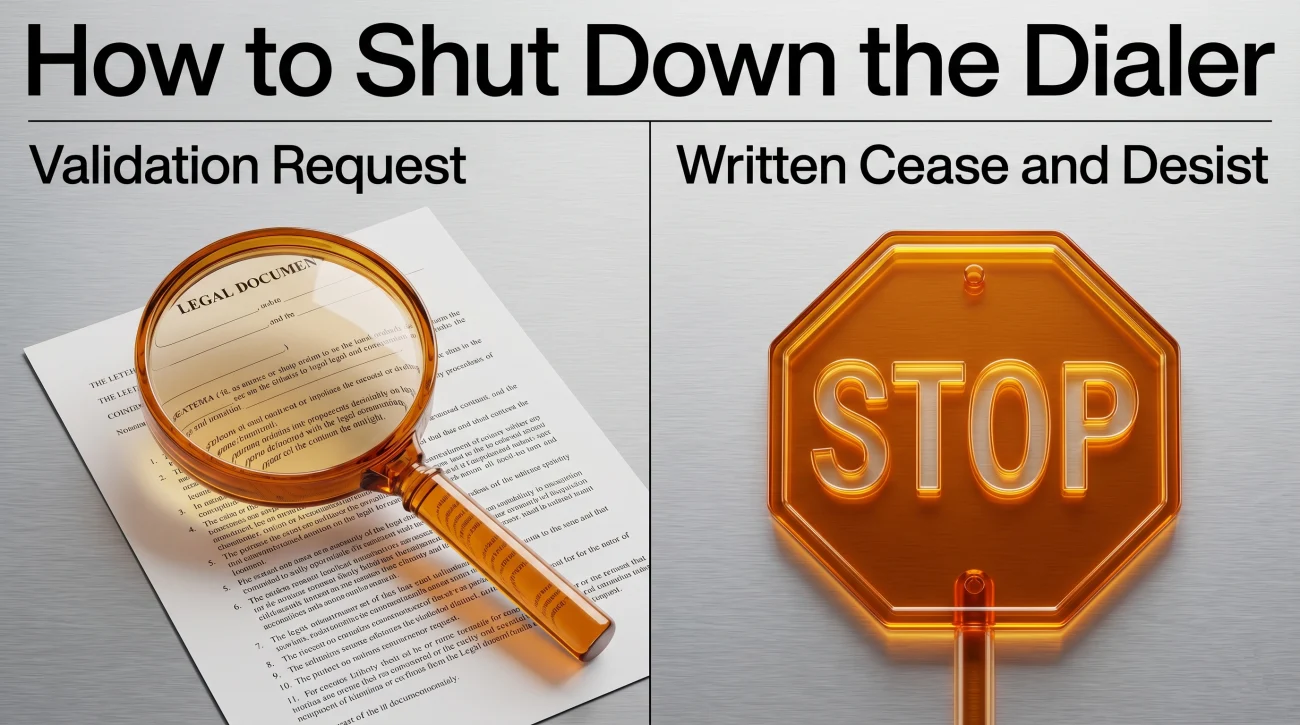
1. Choose Your Weapon: Validation vs. Cease and Desist
You have two primary tools to stop the changing numbers. Which one you use depends on your goal:
- ✅ Debt Validation Request: Use this if you want to know if the debt is actually yours. Once you send this, they must pause all collection activity until they provide proof. If they ignore your request and keep calling from different numbers, they aren’t just in violation of the FDCPA; they effectively lose their legal standing to enforce the debt until they comply. This is major leverage that can stop a collection cycle in its tracks. Learn how to force proof here.
- ✅ Written Cease and Desist: Use this if you just want the calls to stop forever. Once received, they can only call you once more to confirm receipt. Every call after that green return-receipt card is signed is a potential paycheck for you. Stop the calls legally here.
2. The “Answer Once” Information Gathering
Pick up one of the local calls. Stay calm. Ask for the full name of the agency and their mailing address. Once you have that info, the “different numbers” no longer protect them. You now know exactly where to send your written notice.
Critical Mistakes to Avoid
When you are being bombarded by different numbers, your instinct is to react. Avoid these common traps that give collectors more leverage:
One of the biggest mistakes you can make is sending a small “good faith” payment, like $5 or $20, just to get the calls to stop. From the insider perspective, we love this. In most states, that tiny payment resets the statute of limitations on debt. A debt that was about to expire suddenly gets 5-10 years of new legal life, giving the collector a fresh chance to sue you for the full amount. Never pay a cent on an old debt until you know its legal status.
- ❌ Giving “Counter-Data”: If they call your work and you say, “Don’t call me here, call me at my cell [Number],” you just gave the skip tracer a verified new data point to put back into the dialer.
- ❌ Threatening them verbally: Saying “I’ll sue you” on a phone call doesn’t stop the dialer. It just makes the agent mark your file for more aggressive tiers of collection.
What Happens After the Calls Stop?
A major concern is whether stopping the calls triggers a lawsuit. While it’s possible, industry economics suggest otherwise. If an agency is resorting to high-volume number rotation, they are usually using a low-cost strategy. Lawsuits are expensive. When you become “uncollectible” via phone by sending a Cease and Desist, the agency often decides your file isn’t worth the legal fees and may “sell” it to a new agency.
Does a previous Cease and Desist bind a new agency? No. This is a critical blind spot. When a debt is sold, the new owner is not legally bound by the C&D you sent to the previous one. They start with a fresh right to call you. However, because you’ve documented your history, you can send a new notice immediately. You are managing a “file cycle,” once you break the dialer’s logic for two or three different agencies, the debt is often retired into a “dead” bucket.
Final Thoughts from the Inside
I’ve sat on the other side of that ringing phone for over a decade. I can tell you that the changing numbers aren’t a sign of a collector’s power; they are a sign of their desperation. They are using machines to find a crack in your defenses. But machines follow rules, and those rules are written in the FDCPA.
Don’t just block the number and wait for the next one. Document the pattern, identify the agency, and use the written law to pull the plug on the dialer. In the collection industry, we have a saying: “The squeaky wheel gets the grease, but the documented consumer gets a settlement.” Once you stop being a “target” and start becoming a “legal liability,” the calls will stop for good.
❓ FAQ
📞 Why do collectors call from my local area code even though they are in another state?
This is “local presence” dialing. They use VOIP software to buy blocks of numbers in your city because they know you’re more likely to pick up a local call. It’s a trick to increase their answer rates.
👨👩👧 Can they call my family members from these different numbers?
Yes, but only once per person and only to find your “location information.” If they call your relatives repeatedly or disclose that you owe a debt, they are violating the law.
🛑 If I send a Cease and Desist, will they just sue me immediately?
Not necessarily. Agencies that use high-volume dialers often avoid the high cost of lawsuits. Stopping the calls often leads to the debt being sold to another agency rather than a trip to court.
⚖️ Is it illegal for them to call from different numbers even if it’s the same debt?
Rotating numbers is generally legal, but the frequency is not. If the same agency calls you more than 7 times in 7 days about one debt, it’s a violation, regardless of how many different numbers they use to do it.
👮 What if the number on my caller ID says “Police” or “Sheriff”?
If it’s a debt collector, this is a massive FDCPA violation called “illegal misrepresentation.” Debt collectors cannot pose as law enforcement. Screenshot this immediately.
🕵️ How did they get my new phone number so quickly?
They use Skip Tracing databases that pull from your credit apps, utility bills, and public records. Every time you update your data anywhere, it likely finds its way back to them.
💬 Why do they leave voicemails that don’t say who they are?
They are trying to avoid “third-party disclosure” lawsuits while still baiting you to call back. These vague “mystery messages” often fail the Mini-Miranda requirement to identify as a debt collector.
🔄 Should I use a validation request or a cease and desist?
Use a validation request if you want to challenge the debt’s accuracy and freeze the calls temporarily. Use a cease and desist if you simply want the phone contact to stop forever.
📬 If my debt is sold, do I have to send a new Cease and Desist?
Yes. A Cease and Desist notice is generally specific to the agency that received it. If the debt is sold to a new collector, you must send a new written notice to stop their calls.
📼 Is it legal to record my calls with debt collectors?
It depends on your state. Some states require both parties to consent (two-party), while others only require one. To be safe, always notify the collector that the call is being recorded.
The full FDCPA framework and the four areas where it matters most.
- Your legal rights when collectors call, write, or threaten to sue
- When they can call, what they cannot say, and how to make it stop
- How to identify FDCPA violations and what you can do with them
- Why the age of a debt determines what a collector can legally do
- Your right to demand proof before paying or acknowledging anything
Harassment is one thing. Lawsuits, garnishments, and frozen accounts are another.
- When collector behavior crosses the line the FDCPA was written to prevent
- What to do if a collector files suit after their calls have not worked
- What collectors can do to your wages once a judgment is entered
- How a bank levy works and which funds the law protects from seizure
- How to resolve the debt that collectors have been calling about
Disclosure: The content on this site reflects direct experience inside the debt collection industry and is grounded in federal law and regulation. It is informational in nature. Reading it does not constitute legal advice and does not create any professional relationship. If you are dealing with a lawsuit, a judgment, or a legal deadline, consult a licensed attorney in your state before acting.