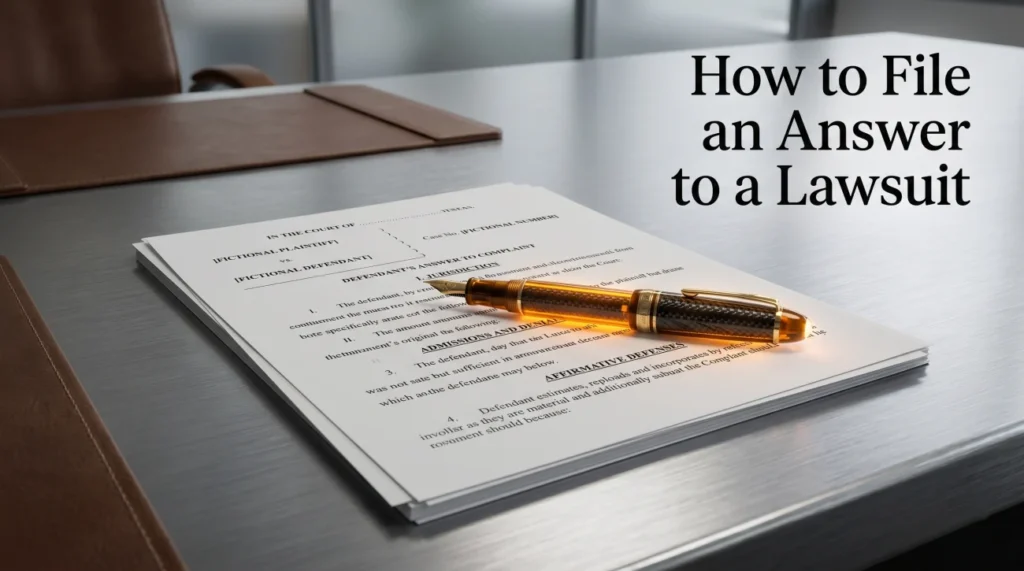
- Filing your Answer requires two mandatory steps: submitting the original to the court and serving a copy directly to the collector’s attorney.
- If you only file with the court but fail to send a copy to the opposing law firm, your filing may be considered defective, leaving you vulnerable to a default judgment.
- Most courts charge a filing fee, but you can request a fee waiver if you meet low-income requirements by submitting a specific form to the clerk.
The Two-Part Reality of Filing Your Lawsuit Response
During my twelve years working inside collection agencies and debt buying firms, I reviewed thousands of account files navigating the legal system. When an account was forwarded to a litigation firm, the firm’s primary objective was efficiency. They filed lawsuits in volume, fully expecting the vast majority of consumers to never respond. When someone actually did write up a defense, it changed the entire calculation of the case.
But writing the document is only half the battle. A significant number of consumers lose their cases not because their defenses are weak, but because they stumble on the administrative mechanics. Filing requires two distinct actions: putting the court on notice that you intend to defend yourself, and simultaneously putting the opposing party on notice. If you have already drafted your document, you are ahead of most people. Now, you need to ensure it lands in the right hands, with the right stamps, before the clock runs out.
Step 1: Preparing Your Copies and Organizing the Paperwork
Before you ever step foot near a courthouse or a post office, you must organize your documents. Courts operate on paper trails and redundancies. Walking into the clerk’s office with a single, original copy of your Answer will immediately stall your progress.
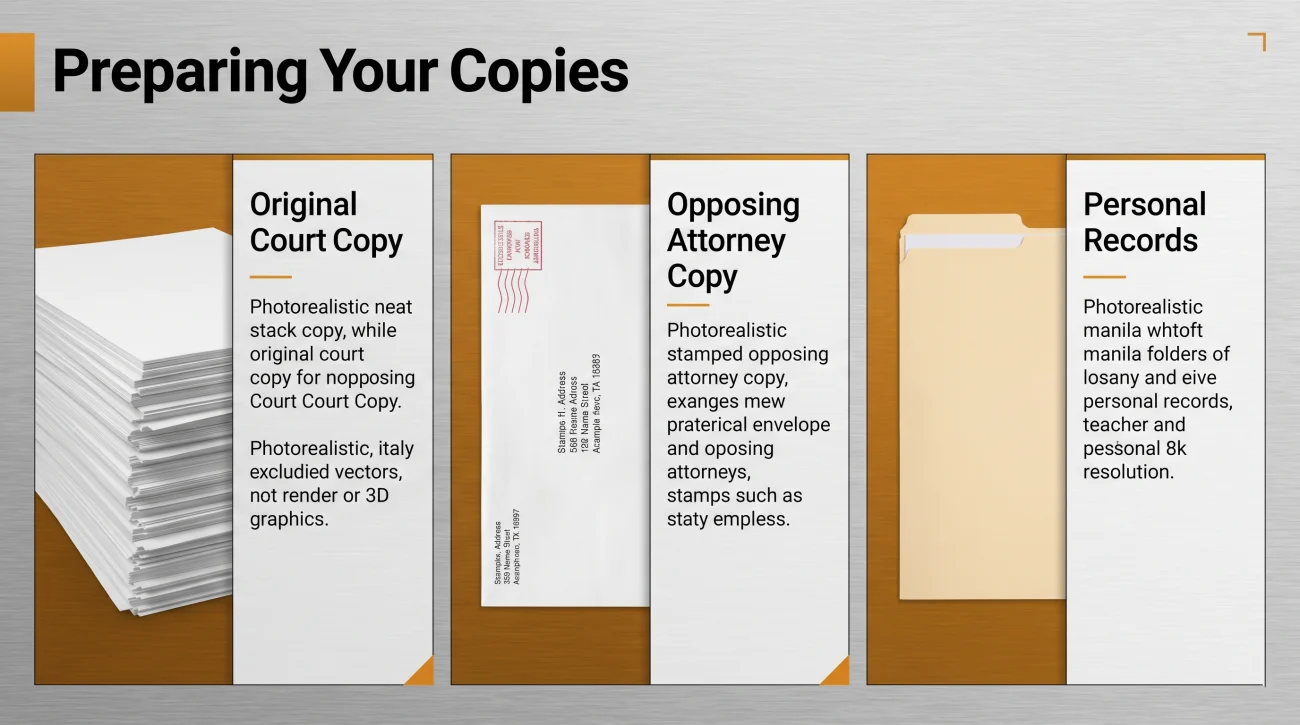
You must make at least three complete copies of your finalized response document. The original goes to the court to be placed in the official case file. The second copy is for the opposing attorney. The third copy is your personal record. If you are attaching any exhibits or evidence to your Answer, those attachments must be included in all three stacks.
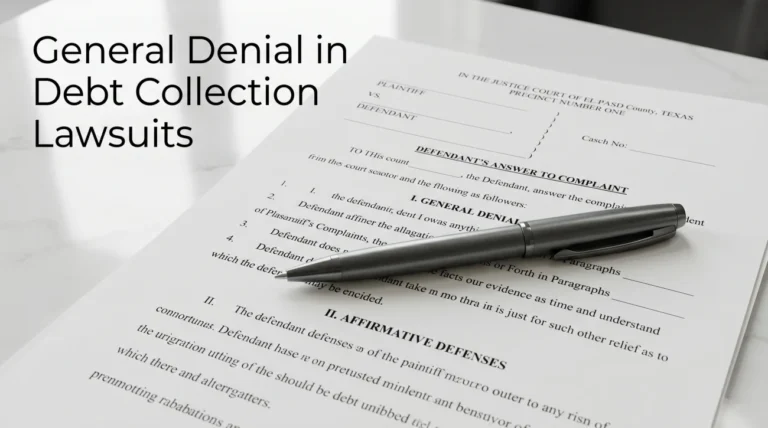
If you are still unsure if your document contains the right legal formatting or paragraph responses, you will want to verify you have appropriately addressed the allegations before making these copies. Understanding exactly what elements protect you when writing your response ensures the document you are about to file actually does the legal work you need it to do.
What If There Are Multiple Defendants?
In many cases, debt buyers will sue both spouses or both co-signers on a single complaint. If both of your names are on the lawsuit, you cannot simply file one Answer and assume it covers both of you unless you both sign it. Each named defendant must officially respond. You can often file a single Answer document that includes both of your names and both of your signatures, but you must ensure the court clerk understands you are entering an appearance for both individuals.
“A common field observation from debt collection litigation: Pro se defendants (people representing themselves) often mail their only original copy to the court without keeping one for themselves. Weeks later, when a hearing is scheduled, they have no reference for what they actually submitted. Always keep a date-stamped copy for your own kitchen table file.”
Once you have your copies separated, it is time to assemble them properly. Staple each packet individually. Do not hand the clerk a loose stack of thirty pages. Presenting organized, neatly stapled packets signals to the clerk that you are prepared, which often makes the intake process significantly smoother.
Step 2: Filing the Original With the Court Clerk
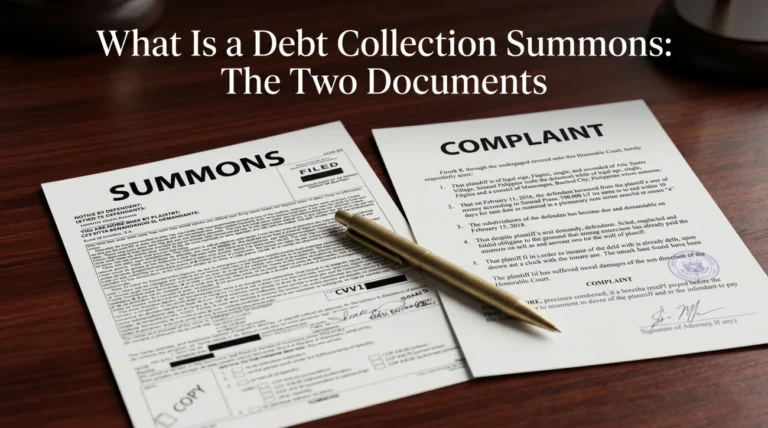
Your primary objective is to get the original document into the hands of the court clerk listed on your summons document. The summons is your instruction manual for this step. It contains the exact name of the court, the physical address, and your specific case number.
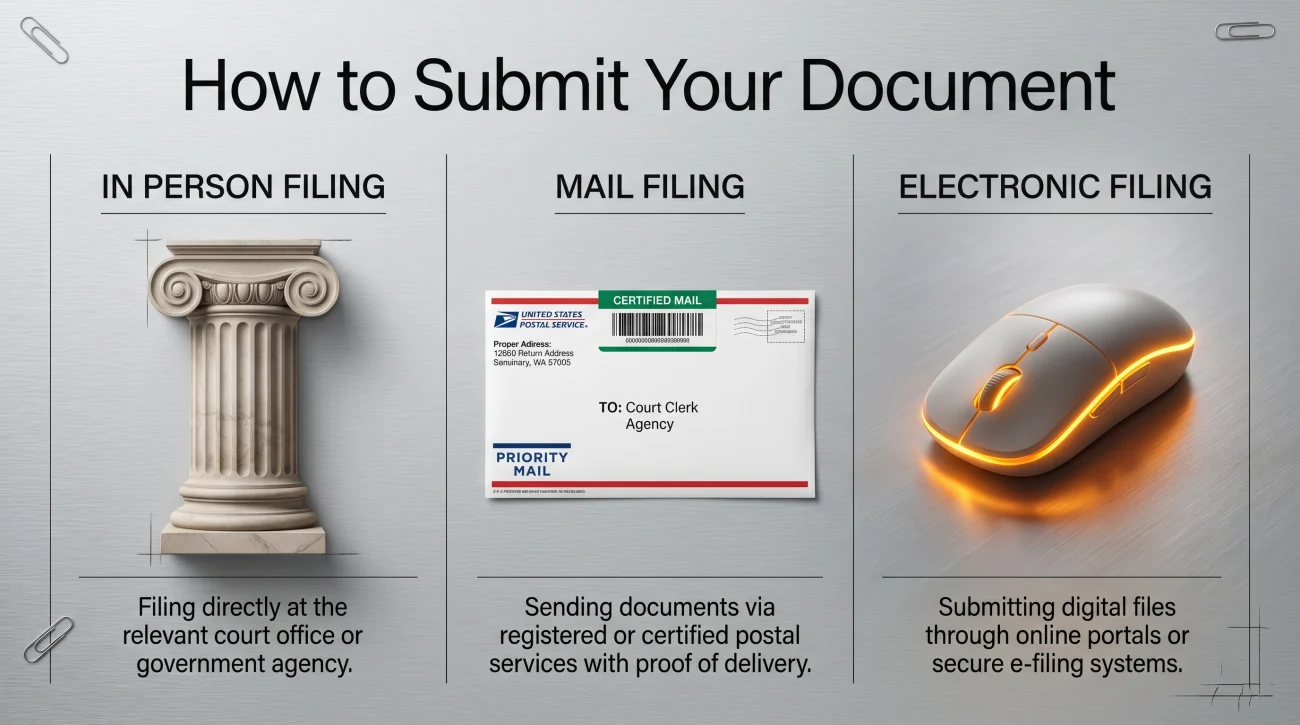
You generally have two options for getting the document to the court: filing in person or filing by mail. If your deadline is rapidly approaching, filing in person is always the safest route. By standing at the clerk’s window, you eliminate the variables of postal delays and mailroom processing times.
The Importance of the Date Stamp
When you hand your packets to the clerk, they will keep the original for the judge’s file. You must explicitly ask the clerk to date-stamp your personal copy. This physical stamp is your armor. It is the absolute, unarguable proof that you submitted your defense on time.
💡 Pro Tip: Never leave the courthouse without your date-stamped copy. If the collector’s attorney later claims you missed the window and files for a default, your stamped copy is the exact evidence the judge will look at to deny their request.
If you choose to file by mail because the court is too far away, you must build in extra time. Mail the original and your personal copy to the clerk, and include a self-addressed, stamped envelope. Include a brief cover letter politely asking the clerk to file the original and return a date-stamped copy to you in the provided envelope. Use certified mail with a return receipt so you can track exactly when the court received it.
Timing is unforgiving in civil procedure. If you are unsure exactly when your window closes, you need to calculate it based on your specific service date. Figuring out exactly how many days you have left to respond dictates whether you have time to mail these documents or if you need to drive to the courthouse today.
The E-Filing Alternative
Many courts now offer or even require electronic filing through an official online portal. If your court uses an e-filing system, you will upload a PDF of your Answer instead of handing over paper copies. The system automatically generates a digital date stamp and often emails you a confirmation receipt. However, you must still mail a physical copy to the opposing attorney unless they have formally opted into the court’s electronic service system. Never assume the e-filing portal automatically serves the debt collector’s lawyer.
Navigating Filing Fees and Requesting a Waiver
Justice is rarely free. Whether you file by mail, use an e-filing portal, or stand at the clerk’s window, the court will almost always require payment before processing your paperwork. In most jurisdictions, filing an Answer requires paying a fee to the court. This catches many people off guard. They arrive at the clerk’s window prepared to hand over their documents, only to be told they owe money just to participate in their own defense.
The cost varies wildly depending on your state and the type of court. In small claims or justice courts, the fee might be as low as $20 to $50. In general civil courts handling larger balances, filing an Answer can cost $150 to over $300. This fee must be paid at the exact moment you file.
However, the legal system recognizes that being sued for a debt often means you are experiencing financial hardship. If you cannot afford the filing fee, you do not automatically lose your right to defend yourself. You can ask the court for a fee waiver, legally known in many jurisdictions as an application to proceed “In Forma Pauperis.”
Clerk: “That will be a $180 filing fee.”
You: “I am currently experiencing financial hardship and cannot afford the fee. Do you have a fee waiver application or an In Forma Pauperis form I can fill out today?”
The clerk will provide a financial disclosure form. You will need to list your monthly income, essential expenses, and any government assistance you receive (like SNAP, Medicaid, or SSI). Usually, a judge reviews this form quickly, often on the same day. If approved, your filing fee is completely waived, and your Answer is accepted into the record.
Step 3: Serving the Opposing Attorney (The Critical Missed Step)
This is where the majority of self-represented defendants make a critical error. They file the document with the court, get their date-stamped copy, go home, and assume they are done. They are not. The court will not automatically send a copy of your defense to the debt collector.
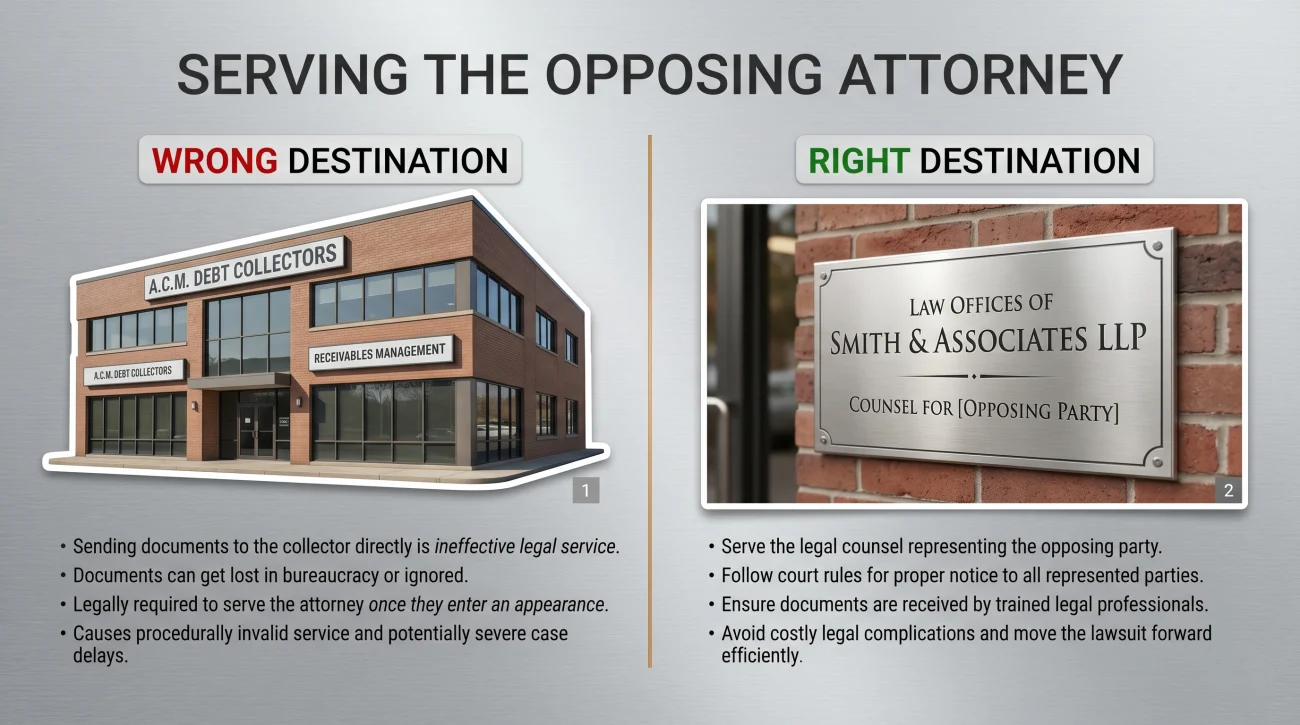
Under the rules of civil procedure, every time you file a document with the court, you are legally obligated to provide a copy to the opposing party. In a debt collection lawsuit, you do not send this to the collection agency itself. You must send it to the law firm representing the collector.
Mailing a copy of your Answer to the PO Box of the debt collection agency that was harassing you on the phone.
Mailing the copy to the specific attorney name and law firm address printed on the upper left corner or the signature line of the lawsuit complaint.
If you fail to serve the opposing attorney, they will not know you responded. From their perspective, the deadline will pass, and they will file a motion asking the judge to award them a default judgment. Even if the court has your Answer on file, failing to serve the plaintiff can cause severe procedural headaches and require you to fight just to keep your case active.
Send their copy via first-class mail. While standard mail is often legally sufficient, spending a few extra dollars to send it via certified mail with a tracking number is a smart defensive move. It prevents the collection law firm from ever walking into a courtroom and claiming they never received your response.
Understanding the Proof of Service Requirement
Because serving the opposing attorney is so critical, many courts require you to prove you actually did it. This is done through a document called a “Proof of Service” or “Certificate of Service.”
A Proof of Service is simply a written statement, signed under penalty of perjury, detailing exactly how and when you sent the document to the other side. Some courts require this certificate to be attached to the back of the Answer you file with the clerk. Certain jurisdictions strictly enforce this requirement and will reject your filing entirely if the certificate is missing.
| Component | What it means in the Proof of Service |
|---|---|
| The Date | The exact day the envelope was dropped in the mail. |
| The Recipient | The name and address of the plaintiff’s attorney as it appeared on the envelope. |
| The Sender | In some states, a party to the lawsuit cannot serve their own documents. You may need a friend over 18 to mail it and sign the form. |
| The Signature | A formal declaration that the mailing actually took place as described. |
The rules on who can mail the document vary by state. If your state requires a non-party to handle the mailing, simply have a friend or family member place the envelope in the mailbox and sign the Proof of Service form. When in doubt about whether your local court requires a formal Proof of Service, include one anyway. It is always better to over-document your compliance than to have your filing rejected on a technicality.
What Happens Once the Filing is Complete
Once you have filed the original with the court and mailed the copy to the plaintiff’s attorney, your immediate procedural obligation is complete. You have successfully prevented an automatic loss.
It is important to understand that you might not receive an immediate confirmation letter from the court. Some clerks mail a receipt, but many do not. This is why your date-stamped copy or e-filing confirmation email is so vital. Create a dedicated physical folder for this lawsuit. Inside it, place your date-stamped Answer, the certified mail receipt from the post office, and the original summons you received. For an overview of how these documents fit into the broader lifecycle of a collection case, reviewing the complete timeline of a debt collector lawsuit provides essential context.
From this point forward, you must read every piece of mail you receive meticulously. The court will eventually mail you a notice setting a date for a hearing or a pretrial conference. Alternatively, the collector’s attorney might mail you a settlement offer, or a packet of legal questions called discovery. Knowing what realistic paths your case might take next will help you prepare for the next phase without anxiety.
Signs Your Filing May Have a Fatal Flaw
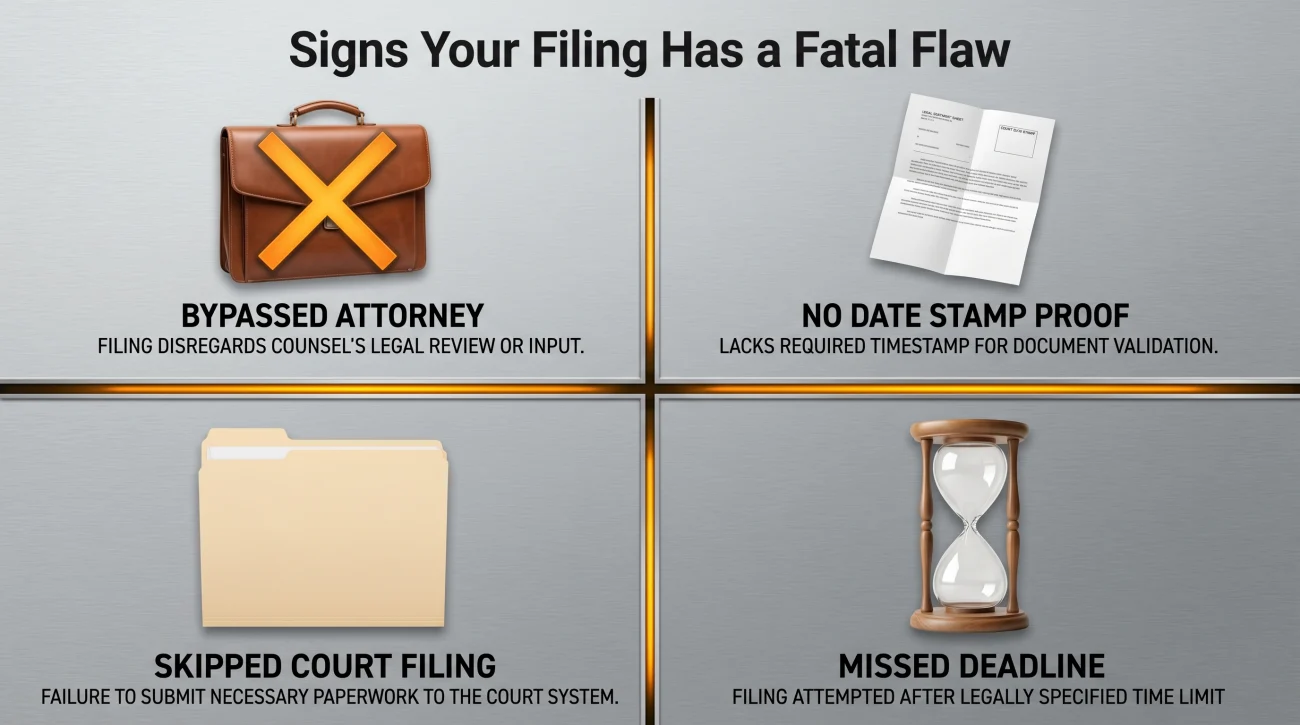
Even well-intentioned defendants make mistakes under the stress of litigation. If you mishandle the filing mechanics, you risk having your defense ignored entirely. You need to act immediately to correct the record if any of the following apply to your situation.
- ⚠️ You bypassed the attorney. You mailed your response directly to the original creditor or the debt collection agency instead of the specific litigation firm handling the lawsuit.
- ⚠️ You lack official proof. You dropped your Answer in a courthouse submission box or mailed it in without requesting a date-stamped copy, leaving you with no proof it was received on time.
- ⚠️ You skipped the court entirely. You sent a heated letter of dispute to the debt collector’s lawyer but never filed an official Answer with the court clerk, leaving the court docket completely empty.
- ⚠️ The deadline passed days ago. You have the paperwork filled out, but you froze out of fear, and your response window has officially closed.
If you realize your filing is defective, or if you simply missed the deadline, you must not assume the case is over. Depending on the exact status of the court docket, an attorney can often step in to file late responses, correct procedural errors, or challenge default motions before they become final. When administrative errors put your case in jeopardy, bringing in professional legal representation is often the most effective way to secure your standing with the judge.
Filing Late: What to Do If You Missed the Window
If you are reading this and your deadline passed yesterday, or even last week, do not throw your Answer in the trash. File it anyway.
Missing the deadline means the collector *can* ask for a default judgment; it does not mean the judge has automatically granted one. The collector’s law firm has to file paperwork to request the default, and it often takes them weeks to get around to it. If you file your Answer late, but before the collector requests a default, many courts will accept it and allow the case to proceed normally.
Even if an “Order of Default” has been entered by the clerk, a judge may not have signed the final judgment yet. In these intermediate stages, the court prefers cases to be decided on their merits rather than technicalities. Get your paperwork to the courthouse immediately. For a broader understanding of how these rules apply, reviewing the overall framework of responding to a lawsuit reinforces why establishing a presence in the case matters so much.
Final Thoughts on Securing Your Response
Filing an Answer is a bureaucratic hurdle designed by lawyers, for lawyers. It is not intuitive for the average consumer. But the mechanics are ultimately simple: one copy for the court to make it official, and one copy for the opposing attorney to put them on notice. By executing both steps diligently, requesting your fee waiver if necessary, and demanding a date stamp for your records, you strip the collector of their easiest path to victory.
You force them to stop relying on defaults and start relying on evidence. In the debt collection industry, that is a transition many debt buyers are entirely unprepared to make. For the consumer standing on the other side, that lack of preparation is exactly where your advantage begins.
❓ FAQ
🏢 Where do I actually drop off the paperwork?
You must deliver the original Answer to the exact court clerk’s office listed on your summons document. Do not guess the location; use the address printed on the official paperwork you received.
💵 What if I literally cannot afford the filing fee?
Ask the court clerk for a fee waiver application, often called an “In Forma Pauperis” form. If you meet low-income guidelines or receive government assistance, a judge can waive the fee entirely.
✉️ Do I have to use certified mail to send the copy to the attorney?
While first-class mail is often legally acceptable, using certified mail with a return receipt provides hard evidence that the attorney received your document, preventing them from claiming ignorance later.
🧑⚖️ Does the judge read my Answer the day I file it?
No. The clerk places the document into the case file. The judge generally will not read your Answer until a hearing or pretrial conference is scheduled.
📅 How do I prove I filed it on time?
You must keep a copy of your Answer that has been physically date-stamped by the court clerk. This stamp is the only definitive proof that you met your legal deadline.
📠 Can I fax or email my Answer to the court?
In most jurisdictions, you cannot submit initial responses via standard email or fax. You generally must file physical paper copies or use the court’s official electronic filing (e-filing) portal if one is available to the public.
📫 What if the opposing attorney’s address is a PO Box?
You can mail the copy to a PO Box if that is the official address listed on the lawsuit complaint. Ensure you keep your tracking receipt to prove it was delivered to that box.
✍️ Do I need to get my Answer notarized before filing?
Generally, a standard Answer does not need to be notarized. However, if your state requires a “verified denial” for certain specific claims, that particular document may require a notary stamp. Check your local court rules.
⏳ I am one day late, should I still go to the courthouse?
Yes, go immediately. A missed deadline allows the collector to request a default, but if they haven’t filed that request yet, the court will often still accept your late Answer.
What each stage of litigation requires and where your leverage sits.
- What the lawsuit process looks like from summons to judgment
- What to file, when to file it, and what happens if you do not
- The legal arguments that can defeat a debt collection lawsuit
- What a default judgment allows collectors to do and how to fight one
- How to negotiate a resolution once litigation has started
Once judgment is entered, collectors gain tools they did not have before.
- The FDCPA violations collectors commonly commit during the collection process
- How to respond to a debt lawsuit and what defenses are available to you
- How a judgment becomes a garnishment order on your paycheck
- When a collector uses a judgment to freeze your bank account instead
- How to settle before the judgment turns into something harder to stop
Disclosure: The content on this site reflects direct experience inside the debt collection industry and is grounded in federal law and regulation. It is informational in nature. Reading it does not constitute legal advice and does not create any professional relationship. If you are dealing with a lawsuit, a judgment, or a legal deadline, consult a licensed attorney in your state before acting.