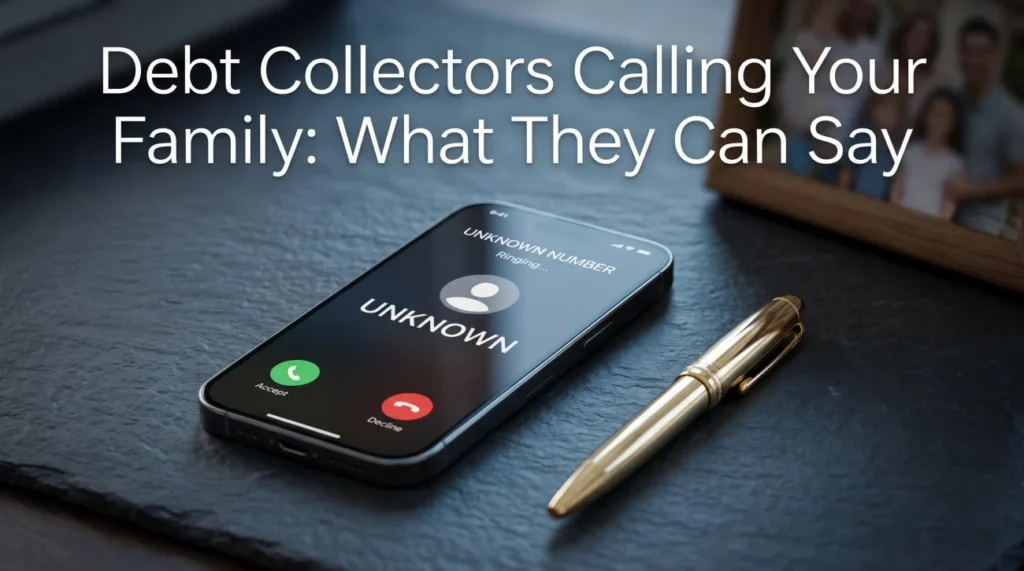
- Debt collectors are legally allowed to contact your family members exactly one time, and strictly for the purpose of acquiring your location or contact information.
- They are strictly prohibited from identifying themselves as debt collectors or mentioning that you owe a debt to anyone other than you or your spouse.
- While the legal justification is finding you, the operational reality inside agencies is that calling family is a deliberate tactic designed to create social pressure.
- You can stop them from contacting your relatives by sending a written cease and desist letter or by providing them with your direct contact information.
- If a collector tells your parent, sibling, or child about your debt, they have crossed a hard legal line and violated federal law.
The Shock of a Collector Reaching Your Relatives
Finding out a debt collector called your mother, your brother, or your adult child is a specific kind of humiliation. You might be working hard to keep your financial struggles private, only to have a stranger intrude on your family life. I know exactly how jarring this feels for consumers, because during my 12 years working inside third-party collection agencies, I watched agents make these calls every single day.
When you discover a collection agency has contacted your relatives, your immediate reaction is usually a mix of anger and panic. You want to know if they are legally allowed to do this, what they might have said, and how you can ensure it never happens again.
The rules governing third-party contact are very specific. Under federal debt collection laws, collectors do have a narrow window to reach out to your family. However, the restrictions on what they can actually say during that phone call are severe. Most consumers do not know where the line is drawn, which means they do not realize when a collector has crossed it.
Let us walk through exactly what the law allows, what is strictly forbidden, and the real reason collectors use this tactic in the first place.
What the Law Actually Allows Collectors to Do
When you understand the exact boundaries placed on collection agencies, you strip away a lot of their power. The Fair Debt Collection Practices Act (FDCPA) is the federal law that dictates how third-party debt buyers and collection agencies must operate. It contains a specific provision regarding communicating with people other than the person who owes the money.
Collectors are permitted to contact third parties, including your family members, for one reason and one reason only: to obtain location information. In the industry, we call this “skip tracing.”
If an agency does not have a valid phone number or address for you, or if they believe the information they have is no longer accurate, they are legally permitted to call your relatives to ask how to reach you. During this call, the agent is allowed to state their own name and state that they are confirming or correcting your location information.
They are allowed to contact a specific family member exactly one time. Once they have spoken to your sibling and asked for your phone number, they cannot call that sibling again unless your sibling explicitly requests a callback, or if the collector has a valid reason to believe the sibling provided false information and now has correct information.
“During floor training, I always taught new agents that the third-party call is a one-shot opportunity. You get one chance to ask a relative for a phone number. If the relative hangs up or says they do not know, you document the file and you do not dial that number again. Calling back a second time is an immediate compliance failure.”
This sounds straightforward, but in practice, the conversation on the phone is a delicate dance. The collector is trying to sound urgent enough that your family member takes it seriously, while staying vague enough to avoid breaking federal law.
The Hard Boundaries: What They Cannot Say
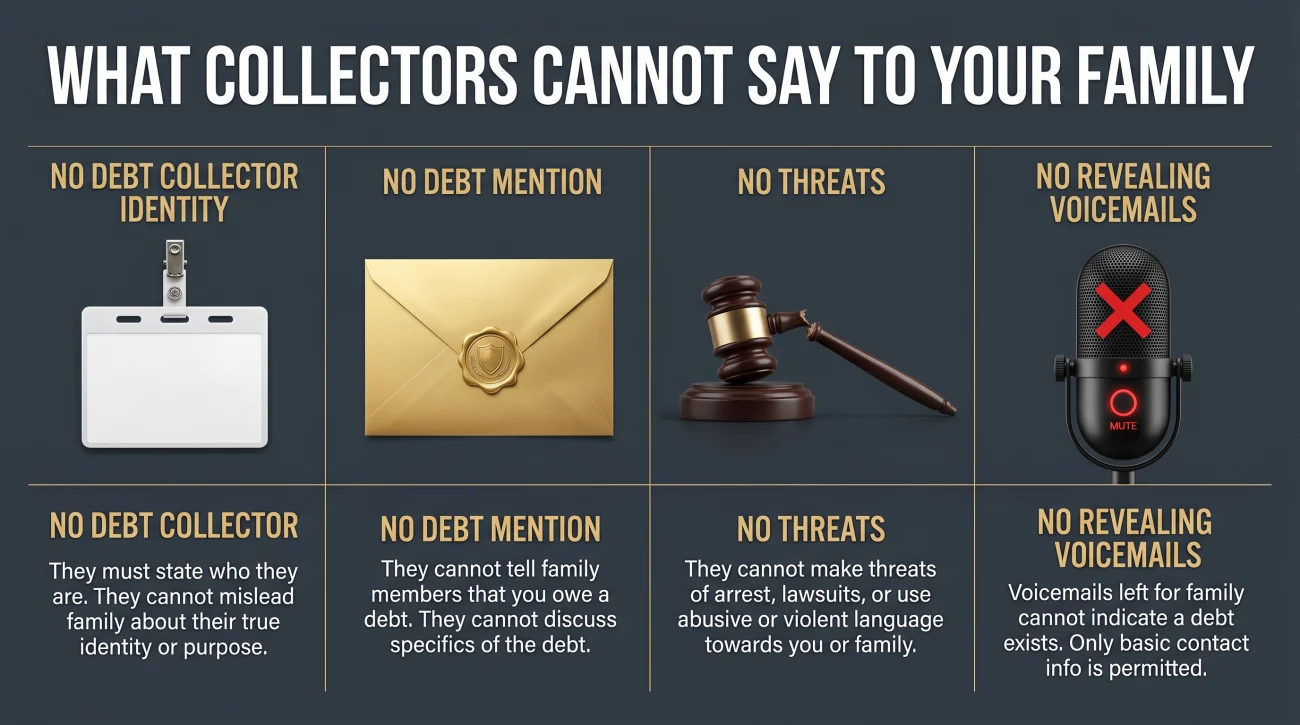
The moment a collector contacts anyone other than you or your spouse, they are walking in a legal minefield. The FDCPA prohibits third-party disclosure, meaning a collector cannot reveal your financial business to the outside world.
If a collector gets your parent or sibling on the phone, here is what they are strictly prohibited from doing:
- 📌 Identifying as a debt collector: They cannot say they work for a collection agency. They must state their individual name, and if asked for their employer, they can only state the company name if it does not reveal they are collecting a debt. For example, they can say “I am calling from MRS Associates,” but they cannot say “I am calling from First Choice Debt Recovery.”
- 📌 Mentioning the debt: They cannot say you owe money, that you are past due on an account, or that you are in financial trouble.
- 📌 Using threats: They cannot tell your family member that you are going to be sued, arrested, or face legal trouble if you do not call back.
- 📌 Leaving revealing messages: The rules around leaving messages are incredibly strict because anyone might hear them. If an agency leaves a message with your family, they have to navigate complex debt collector voicemail rules to ensure they do not accidentally disclose the debt.
If a collector violates any of these rules and tells your family member that you owe a debt, they have committed an illegal third-party disclosure. This is a severe violation of the FDCPA and is highly actionable. You can learn more about how these specific breaches are handled by reviewing common FDCPA violations.
The Insider Reality: Why They Really Call Your Relatives
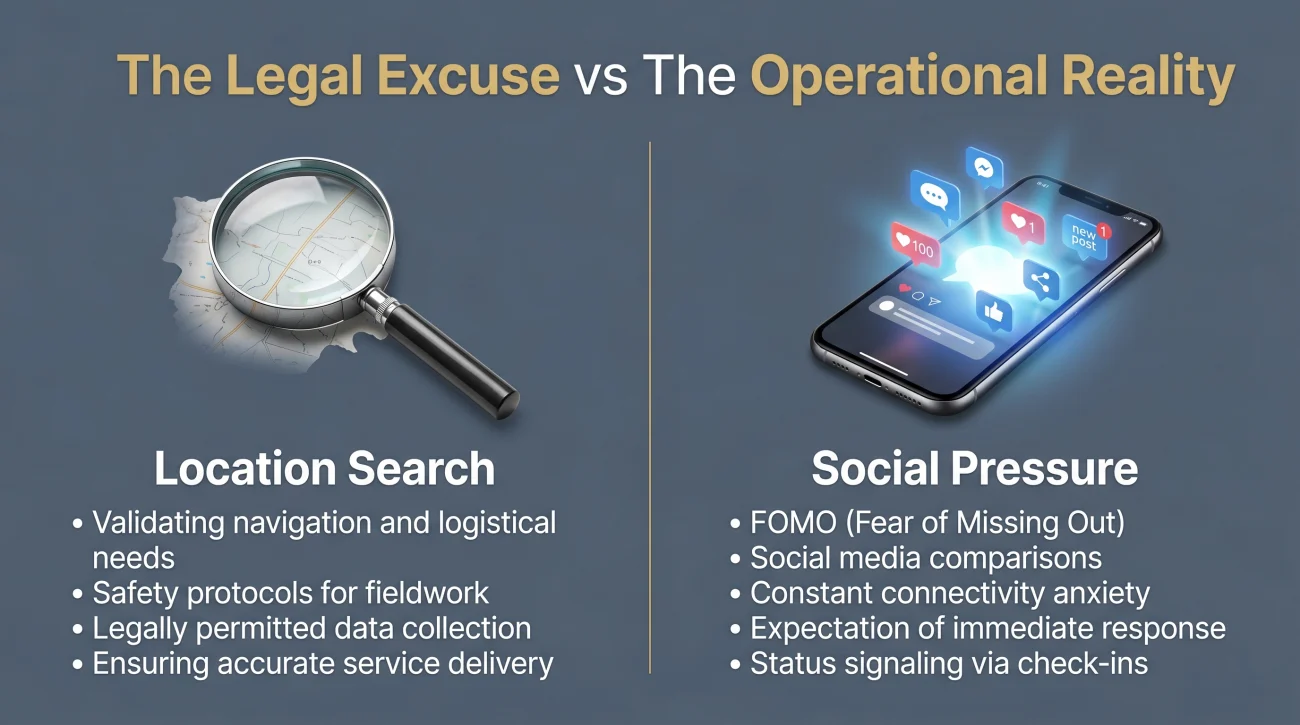
Here is the part that standard legal guides will not tell you. While the legal justification for contacting your family is to gather “location information,” the operational reality inside a collection agency is entirely different.
In many cases, the collector already has your phone number. They may have been leaving you voicemails for weeks. So why do they suddenly call your mother?
They do it to leverage social pressure.
When a professional-sounding stranger calls your parents or your siblings looking for you, it creates immediate anxiety in your family. Your mother will likely call you immediately, worried that you are in trouble. Your brother might text you and ask what is going on. Suddenly, the collector does not just have to rely on you picking up the phone; they have recruited your own family to pressure you into dealing with the situation.
“We could not reach the consumer at their primary number, so we utilized skip tracing to contact a known associate to verify their current residential address and contact details.”
“The consumer is ignoring our calls. If we call their parents and leave a polite but urgent message, the embarrassment and family concern will usually force the consumer to call us back within 24 hours.”
We see this same psychological tactic used in the workplace. When collectors push the boundaries of debt collectors calling your work, it is rarely because they actually need to know if you are employed there. It is because the fear of your boss or coworkers finding out about your financial situation is a powerful motivator to make a payment. The tactic relies on your shame and discomfort.
What If the Debt Is Old or Not Even Yours?
One of the most frustrating experiences is having your family contacted over a debt that is past the statute of limitations, or worse, a debt that belongs to someone else entirely.
Collectors do not stop skip tracing just because a debt is old. In fact, when dealing with old, time-barred debt, reaching out to family is a prime tactic to pressure you into picking up the phone and making a small “good faith” payment that accidentally restarts the legal clock. The collector’s behavior does not change just because the debt has lost its lawsuit enforcement power.
Similarly, in cases of mistaken identity, bulk debt buyers often blast out calls to anyone with a matching last name in your area. They will call your parents asking for a “John Smith” because that is the only lead they have. If this happens, your family member simply stating “you have the wrong person” is often ignored by the automated dialing system. You still need to step in and send a written cease and desist to protect your family’s phones from endless misdirected calls.
The Exception: Communicating With Your Spouse
It is critical to understand that under federal debt collection law, your spouse is not treated as a standard third party. For the purposes of the FDCPA, communicating with your spouse is generally treated the same as communicating with you.
This means a collector is legally permitted to call your spouse, identify themselves as a debt collector, and discuss the details of your debt, the balance owed, and settlement options. They do not have to hide the nature of the call from your husband or wife.
There are rare exceptions depending on very specific state laws regarding separate property, but as a general federal rule, collectors will freely discuss the account with a spouse. If you are trying to keep a debt secret from your partner, you should know that the law offers you almost no protection if a collector decides to dial your home and your spouse answers.
Where Consumers Lose Leverage
Whether it is your spouse answering the home phone or your mother getting a call out of the blue, the immediate aftermath of these contacts is a dangerous window. Emotions run high, and this is the exact moment where consumers make critical mistakes that damage their own leverage.
The most common mistake is calling the agency back in a rage. When you yell at the agent and inadvertently admit to the debt just to get them to leave your family alone, the tactic worked perfectly. From an insider perspective, this is a massive win for the collector. Not only did they force you to engage, but by acknowledging the debt over the phone, you may have just reset the statute of limitations depending on your state. You traded your legal leverage for a momentary emotional release.
Another frequent trap occurs when your family member tries to “help.” A well-meaning parent might call the collector back to explain that you are going through a hard time and just started a new job at a specific company. They think they are generating sympathy. In reality, they just handed the collector your new workplace and asset information for potential wage garnishment.
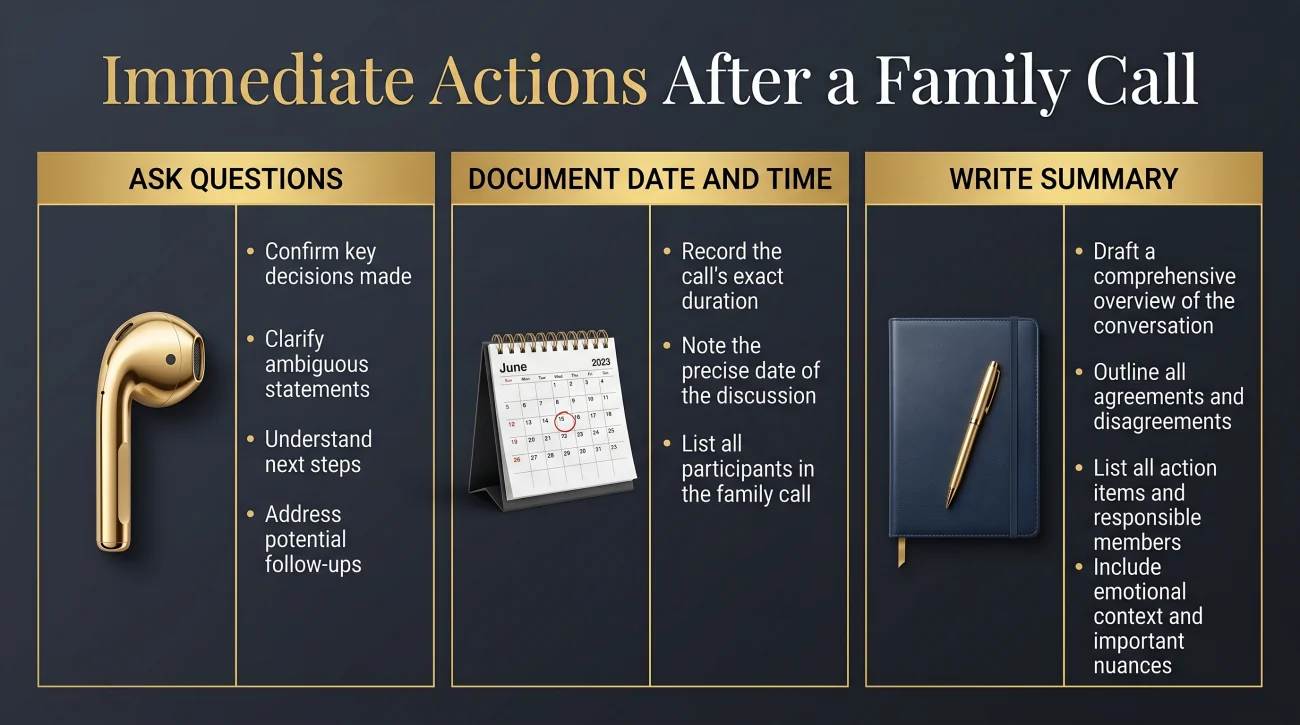
The correct immediate action requires discipline and specific documentation:
- Ask your family member exactly what was said, specifically listening for any mention of a debt or legal threats.
- Document the exact date, time, and the phone number that appeared on their caller ID.
- Have your relative write down a short summary of the conversation while it is fresh in their mind.
This documentation is your armor if you need to escalate the issue and hold the agency accountable.
How to Stop Contact With Your Relatives
You have absolute control over stopping these calls, but you have to use the correct mechanisms. A verbal request is a start, but a written request is a legal mandate.
If you get the collector on the phone, you can verbally tell them to stop contacting your family. Once you have provided them with your direct phone number and told them this is the only acceptable way to reach you, their legal justification for “location information” vanishes. They have no legal reason to call your family ever again.
“I understand you contacted my brother looking for me. My correct phone number is [Your Number] and my address is [Your Address]. You now have my location information. Do not contact my family members or any other third parties regarding this matter again.”
However, verbal instructions are easily lost or ignored by aggressive agencies. To permanently lock down your privacy, you must put it in writing. Sending a formal cease communication letter forces the agency to stop calling entirely. You can request that they stop contacting third parties, or you can demand they stop contacting you as well. For a complete breakdown of how this letter works and what it triggers, review the process on how to stop debt collector calls.
Has the Collector Crossed a Legal Line?
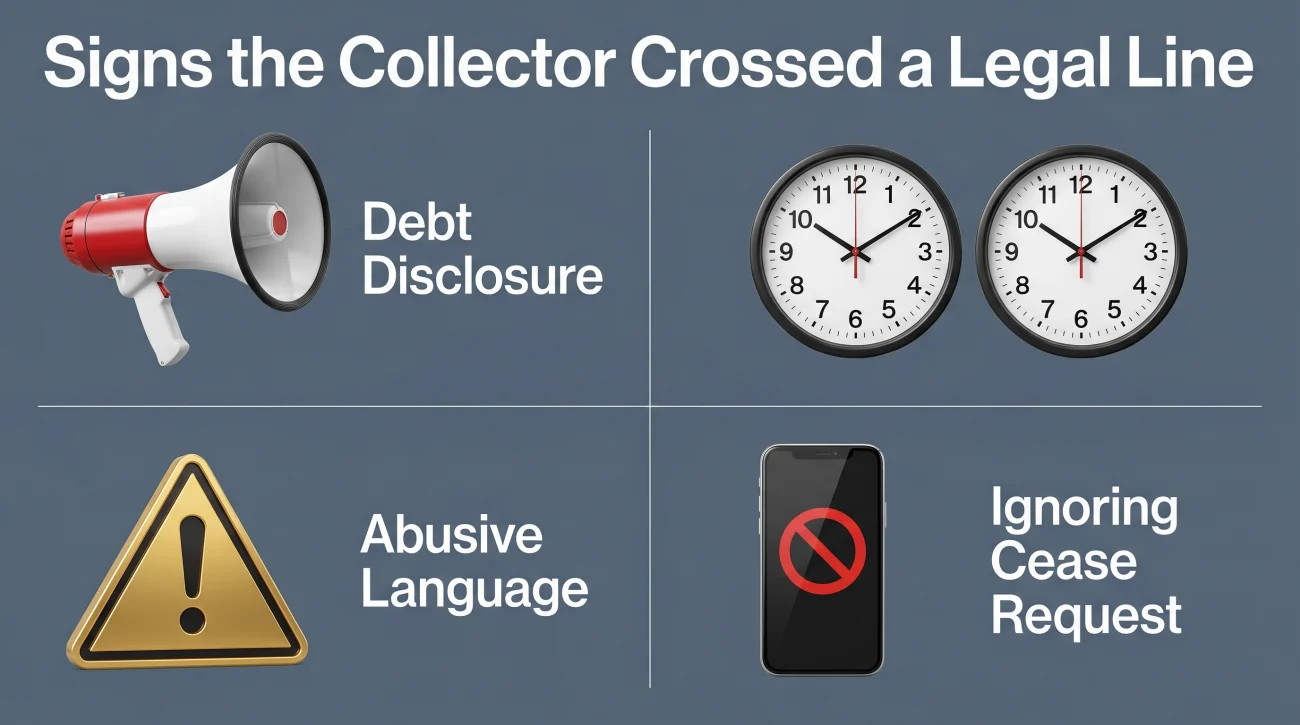
Knowing the law exists is step one, but knowing how to act on a violation is what flips the power dynamic. Review the documentation you gathered from your family member. Rather than just being frustrated, you need to look for specific triggers that create leverage.
You have a highly actionable case if you can document any of the following:
- The collector explicitly told your family member that you owe a debt or are in collections.
- The collector called the same family member more than once without a valid legal reason.
- The collector threatened your relative or used profane language.
- The collector called looking for you after you had already provided them with your direct contact information in writing.
If you spot any of these signs, the collector just handed you a federal violation. If you are experiencing these aggressive tactics and need help evaluating whether this specific agency behavior crosses the line into illegal harassment, it is time to have a professional review your call logs and documentation.
Final Thoughts on Protecting Your Family’s Privacy
Debt collectors use family contact because it is an incredibly effective psychological tool. It weaponizes your own relationships against you, stripping away the privacy you have worked hard to maintain around your financial struggles. That specific kind of humiliation is designed to make you panic and react emotionally.
Do not let the embarrassment of your parents or siblings finding out force you into a bad financial decision. Take a breath, get the facts from your family member, document the interaction, and then take back control of your own narrative by providing your direct number or sending a written cease request. The law is designed to protect your privacy, but you have to be the one to enforce the boundaries.
❓ FAQ
📞 Can a debt collector call my parents if I am an adult?
Yes. The law allows them to contact any third party, including your parents, strictly to ask for your updated phone number or address. Your age does not prevent them from making this location request.
🗣️ What should my family member say if a collector calls them?
They should keep it brief. They are not legally obligated to answer questions. They can simply say, “I am not taking messages for that person,” or provide your phone number if you prefer, and then hang up.
⏰ Can a collection agency call my relatives more than once?
Generally, no. The FDCPA restricts them to contacting a specific third party only once. They can only call back if the relative asks them to, or if they have proof the relative initially lied about having your contact information.
📱 Is it a violation if they leave a voicemail for my family?
It depends on what the voicemail says. If the message mentions a debt or identifies the caller as a collection agency, it is an illegal third-party disclosure. If it is just a vague request for a callback, it may be legal.
💍 Can a debt collector call my spouse about my debt?
Yes. Under federal law, your spouse is not considered a third party. Collectors are allowed to discuss the details of your debt with your husband or wife.
📝 If I am disputing the debt, can they still call my family?
Yes, unless you have specifically triggered a legal pause. Simply telling them on the phone that you dispute the debt does not stop them from calling third parties to locate you. To force a pause, you must send a written validation request within the 30-day window, or send a formal cease and desist letter.
🛑 How do I stop debt collectors from calling my family members?
You can stop them by verbally giving them your correct phone number and telling them to stop calling others, or by sending a written cease and desist letter via certified mail.
💵 Can they tell my family how much money I owe?
Absolutely not. Disclosing any details about the debt, including the balance, the original creditor, or the fact that you are in collections, is a direct violation of the FDCPA.
⚖️ Will suing the collector make the calls to my family stop?
Filing a lawsuit for FDCPA violations usually results in the agency ceasing all contact immediately to avoid further liability. In many cases, it also gives you leverage to settle or eliminate the underlying debt.
The full FDCPA framework and the four areas where it matters most.
- Your legal rights when collectors call, write, or threaten to sue
- When they can call, what they cannot say, and how to make it stop
- How to identify FDCPA violations and what you can do with them
- Why the age of a debt determines what a collector can legally do
- Your right to demand proof before paying or acknowledging anything
Harassment is one thing. Lawsuits, garnishments, and frozen accounts are another.
- When collector behavior crosses the line the FDCPA was written to prevent
- What to do if a collector files suit after their calls have not worked
- What collectors can do to your wages once a judgment is entered
- How a bank levy works and which funds the law protects from seizure
- How to resolve the debt that collectors have been calling about
Disclosure: The content on this site reflects direct experience inside the debt collection industry and is grounded in federal law and regulation. It is informational in nature. Reading it does not constitute legal advice and does not create any professional relationship. If you are dealing with a lawsuit, a judgment, or a legal deadline, consult a licensed attorney in your state before acting.