- You have the legal right under federal law to force a third-party debt collector to stop contacting you by sending a written cease and desist letter.
- Verbal requests over the phone rarely work because they leave no paper trail and do not trigger the automatic communication blocks in a collection agency’s software.
- Stopping the calls does not erase the debt. The balance remains, and the collector can still report the account to credit bureaus.
- Sending this letter forces a strategic decision: the agency will typically either abandon the account, return it to the creditor, or file a lawsuit.
- Any contact from the collector after they process your certified letter is a federal violation worth up to $1,000 in statutory damages.
The Only Guaranteed Way to Silence the Dialer
When your phone rings six times a day from unfamiliar local numbers, the stress becomes physical. You block one number, and another one calls an hour later. You pick up the phone and beg the representative to stop calling you while you are at work. They might agree, but three days later, a different agent from the exact same agency is back on your caller ID.
During my 12 years working inside third-party collection agencies, I watched this cycle play out thousands of times. Consumers would exhaust themselves arguing with agents over the phone, hoping logic or frustration would make the harassment stop. But the dialer software does not care how stressed you are. It only cares about account statuses and legal compliance.
There is a way to legally stop a debt collector from calling you. It is not a secret trick, and you do not need an attorney to do it. It is a simple, written request called a cease and desist letter. Once the agency receives it, federal law requires them to comply. However, before you put a stamp on that envelope, you need to understand exactly what this letter triggers inside the collection agency. Stopping the calls is a powerful move, but it fundamentally changes the timeline of your debt. And before you take that step, you have to be absolutely sure you are sending it to the right company.
How the Cease and Desist Process Actually Works
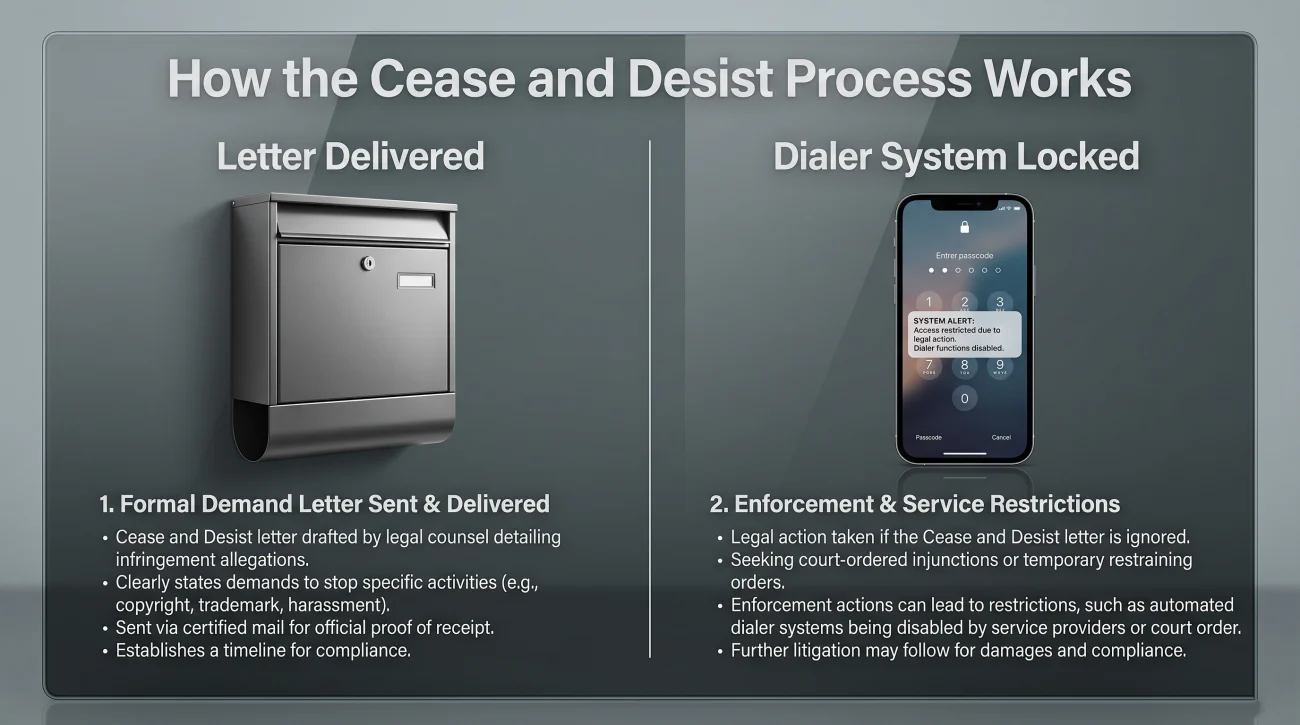
Under the Fair Debt Collection Practices Act (FDCPA), consumers hold a specific right to control communication. The law dictates that if a consumer notifies a debt collector in writing that they refuse to pay a debt or that they wish the collector to cease further communication, the collector must stop.
This sounds straightforward, but inside a collection agency, the method of delivery is the only thing that matters.
“When I was on the collection floor, a consumer screaming ‘never call me again’ and hanging up was logged as a standard refusal. We would simply code the account for a callback the following week. But the moment the mailroom scanned a written cease and desist letter into the system, the dialer software automatically locked the account. No agent could physically dial that number even if they wanted to.”
That shift from an agent’s discretion to a hard system lock is why the written requirement is non-negotiable. Once they have a physical letter in their records, the agency’s compliance department takes over to prevent severe legal liability. For a broader look at the federal framework governing these rules, you can review our main guide on debt collection laws.
The Crucial Blind Spot: Who Are You Sending It To?
Before you draft anything, you must confirm who is actually calling you. The FDCPA rules regarding cease and desist letters apply to third-party debt collectors and debt buyers. They do not universally apply to original creditors.
If your original credit card company or hospital billing department is calling you directly about a past-due bill, sending them a cease and desist letter under the FDCPA will not legally force them to stop. They might honor it as a courtesy, but they are not federally mandated to do so. This letter is your weapon against the agencies that buy or manage the debt after it defaults.
What the Letter Stops (And What It Leaves Open)
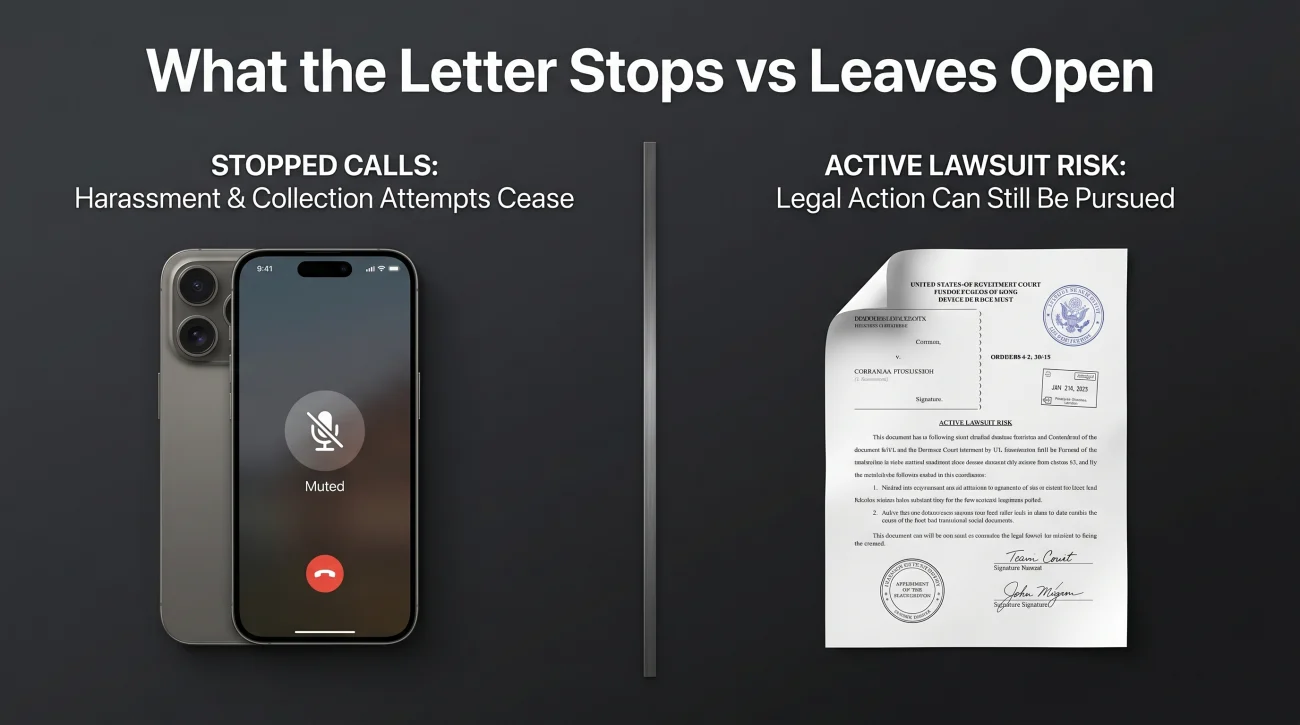
A properly executed cease and desist letter is a blanket communication block. To understand the full scope of what methods collectors are allowed to use, you need to know that this letter revokes their permission for all of them simultaneously.
- Phone Calls: This includes calls to your home, mobile phone, workplace, and any third parties like family members they were calling to find you.
- Text Messages: The letter overrides any previous consent you gave. You can see how the rules apply to text messages specifically, but the cease letter shuts them down entirely.
- Emails and Letters: They can no longer send payment links or standard demand notices.
If you are receiving aggressive volume, this letter is your immediate relief. However, be aware of the mailroom lag time. After tracking shows your letter was delivered, it might take the agency 24 to 48 hours to process it and update the dialer. If you get a call the day after delivery, it is often a processing lag, not necessarily deliberate defiance.
What the Letter Does Not Stop
Sending a cease communication letter is not a magic wand. You are only stopping the harassment; the underlying mechanics of the debt remain fully active.
| What You Might Expect | What Actually Happens |
|---|---|
| The debt is forgiven | You still owe the exact same balance. |
| Credit reporting stops | The collector can still report the account or update the balance with the credit bureaus. |
| Legal action is blocked | The collector retains the full right to file a lawsuit against you. |
| Other agencies cannot call | If this agency abandons the file and sells it to a new debt buyer, your letter does not transfer. The new buyer can legally start calling you until you send them a fresh cease letter. |
The Strategic Choice: Send Now or Negotiate First?
Because this letter cuts off all normal communication, you need to decide what your ultimate goal is before sending it.
If your goal is to settle the debt for a lower amount, sending a full cease and desist letter makes that difficult. You cannot negotiate a payoff with someone who is legally prohibited from talking to you. In those cases, you might prefer to send a partial cease letter. Instead of a blanket block, you explicitly state: “Do not contact me by telephone. You may only communicate with me in writing via USPS mail.” This shuts down the dialer harassment but keeps the channel open for them to mail you their bottom-line settlement offer.
If your goal is simply peace of mind because you cannot afford to pay anyway, or you believe the debt is invalid, a full cease and desist is the right move. However, if you choose the full block, you force the agency into a corner. And that is when you need to understand their next move.
The Decision You Must Understand: The Lawsuit Trigger
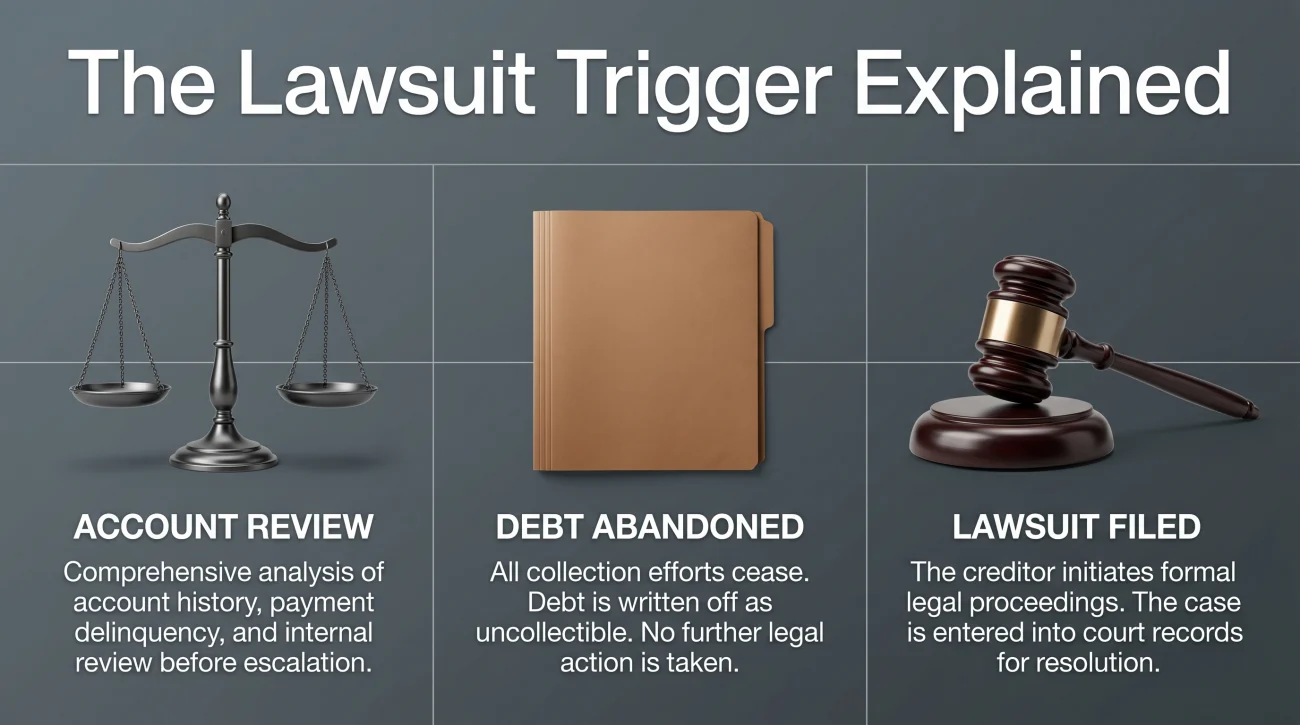
When you strip the collection agency of their primary tool (calling you to apply pressure), their management has to make a final decision on your file. Inside the agency, accounts with cease and desist letters are pulled from the standard floor and routed to a specialized desk. Based on your balance, the age of the debt, and their documentation, they will choose one of two paths.
The first path is abandonment. If the balance is small (usually under $1,000), the cost of taking you to court outweighs the potential recovery. In these cases, the agency will likely close your file and either return it to the original creditor or sell it to a junk debt buyer. The calls from them will permanently stop.
The alternative is litigation. If the balance is high (typically over $3,000), the debt is recent, and they have solid documentation, taking away their ability to call you leaves them with only one profitable option. They will forward the file to their legal department to file a summons and complaint.
The Statute of Limitations Factor: If your debt is very close to the statute of limitations (the legal deadline for them to sue), sending a cease letter can sometimes act as a catalyst. Knowing they are about to run out of time and can no longer call you to push for a reset payment, they might rush to file a lawsuit before the clock expires. If you are concerned about this timing, you need to know what to do if the collector decides to take the matter to court.
Strategic Timing: When You Should Send This Letter Immediately
You already know when you are being annoyed. But from a strategic standpoint, there are specific moments in the collection cycle where sending this letter moves from “optional relief” to “mandatory protection.”
- 📌 You are entering a high-stakes life phase: If you are applying for a mortgage, starting a new job, or going through a security clearance process, you cannot risk a collector calling your employer or causing a disruption. The letter locks this down.
- 📌 The collector is fishing for a reset payment: If an agent suddenly stops demanding the full balance and starts heavily pushing for a “$10 good faith payment,” they are likely trying to restart an expiring statute of limitations. A cease letter shuts down their ability to trick you into a reset.
- 📌 You are tracking extreme boundary violations: If they are calling before 8:00 AM or after 9:00 PM in your local time zone, they are breaking the law. You can verify how nighttime call violations work, but sending the letter immediately caps the harassment and preserves your documentation for a lawsuit against them.
- 📌 You want to force their hand: If you have funds to settle but the agency is refusing to offer a reasonable discount despite months of calls. Sometimes, taking away their ability to dial forces the agency to either drop the account or mail you their bottom-line settlement offer.
How to Send the Letter Correctly
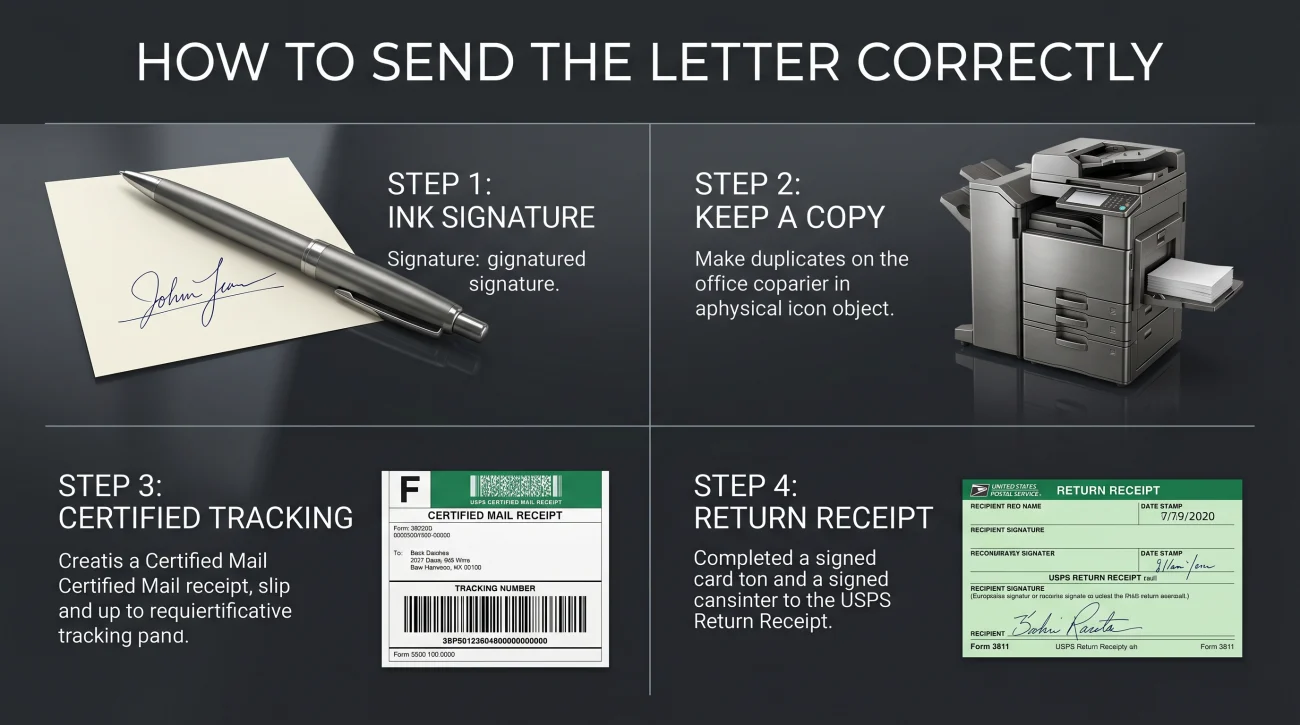
The effectiveness of your letter relies entirely on your ability to prove the collector received it. An agency will happily pretend your letter got lost in the mail if it means they can keep calling you to hit their monthly quotas.
You do not need a lawyer to draft this. A clear, direct statement is highly effective. (If you also need to demand proof of the debt at the same time, look at our debt validation letter template instead).
If your only goal is to stop the calls, the language is simple.
Sample Opening for a Cease and Desist Letter:
Date: [Current Date]
To: [Name of Collection Agency]
Account Number: [Your Account Number]
Dear [Agency Name],
I am writing to request that you cease all communication with me regarding the above referenced account. Under the Fair Debt Collection Practices Act (15 U.S.C. § 1692c), you are hereby notified to immediately stop contacting me by telephone, mail, email, text message, or any other method.
Follow this exact process when mailing your document:
- Print the letter and sign it in ink.
- Make a photocopy of the signed letter for your personal records.
- Go to the post office and send it via USPS Certified Mail.
- Pay the extra few dollars for a Return Receipt (the green card).
When the collection agency receives the letter, an employee must sign the green card. The post office then mails that signed card back to you. Staple that green card to your photocopy of the letter. You now hold federal proof that the agency was notified.
What Happens If the Collector Ignores the Letter?
You hold the signed green card, but a week later, you receive one last letter from the agency. Before you assume they are violating the law, watch out for the one legal exception. The FDCPA allows a collector to contact you one final time after receiving your request. This contact is strictly limited: they can only notify you that collection efforts are being terminated, or that they intend to invoke a specific remedy (like filing a lawsuit). They cannot use this final letter to demand payment. Once that single notice arrives, the wall comes down permanently.
However, what if your phone just rang anyway? The worst thing you can do right now is get angry on the phone. The best thing you can do is grab a pen.
Sometimes, a collection agency will legitimately ignore a cease and desist letter. From an insider perspective, this usually happens for a few reasons: the account was blindly transferred to a new internal team without notes, the mailroom severely lagged on updating the system, or a rogue agent manually overrode the dialer block to try and hit their monthly commission quota.
Regardless of their excuse, if they call you after you hold the certified delivery receipt (and allowing 48 hours for processing), your position changes entirely. You are no longer just a person avoiding a debt. You are a consumer with a documented federal violation against a corporation.
Every single call, text, or letter you receive after that point is a separate FDCPA violation. The law allows consumers to seek statutory damages of up to $1,000, plus actual damages, and requires the collector to pay your attorney’s fees.
Action + Document + Confirm: Answer the call + Log the agent's name, date, and time + State "I have a certified receipt showing you received my cease and desist letter" and hang up.
Start a log book. Take screenshots of text messages. Save voicemails. When you hand that log to a consumer protection attorney, those repeated contacts transform from a source of stress into actionable legal leverage. If you want to know if your log book is strong enough, see how to evaluate if their actions cross into illegal harassment.
Final Thoughts on Taking Back Your Phone
A debt collector’s primary advantage is access. As long as they can reach your phone or your inbox, they can apply the psychological pressure necessary to make you prioritize their bill over your other expenses. Sending a cease and desist letter cuts off that access immediately.
It is the most direct tool you have to regain your peace of mind. Just remember to view it as a tactical move, not a final solution. The silence that follows the letter gives you the breathing room to review your finances, check your state’s statute of limitations, and decide how you want to handle the actual balance on your own terms, without someone yelling at you through the phone.
❓ FAQ
📞 Can I just tell them over the phone to stop calling?
No. Under the FDCPA, a request to cease communication must be in writing to be legally binding. Agents will often ignore verbal requests because they leave no paper trail and do not lock the agency’s dialing software.
🛑 Does a cease and desist letter erase my debt?
No. A communication block does not invalidate the account. The principal and interest will continue to exist, and the creditor still possesses the legal right to collect what is owed. They just cannot call you to ask for it.
✉️ What if I send the letter and they keep calling?
Allow 24 to 48 hours for mailroom processing. If they continue contacting you after that, they are violating federal law. Document every attempt, as this creates strong grounds for a lawsuit against the agency.
📱 Will this stop text messages and emails too?
Yes. A properly worded letter applies to all communication channels simultaneously, forcing them to stop phone calls, SMS texts, emails, and direct mail.
⚖️ Can they still sue me after I tell them to stop?
Yes. In fact, if you owe a large balance, sending the letter might force the agency to move the account directly to their litigation department, since suing you is the only collection tool they have left.
🏢 Does this stop them from calling my workplace?
Yes. It serves as a blanket ban on contacting you anywhere. However, if your only concern is your job, you can stop workplace calls immediately over the phone simply by telling the agent your employer prohibits personal calls.
⏳ How long does it take for the letter to work?
Legally, it takes effect the moment the agency receives it. Practically, it takes a day or two for the physical letter to be scanned into their system and for the dialer software to update.
📝 Do I need a lawyer to write this for me?
No. You can draft it yourself. It just needs your name, account number, and a clear sentence stating that you demand they cease all communication regarding the debt.
👨👩👧👦 Will this protect my family members from being called?
Yes. Once a collector receives a written cease and desist letter from you, they are strictly prohibited from contacting third parties, such as relatives or neighbors, to ask about you.
📬 What happens if they refuse to sign for the certified letter?
If the post office returns the letter to you marked as refused, do not open it. Keep the envelope sealed with the USPS sticker on it. Courts view this as constructive receipt, and that sealed envelope is your proof that you attempted proper legal delivery.
The full FDCPA framework and the four areas where it matters most.
- Your legal rights when collectors call, write, or threaten to sue
- When they can call, what they cannot say, and how to make it stop
- How to identify FDCPA violations and what you can do with them
- Why the age of a debt determines what a collector can legally do
- Your right to demand proof before paying or acknowledging anything
Harassment is one thing. Lawsuits, garnishments, and frozen accounts are another.
- When collector behavior crosses the line the FDCPA was written to prevent
- What to do if a collector files suit after their calls have not worked
- What collectors can do to your wages once a judgment is entered
- How a bank levy works and which funds the law protects from seizure
- How to resolve the debt that collectors have been calling about
Disclosure: The content on this site reflects direct experience inside the debt collection industry and is grounded in federal law and regulation. It is informational in nature. Reading it does not constitute legal advice and does not create any professional relationship. If you are dealing with a lawsuit, a judgment, or a legal deadline, consult a licensed attorney in your state before acting.