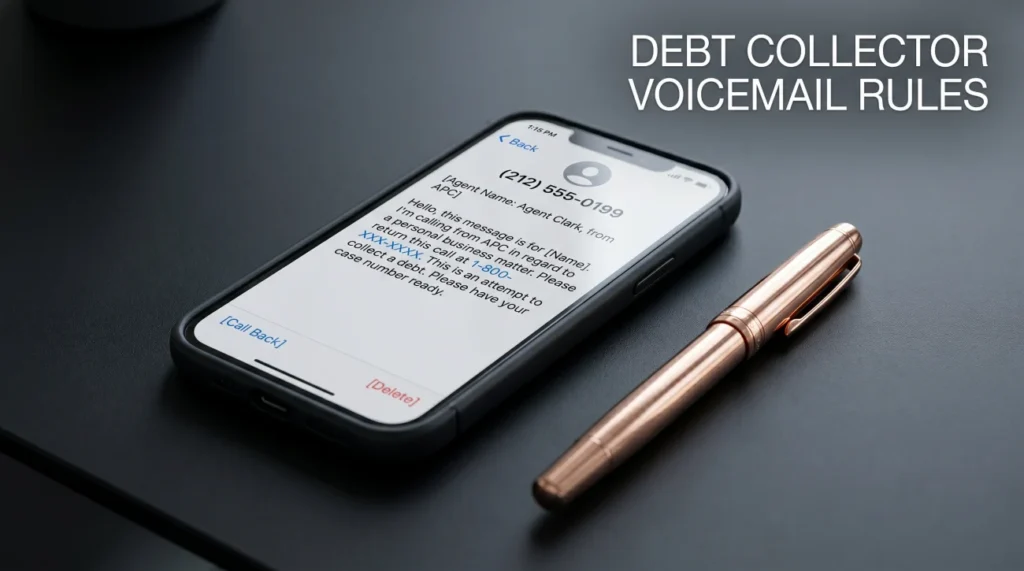
- A debt collector leaving a voicemail is bound by strict federal rules regarding what they must say and what they must keep secret.
- Every standard collection voicemail must include the “Mini-Miranda” disclosure, stating that the call is an attempt to collect a debt.
- If a collector leaves a detailed message and a third party hears it, the collector may have violated federal privacy rules.
- To avoid third-party disclosure violations, many agencies leave vague limited-content messages to navigate a complex legal grey area.
- Capturing a non-compliant voicemail gives you powerful leverage to stop the calls or pursue a federal complaint.
Why Voicemails Are a Legal Minefield for Debt Collectors
In my 12 years working inside third-party collection agencies, one of the most heavily audited actions an agent could take was leaving a simple voicemail. To a consumer, a voicemail from a debt collector sounds routine. You miss a call, your phone beeps, and there is a recorded message asking you to call back. But from the inside of a collection agency, that recorded message is a massive liability risk.
The rules governing what a debt collector can and cannot say in a voicemail are highly specific. The tension comes from two conflicting requirements in federal law. On one hand, collectors are required to tell you exactly who they are and why they are calling. On the other hand, they are strictly forbidden from letting anyone else know that you owe a debt. When a collector leaves a message on an answering machine or a shared phone plan, they have no idea who is actually going to press play.
If you are receiving voicemails from debt collectors, you need to know exactly what the law requires them to say. When they stray from these strict scripts, they often commit documentable violations. Understanding the mechanics behind these messages gives you the upper hand in deciding how to respond and how to protect your privacy.
Screening the Call: Recognizing Collectors Before the Beep
Debt collectors use sophisticated telephony systems to rotate caller IDs before they even leave a message. I have watched collection floors dial the same debtor from five different local area codes in a single week just to force a pickup or ensure the consumer actually listens to the voicemail.
This is a deliberate answer-rate strategy. If you want to know why a debt collector is calling from different numbers, it is because they know you will block a toll-free 800 number immediately. If you are trying to filter these calls, do not rely on your caller ID. The safest approach is to let unknown local numbers go straight to voicemail. Once the message is left, you can safely evaluate their recorded words against the federal compliance rules without engaging in a high-pressure live conversation.
The Mandatory Mini-Miranda Disclosure
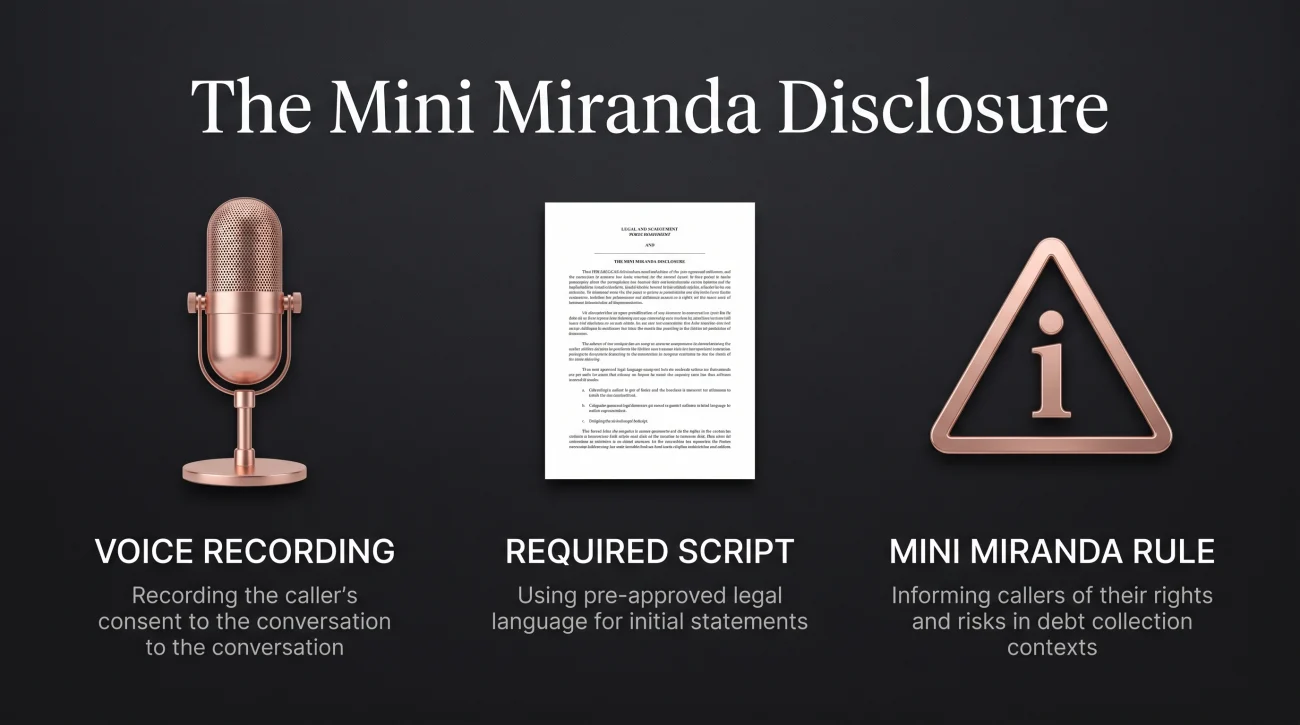
The foundation of all communication between you and a collection agency is a federal law known as the Fair Debt Collection Practices Act. If you want to understand the broad framework of debt collection laws, you will see that honesty and transparency are the primary requirements. This transparency takes the form of a specific disclosure.
Every time a debt collector communicates with you, they are required to provide what the industry calls the “Mini-Miranda” warning. In their very first communication, they must state that they are attempting to collect a debt and that any information obtained will be used for that purpose. In all subsequent communications, including voicemails, they must at least state that the communication is from a debt collector.
This requirement exists so that consumers are not tricked into returning calls under false pretenses. A collector cannot pretend to be a long lost friend, a delivery driver, or a sweepstakes representative just to get you on the phone. If the message is about a debt, the voicemail must clearly identify the caller as a debt collector.
Standard Compliant Voicemail Script:
“Hello, this message is for John Doe. This is Jane Smith calling from ABC Recovery Services. This is an attempt to collect a debt and any information obtained will be used for that purpose. Please return my call at 800-555-1234. Thank you.”
If a debt collector leaves a message demanding that you call them back regarding an urgent matter but completely fails to mention that they are a debt collector or that the call is about a debt, they are potentially violating federal law. However, as with most things in the collection industry, there is a massive complication to this rule.
The Third-Party Privacy Trap
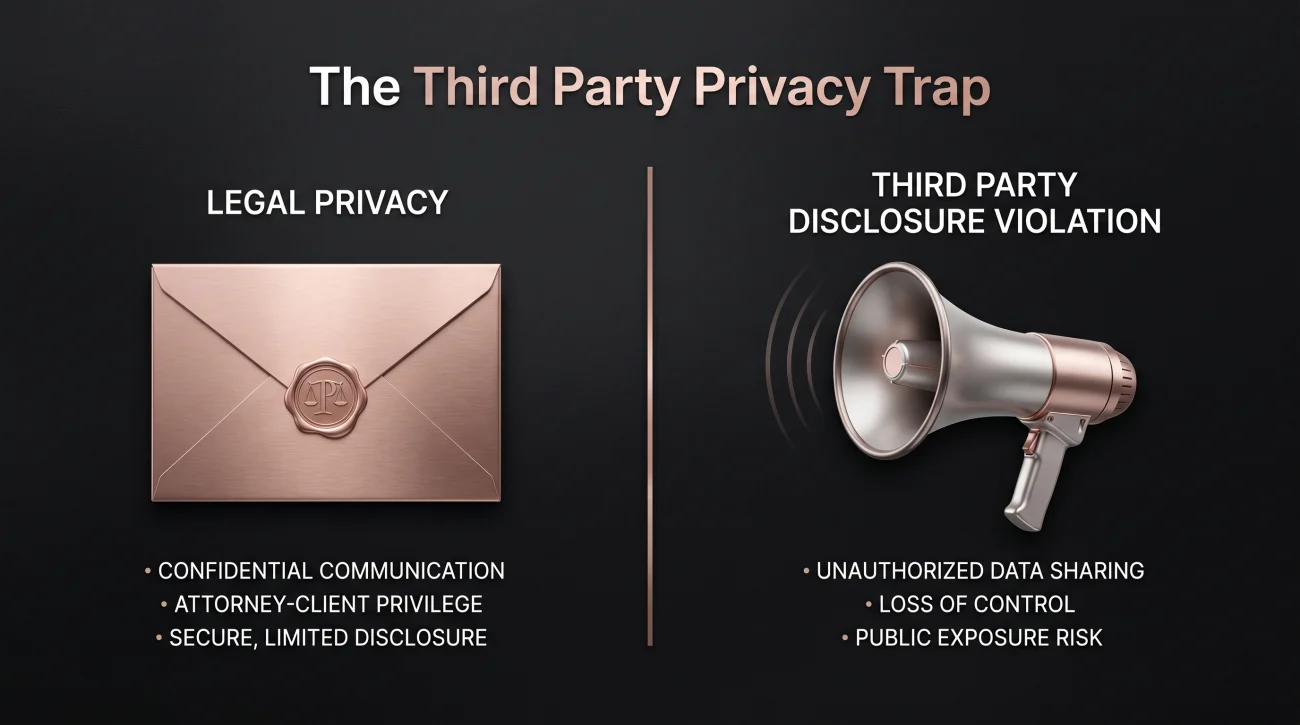
The requirement to openly identify as a debt collector collides directly with another strict federal rule. Debt collectors are not allowed to discuss your debt with anyone other than you, your spouse, or your attorney.
When a collector leaves a voicemail that includes the mandatory Mini-Miranda warning, they are putting that information out into the open. If your roommate checks the answering machine, or if a family member listens to the voicemails on a shared home phone, that third party has just been informed about your financial situation. The collector has inadvertently committed a third-party disclosure violation.
“When I trained new agents on the floor, the voicemail module was always the most stressful. We had to explain that if you leave the mandatory disclosure, you might get sued for violating privacy. If you don’t leave the disclosure, you might get sued for being deceptive. It was a complete legal catch-22.”
If a collector’s voicemail results in your family finding out about your financial struggles, the legal implications are significant. You can review the specific boundaries of what collectors are allowed to say when they call your family, but the core rule is simple. If a third party hears the voicemail and learns about the debt, the collection agency has crossed a line.
The Foti Dilemma and Vague Voicemails
Because of this conflict between required disclosures and privacy rules, a landmark court case reshaped how the entire industry handles answering machines. The case was Foti v. NCO Financial Systems. The court ruled that a voicemail is indeed a “communication” under federal law, meaning it must contain the Mini-Miranda warning. But the court also acknowledged the severe privacy risk.
To navigate this legal minefield, many collection agencies instructed their agents to leave intentionally vague messages. In the agencies I worked for, Quality Assurance teams would regularly audit calls just to catch a misplaced word in a voicemail. Agents were trained to sound urgent but say absolutely nothing of substance.
“John, this is Mike. I have an urgent business matter requiring your immediate attention. Call me back today before the end of business at 800-555-0000.” (This is deceptive and lacks required disclosures).
“This is a message for John Doe. If you are not John Doe, please disconnect or delete this message. John, this is Mike from ABC Agency. Please return my call at 800-555-0000.”
In 2021, the Consumer Financial Protection Bureau updated the official rules (Regulation F) to clarify this exact situation. They created a safe harbor called a “Limited Content Message.” A collector can now leave a specific, bare-bones voicemail without the Mini-Miranda warning, and it will not legally count as a “communication” that triggers the strict disclosure rules. However, they must follow the script exactly.
What a Limited Content Message Must Include
- The consumer’s name.
- A request that the consumer reply to the message.
- The name of the individual debt collector.
- A telephone number the consumer can use to reply.
Notice what is missing. The collector does not say the name of the collection agency if the agency name implies debt collection. They do not mention a debt. If they add anything extra, like asking you to call back regarding an overdue balance, the message instantly becomes a formal communication. The safe harbor is destroyed, and the collector is suddenly liable for missing disclosures and privacy violations.
Timing, Frequency, and Ringless Voicemails
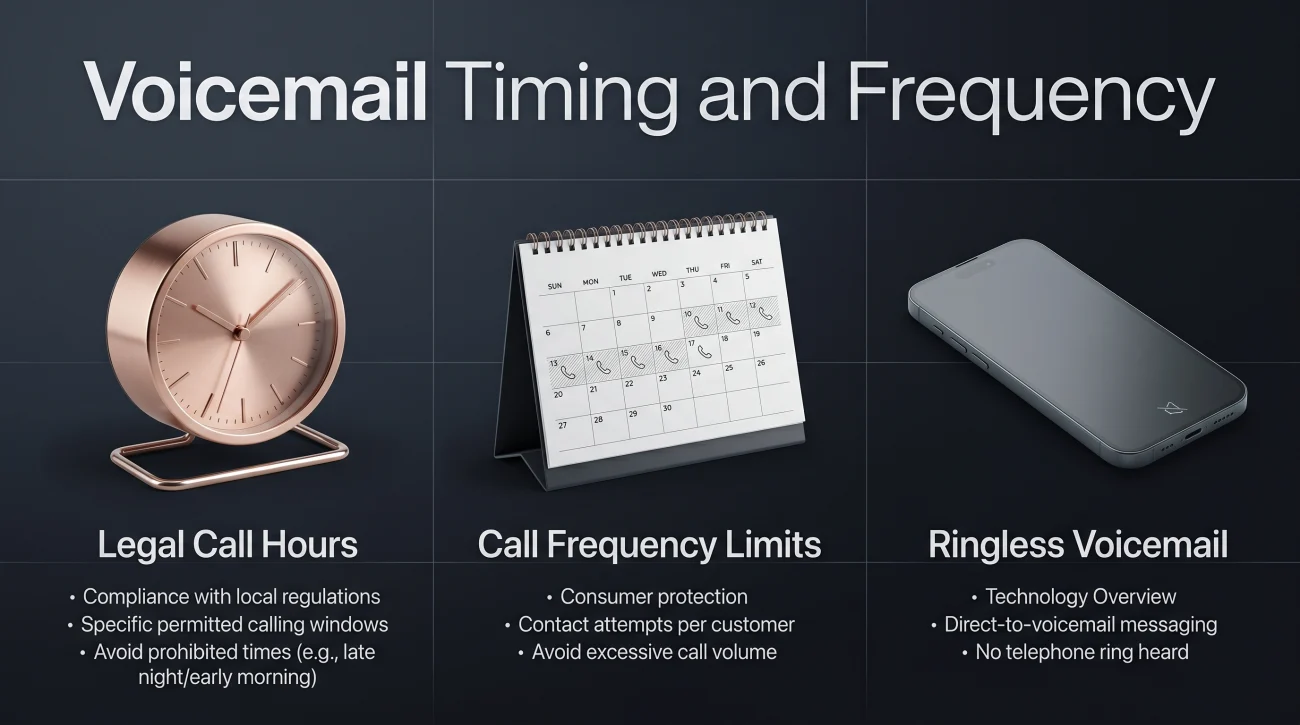
The rules governing voicemails are not just about what is said. They are also about how and when the message is delivered. Voicemails are subject to the same strict timing and frequency regulations as live phone calls. You can read more about the overall debt collector contact rules to see the full picture, but a few specific constraints apply directly to recorded messages.
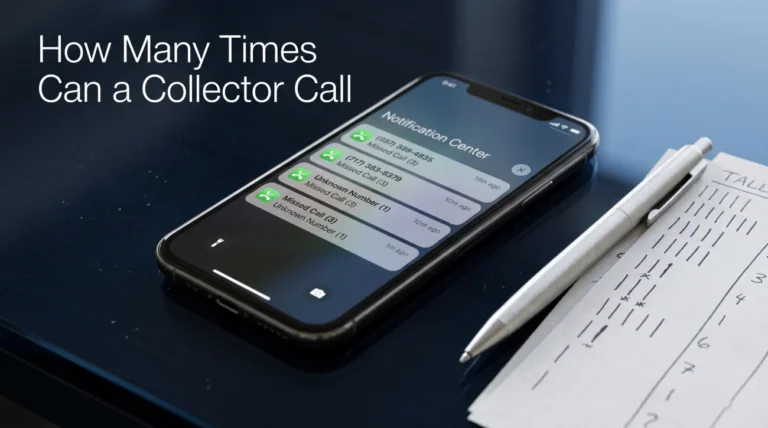
First, leaving a voicemail counts as a call attempt. If a collector leaves a voicemail, they have used up one of their permitted contacts under the seven-call rule. If they leave three voicemails in a single week, they are rapidly burning through their legal limit.
Second, the timing must be legal. A debt collector cannot leave a voicemail outside of the permitted hours of 8:00 AM to 9:00 PM in your local time zone. You can review the rules against a debt collector calling at night to understand how strictly this is enforced.
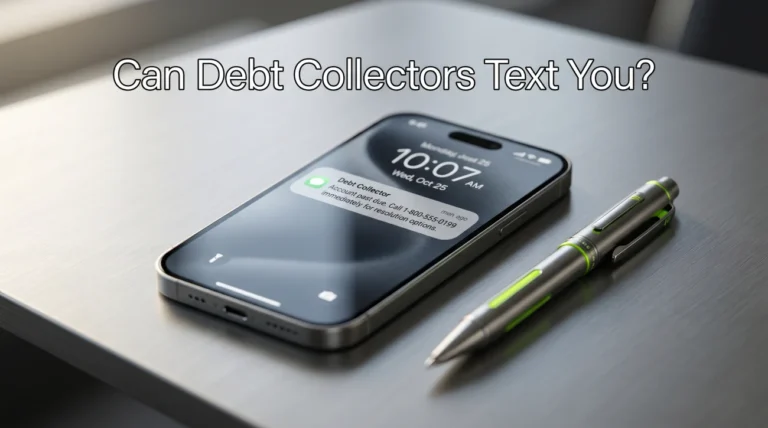
Finally, there is the issue of “ringless voicemails.” This is a technology where a collection agency uses software to drop a pre-recorded audio message directly into your voicemail inbox without your phone ever ringing. The legal consensus is that ringless voicemails are heavily restricted and often violate the Telephone Consumer Protection Act if delivered to a cell phone without your prior express consent. Furthermore, under federal debt collection laws, a ringless voicemail is still a communication and must adhere to every disclosure rule discussed above.
Knowing when these timing and frequency violations occur is only half the battle. The other half is proving it.
How to Preserve Voicemail Evidence
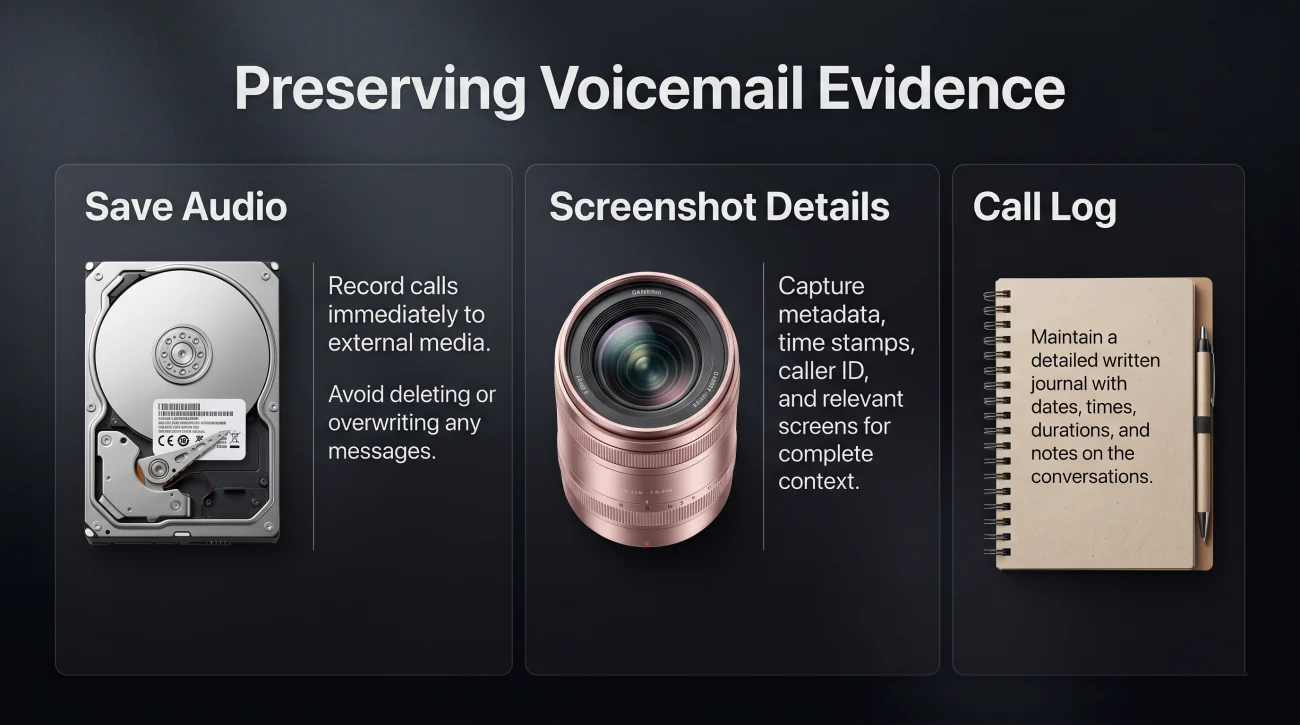
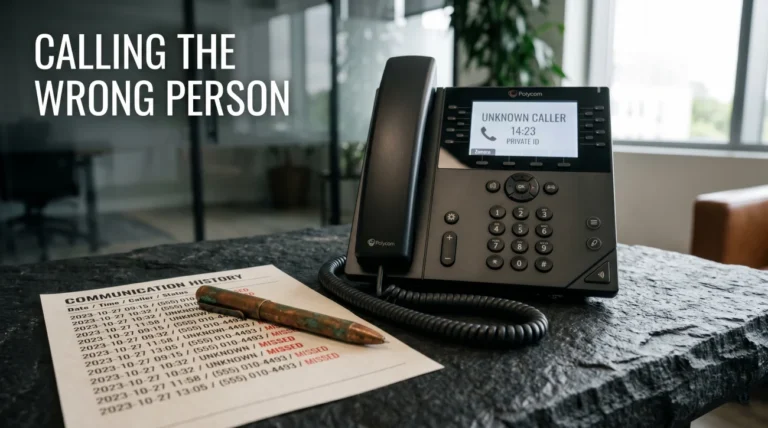
If you suspect a collection agency is leaving illegal voicemails, your phone is your best asset. Debt collectors record their outbound calls, but those recordings conveniently go missing when a lawsuit is filed. You must secure your own evidence.
Many consumers delete aggressive or scary voicemails immediately because they do not want to deal with the stress. This is a critical mistake. A threatening voicemail that lacks the proper legal disclosures is a golden ticket for a consumer protection attorney. If you delete it, you destroy the proof.
- Step 1 (Save): Export the audio file directly from your visual voicemail app to your device or cloud storage. Do not leave it sitting in the carrier’s inbox where it may auto-delete.
- Step 2 (Document): Take a screenshot of the caller ID, date, and time of the missed call. The timestamp is your absolute proof of outside-hours violations.
- Step 3 (Log): Start a physical or digital logbook mapping the exact voicemail audio to the specific phone number that called you.
Collector Voicemails vs. Law Firm Voicemails
There is a specific variation of the collection voicemail that triggers instant panic. If a recorded voice says they are calling from a “Law Office,” the stakes feel immediately higher. However, you need to understand how collection law firms operate before reacting.
Attorneys who regularly collect consumer debts are subject to the exact same FDCPA rules as standard collection agencies. They must provide the Mini-Miranda disclosure, and they are restricted by the exact same third-party privacy laws. The primary difference is the implied threat. If a law firm leaves a message implying a lawsuit has been filed when it has not, that is a severe misrepresentation violation. Receiving a voicemail from a law firm usually signals that the creditor has escalated the account, but it does not exempt the caller from strict compliance.
Signs a Voicemail Has Crossed a Legal Line
It is easy to feel intimidated when an authoritative voice leaves a message demanding a callback. But knowing the rules allows you to listen to these messages objectively. Instead of feeling fear, you should be listening for compliance failures.
You may have grounds for a complaint or legal review if your voicemails contain any of the following elements:
- The caller threatens legal action, wage garnishment, or arrest in the recorded message.
- A family member, coworker, or roommate heard the message and learned that you owe a debt.
- The voicemail was timestamped before 8:00 AM or after 9:00 PM your time.
- The caller left a detailed message about a debt but failed to include the required Mini-Miranda disclosure.
- The agency is filling up your inbox with multiple voicemails per day, exceeding reasonable contact limits.
If you are saving messages that fit this description, you have moved beyond standard collections and into the realm of illegal tactics. At this stage, you need to evaluate whether you are experiencing actionable debt collector harassment and what your next move should be.
What to Do After You Identify a Voicemail Violation
If you have captured a non-compliant voicemail, you have leverage. A single recorded FDCPA violation shifts the power dynamic entirely. Here is the sequence of actions you can take to regain control.
First, stop the bleeding by sending a written cease and desist letter. You can explicitly state that all phone communication must stop. You can learn exactly how to write a cease and desist letter that stops calls, which legally forces them to halt the voicemails entirely.
Second, file a formal complaint with the Consumer Financial Protection Bureau and your state attorney general. Attach your screenshots and a transcript of the voicemail. This creates a permanent regulatory record that works against the agency.
Finally, consider professional leverage. FDCPA violations carry statutory damages of up to $1,000, plus actual damages and attorney fees. Because federal law requires the debt collector to pay your legal costs if you win a violation suit, many consumer protection attorneys take these cases on contingency. Having a recorded voicemail of a clear violation makes your case incredibly strong and costs you nothing out of pocket to pursue.
Final Thoughts on Handling Collection Voicemails
A debt collector’s voicemail is not a trap for you. When you understand the strict federal rules they must navigate, every recorded message becomes a potential liability for them. By treating every voicemail as hard evidence rather than an emergency, you take the emotion out of the process.
Listen to the message carefully. Did they identify themselves properly? Did they respect your privacy boundaries? Did they call at a legal hour? You hold the recording, which means you hold the proof. Use that legal leverage to dictate exactly how the interaction proceeds from that moment forward.
❓ FAQ
📞 Can a debt collector leave a voicemail without saying who they are?
No. Under the 2021 Regulation F updates, even a “Limited Content Message” must include the name of the individual caller. If it is a standard voicemail, they must clearly state that they are a debt collector.
👨👩👧 What happens if my family member hears a debt collection voicemail?
If the voicemail contained information indicating that you owe a debt, and a third party like a family member heard it, the collection agency has likely committed a third-party disclosure violation under federal law.
🕒 Can they leave a voicemail at 2 AM if my phone is on silent?
Absolutely not. Debt collectors are strictly prohibited from calling or leaving voicemails outside the hours of 8:00 AM and 9:00 PM in your local time zone, regardless of your phone’s volume settings.
📠 Do automated robocall voicemails count under the rules?
Yes. Any pre-recorded message dropped into your voicemail inbox counts as a communication. It must follow all disclosure rules, time restrictions, and harassment limits.
🗑️ Should I delete a threatening voicemail from a collector?
Never. A threatening voicemail is concrete evidence of illegal collection practices. Secure the audio file and keep it safe for a potential legal complaint.
📵 How do I stop debt collectors from leaving messages entirely?
You must send a written cease and desist letter via certified mail, which legally forces the agency to halt all phone communication.
🗣️ Is it legal for them to mention my debt amount on my answering machine?
Technically yes, if they are speaking directly to you. However, doing so is incredibly risky for the collector because if anyone else hears the message, the agency commits a severe privacy violation.
🕵️ Why do some collectors just say they have an important business matter?
They are trying to avoid a third-party disclosure violation by keeping the message vague. However, if they fail to identify as a debt collector, they may be violating the requirement to provide a Mini-Miranda warning.
📱 Can a debt collector leave a voicemail on my work phone?
They can, unless you have explicitly told them that your employer prohibits personal calls or that you cannot receive such calls at work. Once you tell them to stop calling your workplace, they must cease.
📝 Can I sue a debt collector over a bad voicemail?
Yes. If a voicemail violates federal law by omitting required disclosures, threatening illegal actions, or revealing your debt to a third party, you can sue the agency for statutory damages and attorney fees.
The full FDCPA framework and the four areas where it matters most.
- Your legal rights when collectors call, write, or threaten to sue
- When they can call, what they cannot say, and how to make it stop
- How to identify FDCPA violations and what you can do with them
- Why the age of a debt determines what a collector can legally do
- Your right to demand proof before paying or acknowledging anything
Harassment is one thing. Lawsuits, garnishments, and frozen accounts are another.
- When collector behavior crosses the line the FDCPA was written to prevent
- What to do if a collector files suit after their calls have not worked
- What collectors can do to your wages once a judgment is entered
- How a bank levy works and which funds the law protects from seizure
- How to resolve the debt that collectors have been calling about
Disclosure: The content on this site reflects direct experience inside the debt collection industry and is grounded in federal law and regulation. It is informational in nature. Reading it does not constitute legal advice and does not create any professional relationship. If you are dealing with a lawsuit, a judgment, or a legal deadline, consult a licensed attorney in your state before acting.