- Nearly half of all consumer complaints about debt collectors involve attempts to collect money the consumer does not actually owe.
- Debt buyers purchase bulk data files for pennies on the dollar, meaning they rarely have original contracts or updated payment records before they start calling.
- Sending a formal, written dispute within 30 days legally forces the collection agency to pause all collection activity until they can produce verification of the debt.
- Making even a small token payment to make a collector go away is a critical mistake that can validate a fake debt and reset the statute of limitations.
The Mathematical Reality of Fake and Incorrect Debts
If you are receiving calls for a debt you know you do not owe, you might feel like you are losing your mind or being targeted by a highly specific scam. You check your records, you look at your bank statements, and nothing matches what the person on the phone is demanding. It is incredibly frustrating to be accused of ignoring a financial obligation that you never incurred or have already paid in full.
You are absolutely not alone in this experience. In fact, this is the single most common issue in the entire collection industry. According to data from the Consumer Financial Protection Bureau, approximately 45 percent of all debt collection complaints filed by consumers involve a debt collector collecting debt I don’t owe. That is a staggering statistic. Nearly half of the friction in this industry comes down to collectors chasing the wrong accounts, the wrong amounts, or the wrong people.
During my 12 years working inside third-party collection agencies and a national debt buyer, I saw exactly how this happens. It is not always a malicious scam. More often than not, it is the predictable, mathematical result of how debt is packaged, bought, and sold in the modern financial system. When you understand what the collector actually sees on their computer screen when they call you, it becomes much easier to strip the emotion out of the interaction and use federal law to shut the collection effort down.
Why Collectors Pursue Debt Not Owed (The Insider Explanation)
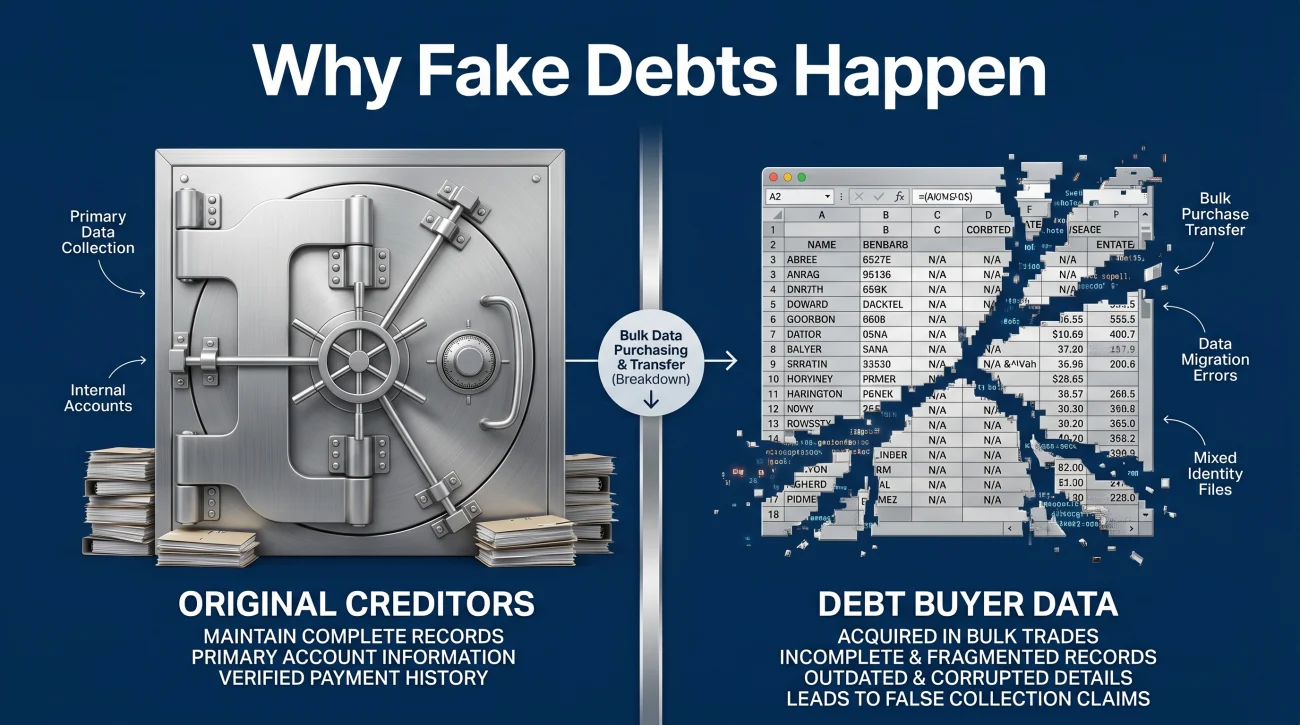
To stop a collector who is pursuing an invalid debt, you first have to understand why they are calling you with such confidence in the first place. Most consumers assume that if a formal-sounding agency is calling them, that agency must have a thick physical file folder sitting on a desk, complete with signed contracts, itemized billing statements, and a flawless payment history. That is almost never the case.
When an original creditor decides to give up on collecting an unpaid account, they sell that account to a debt buyer. They do not sell these accounts one by one. They sell them in massive bulk portfolios containing tens of thousands of accounts at a time. The debt buyer pays pennies on the dollar for this portfolio. They might pay two to four cents for every dollar of debt face value.
“When I reviewed newly purchased portfolios at the debt buyer level, we did not receive filing cabinets full of original contracts. We received an Excel spreadsheet. That spreadsheet had a column for a name, a column for a Social Security number, a column for a last known address, and a column for a single balance figure. If that spreadsheet row said John Doe owed $3,200, the dialer system loaded the number and the agents started calling. Nobody stopped to manually verify the accuracy of the underlying documentation before the first call went out.”
Because they bought the debt for pennies, the agency only needs to collect on a tiny fraction of the spreadsheet to make a massive profit. The business model prioritizes volume over accuracy. The agent calling you genuinely believes you owe the money because their screen tells them you do, but their screen is populated by a data transfer that may be years old, highly incomplete, or entirely erroneous.
Four Common Scenarios for Invalid Debt
The “I do not owe this” complaint generally falls into one of four distinct categories. Knowing which bucket your situation fits into will dictate exactly what kind of proof you need to gather to fight back.
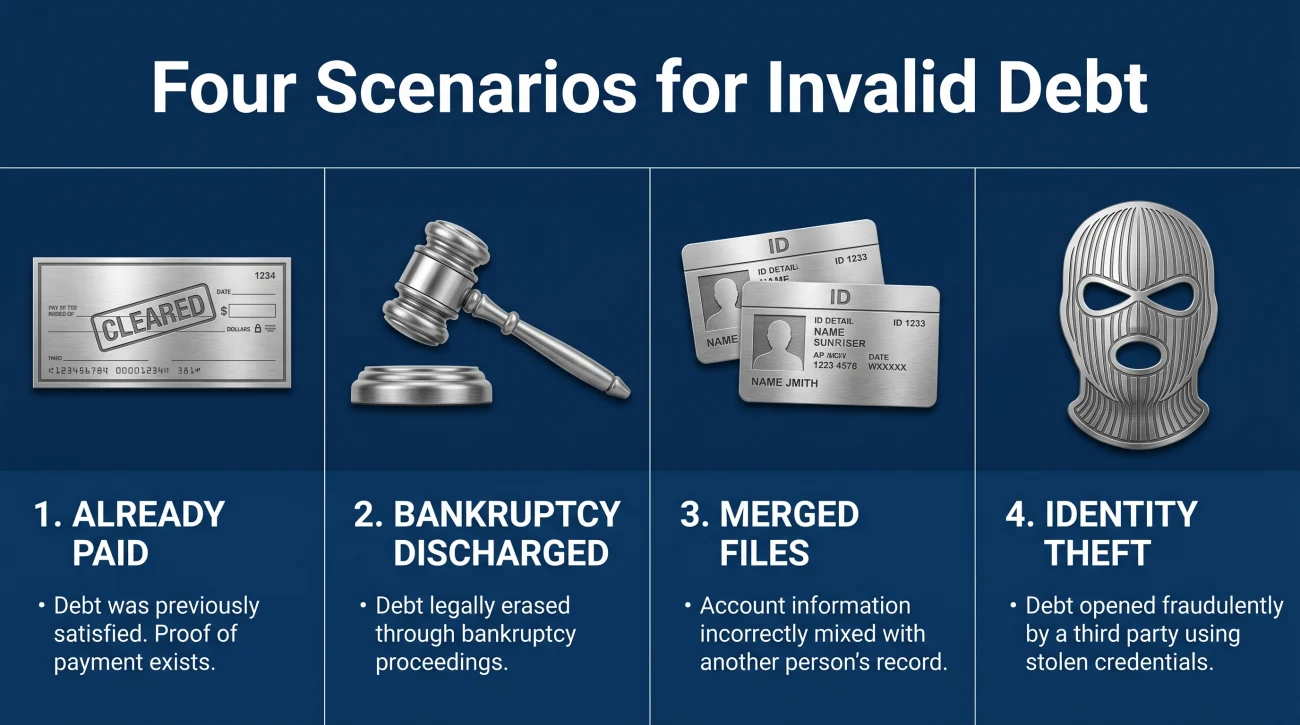
Scenario 1: You Already Paid the Debt
This is incredibly common. You settled the account with the original creditor, or you paid off a previous collection agency months or years ago. Suddenly, a new agency is calling demanding payment for the exact same account. What happened here is a data lag. The original creditor packaged the portfolio for sale before your final payment was fully processed and recorded in their master system. The debt buyer purchased a snapshot of the account from a time when a balance was still owed. They have absolutely no record of your subsequent payment because it did not transfer with the portfolio.
Scenario 2: The Debt Was Discharged in Bankruptcy
When you successfully complete a bankruptcy filing, qualifying debts are discharged. This creates a permanent federal injunction preventing any creditor from attempting to collect those debts. However, just like with paid debts, the bankruptcy status code does not always survive the data transfer when a portfolio is sold. The debt buyer purchases the account completely unaware that a federal judge has erased the legal obligation to pay it. Some aggressive debt buyers ignore bankruptcy flags, but many are simply operating on bad data.
Scenario 3: File Mix-Ups and Merged Identities
If you have a common name, credit bureaus and data brokers frequently merge files. A debt belonging to someone else in a different state gets attached to your phone number and address. The collector is genuinely looking for the right person, but their skip-tracing software has pointed them to you instead. Handling this mistaken identity requires its own approach, which we cover in our guide on what to do when a debt collector is calling the wrong person.
Scenario 4: Identity Theft and Fraud
This is the most complex scenario. The debt actually exists on paper, but you are not the one who opened the account or spent the money. A fraudster used your Social Security number and personal details to open a credit card or secure a loan. From the collector’s perspective, the documentation matches your name perfectly. Standard dispute letters are often not enough here, as the collector will just verify that the name matches the account. You will typically need to provide an FTC Identity Theft Report and a police report to force the collector to close the file.
What the Law Requires When You Challenge the Debt
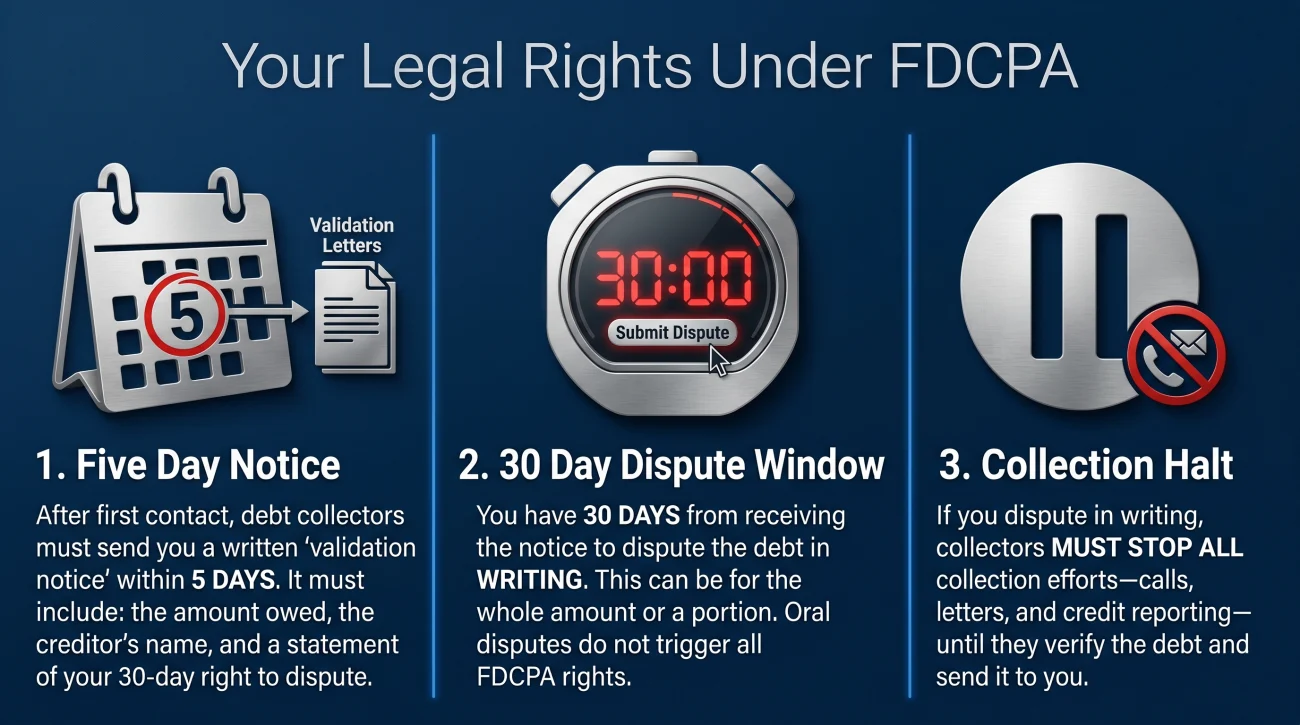
Federal law provides a specific mechanism for dealing with debts you do not recognize, but you have to know how to trigger it. Under the Fair Debt Collection Practices Act (FDCPA), you have the right to force the collection agency to prove their claims before you have to engage in any negotiations.
The process starts with a validation notice. Within five days of their initial communication with you, the collector must send you a written breakdown of the debt. If they only call you and never put anything in the mail, they are already breaking the law. You can review exactly what your rights are when a debt collector fails to send a validation notice.
Many collectors hope you ignore this notice because once you receive it, a critical 30-day window begins. If you send a written dispute within 30 days of receiving that document, the FDCPA requires the collector to completely pause all collection activity. They must stop calling you, they must stop sending letters, and they cannot report the debt to the credit bureaus until they obtain and mail you verification of the debt. The burden of proof rests entirely on them.
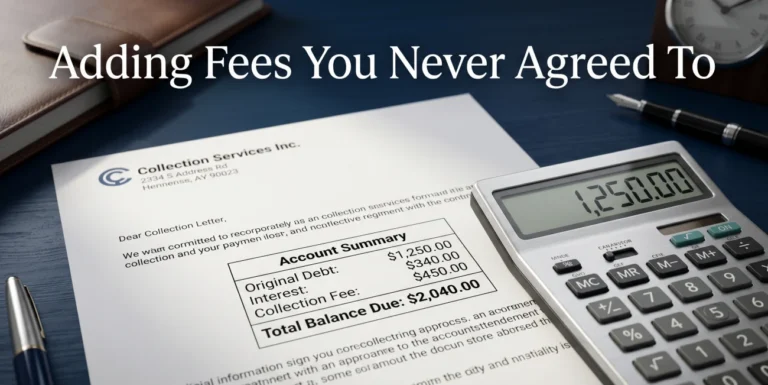
If you recognize the account but believe the balance has been artificially inflated with unauthorized charges, you still have the right to dispute it. Challenging an incorrect balance is just as valid as challenging a fake account. Learn more about your options when a debt collector is lying about the amount owed.
What ‘I Do Not Owe This’ Means for Your Account File
Many consumers hesitate to send a formal dispute because they assume the collector will just fight back harder or try to take them to court immediately. On the collection floor, a clear, written dispute often triggers the exact opposite response: it gets a junk debt account closed quickly.
When a collection agency receives your written dispute, the account is pulled out of the automated dialer system and flagged for manual review. The compliance department or a specialized agent must look at the file to see if they can satisfy the verification requirement. A formal dispute halts their automated workflow, forcing them to manually hunt for underlying contracts.
If they request the original contracts and billing statements from the original creditor, it costs them time and money. For small balances, or debts that have been sold three or four times, the documentation often no longer exists. When a collector realizes they cannot legally verify the debt to the standard required by the FDCPA, their standard industry response is to close the file, return the account to the seller, or simply abandon collection efforts against you. They will rarely send you a letter apologizing; the calls will simply stop.
Signs You Are Dealing with a Genuinely Invalid Debt
Before you spend hours stressing over a collection notice, take a moment to look at the facts of the account. Debt buyers rely on consumer panic to generate payments. If you notice any of these red flags, your confidence in disputing the debt should increase significantly.
- ⚠️ The account in question does not appear anywhere on your current credit reports from Equifax, Experian, or TransUnion. (Why this matters: Original creditors almost always report to the bureaus; a missing account often indicates a fabricated or excessively old debt.)
- ⚠️ You contacted the original creditor and they confirmed the account has a zero balance. (Why this matters: It proves the debt buyer purchased outdated information and is chasing a phantom balance.)
- ⚠️ The debt is for an account type you have never used, such as an auto loan when you have never owned a car. (Why this matters: This points strongly to identity theft or a merged file, requiring a different dispute approach.)
- ⚠️ The collector becomes highly aggressive or evasive when asked for the original creditor’s name and address. (Why this matters: An evasive collector usually lacks the chain of title documentation to prove they actually own the account.)
- ⚠️ You have cleared checks or settlement letters proving the debt was resolved years ago. (Why this matters: You hold the absolute defense, and sending copies of these will usually force an immediate closure.)
If you are facing an aggressive collector who refuses to listen to reason, or if they are threatening you over a debt you know is fake, the situation has escalated beyond a simple clerical error. Continuing to harass a consumer over an invalid debt after being notified is a severe violation of federal law. In these situations, getting a professional evaluation is often the safest path forward. You can learn more about how to assess your options and determine if the collector crossed the line by reviewing our guide on how to identify debt collector harassment.
Common Mistakes When Arguing About Debt You Do Not Owe
When someone accuses you of owing money unfairly, the natural human reaction is to get on the phone and argue your case. Unfortunately, the debt collection industry is designed to penalize natural human reactions. Avoid these critical errors to protect your legal standing.
❌ Mistake 1: Arguing your case over the phone.
Telephone agents have exactly one job: securing a payment commitment. They are not judges, they are not compliance officers, and they cannot unilaterally erase a debt from the system just because your story sounds convincing. Arguing on the phone is a waste of your breath. Hanging up and mailing your dispute forces them to pause collection legally.
❌ Mistake 2: Sending your original documents to the collector.
If you have a cleared check or a payoff letter proving the debt is resolved, never mail the original document to a collection agency. Things get lost in mailrooms constantly. Always send clear copies and keep your original evidence safely filed at home.
⚠️ Warning: Making a token payment just to make them go away.
This is the most dangerous trap in the industry. A collector might say, “Look, if you just pay $50 to show good faith, I’ll close the file while we investigate.” Do not do it. In most states, making any payment on an account legally resets the statute of limitations and can be used in court as an admission that the debt is valid and belongs to you. Never pay money toward a debt you do not owe.
How to Write a Dispute Letter for Fake Debt
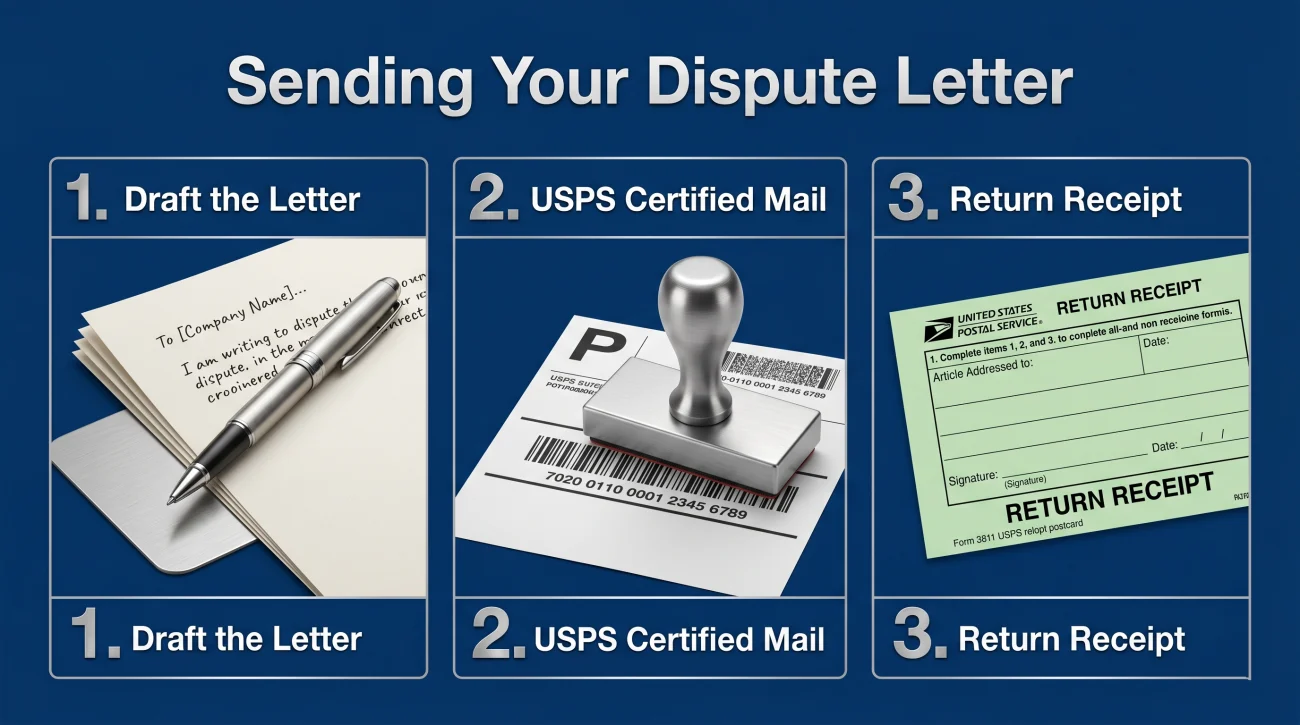
To trigger your federal protections, you must communicate your dispute formally. This removes the emotion from the situation and forces the collector to play by the rules.
You do not need to hire a lawyer to draft this initial letter, and you do not need to use complicated legal jargon. The goal is to clearly identify the account and explicitly state that the debt is invalid. Below is a practical, copy-paste safe template you can adapt for your situation.
Sample Written Dispute Letter
[Your Name]
[Your Address]
[Date]
[Collection Agency Name]
[Collection Agency Address]
Re: Account Number [Insert Number if known]
Dear Debt Collector:
I am writing in response to your recent communication regarding the account referenced above. I am formally disputing this debt in its entirety. I do not owe this debt.
[Optional: Add one brief sentence explaining why, such as: “This account was paid in full to the original creditor on [Date]” or “I have never held an account with [Original Creditor Name].”]
I am formally requesting that you provide competent legal verification of this debt. Until this verification is provided, I expect all collection activities to cease in accordance with federal law.
Furthermore, I demand that you do not report this inaccurate information to any credit reporting bureau. If you have already reported it, you must immediately notify them that the debt is disputed.
All future communications regarding this matter must be in writing to the address listed above. Do not call my home or my place of employment.
Sincerely,
[Your Printed Name – Do not sign your usual signature]
Always send your dispute letter via USPS Certified Mail with a Return Receipt requested. This gives you a green postcard proving exactly what day the collection agency received your letter. From that day forward, any phone call or collection letter they send you without first providing verification is a federal violation.
Protecting Your Credit Report from Phantom Debt
Dealing with the collection agency is only half the battle. You must also protect your financial reputation. Unscrupulous debt buyers often use a passive collection tactic known as “parking.” They report an invalid debt to Equifax, Experian, and TransUnion without ever calling you, hoping you only discover it when applying for a mortgage or a car loan. They know that a sudden drop in your credit score puts immense pressure on you to settle the fake account quickly just to clear the hurdle for your loan approval.
Under the Fair Credit Reporting Act (FCRA), credit bureaus are legally required to report accurate information. If a collector parks a debt you do not owe on your credit profile, you have the right to dispute the item directly with the bureaus to counter this tactic. You can initiate these disputes online through the official portals of each bureau. Include copies of any proof you have, such as your clearance letter from the original creditor or the certified mail receipt showing the collector failed to validate the debt.
The credit bureaus have 30 days to investigate by contacting the collection agency. Here is the insider reality: if a debt buyer already knows they lack the documentation to verify the debt to you, they rarely spend the resources to verify it to the credit bureaus. When they fail to respond to the bureau’s inquiry within the window, the fake debt must be deleted from your report entirely.
Final Thoughts on Fighting Invalid Debt Claims
Being chased for money you do not owe feels like a massive injustice, but treating it as an administrative problem rather than a personal attack is how you win. Debt collection is a volume-based industry running on imperfect data. When you force a collector to pause their automated systems and manually produce evidence, you exploit their primary weakness: a severe lack of original documentation. Most invalid debts collapse under the weight of a simple certified validation request.
If the collector does manage to verify the debt with legitimate documentation, your position simply shifts from disputing its existence to evaluating your settlement or defense options. For a complete understanding of how the laws restrict collection behavior across the board, start with our foundational breakdown of debt collection laws and your consumer rights. If the collector decides to escalate the situation by filing a lawsuit over a debt you know you do not owe, ignoring the court papers is the worst possible choice. You should immediately explore your options with a professional by reviewing our guide on finding a debt lawsuit defense attorney.
❓ FAQ
🛑 How do I stop a collection agency from calling me about a debt that isn’t mine?
A formal letter sent via certified mail is the legally recognized way to dispute the debt and demand verification. Once they receive this document, federal law requires them to halt their outreach until they provide proper proof.
💸 Can a debt collector force me to pay for a debt I never agreed to?
No. A debt collector cannot legally force you to pay a debt you do not owe. However, if they file a lawsuit against you and you ignore it, they can get a default judgment. You must always respond to official court documents, even if the debt is completely fake.
📞 Should I call the collector to explain they have the wrong information?
Calling is rarely effective. Telephone agents are trained to collect money, not investigate errors, and verbal conversations are hard to prove later. Submitting a certified letter is the only method that legally triggers your right to a collection pause.
📊 Will an unpaid fake debt ruin my credit score?
It can temporarily damage your score if the collector parks it on your report. However, you have the right to challenge inaccurate information directly with Equifax, Experian, and TransUnion. If the collector cannot prove the debt belongs to you, the bureaus must remove it.
⚖️ What happens if the collector ignores my dispute letter and keeps collecting?
If a debt collector continues to pursue you without providing verification after receiving your timely written dispute, they are violating the Fair Debt Collection Practices Act (FDCPA). You may be entitled to sue them for statutory damages of up to $1,000 plus attorney fees.
The full FDCPA framework and the four areas where it matters most.
- Your legal rights when collectors call, write, or threaten to sue
- When they can call, what they cannot say, and how to make it stop
- How to identify FDCPA violations and what you can do with them
- Why the age of a debt determines what a collector can legally do
- Your right to demand proof before paying or acknowledging anything
Harassment is one thing. Lawsuits, garnishments, and frozen accounts are another.
- When collector behavior crosses the line the FDCPA was written to prevent
- What to do if a collector files suit after their calls have not worked
- What collectors can do to your wages once a judgment is entered
- How a bank levy works and which funds the law protects from seizure
- How to resolve the debt that collectors have been calling about
Disclosure: The content on this site reflects direct experience inside the debt collection industry and is grounded in federal law and regulation. It is informational in nature. Reading it does not constitute legal advice and does not create any professional relationship. If you are dealing with a lawsuit, a judgment, or a legal deadline, consult a licensed attorney in your state before acting.