- Filing a complaint locks the collection agency’s actions into a federal database, giving you powerful leverage if you ever need to take them to court.
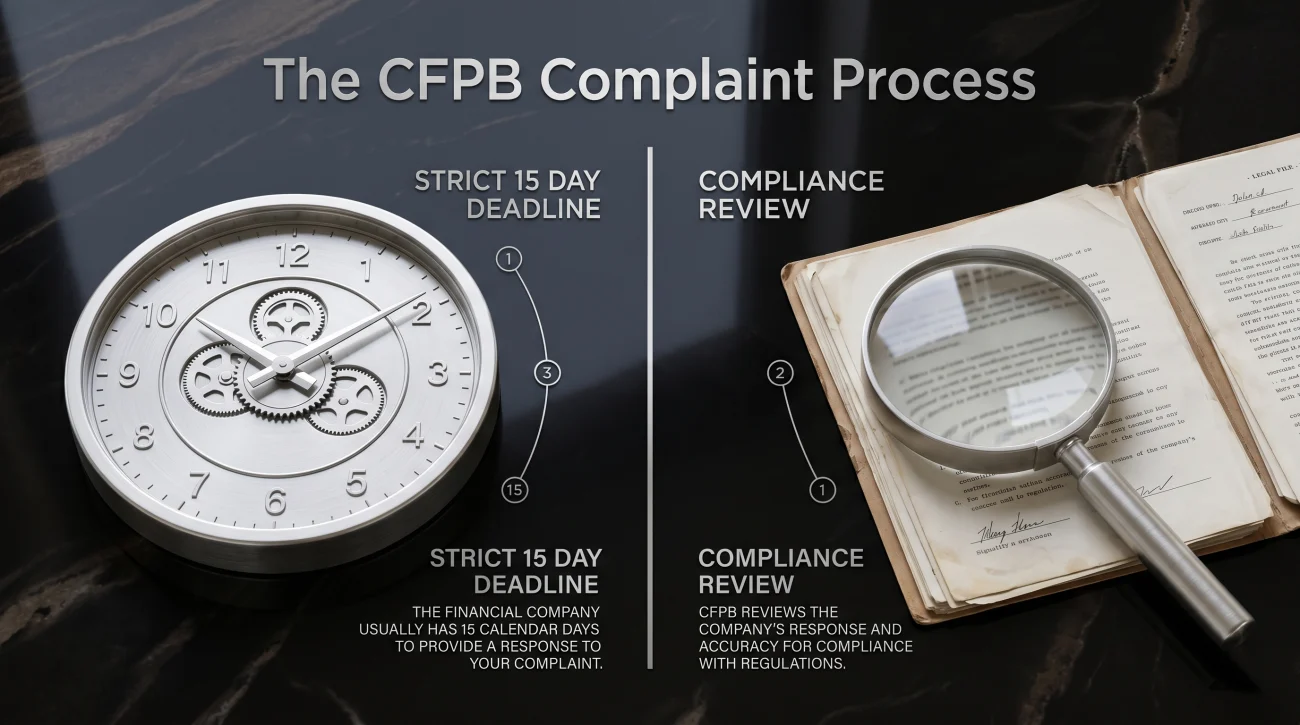
- The CFPB requires collection agencies to respond to your complaint within 15 days, forcing a compliance manager to actually look at your file.
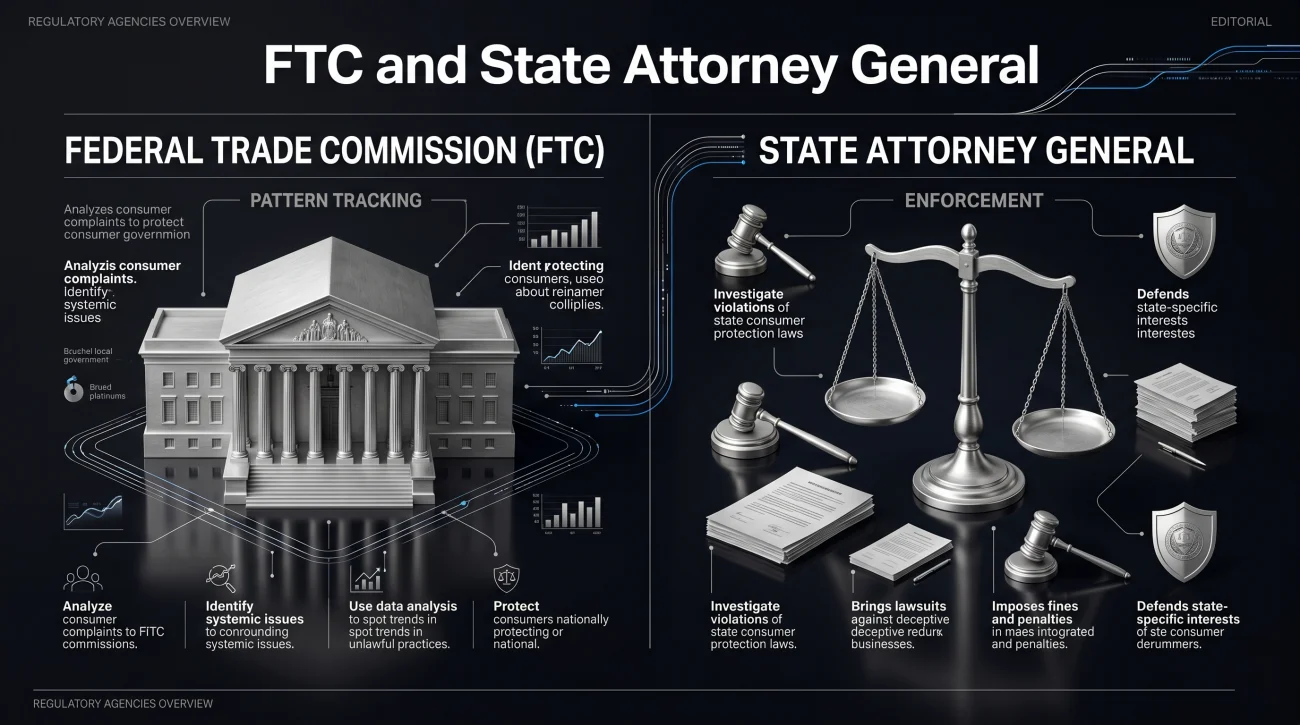
- Complaints to the CFPB, FTC, and state Attorney General serve different purposes. The CFPB handles direct mediation, while the FTC uses your data to build massive federal cases against bad actors.
- A complaint does not erase your debt or automatically result in a financial payout. Its primary value is building systemic leverage.
Filing a Complaint Works, But Not for the Reason Most People Think
In my 12 years working inside third-party collection agencies, I watched thousands of accounts move through the system. Most of the time, the process is a grind of automated dials and standardized letters. But every so often, an alert would hit the floor from the compliance department. A consumer had figured out how to report a debt collector to the federal government, and suddenly, the dynamic on that account shifted entirely.
You should absolutely file that complaint, but make sure you are doing it for the right reasons. Most consumers file a complaint expecting instant justice. They assume the government will immediately erase their debt, fine the collector, and send them a check. That is not how the system operates.
When you file a complaint, you are not hiring a personal government lawyer. What you are actually doing is pulling your account out of the hands of a frontline collection agent and dropping it directly onto the desk of the agency’s compliance manager. You are forcing the agency to explain their actions on a federal record. If you are dealing with aggressive tactics, understanding the debt collector complaint process is how you take back control of the narrative.
There are three main channels for reporting collection agency violations, and each has a very different function. Let’s break down exactly which agency does what, and what actually happens behind closed doors after you hit “submit.”
What a CFPB Debt Collection Complaint Actually Does
The Consumer Financial Protection Bureau (CFPB) is your primary weapon when dealing with debt collection issues. Of all the federal agencies, this is the one that has the most immediate, practical impact on your specific account.
When you submit a CFPB debt collection complaint, the bureau does not investigate the issue itself right away. Instead, it acts as a highly authoritative mediator with enforcement power. The CFPB takes your complaint and routes it directly to the collection agency via a secure portal. Once the agency receives it, a federal clock starts ticking: the collector is legally required to respond within 15 days.
“Inside an agency, a CFPB complaint is treated like a localized fire. Floor agents don’t handle them; they are escalated immediately to compliance officers or legal counsel. The agency knows that failing to respond, or responding with a blatant lie, invites federal audits.”
Here is what happens on the collector’s end when that complaint arrives:
- They must review the call recordings and account notes related to your file.
- They must communicate with you directly to address the issue.
- They must formally report the resolution back to the CFPB.
Every complaint is logged into the CFPB’s public Consumer Complaint Database. Regulators, consumer protection attorneys, and researchers constantly monitor this database. If a specific agency starts racking up complaints for illegal tactics, the CFPB uses that data to launch massive enforcement actions.
However, it is crucial to manage your expectations. A CFPB complaint does not act as a magic wand that makes a valid debt disappear. Its core value is documentary and systemic. It forces the collector to play by the rules under the watchful eye of a federal regulator.
The FTC and Your State Attorney General: Macro-Level Enforcement
While the CFPB handles the micro-level involving your specific account, the Federal Trade Commission (FTC) and your state Attorney General operate on the macro-level. You should file with them, but you need to understand their roles so you aren’t left waiting for a phone call that will never come.
The FTC Debt Collector Complaint Process
The FTC shares enforcement authority over the Fair Debt Collection Practices Act (FDCPA) with the CFPB. However, the FTC explicitly states that it does not intervene in individual consumer disputes. If you file an FTC debt collector complaint, nobody from the FTC is going to call the collection agency on your behalf.
The real value of filing here is that your complaint feeds directly into Consumer Sentinel, a massive investigative database used by law enforcement agencies worldwide. The FTC looks for patterns. I have seen agency owners panic over a cluster of FTC complaints because they know this data is what triggers federal audits. If the FTC sees 500 complaints about a specific agency threatening people with jail time, they will build a federal case and sue the agency into the ground. Filing with the FTC is how you protect the next person from being abused.
State Attorney General Debt Collector Complaints
Your state Attorney General (AG) is the wild card in this process. What happens after reporting a debt collector to your AG varies wildly depending on where you live.
Some state AG offices, like those in New York or Massachusetts, have incredibly aggressive consumer protection divisions. They will actively investigate individual complaints, send cease and desist letters on your behalf, and penalize agencies that violate state laws (which are often stricter than federal laws). Other states treat complaints much like the FTC does, filing them away to look for broader patterns.
💡 Pro Tip: Always file a complaint with your state’s AG, but also file one with the AG in the state where the collection agency is headquartered. This forces the agency to defend its actions to the regulator that holds their primary operating license, while also answering to the authority that protects your local consumer rights. When an AG inquiry came across my desk from the agency’s home state, the priority level immediately jumped.
| Agency | Primary Function | Direct Intervention? | Best Used For |
|---|---|---|---|
| CFPB | Direct mediation & enforcement | Yes (Forces 15-day response) | Getting the agency’s immediate attention on your file. |
| FTC | Federal pattern tracking | No | Reporting egregious scams and systemic abuse. |
| State AG | State law enforcement | Varies by state | Leveraging state-specific consumer protection laws. |
How to Write a Complaint That Actually Works
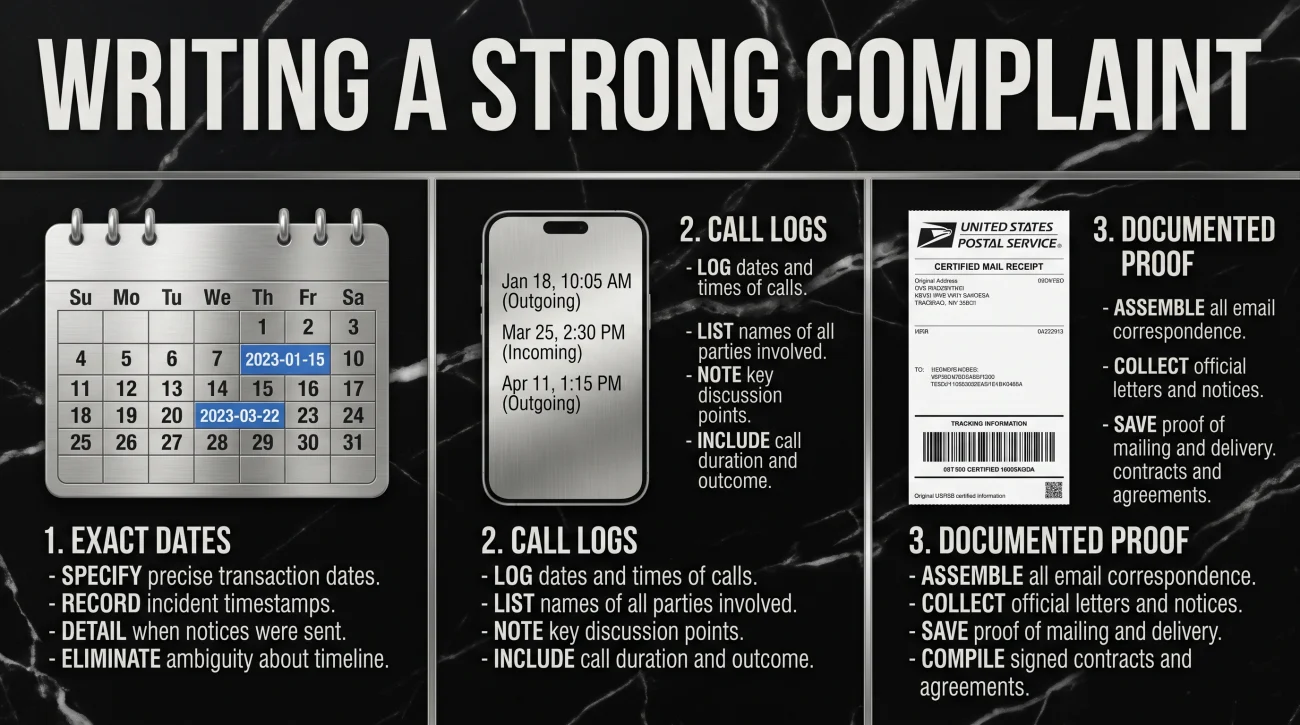
When you sit down to file your complaint, you need to write for your audience. The person reading it at the CFPB, and the compliance officer reading it at the collection agency, are looking for facts, dates, and clear violations of the law. They are not looking for an emotional narrative about how unfair the debt is.
From the other side of the desk, a complaint filled with emotional venting was easy for us to dismiss with a generic corporate response. But a complaint that listed exact timestamps and quoted specific rule violations? That went straight to the general counsel. A highly specific complaint creates legal exposure for the agency, which makes them act quickly.
“This agency keeps harassing me all day and I don’t even have the money to pay them. The guy was super rude and made me feel terrible. Make them stop calling me, this is ruining my life!”
“On October 12th at 9:15 PM, an agent from [Agency Name] called my cell phone. I informed them this was outside legal calling hours and requested they stop. On October 14th at 8:15 AM, they called my workplace. This violates the FDCPA rules regarding time restrictions and workplace contact.”
Always include the exact name of the collection agency, the phone numbers they are calling from, dates and times of the calls, and the names of any specific agents you spoke to. If you have sent them letters, mention the date you mailed them and the tracking numbers. When a compliance officer sees a complaint packed with exact timestamps and USPS tracking numbers, they immediately know they can’t bluff their way out of it. It signals that you are building a real case, not just venting.
The Parallel Path: Using Complaints to Support a Lawsuit
This is the most critical insider knowledge you can have about the complaint process. Filing a complaint is not just about getting a regulator’s attention. It is about building an unshakeable paper trail for your own private legal action.
If a collector has crossed serious legal lines, you have the right to hold them accountable in court. When a consumer protection attorney evaluates your case to see if you can sue a debt collector, the first thing they look for is documentation. A filed CFPB complaint is golden evidence.
It establishes a timeline. It proves that you put the agency on notice about their illegal behavior. Most importantly, the written response the agency provides to the CFPB forces them to put their defense on the official record. If they invent an excuse for the regulator, and your attorney later proves it was a lie using your certified mail receipts, the agency’s legal defense completely collapses.
💡 Pro Tip: Think of the CFPB complaint portal as a free way to officially log your evidence before you ever step foot in a lawyer’s office.
For example, if a debt collector is ignoring your cease and desist letter, every call they make is a potential $1,000 FDCPA violation. Logging those calls in a CFPB complaint creates a federal record of their non-compliance. Similarly, if a debt collector told your employer about your debt, noting the exact date, time, and witness to that conversation in an FTC and CFPB complaint solidifies your narrative.
Signs Your Situation Warrants Filing With All Three Channels
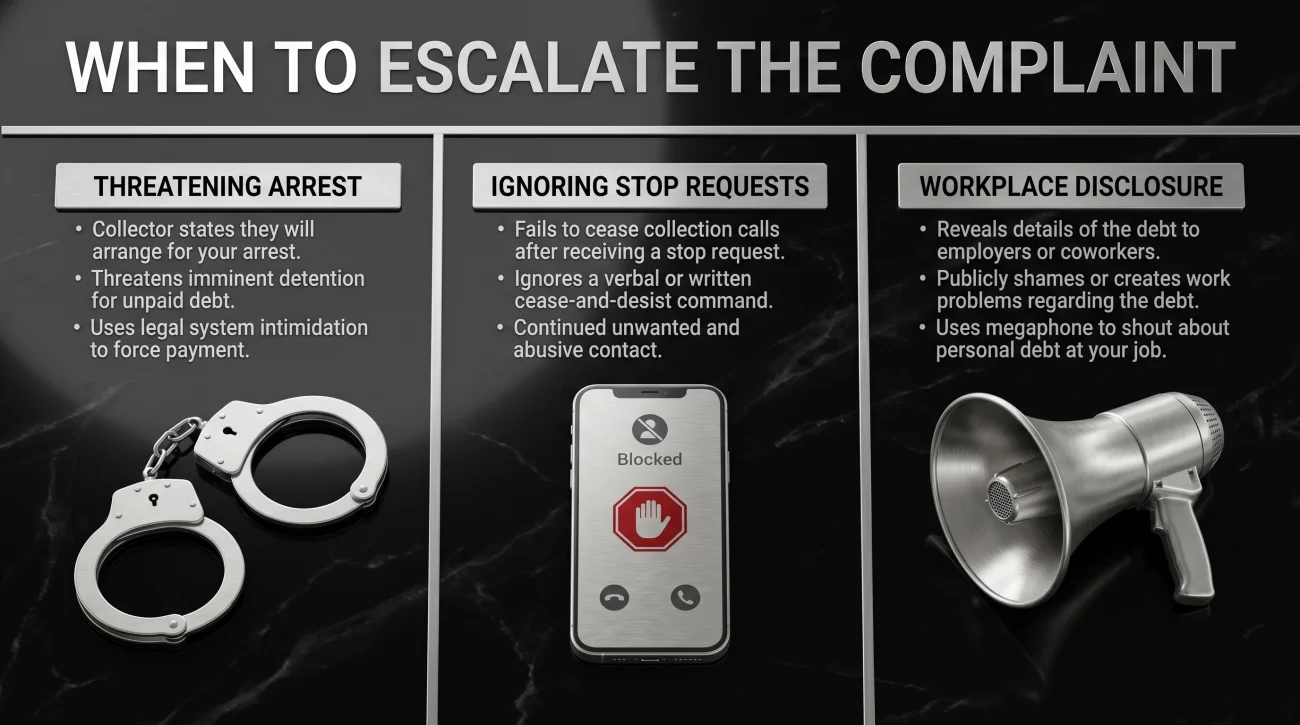
You don’t need to file a federal complaint every time a collector calls you. However, there are certain escalations where filing with the CFPB, the FTC, and your state AG simultaneously is the only correct move.
You should initiate the full complaint process immediately if you are experiencing any of the following:
- ⚠️ Deliberate legal violations: The collector explicitly threatened you with arrest, claimed to be a process server when they are not, or used profane language on a recorded line.
- 📋 Ignoring written demands: You have certified mail proof they received your cease and desist letter, but an agent called your cell phone two days later anyway.
- ❌ Third-party disclosure: The collector left a voicemail mentioning the debt on a shared family line or spoke directly to your HR department about your account.
- ⚖️ You are preparing for litigation: You know the collector crossed the line, you have kept your call logs, and you need to establish a documented federal record to hand over to a consumer attorney.
Understanding which agencies to report to is step one. Knowing whether the violations you’ve endured cross the line into actionable legal harassment is step two. If you are dealing with a collector who refuses to follow the rules, you need to understand exactly how much leverage their bad behavior has just handed you.
If you are dealing with aggressive tactics and need to know your options right now, learn more about how to handle debt collector harassment.
What Actually Happens After You File
Once you hit submit on a CFPB complaint, the waiting game begins. Here is the realistic timeline of what happens after reporting a debt collector.
First, the CFPB screens the complaint to ensure it falls under their jurisdiction and is complete. Within a few days, they forward it to the collection agency. At this point, the 15-day response window opens.
Inside the agency, the file is flagged. Collection calls usually stop immediately during this review period. The compliance manager will look at the notes. If the floor agent clearly broke the FDCPA rules, the agency will often close the account and return it to the original creditor to avoid further federal scrutiny. They won’t admit fault to you, but the calls will quietly cease.
If the agency believes they acted legally, they will draft a formal response to the CFPB detailing why their actions were justified. The CFPB will forward this response to you. You will then have the opportunity to review the company’s response and provide feedback on whether you believe the issue was resolved.
⚠️ Warning: Do not use the CFPB complaint portal to admit to owing a debt if you are trying to dispute it or if it is past the statute of limitations. Stick strictly to reporting the collector’s behavior.
Final: Forcing the Collector Off Their Script
Dealing with aggressive debt collectors can make you feel powerless. They control the phone lines, they control the letters, and they follow a strict playbook designed to keep you on the defensive.
The moment you submit a federal complaint, you strip them of that playbook. You force them to stop working their standard collection script and start defending their compliance. Even if the CFPB doesn’t instantly fine the agency, and even if the FTC doesn’t immediately shut them down, you have elevated the stakes. You are holding them accountable in the one language they actually respect: legal exposure.
❓ FAQ
⏱️ How long does it take for the CFPB to respond?
The CFPB generally forwards your complaint to the collection agency within a few days. The agency is then legally required to respond to the CFPB within 15 days. You will be notified as soon as the company provides its response.
📞 Will filing a complaint stop the debt collector from calling?
Often, yes. While a complaint is not a legal cease and desist order, most collection agencies will place a temporary hold on the account while their compliance department investigates the CFPB inquiry. If you want a legally binding halt to calls, you must send a written cease and desist letter.
💵 Does a CFPB complaint erase my debt?
No. Filing a complaint addresses the illegal or abusive behavior of the debt collector. It does not act as a dispute of the debt itself, nor does it magically erase what you owe to the original creditor.
⚖️ Can I report a debt collector and still sue them later?
Yes, absolutely. In fact, filing a complaint with the CFPB is often recommended before filing a lawsuit. It creates a documented, federal record of the collector’s violations, which your attorney can use as evidence in your FDCPA case.
🕵️♂️ Can I report a collector anonymously?
No. To effectively route the complaint and force the agency to respond regarding your specific account, the CFPB and your state AG need your identifying information. However, you can choose not to have your specific complaint narrative published in the CFPB’s public database.
📱 How do I report a debt collector text message?
You can report abusive or non-compliant text messages through the exact same CFPB and FTC portals used for phone calls. Take screenshots of the texts showing the timestamp, the sender’s number, and the lack of an opt-out option, and upload these as evidence with your complaint.
🏛️ Should I report to my state or the collector’s state?
You should report them to the Attorney General of your home state, as you are protected by your local consumer laws. For maximum impact, you can also file a duplicate complaint with the Attorney General in the state where the collection agency is headquartered.
📝 What proof do I need to file a complaint against a debt collector?
You do not need absolute legal proof to file a complaint. However, providing call logs (dates and times), copies of letters sent or received, and the names of the agents you spoke to will force the agency to give a much more detailed response.
🏢 Can I report the original creditor to the CFPB?
Yes. The CFPB handles complaints against banks, credit card issuers, and original lenders, not just third-party debt collectors. However, original creditors are governed by different laws than third-party agencies, so the rules they must follow are slightly different.
🛑 What happens if a debt collector ignores a CFPB complaint?
If an agency fails to respond to a CFPB inquiry within the mandated timeframe, they risk severe regulatory scrutiny, fines, and audits from the federal government. Legitimate agencies rarely ignore CFPB complaints. If they do, it is a strong indicator they may be a scam operation.
The full FDCPA framework and the four areas where it matters most.
- Your legal rights when collectors call, write, or threaten to sue
- When they can call, what they cannot say, and how to make it stop
- How to identify FDCPA violations and what you can do with them
- Why the age of a debt determines what a collector can legally do
- Your right to demand proof before paying or acknowledging anything
Harassment is one thing. Lawsuits, garnishments, and frozen accounts are another.
- When collector behavior crosses the line the FDCPA was written to prevent
- What to do if a collector files suit after their calls have not worked
- What collectors can do to your wages once a judgment is entered
- How a bank levy works and which funds the law protects from seizure
- How to resolve the debt that collectors have been calling about
Disclosure: The content on this site reflects direct experience inside the debt collection industry and is grounded in federal law and regulation. It is informational in nature. Reading it does not constitute legal advice and does not create any professional relationship. If you are dealing with a lawsuit, a judgment, or a legal deadline, consult a licensed attorney in your state before acting.