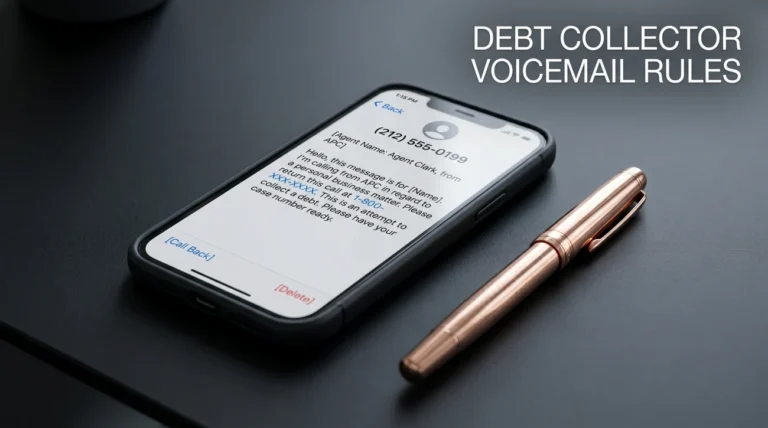
- A debt collector threatening a lawsuit without the actual intent or legal ability to file one is committing a federal violation under the FDCPA.
- Lawsuit threats are often a bluff for small balances (under $1,000) or very old debt, driven by the fact that court costs exceed the potential recovery.
- Threats are usually real when the balance is large, the account is recently delinquent, and the collector is a specialized collection law firm.
- You can test a bluff by requesting full written validation of the debt; collectors who cannot validate rarely file lawsuits.
- If a threat turns into an actual court summons, ignoring it is the worst mistake you can make, as it leads directly to a default judgment.
Debt Collector Threatening to Sue You
Hearing a debt collector threatening lawsuit action against you over the phone is designed to make your heart race. Most people immediately wonder if they are about to lose their bank account, their wages, or their property. During my 12 years working inside third-party collection agencies and debt buying firms, I heard collectors deliver this exact script hundreds of times. But here is the reality from the inside: the vast majority of the agents making that threat had absolutely no authority to file a lawsuit. They simply wanted you to make a payment over the phone right then and there to stop a legal process that did not even exist yet.
However, debt collection lawsuits are a very real part of the industry. Agencies file thousands of them every day. The difference between a frontline collector trying to scare you into a $100 payment and a specialized law firm actually drafting a court complaint comes down to math, documentation, and timing. If you can understand how an agency decides which accounts to sue over, you can figure out whether the threat you just received is an empty bluff or a genuine warning.
The Federal Law on Empty Legal Threats
Before we look at how to tell if a collector is bluffing, you need to understand that the bluff itself is highly regulated. Debt collectors do not have free rein to say whatever it takes to get you to pay.
Under the Fair Debt Collection Practices Act (FDCPA), a collector is strictly prohibited from threatening to take any action that cannot legally be taken or that is not actually intended to be taken. If a debt collector said they will sue me, but their agency has a strict policy against suing for balances under a certain amount, that threat is a direct violation of federal law.
“On the collections floor, we knew exactly which client portfolios we had authorization to litigate and which ones we didn’t. When an agent threatened to sue on a ‘no-suit’ portfolio, they were explicitly breaking the law just to hit their monthly bonus target. The agency knew it, but they often looked the other way until a consumer actually filed a complaint.”
This rule exists precisely because empty threats work. Most consumers do not know the legal process, so they assume the collector holds all the power. But the law draws a hard line. A collector threatening court action when they have no standing to do so, or when the debt is past the statute of limitations, is handing you leverage.
You can read the full breakdown of your rights and what constitutes an FDCPA violation in our detailed guide.
Inside the Agency: When They Are Almost Certainly Bluffing
When you are trying to figure out if a debt collector bluffing lawsuit action is your reality, you have to look at the situation like a business manager, not a debtor. Lawsuits cost money. An agency has to pay filing fees, process servers, and attorney hours. If the math does not make sense, they will not sue.
Here are the scenarios where a lawsuit threat is almost always an empty scare tactic.
The Balance Is Too Small to Justify Court Costs
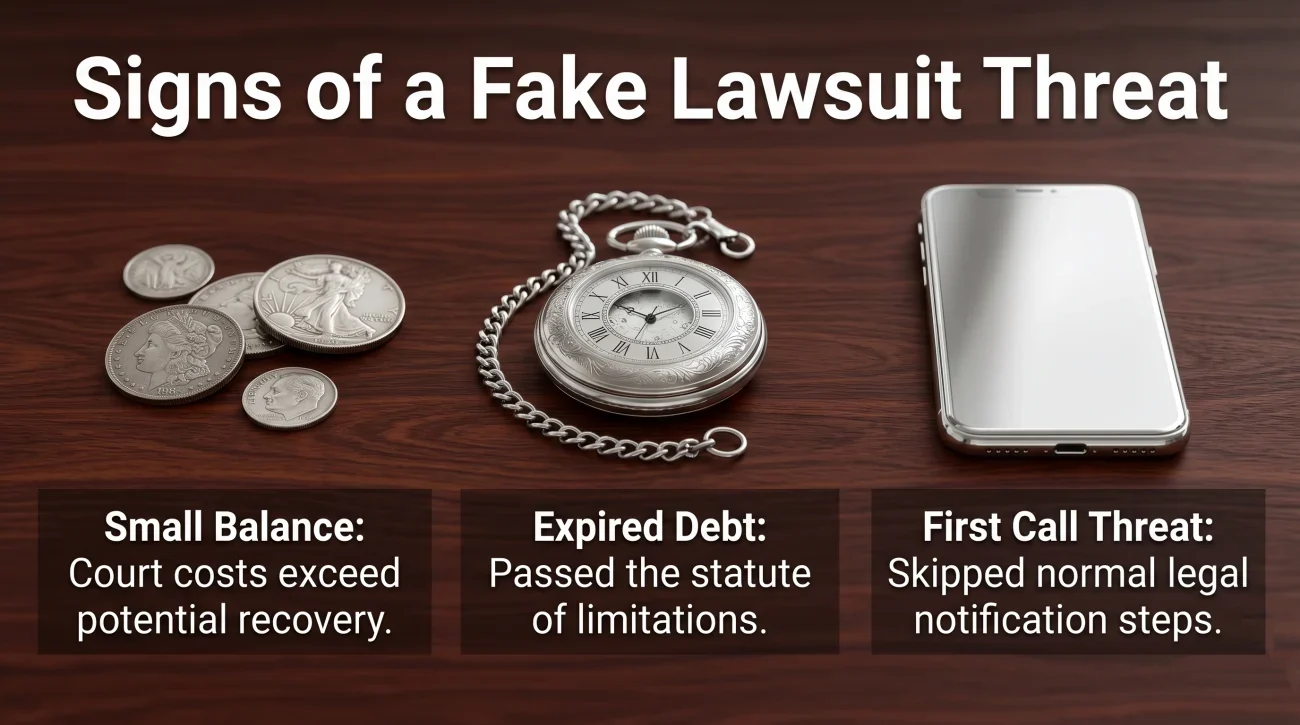
Filing a lawsuit is an investment. If you owe a $400 medical bill or a $600 credit card balance, the collection agency is not going to spend $350 in court costs and attorney time to get a judgment that you might not even be able to pay. While there is no universal minimum, most major debt buyers and third-party agencies will not litigate balances under $1,000 to $1,500 simply because the return on investment is negative.
The Debt Is Nearing or Past the Statute of Limitations
If your debt is very old, the collector knows their legal window to file a lawsuit is closed or rapidly closing. Threatening to sue on a time-barred debt is a direct FDCPA violation, but some collectors will aggressively hint at it to scare you into making a partial payment. Why? Because making even a small “good faith” payment can restart the clock, giving them the right to actually sue you. If an agent is pushing hard for a quick $20 while mentioning legal action, they are likely sitting on an expired file.
The Threat Happens on the Very First Phone Call
Real legal action is a process. If an agent calls you for the very first time, refuses to listen to your situation, and immediately claims they are sending a process server to your house today, they are lying. Legitimate agencies follow a sequence of letters, validation notices, and demands before escalating to litigation. Immediate, aggressive threats of court on a first contact are the hallmark of a bluff, and sometimes, a complete scam.
How to test the bluff on the phone:
“You are stating on a recorded line that you intend to file a lawsuit against me. I will not discuss this further over the phone. Send me a complete written debt validation notice and all legal correspondence by mail. Do not call this number again.”
A collector who is bluffing will usually try to keep you on the phone by arguing. A legitimate law firm preparing to sue will simply note the file and send the paperwork.
The Math Flips: When a Lawsuit Threat Is Real
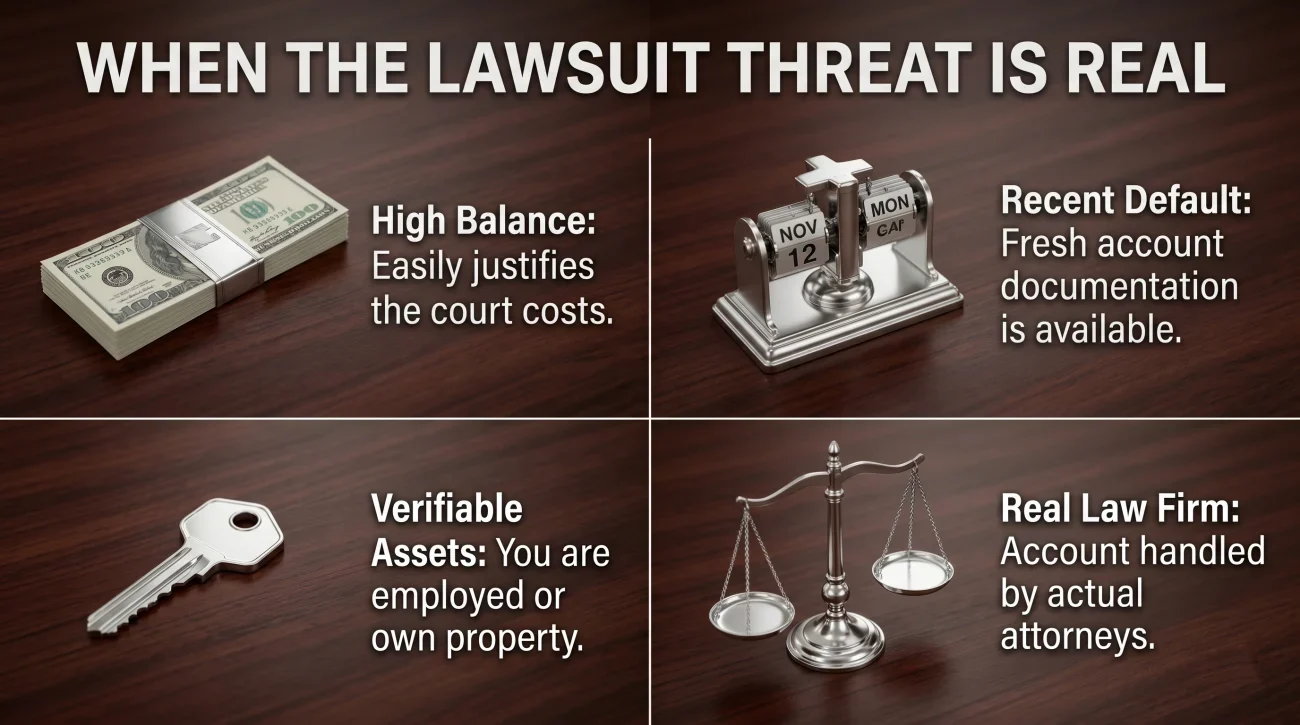
It is dangerous to assume every collector is lying. While many front-line agents bluff, the legal departments backing them up do not. If you are asking yourself, is debt collector lawsuit threat real in my specific case, you need to look for the operational signals that show an agency is preparing to spend money on litigation.
The decision to litigate is methodical. Agencies score accounts based on the likelihood of recovery. If you fit their profile, the threat is genuine.
- The balance is significant: Debts over $5,000, particularly auto loan deficiencies, high-limit credit cards, and personal loans, are prime targets for litigation. The potential recovery easily justifies the court costs.
- The account is relatively recent: If you defaulted six months to two years ago, the documentation is still fresh, and the original creditor or debt buyer has easy access to your account statements and signed agreements. This makes proving their case in court very simple.
- You are employed or own property: Agencies use basic skip-tracing tools to check your employment status and whether you own a home. If they see you have a steady job, they know a court judgment will allow them to garnish your wages. They do not sue people who have no assets; they sue people who can be forced to pay.
- The collector is a specialized law firm: If your account has been transferred from a standard call center agency to an entity with “Law Offices of” in their name, the risk level has escalated. While some of these firms operate like standard collection agencies, they actually have the infrastructure to draft complaints and file them in your local county court.
It is important to note that a collection law firm must actually review your file before sending a letter that implies legal action. Posing as a law firm or sending mass-produced letters with a lawyer’s signature block when no lawyer has looked at your case is a violation. You can learn more about how to spot this specific tactic in our guide on debt collectors impersonating an attorney.
If an agency holds a fresh, high-balance account and operates as a law firm, they are likely moving toward litigation. Recognizing these operational signals early is what separates a prepared consumer from one who gets caught off guard.
Warning Signs the Lawsuit Threat Is Serious
It is easy to get overwhelmed when the phone rings every day, but you must distinguish between annoying harassment and an actual legal emergency. If a debt collector threatening to sue has crossed over into taking real action, your window to handle this outside of court is closing rapidly.
If your situation matches the following signs, you should treat the threat as real and prepare accordingly:
- Your balance is well over $3,000, and the debt is well within your state’s statute of limitations.
- You received a formal “Demand Letter” in the mail stating that if payment is not made within a specific timeframe, the file will be reviewed for litigation.
- The company contacting you is the original creditor (like your actual bank) rather than a third-party debt buyer. Original creditors are far more likely to sue quickly because they have perfect documentation.
- The collector has stopped calling you altogether. Ironically, when an agency decides to sue, the daily harassment calls often stop. The file is moved from the call center floor to the legal department to be processed.
If you see these warning signs, doing nothing is the most dangerous choice you can make. This is the exact moment you need to evaluate your legal position. I strongly recommend you consult with a debt lawsuit attorney to understand your options before a process server shows up at your door.
The Space Between a Phone Threat and a Court Summons
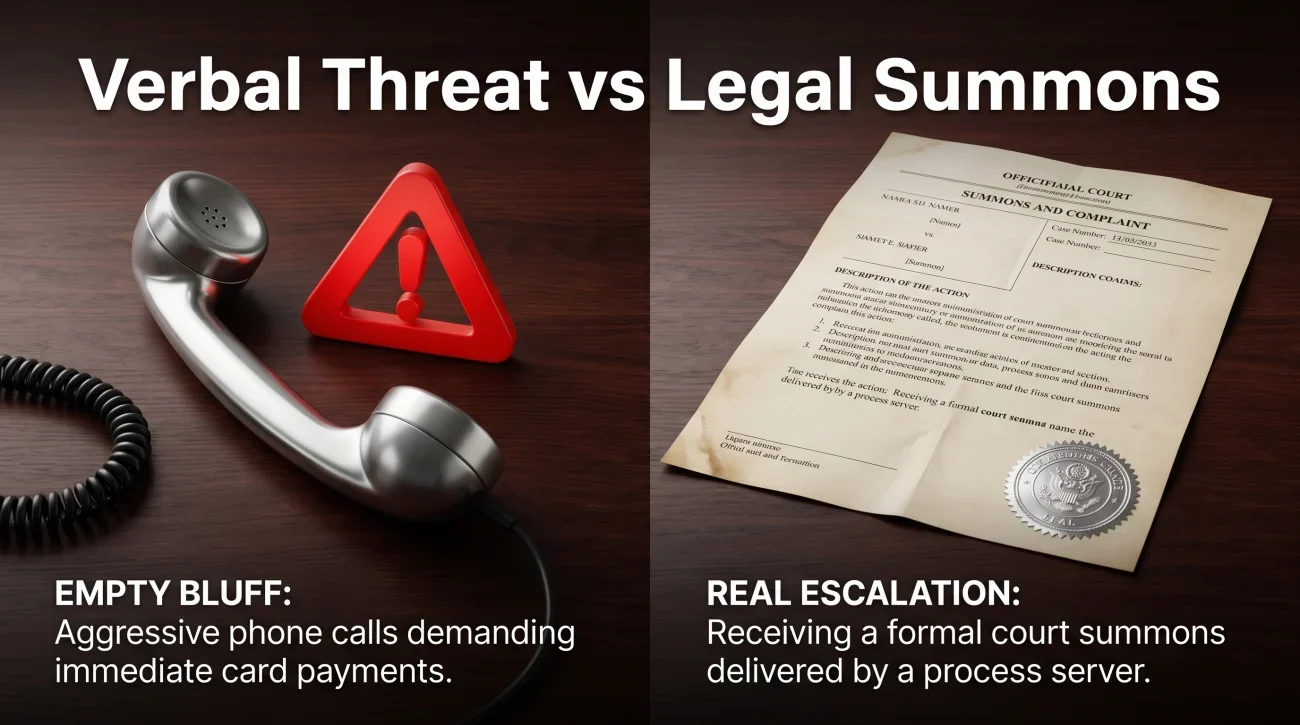
A major point of confusion for consumers is understanding how a lawsuit actually starts. When a debt collector said case going to court over the phone, they want you to believe the lawsuit has already begun. They do this to induce panic. But the legal system does not work via phone calls.
A verbal threat is just a threat. A lawsuit only becomes real when a formal complaint is filed in your local county court, and you are officially served with a Summons and Complaint. Until a process server hands you legal paperwork, or it is delivered according to your state’s strict service rules, you have not been sued yet.
A collector calls and says, “We are marking your file as ‘refusal to pay’ and sending it to the courthouse tomorrow if you don’t give me a debit card number now.”
You receive a letter from a law firm in your state giving you 30 days to dispute the debt, explicitly stating they have been retained to commence litigation if the matter is not resolved.
If you suspect a collector is lying about having filed a lawsuit against you, you do not have to guess. You can call the clerk of court in your local county and ask if there is a civil case filed under your name. If the collector claims a case is active but the clerk has no record of it, the collector has handed you a severe FDCPA violation.
This is a completely different scenario from a collector claiming they will have you locked up. Civil debt is not criminal. If an agent ever claims they are sending the police, that is a massive violation. Read exactly why threatening you with arrest crosses a hard legal line and what it means for your case.
The Threat as a Leverage Point for Negotiation
If a collection agency threatening legal action is actually serious, it changes your negotiation dynamic. Instead of freezing up, look at the threat as useful information. A collector who intends to sue is signaling two things: first, they believe they have the documentation to prove you owe the money. Second, they believe you have the means to pay a judgment. However, going to court is still expensive and risky for them. They would almost always prefer a guaranteed settlement today over a lengthy court process tomorrow.
The time between a serious threat and the actual filing of a summons is your best window to negotiate a settlement. Once they pay the court filing fees and the process server, the agency will demand a higher settlement amount to recoup those hard costs. If you know the debt is yours, the balance is large, and the threat is real, stepping in to negotiate a lump-sum payoff or a payment plan before the paperwork is filed saves both sides money.
Key Point: Never agree to a payment plan you cannot afford just to stop a lawsuit. A broken payment plan often provides the collector with fresh evidence to use against you in court later.
Turning an Empty Threat Into Your Legal Advantage
If you determine that the agency has no actual standing or intent to sue, the dynamic shifts entirely in your favor. A collector who uses false legal threats to extract payments has crossed from standard debt collection into illegal harassment.
Every time a collector makes a false threat on the phone or in a letter, they are violating federal law. But to turn that violation into leverage, you must document it. The FDCPA is a strict liability statute, meaning you do not have to prove the collector intended to hurt you; you just have to prove they broke the rule.
💡 Pro Tip: Document the exact date, time, collector’s name, and their specific threat word-for-word immediately after the call.
If you have a log showing a collector threatened to sue you three times in one month for a $200 debt, and you know they have no intention of filing, you now hold the cards. FDCPA violations carry statutory damages of up to $1,000, plus the collector often has to pay your attorney fees if you win.
You can learn more about how to sue a debt collector for statutory damages and flip the script entirely.
If you are dealing with a pattern of false threats, constant calls, or aggressive tactics, you do not have to handle it alone. Evaluate whether you are dealing with illegal debt collector harassment and what you can do to make them pay for it.
Final Thoughts: Don’t Let Fear Dictate Your Response
A debt collector threatening a lawsuit is banking on your fear of the unknown. By understanding the difference between a high-pressure desk bluff and a calculated legal escalation, you take that power back. You are not powerless in this process. Whether their threat is a hollow script designed to scare you or a legitimate precursor to a summons, your best defense is always documentation and a cool head.
Check your state’s statute of limitations to know where you stand. If the threat is real, use that information to make a calculated business decision about your next steps, rather than reacting out of panic. If you know the rules they have to play by, you can protect yourself from the tactics they use to bend them. For a complete understanding of those rules, review our breakdown of federal debt collection law.
❓ FAQ
⚖️ Can a debt collector sue me for any amount?
Legally, yes, there is no federal minimum amount required to file a lawsuit. However, in practice, collectors rarely sue for very small amounts (under $1,000) because the filing fees and attorney costs would exceed the amount they could recover.
📞 What should I do if a debt collector threatens me over the phone?
Stay calm, do not agree to pay anything, and do not acknowledge the debt. Tell them you want all communication in writing and request a formal debt validation notice. Then, write down exactly what they said, the date, and the time for your records.
⏱️ How long does a debt collector have to sue me?
They are bound by your state’s statute of limitations, which typically ranges from 3 to 10 years depending on the state and the type of debt. Once this period expires, the debt is considered time-barred, and they can no longer legally sue you.
🛑 Is it illegal for a collector to threaten a lawsuit they won’t file?
Yes. Under the Fair Debt Collection Practices Act (FDCPA), threatening to take legal action that cannot legally be taken or that the collector does not actually intend to take is a federal violation.
📄 How will I know if they actually filed a lawsuit?
You will be officially served with legal paperwork, usually a Summons and Complaint, delivered by a process server or law enforcement officer, or sent via certified mail according to your state’s court rules. A phone call is never a legal summons.
🏦 Can they garnish my wages if they threaten to sue?
Not immediately. To garnish your wages, a debt collector must first actually file a lawsuit, win the case in court, and obtain a formal judgment from a judge. They cannot touch your paycheck based on a threat alone.
🗣️ Should I ignore a collector who says my case is going to court?
You should never ignore a real court summons. If it is just a phone threat, demand written validation. But if you receive actual court documents, ignoring them will result in a default judgment against you, giving the collector the power to freeze your bank accounts.
The full FDCPA framework and the four areas where it matters most.
- Your legal rights when collectors call, write, or threaten to sue
- When they can call, what they cannot say, and how to make it stop
- How to identify FDCPA violations and what you can do with them
- Why the age of a debt determines what a collector can legally do
- Your right to demand proof before paying or acknowledging anything
Harassment is one thing. Lawsuits, garnishments, and frozen accounts are another.
- When collector behavior crosses the line the FDCPA was written to prevent
- What to do if a collector files suit after their calls have not worked
- What collectors can do to your wages once a judgment is entered
- How a bank levy works and which funds the law protects from seizure
- How to resolve the debt that collectors have been calling about
Disclosure: The content on this site reflects direct experience inside the debt collection industry and is grounded in federal law and regulation. It is informational in nature. Reading it does not constitute legal advice and does not create any professional relationship. If you are dealing with a lawsuit, a judgment, or a legal deadline, consult a licensed attorney in your state before acting.