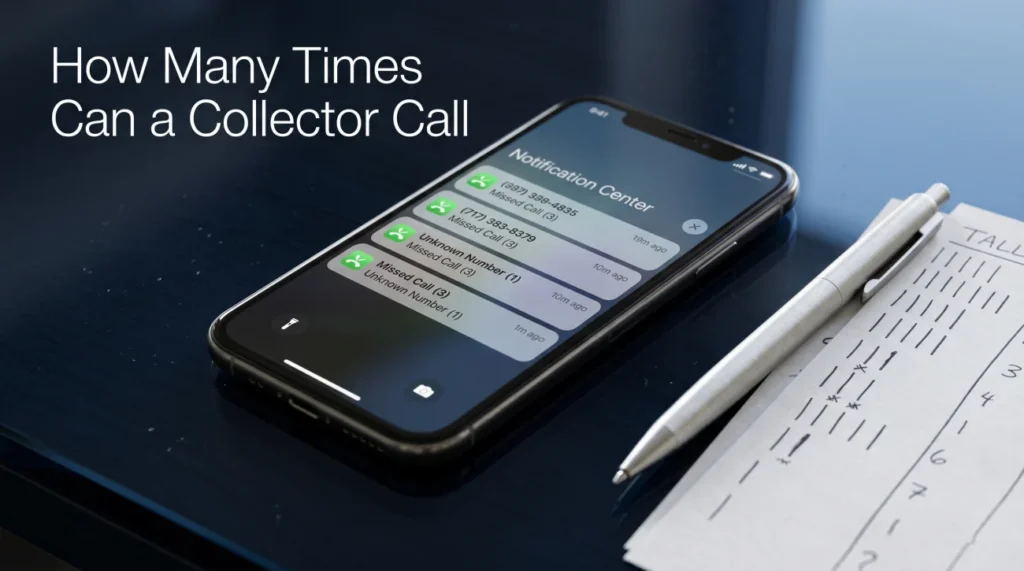
- Federal law presumes a debt collector is violating the rules if they call you more than seven times in a seven-day period about the same debt.
- Once you have an actual conversation with a collector about the debt, they are prohibited from calling you again about that specific account for seven days.
- The number seven is a legal presumption, not a hard ceiling. A collector calling six times in a single day can still be guilty of illegal harassment based on their pattern.
- The limit applies per account, not per person. If you have four medical bills with the same agency, they can legally dial your number up to 28 times in one week.
- Keeping a precise, written log of every call is the only reliable way to document a violation and force the harassment to stop.
The Math Behind the Dialing
There is a specific rule governing how many times can debt collectors call you. It is a number every collection agency knows intimately. The massive software systems that dial your phone are programmed around it. The agents on the floor are trained to track it. And while having a hard number sounds like a solid protection for consumers, the reality inside the industry is much more complex.
During my 12 years working inside third-party collection agencies and a national debt buyer, I learned that call volume is never random. We did not dial numbers just hoping someone would eventually pick up. Every outbound call was calculated. The goal was to stay in your head without technically breaking the rules. The pressure you feel when your phone rings multiple times a week is entirely intentional. The collector knows exactly how much pressure the law allows them to apply.
However, most consumers misunderstand how this numeric limit actually works. They believe it is a strict ceiling and that any call frequency under that limit is perfectly legal. Collectors understand the gaps in the federal rules, and they use those gaps efficiently. To stop the barrage of calls, you first have to understand the exact rules the caller is operating under, and where those rules actually bend in your favor.
The 7-in-7 Rule Explained
For decades, federal law only provided a vague prohibition against calling repeatedly with the intent to annoy, abuse, or harass. That ambiguity made it difficult for both consumers and collectors to know exactly where the legal line was drawn. That changed when the Consumer Financial Protection Bureau updated Regulation F, which implements the Fair Debt Collection Practices Act (FDCPA).
The update created what is commonly known in the collection industry as the 7-in-7 rule. Under this regulation, a debt collector is presumed to violate the law if they do either of two things.
First, they cannot call you more than seven times within a seven-day period regarding a specific debt.
Second, if they actually have a telephone conversation with you about the debt, they cannot call you again regarding that same debt for seven days after the conversation takes place.
Key Point: A call counts toward the limit whether you answer it or not. A missed call, a voicemail, or a call from an automated system that simply rings and disconnects all count toward the seven-call threshold.
This sounds relatively straightforward. If you look at your phone log and count eight missed calls from the same agency in a week, you might assume you have a clear-cut case. But the keyword in the federal regulation is “presumed.” I will explain exactly what that presumption means for your call log below, but first, you need to see how this fits into the broader framework of federal debt collection rules.
Why “7” Is a Presumption, Not a Hard Ceiling
When people hear about the seven-call rule, they usually assume it is a hard boundary that collectors can never cross. It is not. The number seven is what the law calls a legal presumption.
If a collector calls you eight times in a week, the law presumes they are harassing you. The burden is entirely on the agency to prove they were not. They would have to show that the eighth call was an error, or that you specifically asked them to call back. In practice, agencies fight very hard to avoid crossing the seven-call line because defending an eighth call is legally expensive.
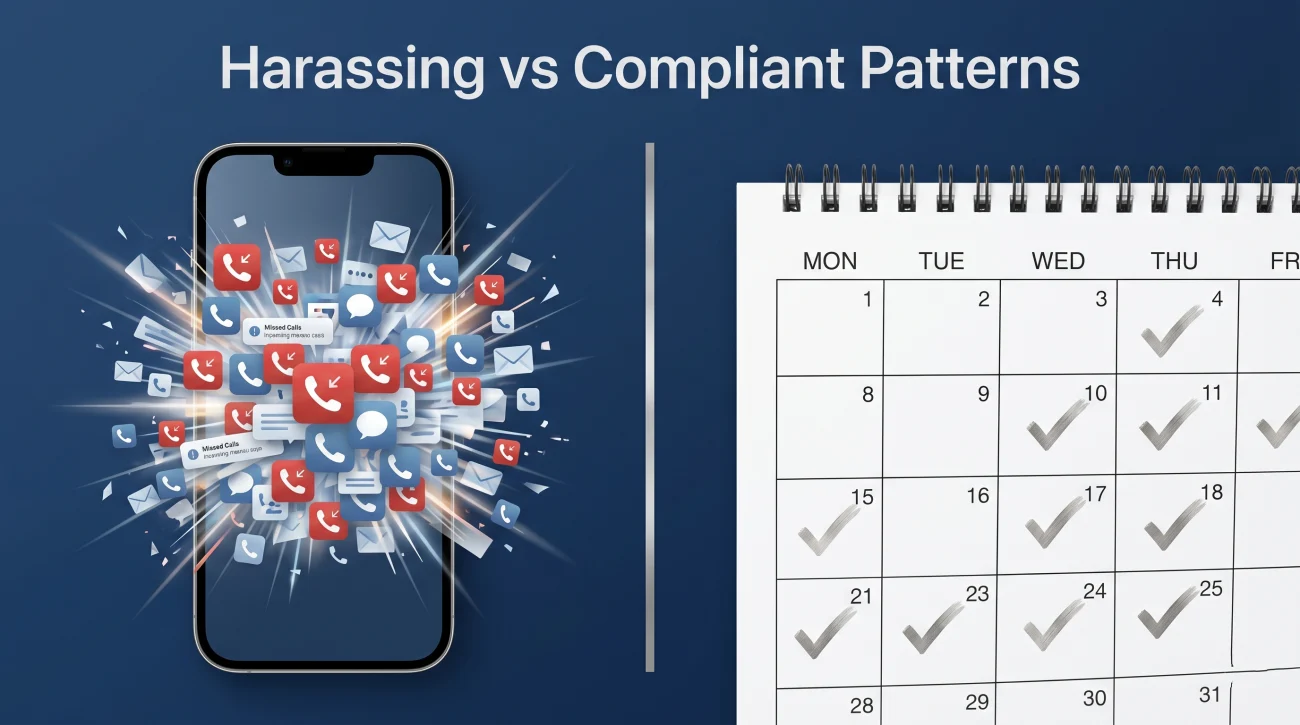
Conversely, if they call you six times in a week, the law presumes they are complying with the FDCPA. But this does not automatically make those six calls legal. The broader prohibition against harassment still applies.
A collector calls you at 8:15 AM, again at 8:45 AM, again at 9:30 AM, and twice more in the early afternoon. Even though the total is only five calls for the week, the concentrated, rapid-fire pattern clearly demonstrates an intent to annoy or panic you. That is a violation.
A collector calls you once on Monday afternoon, once on Wednesday morning, and once on Friday evening. This pattern is spread out, gives you time to respond, and falls safely within the presumed compliance of the regulations.
Many people ask how often can debt collectors call before it becomes harassment. The answer is that pattern and timing matter just as much as the raw number. If the agency is utilizing rapid-fire dialing, they are violating the law, regardless of whether their weekly total stayed under seven.
The Per-Account Loophole Collectors Exploit
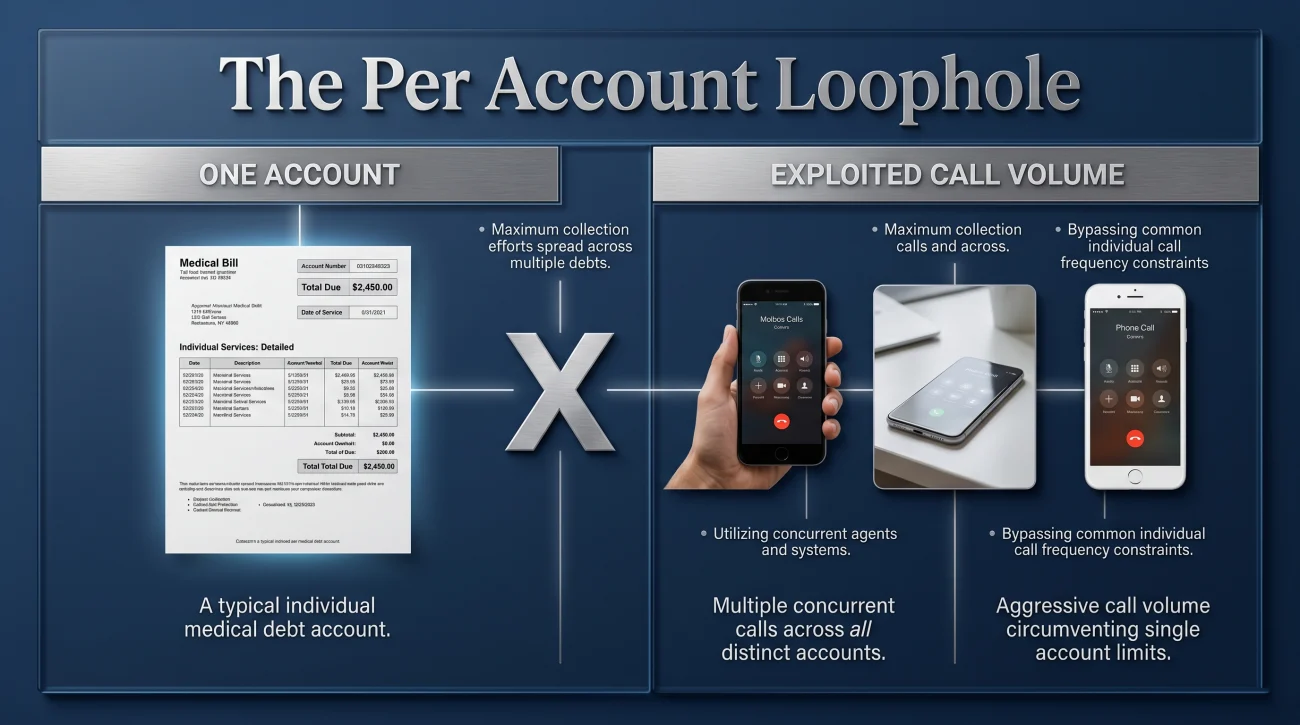
If you are looking at your caller ID and seeing two or three calls every single day from the same agency, you might assume they are blatantly breaking the law. Often, they are not. They are utilizing the most significant loophole in the contact rules.
The seven-call limit applies per debt, not per consumer.
Inside the agency, we frequently worked consumer files that contained multiple associated accounts. If a patient went to the hospital and had separate bills from the emergency room, the radiologist, and the anesthesiologist, those were three distinct debts. Our dialer software treated them independently. We could legally call that person 21 times in a single week.
This per-account rule is exactly why medical debt and certain retail credit card debts often generate an overwhelming volume of calls. The agency is not necessarily violating the seven-call limit. They are simply multiplying it by the number of accounts sitting under your name in their database.
Furthermore, agencies often rotate the phone numbers they use to call you. They will call from a toll-free number on Tuesday, and a local area code on Thursday. This is a deliberate tactic to increase answer rates, as most people will ignore a known collection number but might pick up a local call. While rotating numbers is generally legal, it makes tracking the actual call frequency difficult. If you are experiencing this, you should review why collection agencies rotate phone numbers to understand what they are doing.
Is There a Daily Limit? (And How They Maximize the 7)
One of the most common questions from stressed consumers is whether there is a strict daily limit on collection calls. The frustrating truth is that the federal rules do not set a specific daily cap. The restriction is strictly based on the rolling seven-day window.
Inside the agency, we tracked answer rates meticulously. Since we only had seven bullets in the chamber per week, we had to fire them when you were most likely to answer. Agents were trained to distribute those calls strategically across the day.
You will often see a pattern where a collector calls at 8:15 AM before you start work, again around 12:30 PM during lunch, and perhaps a third time at 5:45 PM as you commute home. They are actively trying to catch you off guard. While this three-call day does not violate the weekly limit, spacing them out this way is a deliberate tactic to maximize pressure.
However, collectors also know they must respect the legal calling hours. If they push that daily distribution too far, they create legal exposure.
- A call placed before 8:00 AM in your local time zone is a strict violation, regardless of the weekly total.
- A call placed after 9:00 PM in your local time zone is also a strict violation.
- A collector calling every day exactly at 8:01 AM can be argued as having harassing intent, even if it fits the technical time rules.
If you are receiving calls outside of normal waking hours, check the specific time restrictions and your rights regarding when collectors call outside of permitted hours.
What Happens to Your Account When You Do Not Answer
Many consumers receive five or six calls a week, never pick up, and wonder what is actually happening on the collector’s end. Every time the phone rings and you ignore it, the system logs a disposition code.
Inside the collection floor, these codes dictate your future. If a call results in a “No Answer” code, the predictive dialer simply throws your account back into the queue for a different time block the next day. If the agent logs “Left Message,” the system might pause for 48 hours to give you a chance to return the call before dialing again.
This is why ignoring the calls rarely makes them stop. As long as the disposition code shows the number is active but unanswered, the algorithm will keep calculating the most aggressive legal dialing schedule possible until it hits that weekly limit of seven.
The 7-Day Pause: What Happens When You Do Answer
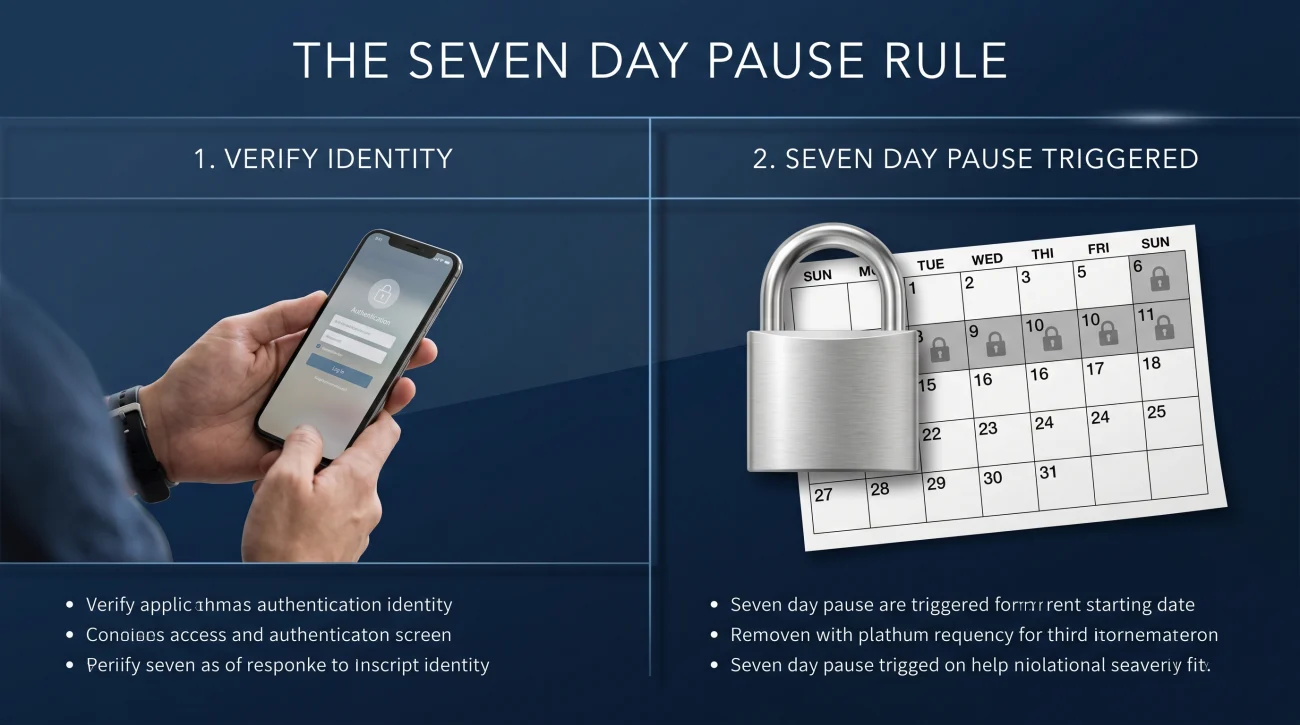
The second half of the 7-in-7 rule is just as important as the first. If a collector has a telephone conversation with you about the debt, they are prohibited from calling you again about that same debt for seven days.
This rule exists to give consumers breathing room. Once you have engaged with the agency, they cannot immediately begin calling you the next morning to ask if you have mailed a check yet. However, the protection only kicks in if the conversation is actually about the debt. Inside the agency, agents were trained to secure identity verification immediately, because without it, the contact did not count as a conversation and the seven-day pause would not trigger.
- If you answer the phone, say “wrong number,” and hang up, that does not trigger the seven-day pause.
- If you answer the phone, refuse to verify your identity, and hang up, the pause does not apply.
- If a collector leaves an automated voicemail mentioning the debt, it counts as one of their seven weekly calls, but it does NOT trigger the seven-day pause because a two-way conversation did not occur.
- If you answer, verify your identity, and the collector states they are calling about the outstanding balance, the seven-day pause is officially active the moment the call ends.
Many consumers make the mistake of answering the phone just to yell at the collector to stop calling, without actually verifying their identity or letting the collector state the purpose of the call. In the agency’s system, this is logged as a generic, incomplete contact. Because the debt itself was never discussed, the dialer system will likely queue your number up to be called again the very next day.
Signs the Call Frequency Has Crossed the Harassment Line
Dealing with debt is inherently stressful, but there is a distinct line between a collector aggressively doing their job and a collector violating federal law. Most consumers do not realize the collector has crossed this legal threshold until they look back at a month of phone records and realize how extreme the volume has become.
If you are experiencing any of the following patterns, the agency has likely moved past legal collection efforts and into actionable harassment:
- You are receiving more than seven calls in a rolling seven-day period, and you are absolutely certain they are all regarding one single account.
- You answered the phone, verified your identity, discussed the debt, and the same agency called you again three days later to ask about payment.
- You receive multiple calls within a few hours, day after day, creating a pattern of rapid-fire dialing designed to cause anxiety.
- The collector continues to call you at a high frequency even after you have verbally asked them to stop calling your number.
- The high-frequency calls are accompanied by aggressive language, threats, or calls directed to your workplace.
Recognizing these signs is the first step. Knowing that a line has been crossed gives you power, but only if you take the right steps to address it. Whether your situation requires a simple written notice or a more serious legal intervention depends entirely on the specifics of the contact. If this sounds like your reality, you should look into evaluating whether the collector’s behavior qualifies as actionable harassment to determine your best path forward.
The Logbook: Building Your Leverage
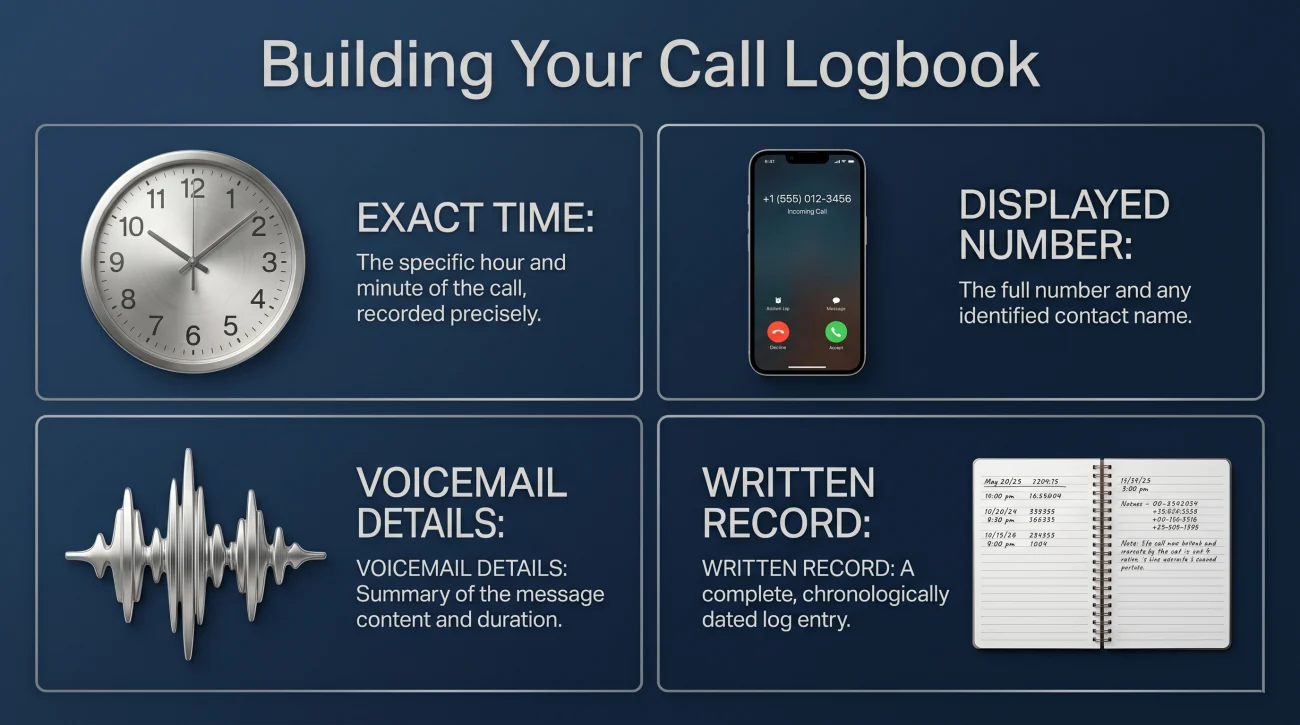
The single biggest mistake consumers make when dealing with excessive collection calls is relying on their memory. When you file a complaint with the CFPB or consult an attorney, saying “they call me all the time” is not actionable. Saying “they called me nine times between October 4th and October 10th” is hard evidence.
Inside the collection industry, we operated under the assumption that if it is not documented in the system, it did not happen. You must adopt the exact same mindset to protect yourself.
You need to start a call log today. You do not need anything complex. A spiral notebook or a simple digital note on your phone is sufficient. You must record the specifics of every single contact attempt.
Sample Call Log Entry Format
Date: 10/14/2026
Time: 2:15 PM
Number displayed on caller ID: (555) 123-4567
Collector Name/Agency: John from Midland Funding (left on voicemail)
Did I answer?: No
Notes: Left an automated voicemail asking for a return call. This is the 4th call this week.
Every time the phone rings, you make an entry. If you answer, you write down exactly what was said. If you ask them to stop calling, you write down the exact time you made the request and the agent’s response.
This documentation is your leverage. A collector will confidently argue against a vague accusation of harassment. They will immediately back down when presented with a precise, day-by-day ledger of their own dialing habits. It proves you know your rights and have the evidence to enforce them.
Mistakes to Avoid When Trying to Stop the Calls
Tracking the calls gives you evidence, but it does not physically stop the phone from ringing. If a collector is staying within the seven-call limit, or exploiting the multiple-account loophole, the calls are perfectly legal. Consumers often take steps out of frustration that fail to fix the problem.
⚠️ Warning: Do not rely on verbal requests to stop calling. While some agencies will honor a verbal request as a courtesy, the FDCPA only legally requires them to stop contacting you if you make the request in writing.
Another common mistake is blocking the phone number. Blocking a single number rarely works as a long-term strategy. Large agencies have hundreds of phone lines. If you block one, their dialer system will simply route your account through a different number the next day. You will end up playing an endless game of whack-a-mole with your caller ID.
To shut the communication down entirely, you have to use a specific legal mechanism: a written cease and desist letter. Once the agency receives your letter, they are legally barred from contacting you again, with one narrow exception. They can send one final communication to confirm they are stopping, or to notify you that they are taking a specific action, such as filing a lawsuit. If you are ready to pull this trigger, make sure you understand how to execute legally forcing the agency to cease all communication.
Final Thoughts: Taking Control of the Contact
The rules governing debt collector call frequency are designed to balance an agency’s right to pursue a legitimate debt with your right to live without constant harassment. The 7-in-7 rule is the benchmark. When you understand that the number is a presumption rather than a hard ceiling, and when you understand how agencies exploit multiple accounts to increase call volume, the mystery disappears.
The calls you are receiving are not random. They are a systematic process designed to wear you down. Your response must be equally systematic. Document everything. Log every call. If the frequency crosses the line, you have the evidence to hold them accountable. And if the legal volume of calls is simply too much to handle, remember that you hold the ultimate right to shut the communication down entirely with a written request. You control the access to your phone; the collector only borrows it until you say otherwise.
❓ FAQ
Below are the questions that come up most often when consumers first start tracking their calls.
📞 Can debt collectors call back to back?
Calling back to back is generally considered a strong indicator of harassment under federal law, regardless of the weekly total. Rapid-fire dialing is a deliberate pressure tactic, and documenting back-to-back calls helps build a strong case for an FDCPA violation.
📅 Do weekend calls count toward the 7-day limit?
Yes. The seven-day period is a rolling window that includes weekends and holidays. A call placed on a Sunday counts exactly the same as a call placed on a Tuesday toward the seven-call presumption limit.
📱 Does a dropped call count as one of the seven calls?
Yes. If their predictive dialer calls you and the line drops before an agent speaks to you, it still counts as a contact attempt under the 7-in-7 rule. Do not let a collector argue that an abandoned call does not count.
👨👩👧 What if they call my family 7 times looking for me?
Calls to third parties like family members to acquire location information are governed by separate, stricter rules. A collector is generally only allowed to contact a family member one time ever, making the seven-call rule inapplicable to those specific calls.
🗣️ Does telling them to stop on the phone actually work?
Sometimes a collector will honor a verbal request to stop calling, but they are not legally required to do so under federal law. To trigger the legal protection of the FDCPA, the request to cease communication must be put in writing.
🏢 How many times a week can a debt collector call my job?
Workplace calls count toward the total seven-call limit. However, if you verbally tell a debt collector that your employer prohibits you from receiving personal calls at work, they must immediately stop calling your workplace entirely, regardless of the weekly count.
💬 Can they text me 7 times a week too?
The specific 7-in-7 numerical limit applies only to phone calls. However, text messages are still subject to the general prohibition against harassment. Sending an excessive number of texts can still be considered a violation based on frequency and pattern.
🛑 What happens if I just block the number?
Blocking the number stops that specific line from ringing your phone, but it does not stop the collector. They will usually rotate to a new local or toll-free number and continue dialing. A written cease and desist letter is the only legally binding way to force them to stop.
⚖️ Can I sue if they call 10 times in a week?
Yes. Exceeding the seven-call limit establishes a presumption of a legal violation. With proper documentation from a call log, consumers regularly work with consumer protection attorneys to file lawsuits for statutory damages based on call frequency violations.
⏰ What if they call me at 7:30 AM?
Calling before 8:00 AM or after 9:00 PM in your local time zone is a strict violation of the FDCPA. It does not matter if it is the first call of the week or the eighth; calling outside allowed hours is illegal.
The full FDCPA framework and the four areas where it matters most.
- Your legal rights when collectors call, write, or threaten to sue
- When they can call, what they cannot say, and how to make it stop
- How to identify FDCPA violations and what you can do with them
- Why the age of a debt determines what a collector can legally do
- Your right to demand proof before paying or acknowledging anything
Harassment is one thing. Lawsuits, garnishments, and frozen accounts are another.
- When collector behavior crosses the line the FDCPA was written to prevent
- What to do if a collector files suit after their calls have not worked
- What collectors can do to your wages once a judgment is entered
- How a bank levy works and which funds the law protects from seizure
- How to resolve the debt that collectors have been calling about
Disclosure: The content on this site reflects direct experience inside the debt collection industry and is grounded in federal law and regulation. It is informational in nature. Reading it does not constitute legal advice and does not create any professional relationship. If you are dealing with a lawsuit, a judgment, or a legal deadline, consult a licensed attorney in your state before acting.